Coloring tips: How to color Tie And Cufflinks coloring page well?
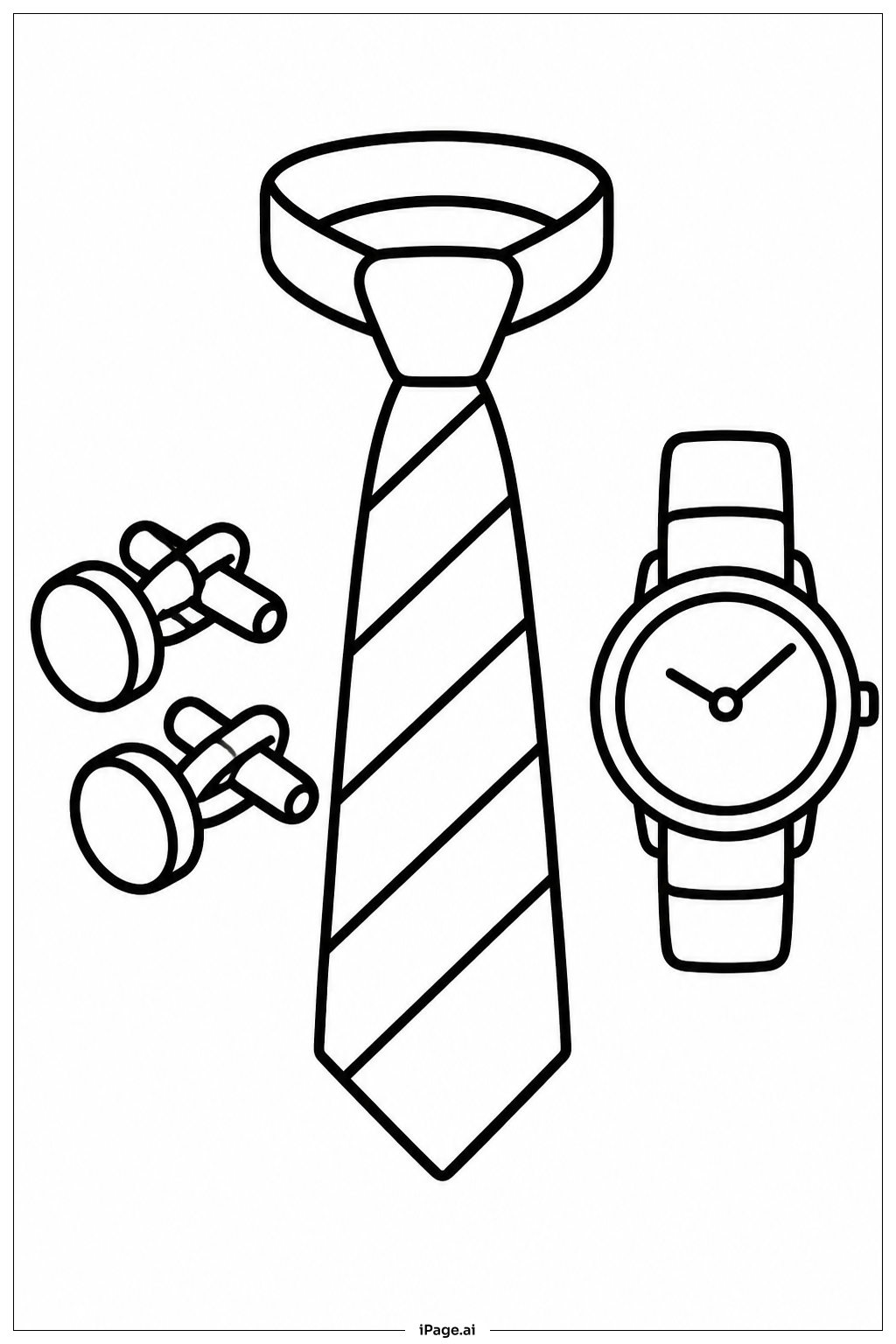
For the tie, consider using deep, sophisticated colors like navy blue, burgundy, or forest green as the base. The diagonal stripes can be colored in contrasting shades such as silver, gold, or white to create an elegant pattern. You might also try classic combinations like red with thin white stripes or purple with gray. For the cufflinks, metallic colors work beautifully - use silver, gold, bronze, or even rose gold for a luxurious appearance. The circular faces of the cufflinks can feature accent colors like deep blue, black, or emerald green to add visual interest. Consider adding subtle shading along the edges of the tie to give it dimension and make it appear three-dimensional. The connecting bars of the cufflinks can be colored in matching or complementary metallic tones.
Coloring challenges: Which parts are difficult to color and need attention for Tie And Cufflinks coloring page?
• Stripe Pattern Precision: The diagonal stripes on the tie require careful attention to stay within the lines and maintain consistent color throughout each stripe. Young colorists may find it challenging to keep the pattern neat, especially where stripes narrow near the knot. Using the tip of the coloring tool and working slowly helps achieve clean, professional-looking stripes without crossing boundaries.
• Metallic Cufflink Finish: Creating a realistic metallic appearance on the cufflinks presents a unique challenge. To achieve an authentic gold or silver look, colorists need to use light pressure and leave small white highlights to simulate reflection and shine. Blending multiple shades of gray or yellow can add depth, but this technique requires practice and patience to master effectively.
• Tie Knot Complexity: The folded areas of the tie knot contain multiple overlapping sections that need different shading to appear three-dimensional. Distinguishing between the various folds and applying appropriate light and dark tones requires careful observation. Younger children might struggle with understanding which areas should be darker to create shadows and which should remain lighter.
• Small Detail Work: The cufflinks contain intricate decorative elements and fine details that demand precision coloring. These small areas can be difficult to color without going outside the lines, especially for children with developing fine motor skills. Using fine-tipped coloring tools like colored pencils or thin markers provides better control than broader instruments.
Benefits of coloring books: Advantages of drawing Tie And Cufflinks coloring page
Coloring this tie and cufflinks image helps children develop fine motor skills and hand-eye coordination through the precise work required for the stripes and small details. The repetitive pattern of the diagonal stripes teaches pattern recognition and consistency, important skills for early learning. Working with the concept of formal wear accessories introduces children to professional attire and social conventions in a fun, engaging way. The project encourages color theory exploration as they experiment with complementary colors and metallic effects. The varying levels of detail accommodate different skill levels - beginners can focus on the larger tie areas while advanced colorists can perfect the intricate cufflink details. This image also promotes patience and concentration as children work to stay within lines and create smooth, even coloring. Completing this sophisticated design builds confidence and a sense of accomplishment.