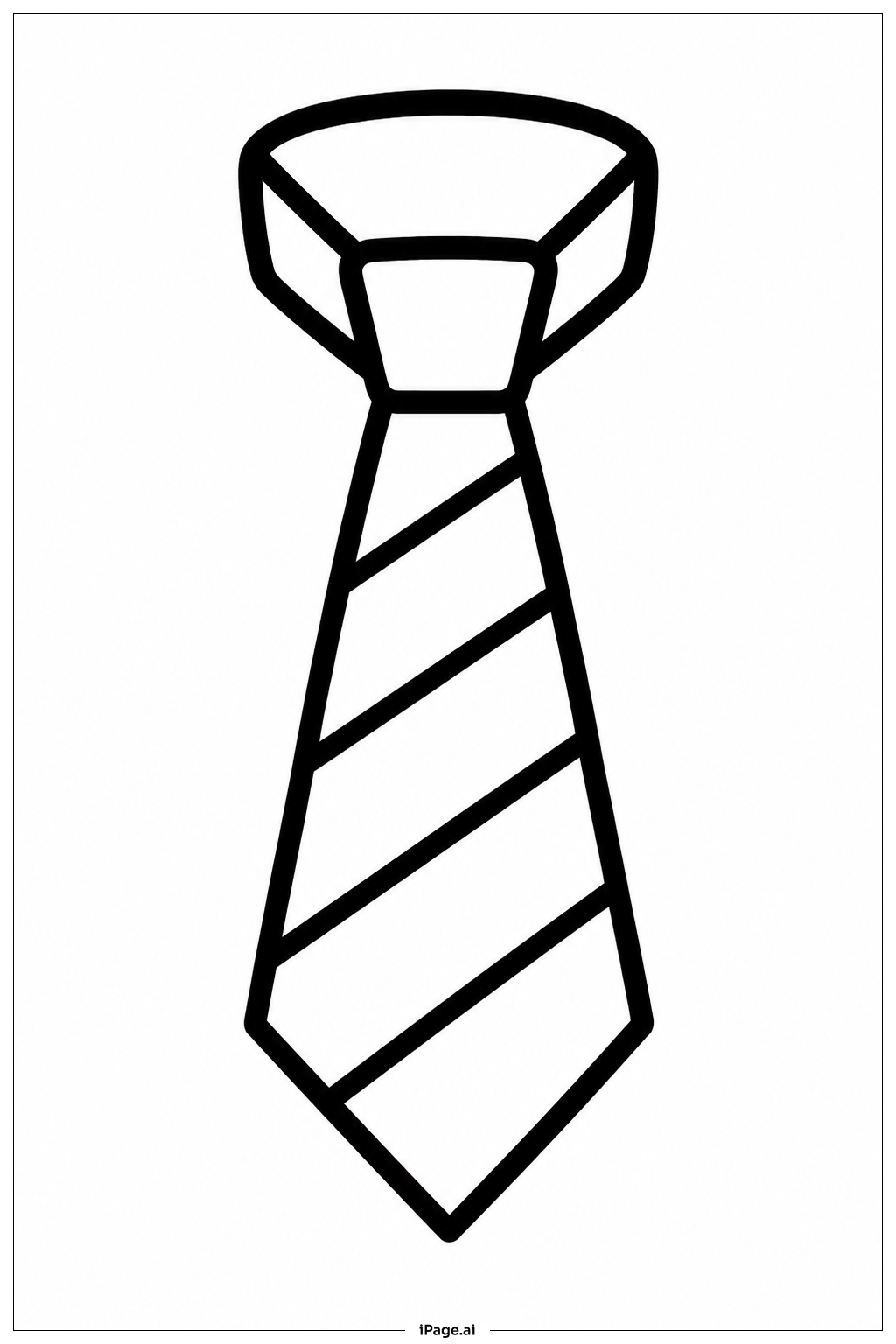
Coloring tips: How to color School Tie coloring page well?
Start by picking two or three colors that look great together — like navy blue and gold, or red and silver. These are classic school tie color combinations. Use one color for the diagonal stripes and another for the background of the tie. For the knot area at the top, use a slightly darker shade of your main color to give it depth and a 3D look. You can also add a thin highlight line down the center of the tie using a light color or white to make the fabric look shiny. Keep your strokes smooth and even along the length of the tie. If you want to make it look more like a real school tie, try adding a small crest or pattern in the center. Have fun mixing colors and making the tie your own!
Coloring challenges: Which parts are difficult to color and need attention for School Tie coloring page?
• Coloring the Diagonal Stripes Evenly: The diagonal stripes on the tie need to be colored carefully so they stay consistent in width and direction from top to bottom. It can be tricky to follow the angle of the stripes without going outside the lines, especially where the stripes meet the edges of the tie. Take your time and use a sharp colored pencil or fine-tipped marker for precision.
• Shading the Knot Area: The knot at the top of the tie has multiple overlapping fabric folds. Coloring this section requires using different shades of the same color to show depth and dimension. Younger colorists may find it hard to blend light and dark tones smoothly in such a small, complex area.
• Keeping Color Transitions Clean: Where one stripe color ends and another begins, the boundary should be sharp and neat. Bleeding or smudging across color borders can make the stripes look blurry. Using fine-tipped tools and coloring slowly near the edges helps maintain clean transitions.
• Showing Fabric Texture: The tie has subtle texture lines suggesting a woven or silk-like material. Deciding whether to color over these lines or leave them uncolored to create a texture effect can be a challenge. Leaving them slightly lighter than the surrounding color gives a realistic fabric appearance.
• Maintaining Color Consistency Along the Full Length: Because the tie is long and narrow, keeping a consistent color tone from the top of the knot all the way to the pointed bottom tip requires patience. Uneven pressure on a pencil or marker can create patchy areas that break the smooth, uniform look of the tie.
Benefits of coloring books: Advantages of drawing School Tie coloring page
Coloring a school tie is a wonderful activity for kids of all ages. It helps build fine motor skills as children carefully color within the narrow stripes and follow the tie's shape. Working with diagonal lines and geometric stripe patterns also strengthens hand-eye coordination and attention to detail. Choosing color combinations for the stripes encourages creative thinking and color theory awareness — kids learn which colors look great together and how contrast works. Shading the knot area introduces the concept of light and shadow in a simple, approachable way, laying the groundwork for more advanced art skills later on. Because the school tie is a familiar object from everyday life, coloring it creates a sense of connection and pride. Kids who wear uniforms may enjoy personalizing a tie with their school colors, making the activity feel meaningful and personal. It is also a calm, focused task that helps children practice patience and concentration. Whether done at home or in the classroom, coloring this page is a relaxing and rewarding creative experience for Boys and Girls alike.