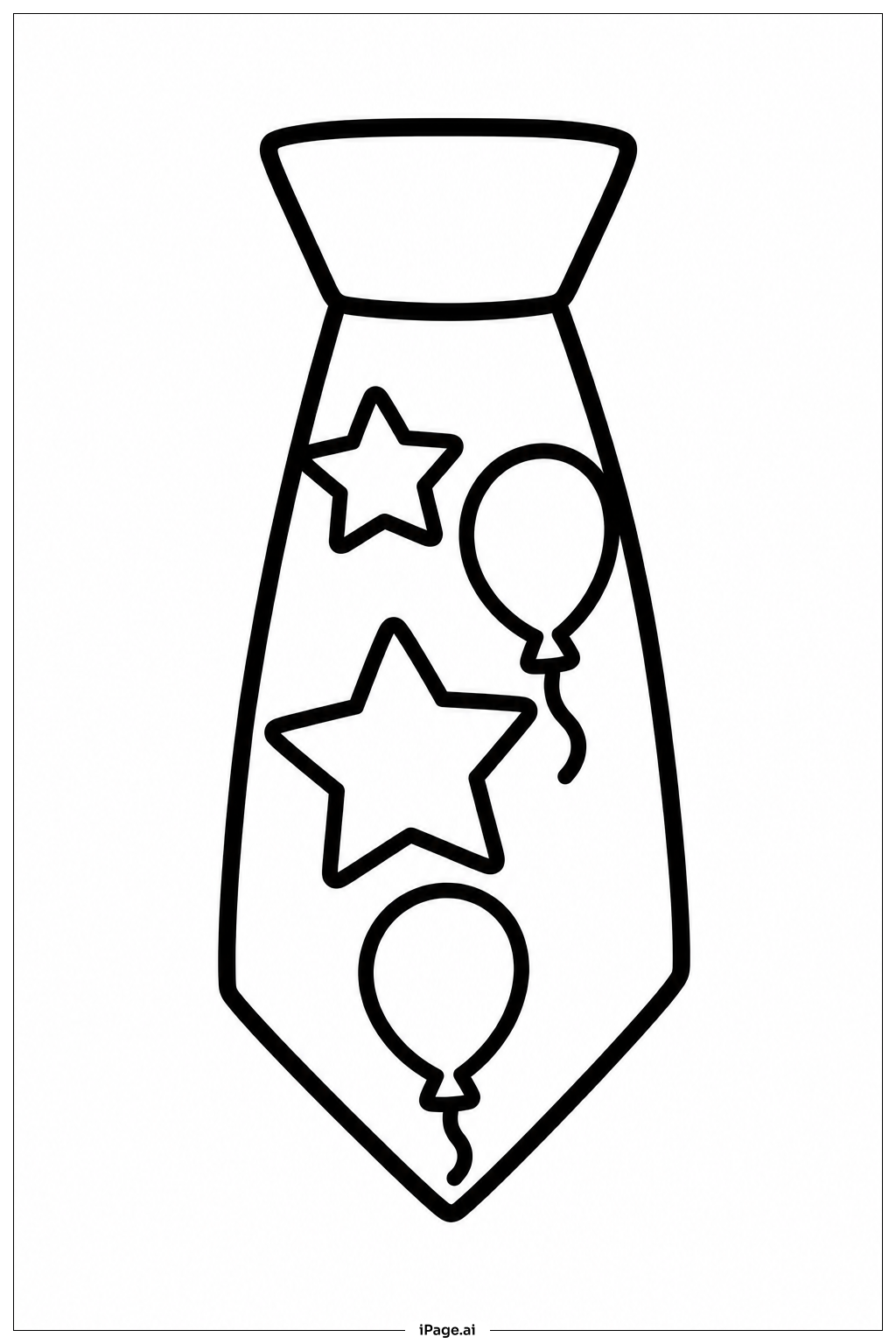
Coloring tips: How to color Party Tie coloring page well?
Start by choosing bright, cheerful colors that match the party theme. Use a bold solid color for the main background of the tie — red, royal blue, or deep purple all look great. Then bring each small decoration to life with contrasting colors. Color the balloons in yellow, orange, pink, or green to make them pop. Use gold or silver for the stars and confetti to add a shiny, festive feel. The gift boxes can be colored in bright wrapping colors with contrasting ribbon details. Keep your strokes neat inside the outlines of the smaller shapes to make them stand out clearly. If you want a fun effect, try using a gradient on the main tie body — going from one color at the top to a different one at the bottom. Don't be afraid to mix and match colors. The more vibrant and varied your palette, the more exciting and festive the final result will look. Have fun with it!
Coloring challenges: Which parts are difficult to color and need attention for Party Tie coloring page?
• Staying Inside Small Decorative Elements: The tie contains many tiny details like confetti, stars, and small balloon shapes. Coloring neatly within these small outlines can be tricky, especially for younger children. Using a fine-tipped colored pencil or a thin marker will help you stay within the lines and keep each element looking clean and distinct.
• Balancing Colors Without Clashing: Because the tie has so many different decorative elements all close together, choosing colors that look good side by side can be a real challenge. If two neighboring elements use similar shades, they can blend together and lose their individual look. Try to alternate warm and cool colors, or use light and dark versions of the same color family to create separation.
• Coloring the Tie Knot Area: The knot at the top of the tie is a small, tightly shaped section. It has less space than the wide lower body of the tie, making it harder to fill evenly. Take your time here and use short, careful strokes. Choosing a slightly darker shade of your main tie color for the knot can help define it and give the tie a more three-dimensional appearance.
• Keeping the Overall Design Cohesive: With so many elements and colors involved, it can be easy for the finished design to look scattered or uneven. Planning your color scheme before you start — perhaps picking two or three main colors to repeat throughout — will help the entire tie look unified and polished rather than random.
Benefits of coloring books: Advantages of drawing Party Tie coloring page
Coloring this Party Tie page offers a wonderful mix of fun and skill-building for children and beginners alike. The festive theme naturally sparks creativity and imagination, encouraging kids to experiment with bright, joyful color combinations they might not try otherwise.
Working through the many small decorative elements — balloons, stars, confetti, and gift boxes — helps develop fine motor skills and hand-eye coordination. Carefully coloring within tight outlines trains steadier hand control, which builds confidence over time.
The variety of shapes on the tie introduces children to color planning and decision-making. Choosing which color goes on which element, and making sure the overall design looks balanced, is a gentle and enjoyable introduction to basic design thinking.
Coloring also has a calming, meditative quality. Focusing on a creative task like this helps reduce stress and improve concentration, making it a great quiet-time activity. Finishing the page gives a strong sense of achievement and pride, which is especially encouraging for younger children.
Finally, the party theme makes this page particularly great for seasonal use — coloring it before a birthday party or holiday celebration adds to the excitement and helps children feel more involved in the event. It is a simple, screen-free activity that delivers big creative rewards.