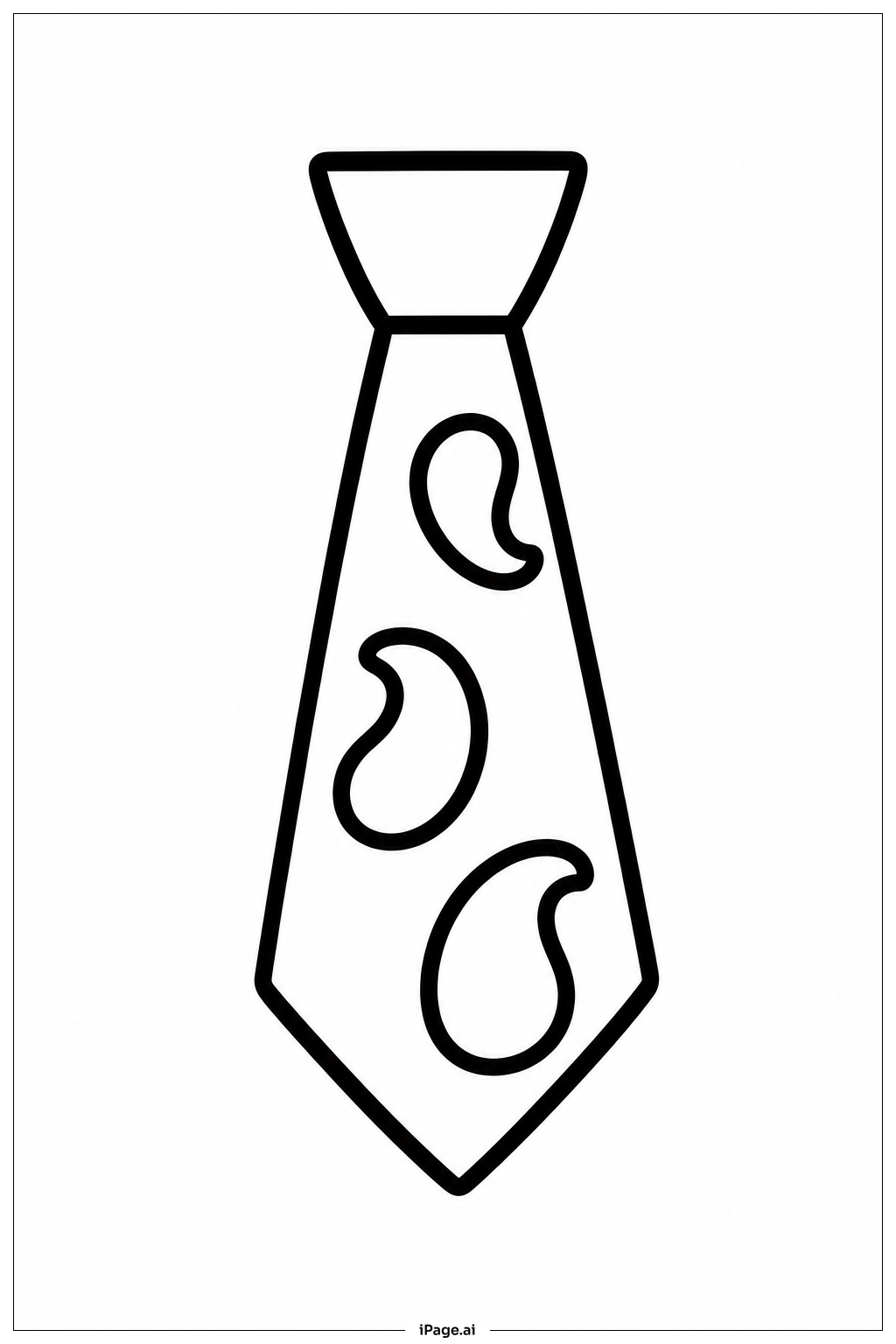
Coloring tips: How to color Paisley Tie coloring page well?
For this paisley tie, consider using rich jewel tones like deep burgundy, navy blue, or forest green as your base color. The paisley patterns can be colored in contrasting shades such as gold, cream, or rust orange to make them stand out. Try using different colors for each paisley motif to create visual interest, or keep them uniform for a more coordinated look. The inner details of each paisley can be filled with lighter or darker variations of your chosen colors. Add shading along the edges of the tie to give it dimension and depth. The decorative borders can be colored in metallic shades like silver or bronze. Consider using colored pencils for smooth blending in the curved areas, and fine-tip markers for the tiny decorative dots and swirls.
Coloring challenges: Which parts are difficult to color and need attention for Paisley Tie coloring page?
• Intricate Paisley Details: The paisley patterns contain multiple layers of curves, swirls, and decorative elements within small spaces. Coloring these tiny internal features requires steady hands and fine-tipped coloring tools. Children may find it challenging to stay within the narrow boundaries of each curved line, especially where multiple patterns overlap or connect.
• Pattern Consistency: Maintaining consistent color schemes across numerous paisley motifs can be difficult. Deciding whether to use the same colors for all paisleys or vary them requires planning. Keeping track of which colors go where, especially in repeating patterns, demands focus and organization throughout the coloring process.
• Border and Edge Precision: The tie features delicate borders and geometric accents that run along its edges. These thin lines require careful coloring to avoid going outside the boundaries. The pointed tip and knotted top section have particularly narrow areas that challenge fine motor control.
• Layering and Depth: Creating visual depth in the overlapping paisley patterns requires understanding of color values and shading techniques. Deciding which patterns should appear in the foreground and which in the background, then using appropriate color choices to convey this depth, adds complexity to the coloring experience.
• Small Decorative Elements: The numerous dots, tiny florals, and fine line details scattered throughout the design require patience and precision. These small features can be easily overlooked or difficult to color neatly, especially for younger children still developing fine motor skills.
Benefits of coloring books: Advantages of drawing Paisley Tie coloring page
Coloring this paisley tie offers excellent benefits for developing fine motor skills and hand-eye coordination. The intricate patterns require precise movements, helping children strengthen the small muscles in their hands and fingers. This practice is valuable for improving handwriting and other detailed tasks. The complex paisley designs encourage focus and concentration, as children must pay attention to stay within the lines and maintain consistent coloring throughout the piece. This activity promotes patience and perseverance as they work through the detailed patterns. The tie also introduces children to traditional decorative art forms, expanding their cultural awareness and appreciation for pattern design. Making color choices for the various paisley elements stimulates creativity and develops an understanding of color harmony and contrast. Completing this detailed coloring page provides a sense of accomplishment and boosts confidence, especially when children see their beautiful finished artwork.