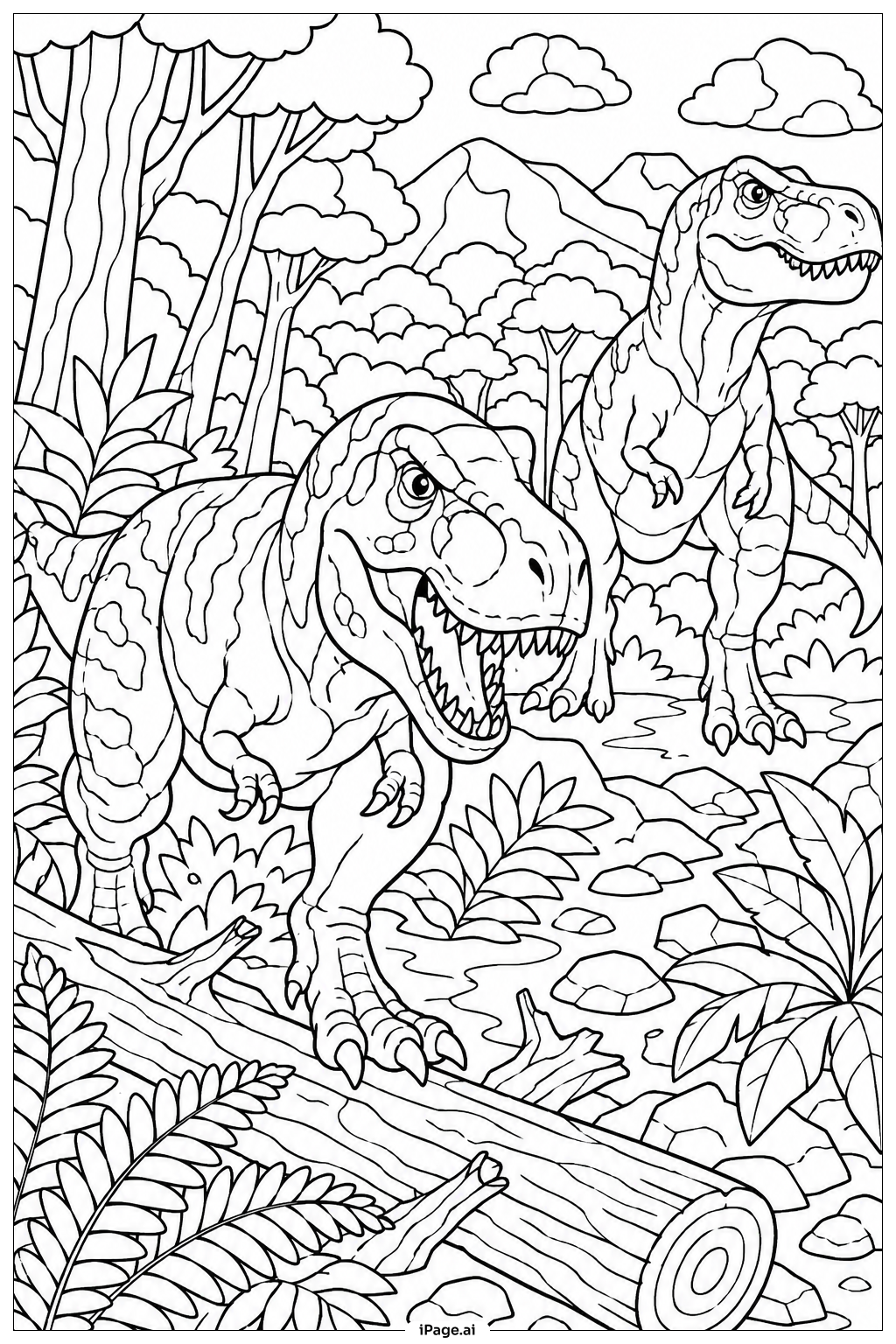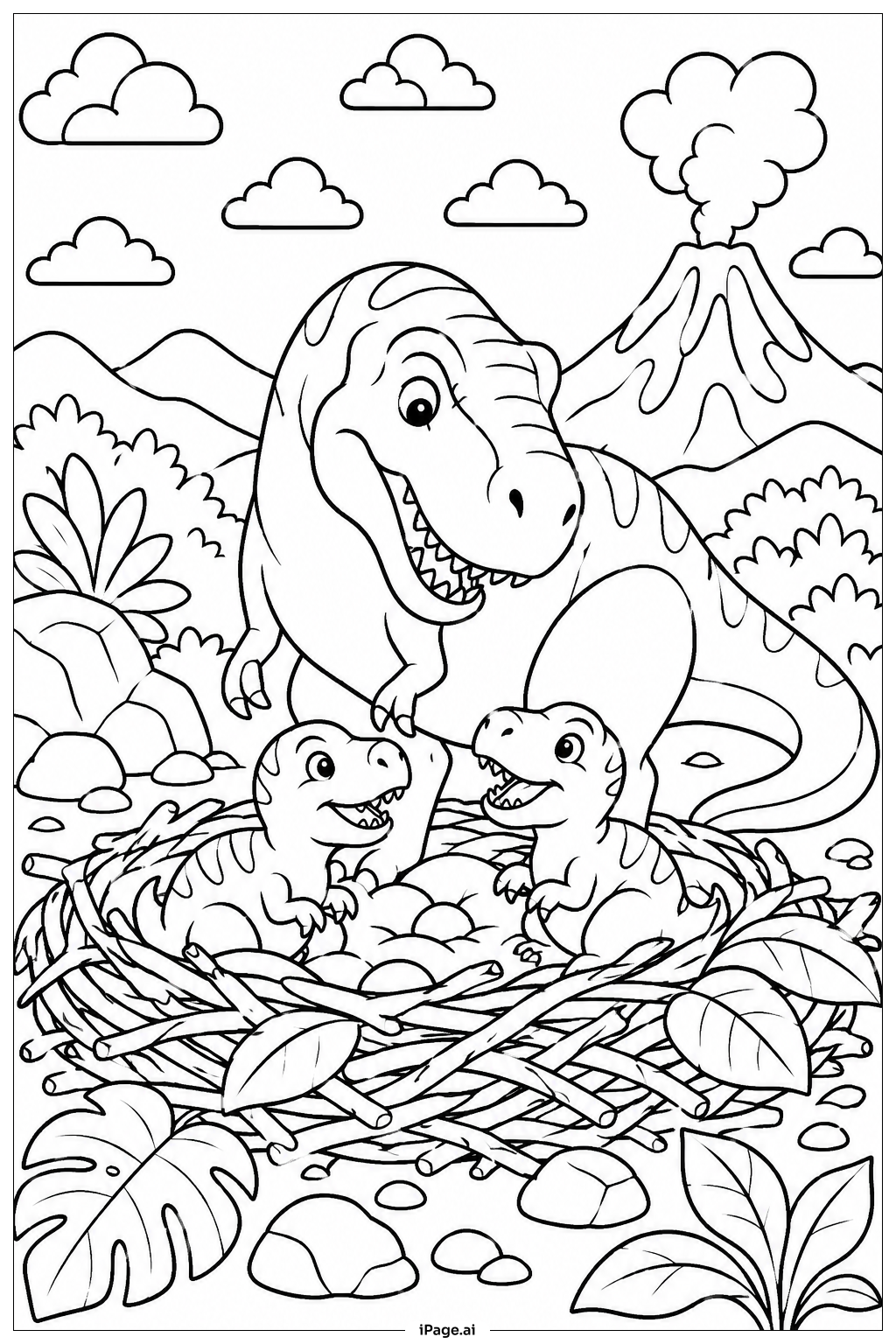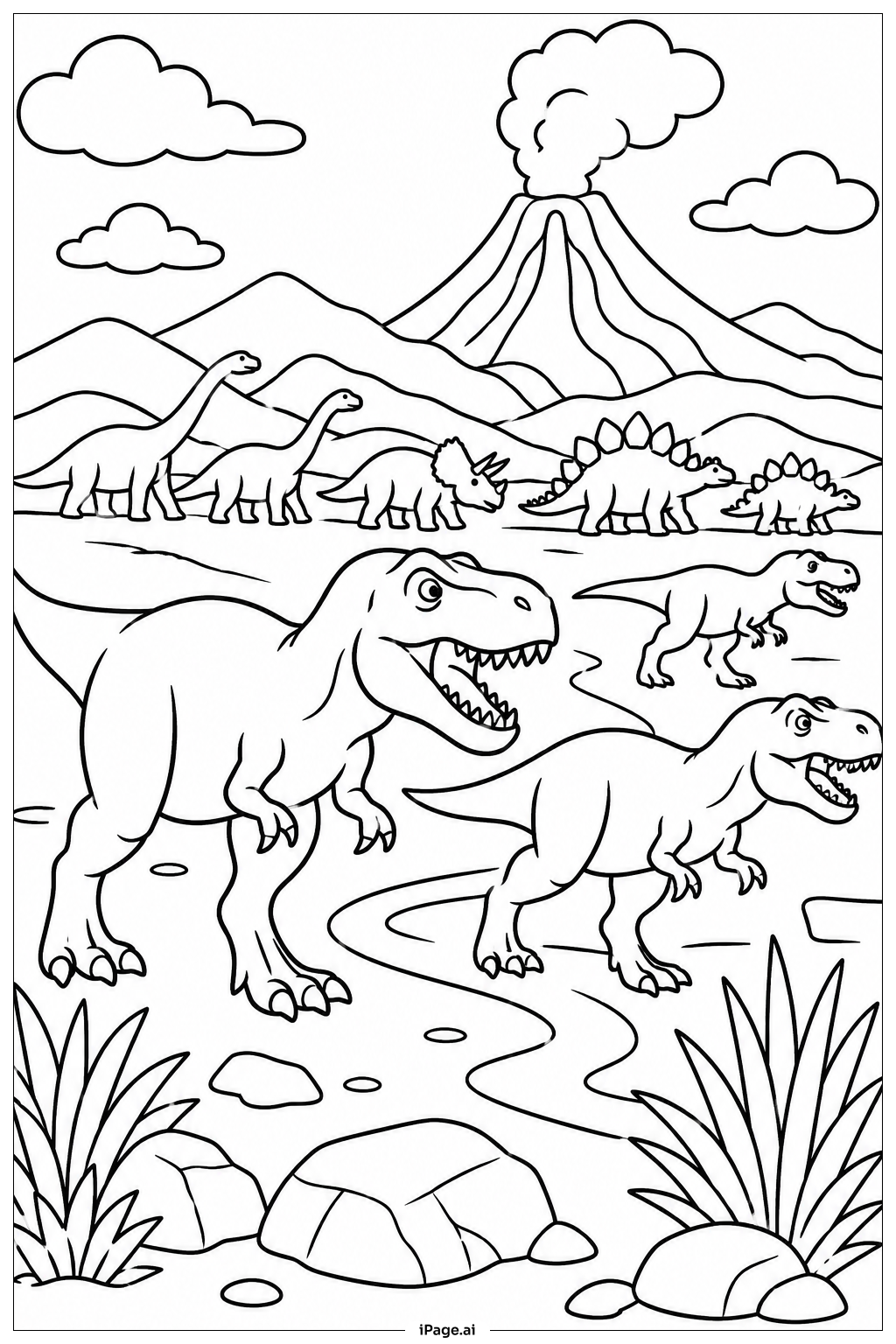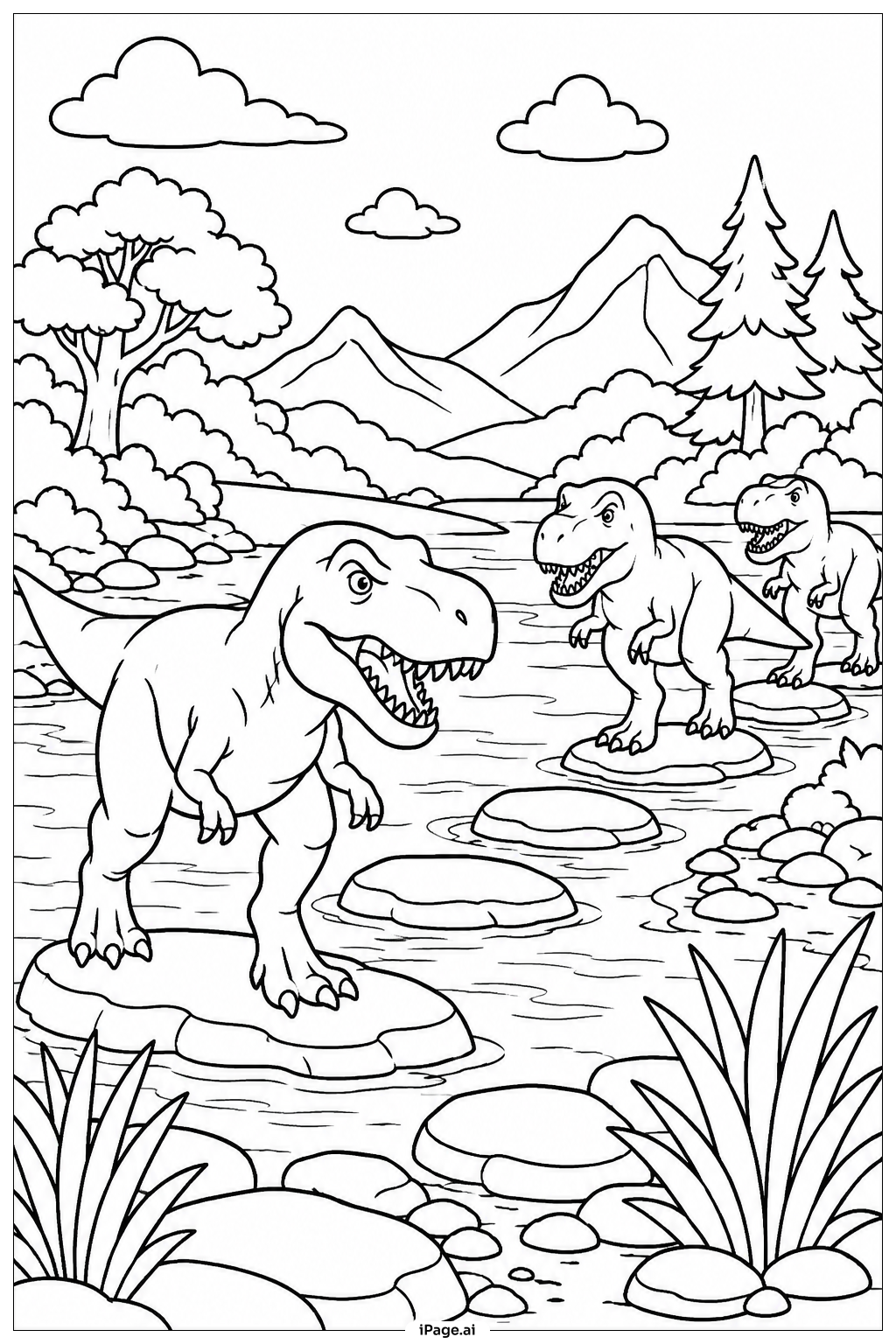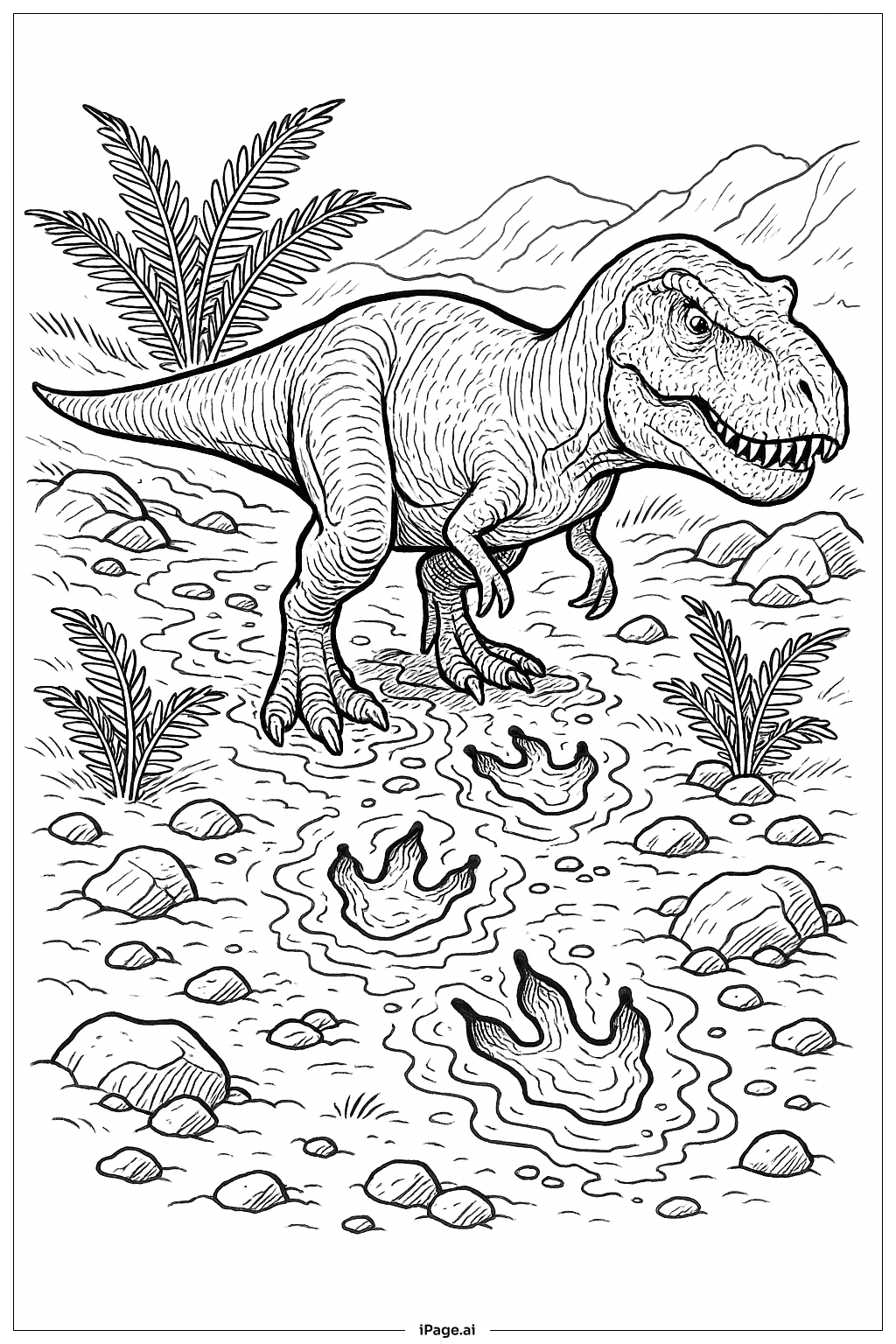
Coloring tips: How to color T Rex Tracking Footprints coloring page well?
Start with the T Rex itself using bold, prehistoric colors. Try greens, browns, or even vibrant oranges and reds for the body scales. Add darker shades along the back and lighter tones on the belly to create dimension. Color the teeth bright white or ivory, and give the eyes a fierce yellow or amber glow. For the footprints, use earthy browns or grays to make them look pressed into mud or dirt. The ground can be sandy beige, dusty brown, or even reddish clay. Add variety by shading around each footprint to show depth. Consider using colored pencils for fine details on the scales and markers for larger areas. You can make your T Rex realistic or fantastical with unexpected color combinations.
Coloring challenges: Which parts are difficult to color and need attention for T Rex Tracking Footprints coloring page?
• Scale Texture Details: The T Rex body features numerous small scales and texture lines that require patience and precision. Coloring each scale individually or creating a consistent pattern across the entire body can be time-consuming. Younger children may find it challenging to stay within these tiny spaces, while older colorists can use this opportunity to practice shading techniques and create realistic reptilian skin texture.
• Dimensional Shading: Creating a three-dimensional appearance on the dinosaur requires understanding of light sources and shadow placement. The muscular legs, rounded body, and large head all need different shading intensities to look realistic. Blending colors smoothly from dark to light areas takes practice and the right tools, making this particularly challenging for beginners who are still learning color gradation techniques.
• Footprint Depth Illusion: Making the footprints appear pressed into the ground requires special attention to shadow and highlight placement. The edges of each print need darker shading while the center might be lighter, and the surrounding ground needs subtle texture work. This creates a technical challenge in understanding how indentations work visually.
• Proportional Color Balance: Balancing colors between the large T Rex figure and the smaller footprints and background elements requires planning. If colors are too similar, elements blend together; if too contrasting, the composition feels disconnected. Choosing a cohesive color scheme that maintains visual interest across different-sized elements challenges intermediate colorists to think about overall composition.
Benefits of coloring books: Advantages of drawing T Rex Tracking Footprints coloring page
Coloring this T Rex tracking scene builds important developmental skills. Fine motor control improves as children carefully color within the detailed scales and small spaces, strengthening hand muscles needed for writing. The scene encourages storytelling imagination as kids wonder where the footprints lead and what the T Rex might discover. Learning about dinosaurs becomes more engaging through creative interaction. The varying difficulty levels across the image let children choose whether to focus on simple areas or challenge themselves with complex textures. Pattern recognition develops as they decide how to approach repetitive scales. Color theory practice happens naturally when mixing earth tones and deciding on realistic versus creative color schemes. The concentration required promotes mindfulness and relaxation, helping children practice patience and attention to detail in an enjoyable prehistoric adventure.