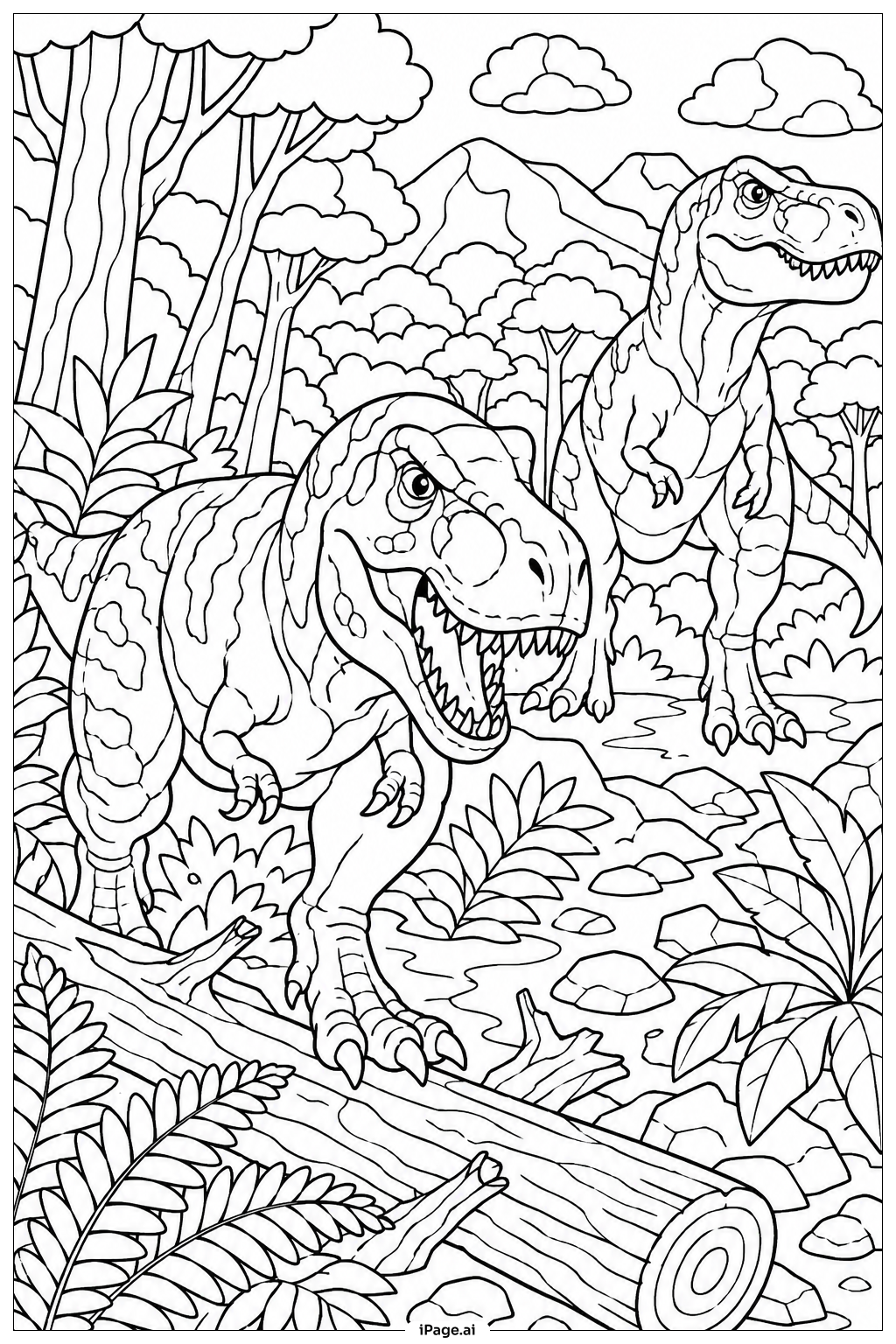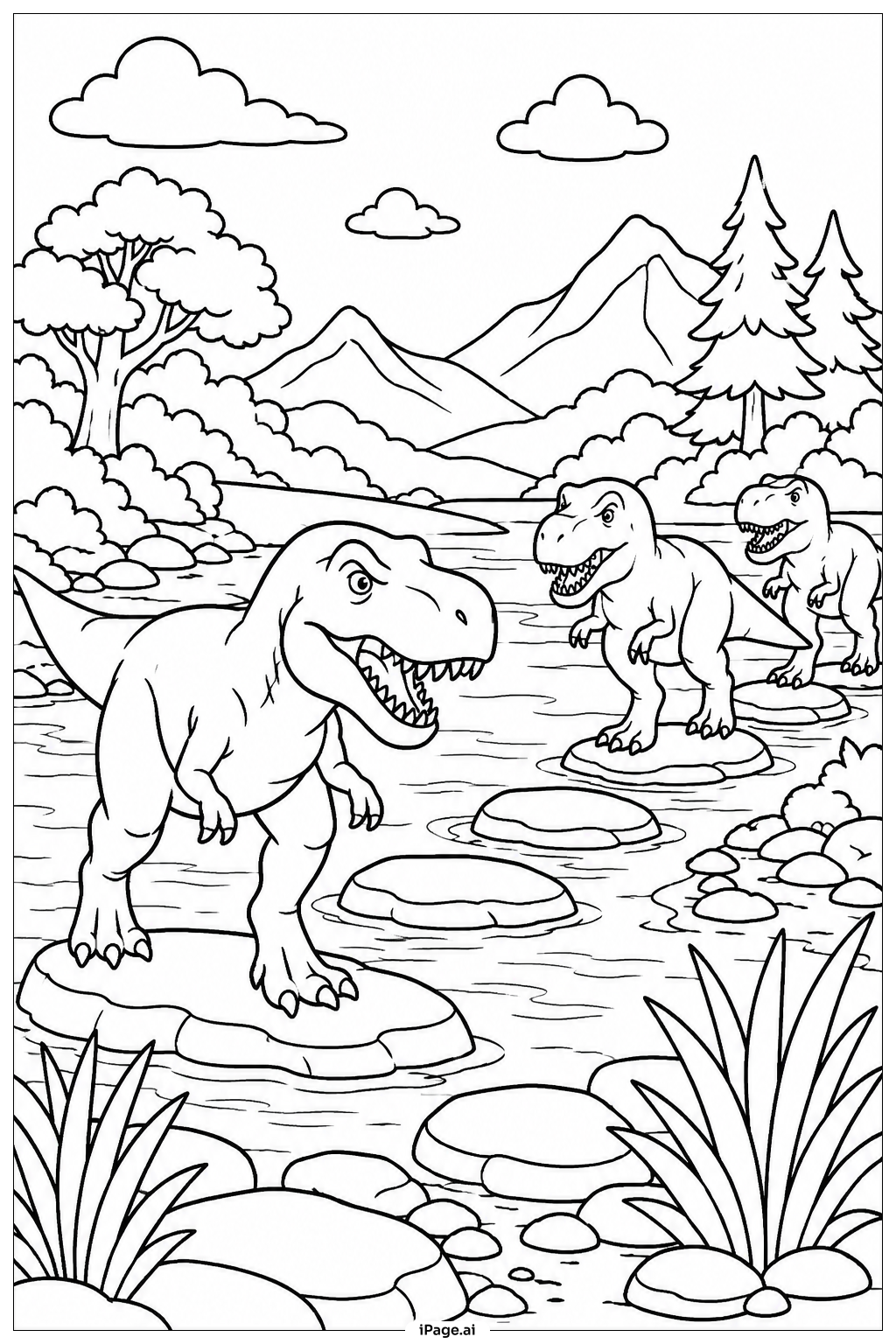
Coloring tips: How to color T Rex Crossing River Scene coloring page well?
Start with the T Rex's body and use warm earthy tones like dark green, olive brown, or muddy gray to bring the dinosaur to life. Add darker shading along the belly and underbelly folds to give it depth. For the river, use shades of blue and teal, with lighter streaks of white to show splashing water and foam around the dinosaur's legs. The riverbanks can be sandy tan or reddish-brown, and the rocks in the background look great in gray with hints of purple or blue shadow. Paint the jungle trees deep green with patches of lighter lime green for sunlit leaves. Use yellow or orange tones in the sky peeking through the canopy to suggest a warm prehistoric afternoon. Take your time layering colors for a more realistic and exciting result.
Coloring challenges: Which parts are difficult to color and need attention for T Rex Crossing River Scene coloring page?
• T Rex Skin Texture: The T Rex has a rough, scaly skin surface with many small bumps and folds. Staying within all the tiny texture lines without smudging takes patience and a sharp, fine-tipped coloring tool. Blending darker and lighter shades of the same color across the body is needed to make the skin look three-dimensional and realistic rather than flat.
• Moving Water and Splashes: The river water around the dinosaur's legs is full of dynamic splashes, ripples, and wave patterns. These irregular shapes are tricky to color because they require multiple shades of blue, white, and gray blended smoothly together. Leaving some areas white or very light helps create the illusion of foam and fast-moving current.
• Overlapping Elements: The T Rex's body overlaps with the river, rocks, and background jungle. Keeping each element visually distinct requires careful color selection so that, for example, the dark dinosaur body does not blend into the dark green trees behind it. Using contrasting tones at the edges of overlapping shapes helps define each layer clearly.
• Dense Background Foliage: The jungle trees and leaves in the background contain many overlapping shapes and fine lines. Coloring each leaf or branch individually would be very time-consuming, so a strategy of working in light-to-dark layers across sections of foliage works best. Mixing different greens adds variety and prevents the background from looking too uniform.
• Rock and Ground Details: The riverbed and banks feature scattered rocks, pebbles, and uneven ground. Each rock benefits from multiple gray or brown tones with a highlight on one side and a shadow on the other to look solid and round, which can be challenging for younger colorists.
Benefits of coloring books: Advantages of drawing T Rex Crossing River Scene coloring page
Coloring the T Rex Crossing River Scene offers a wonderful mix of fun and learning for kids and young artists. Filling in the powerful dinosaur and the rushing river helps build fine motor skills as children carefully guide their crayons or markers along detailed lines and curves. Choosing colors for the T Rex's skin, the splashing water, and the jungle background encourages creative thinking and artistic decision-making. Kids get to experiment with blending and shading, learning how lighter and darker versions of the same color can make a picture look alive and full of depth. The exciting prehistoric theme naturally sparks curiosity about dinosaurs, rivers, and ancient ecosystems, making this a great starting point for learning about natural history. Completing a complex, action-filled scene like this builds patience and concentration, as children must focus carefully to stay within lines and work through multiple sections of the image. Finishing the page gives a strong sense of personal achievement and pride, boosting confidence and encouraging kids to take on more creative challenges. Overall, this coloring page turns screen-free time into an engaging, educational, and genuinely rewarding experience.