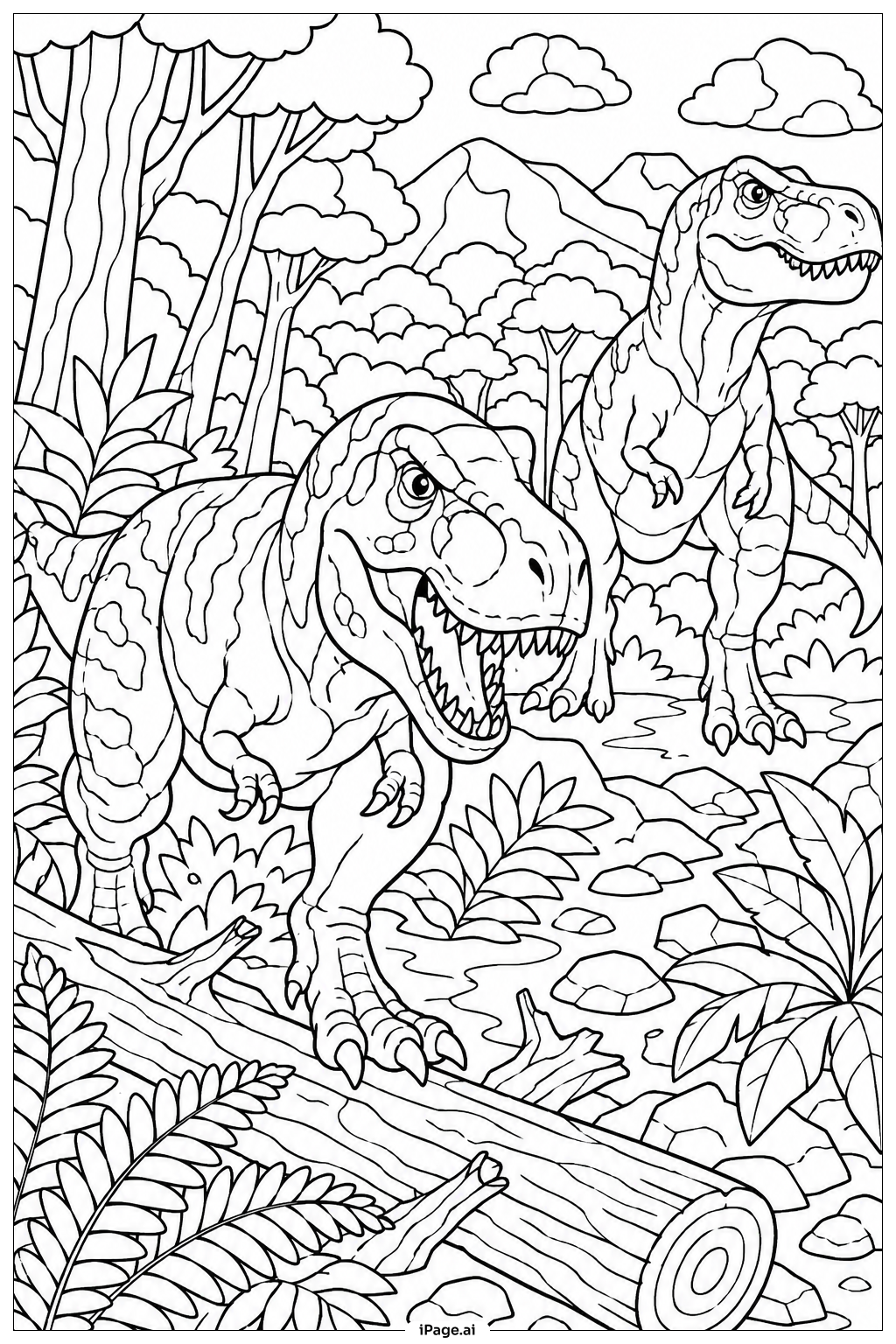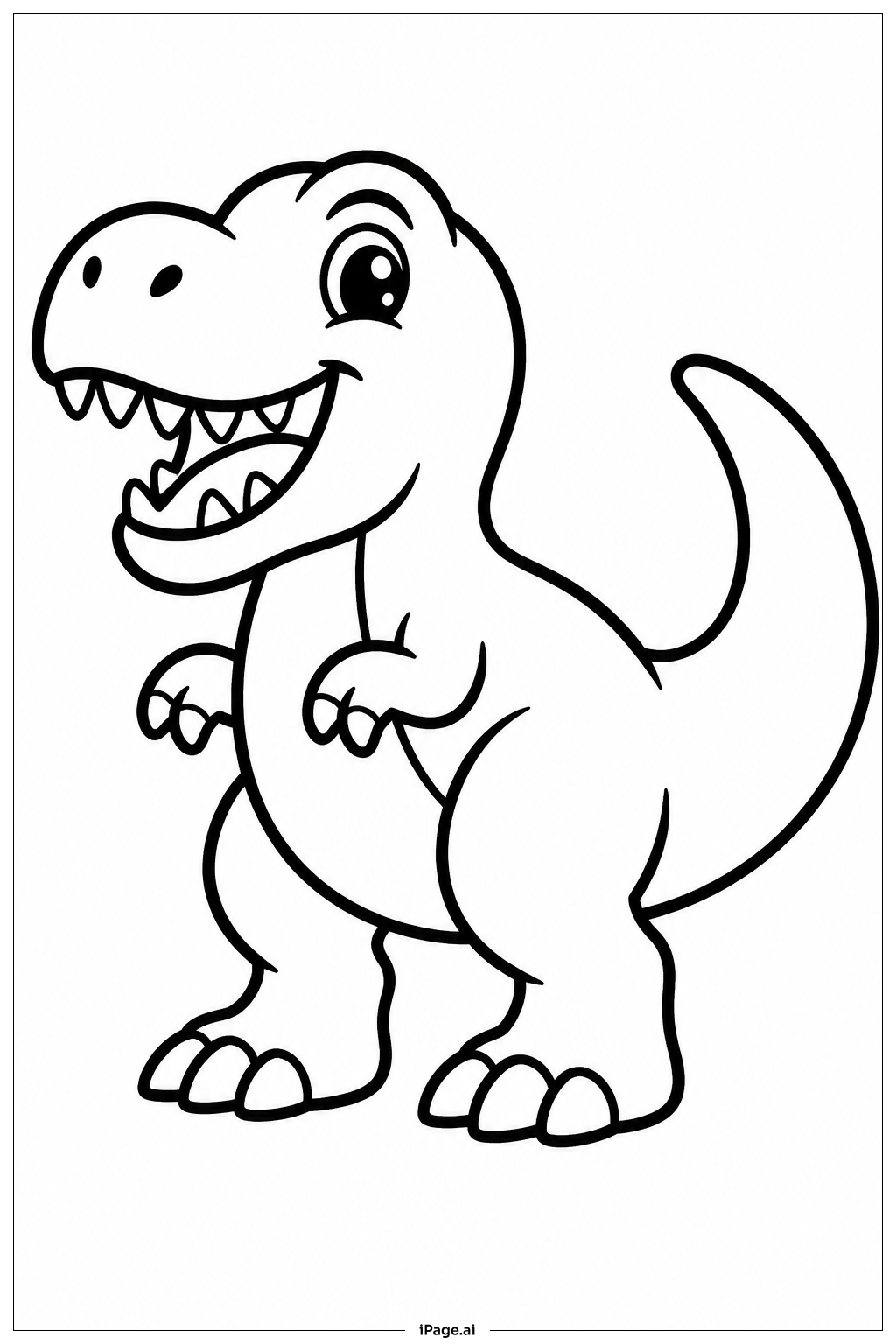
Coloring tips: How to color T Rex Tail Curve coloring page well?
Start with the base of the tail and work your way toward the tip. Use deep greens or earthy browns for the main body of the tail to give it a realistic dinosaur look. Add darker shades of the same color along the underside and between scale rows to create shadows and depth. Use a lighter version of your base color along the top ridge to show where light hits the tail. For a more creative look, try mixing greens and grays, or even go bold with blue-greens and purples. Younger kids can use a single color and focus on staying inside the lines. Older kids can try blending two or three shades to make the scales look three-dimensional. Add small highlights with a white or light yellow pencil to make the scales pop. Take your time with the texture — the scales are the most fun part of this image to color.
Coloring challenges: Which parts are difficult to color and need attention for T Rex Tail Curve coloring page?
• Scale Texture Consistency: The tail is covered in dozens of overlapping scales of varying sizes. Keeping a consistent color pattern across all of them takes patience. If you change shades too often, the scales may look uneven. Try coloring all the scales in one base color first, then go back and add shading to individual ones.
• Curved Shape Shading: Because the tail curves, the light and shadow fall differently on each part. The outer curve catches more light, while the inner curve sits in shadow. Capturing this effect with colored pencils or markers requires careful blending and an understanding of basic light direction.
• Ridge Detail Along the Top: The bumpy ridge running along the top of the tail is a narrow, detailed area. Using a thick marker or crayon here can easily cover the outline or bleed into neighboring sections. A fine-tipped tool works best for this part.
• Tapering Scale Size: Near the tip of the tail, the scales become much smaller and closer together. Coloring these tiny shapes neatly is one of the trickiest parts of this page. Young children may find it easier to simply fill in the tip area with one smooth color rather than trying to color each tiny scale separately.
• Maintaining Color Harmony: Because the tail is one continuous body part, all your color choices need to feel connected. Switching to a completely different color halfway down the tail can make it look disconnected. Plan your color palette before you start to keep the whole tail looking like it belongs to the same creature.
Benefits of coloring books: Advantages of drawing T Rex Tail Curve coloring page
Coloring this T Rex tail page offers a great mix of fun and learning. The detailed scale patterns help kids practice fine motor skills, training their hands to make small, careful movements with crayons or colored pencils. This kind of focused hand work builds the muscle control that helps with writing and drawing too.
The curved shape of the tail teaches kids to think about shading and light, which are early art concepts that grow creativity and visual thinking. Choosing colors and deciding how to shade the scales encourages imaginative thinking and personal expression.
For older kids, this page is a calm and rewarding activity that builds concentration and patience. Completing a detailed image like this gives a strong sense of accomplishment.
For younger children, simply filling in the big open areas of the tail is satisfying and confidence-building. It also sparks curiosity about dinosaurs, which can lead to questions, reading, and learning about prehistoric life.
Overall, this coloring page combines artistic practice with a love of nature and science, making it a fun and enriching activity for kids of all ages.