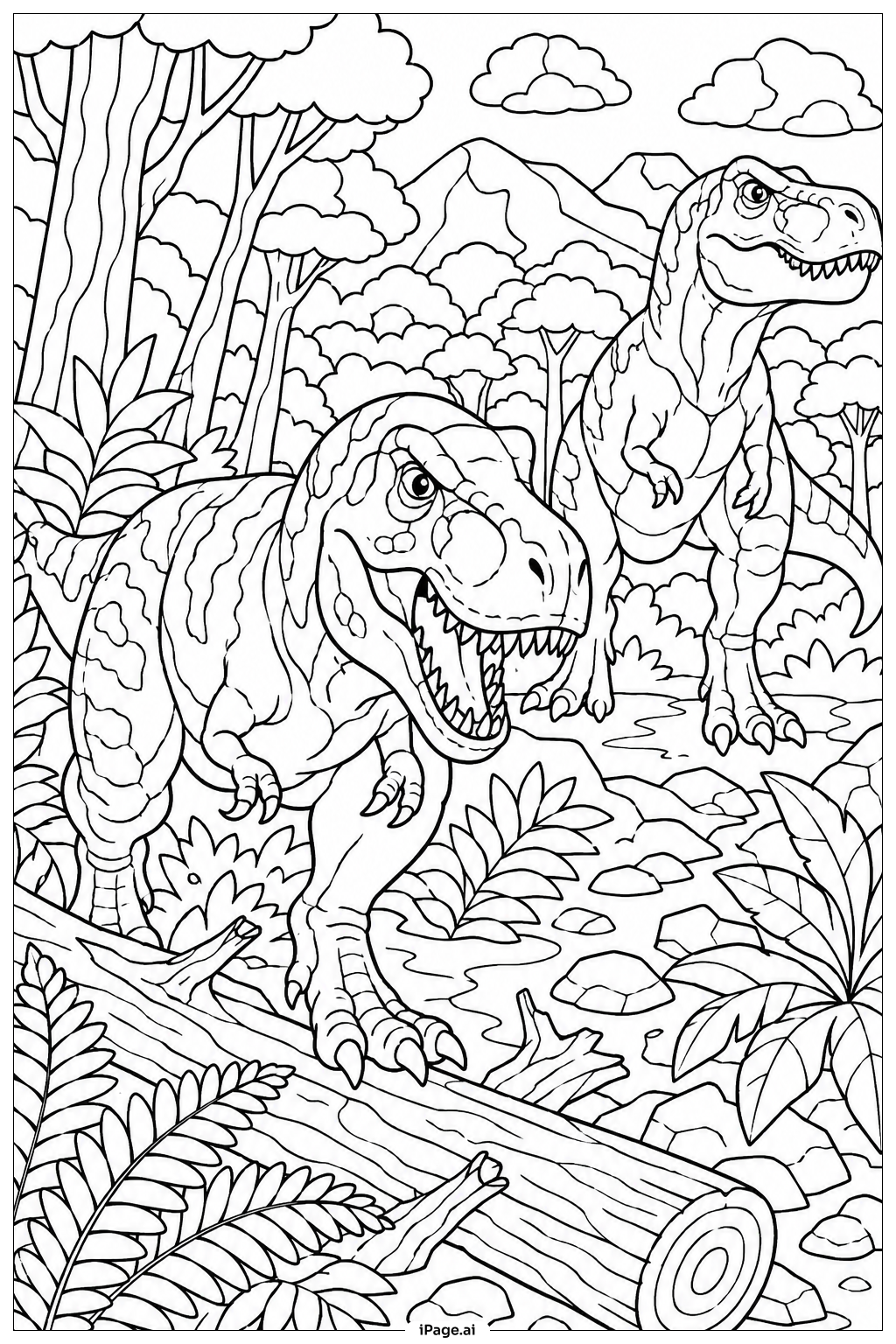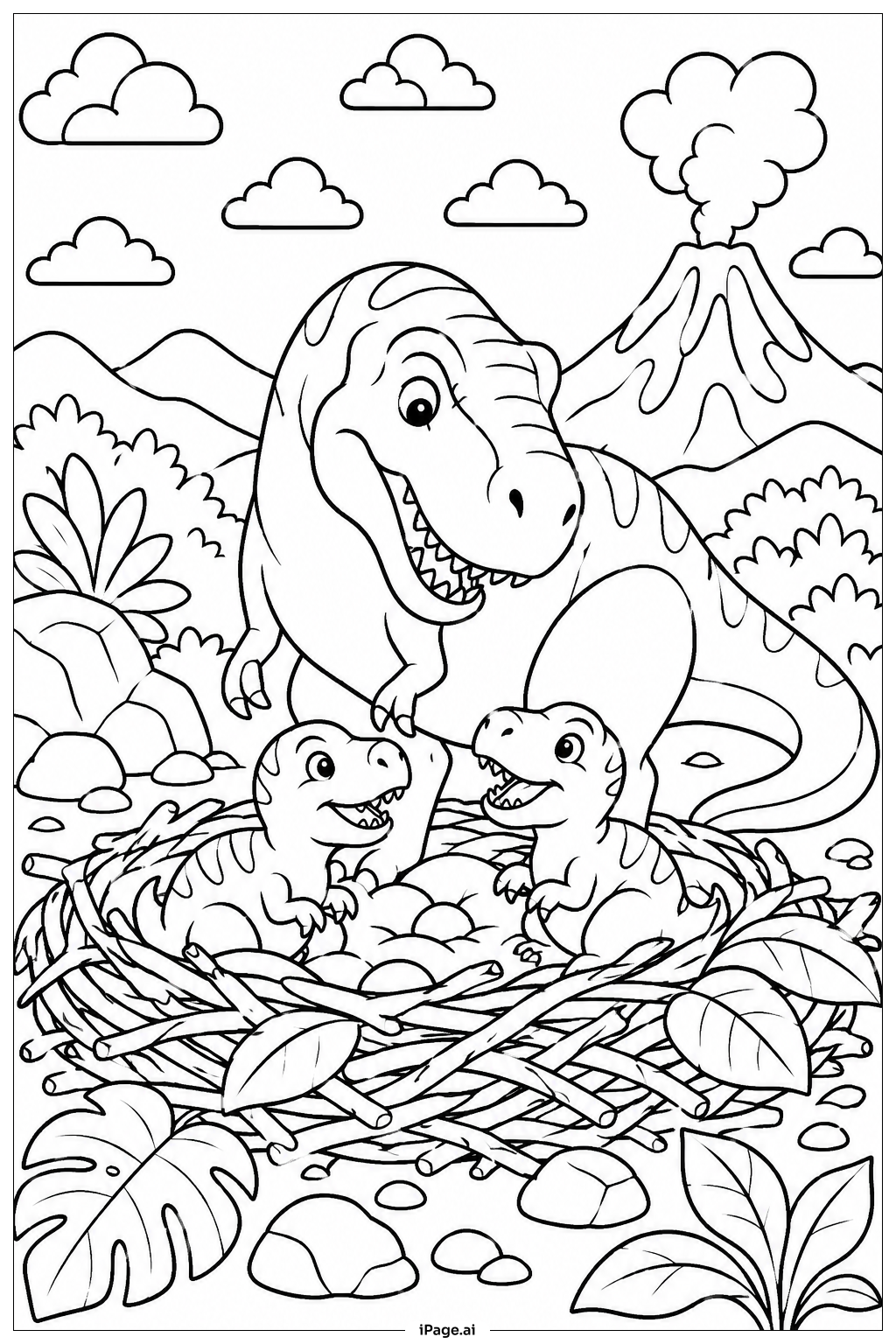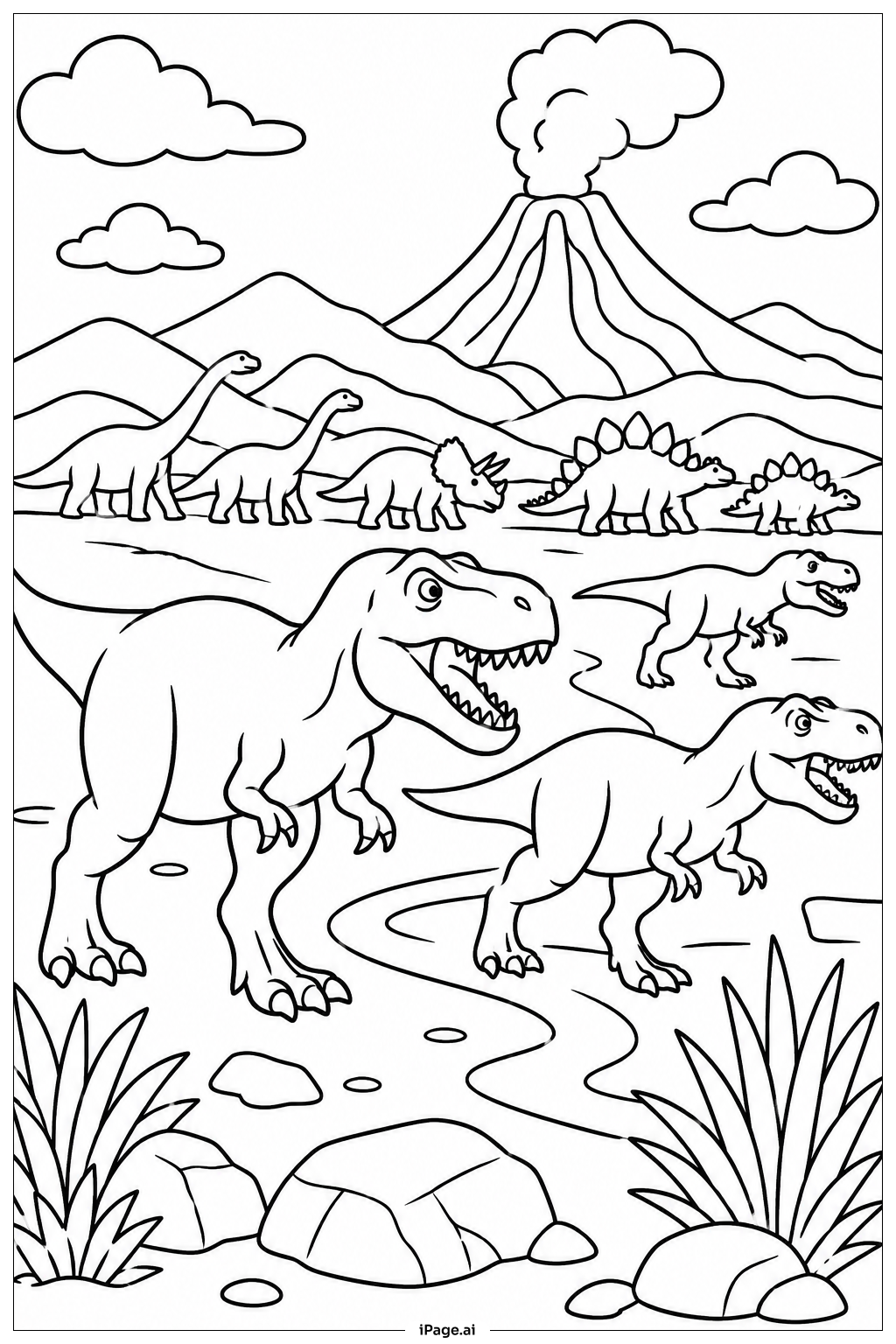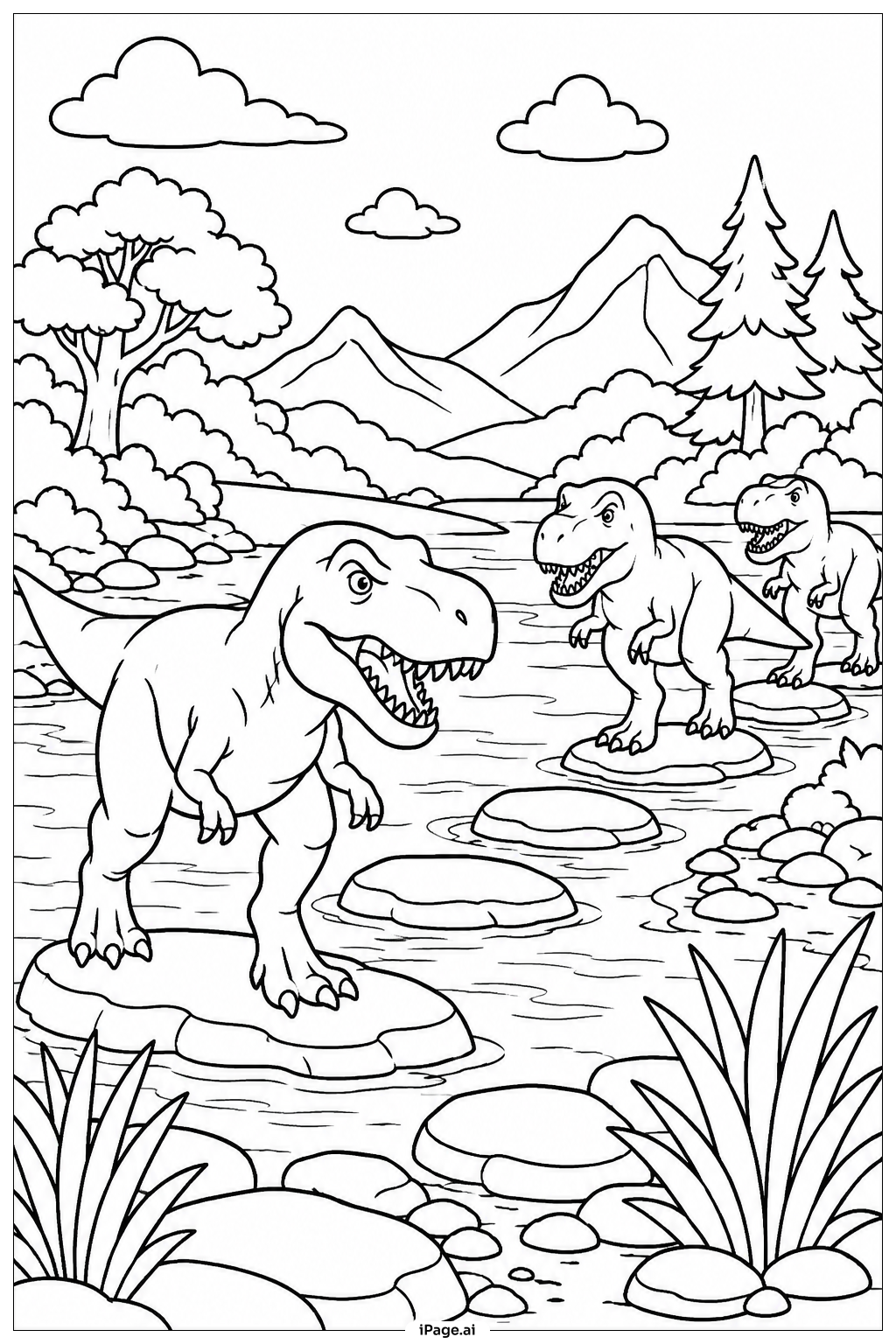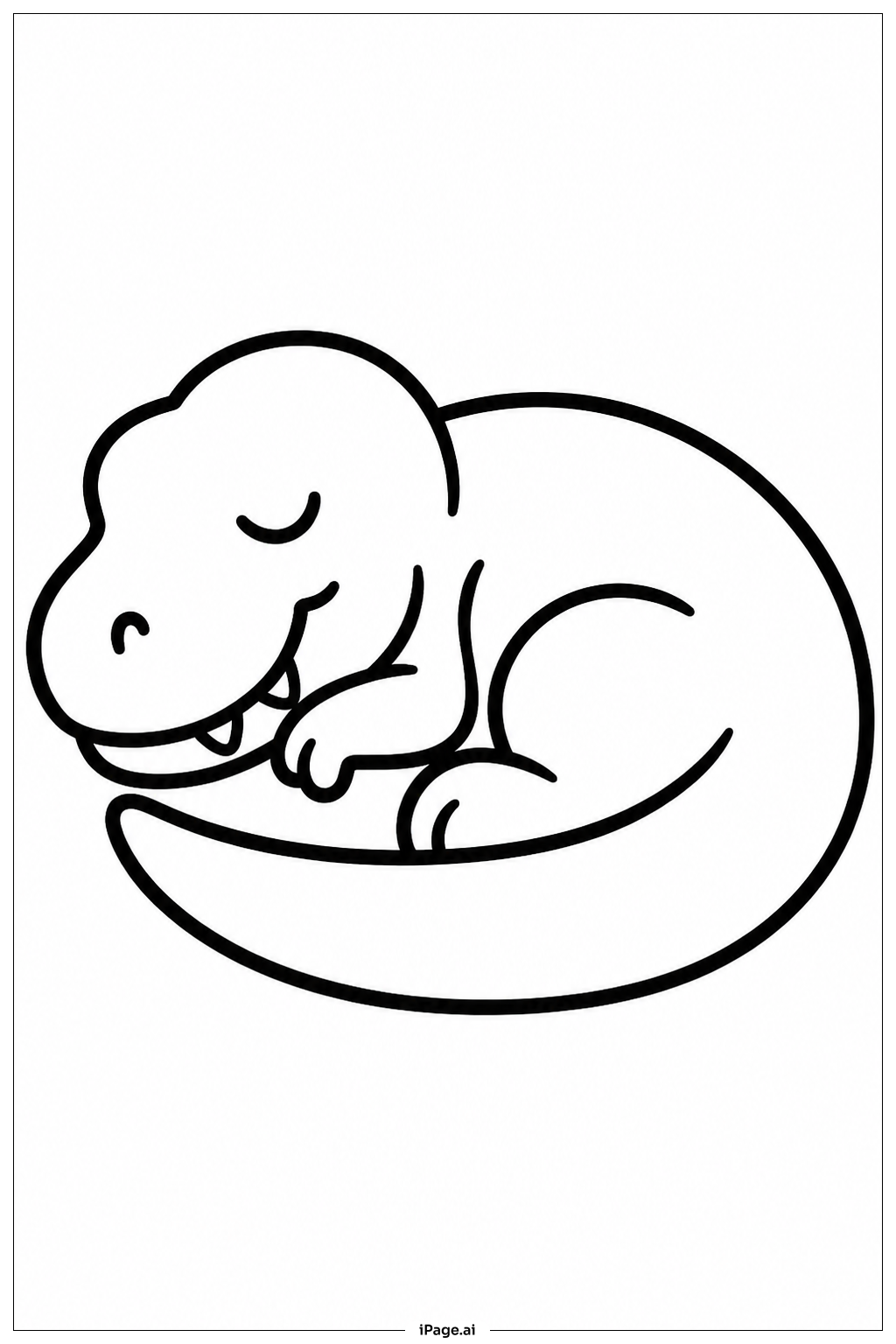
Coloring tips: How to color T Rex Sleeping coloring page well?
Start with the body of the T Rex. Use shades of green, olive, or brown for the skin. You can mix light and dark tones to show the bumpy texture. Add darker green or gray along the back and sides to create depth and shadow. Use a lighter color on the belly to make it look soft. Color the claws with gray or dark brown. For the eyes, try a light yellow or keep them closed with a soft skin tone. Add a warm orange or red inside the mouth if it is slightly open. You can make the background sandy brown or grassy green to show where the T Rex is resting. Feel free to use your favorite colors to make your T Rex unique and fun. There are no wrong choices. Use bright, bold colors if you want an exciting look, or soft, muted tones for a dreamy, sleepy feel.
Coloring challenges: Which parts are difficult to color and need attention for T Rex Sleeping coloring page?
• Skin Texture Details: The T Rex body is covered in bumpy, scaly skin with many small raised sections. Coloring each bump individually takes patience. Try using a base color first, then add darker shading around each bump to make the texture pop without going outside the outlines.
• Body Shading and Depth: Because the dinosaur is lying down, parts of its body curve and overlap. Adding light and shadow helps the figure look three-dimensional. The top of the back should be darker, while the underside and belly should be lighter. Blending two or three similar colors together can be tricky for younger colorists.
• Small Claw Details: The T Rex has short arms and thick legs with sharp, curved claws. These areas are small and close together, making it hard to stay inside the lines. Using a fine-tipped colored pencil or thin marker works best in these tight spots.
• Facial Expression: The sleeping face includes closed eyes, wrinkled skin around the snout, and possibly a slightly open mouth showing teeth. Coloring the face requires care so the expression still looks peaceful and sleepy. Too much dark color near the eyes can make the dinosaur look fierce instead of restful.
• Background Integration: If you choose to add a background, blending it naturally with the resting T Rex can be challenging. Making sure the ground color does not clash with the dinosaur's body color is important for a balanced and pleasing final result.
Benefits of coloring books: Advantages of drawing T Rex Sleeping coloring page
Coloring this T Rex Sleeping page offers many great benefits for kids of all ages. It helps children practice focus and patience as they carefully fill in the details of the large dinosaur body. Staying inside the lines and choosing colors builds fine motor skills and hand-eye coordination, which are important for writing and other everyday tasks.
This image also sparks creativity. Kids can choose any colors they like, experiment with shading, or even invent a brand-new dinosaur color pattern. There are no rules, so every finished page is one of a kind.
Learning about dinosaurs while coloring makes the activity educational too. Children can talk about what T Rex looked like, how big it was, and what it might have been like to see one resting. This encourages curiosity and storytelling.
The peaceful sleeping pose of the T Rex makes this page especially calming. Coloring slow, smooth shapes and rounded lines can help children relax and reduce stress. It is a great quiet-time activity before bed or during a calm part of the day.
Most importantly, finishing the page gives children a real sense of pride and accomplishment. Displaying their colorful T Rex art builds confidence and encourages them to keep creating.