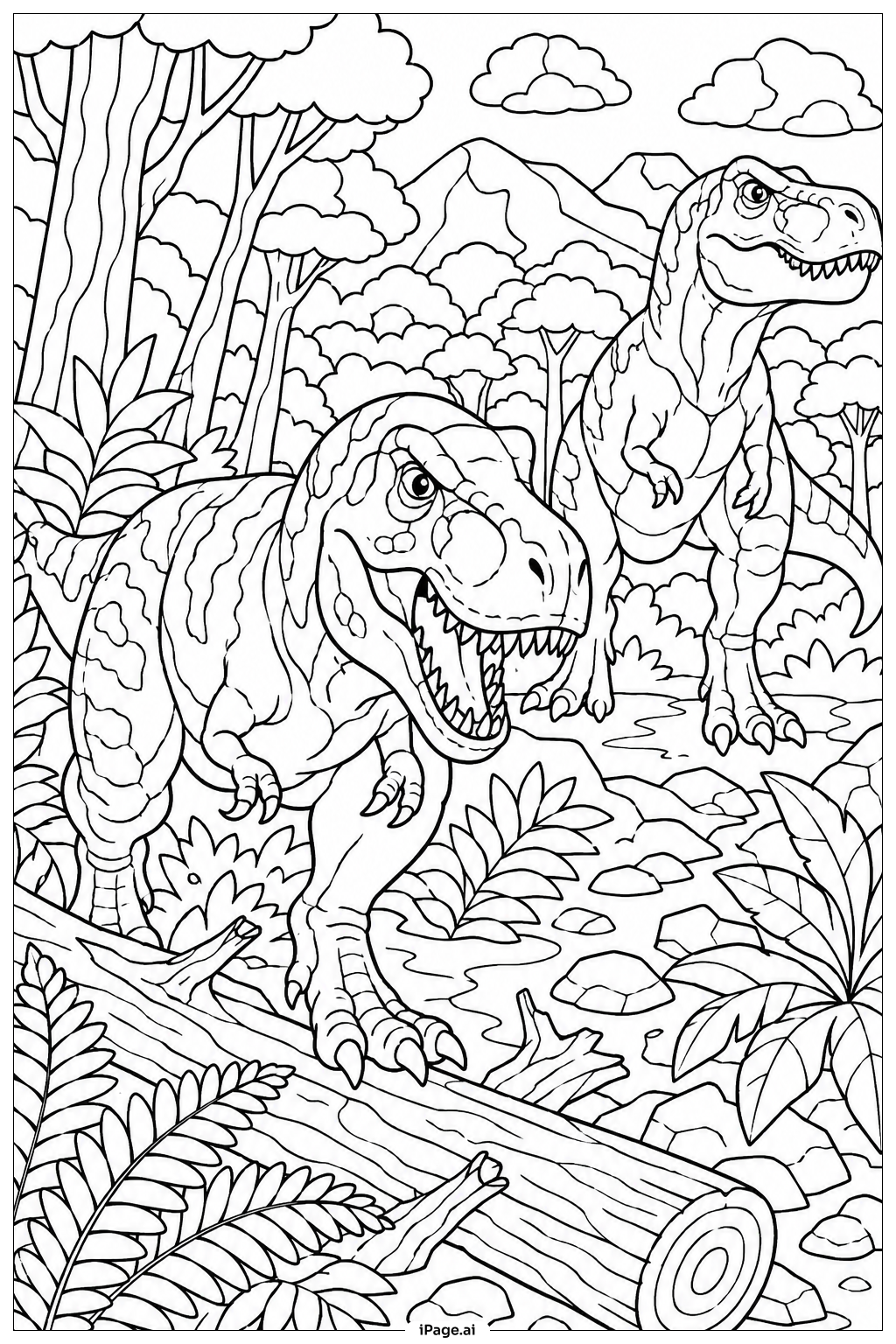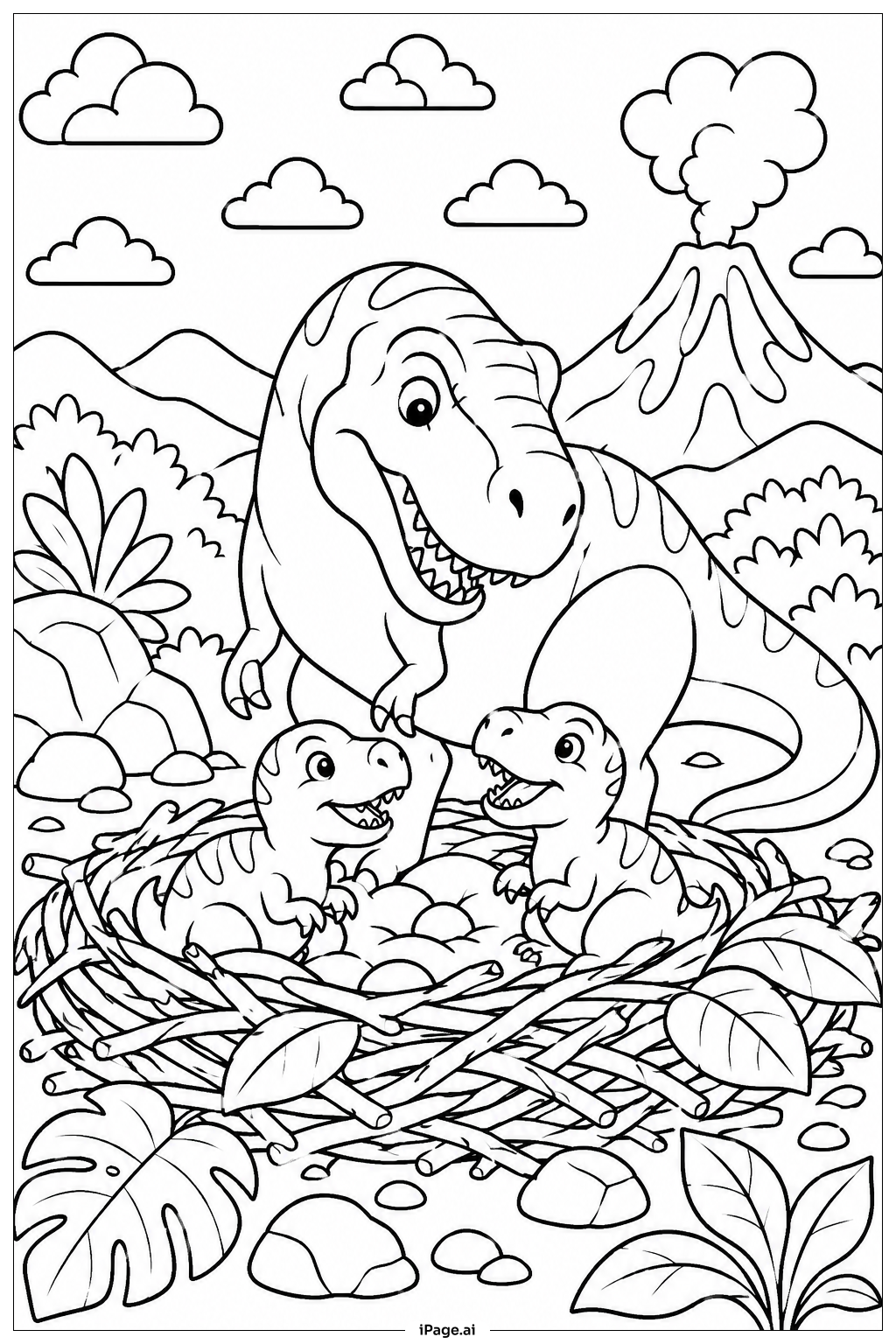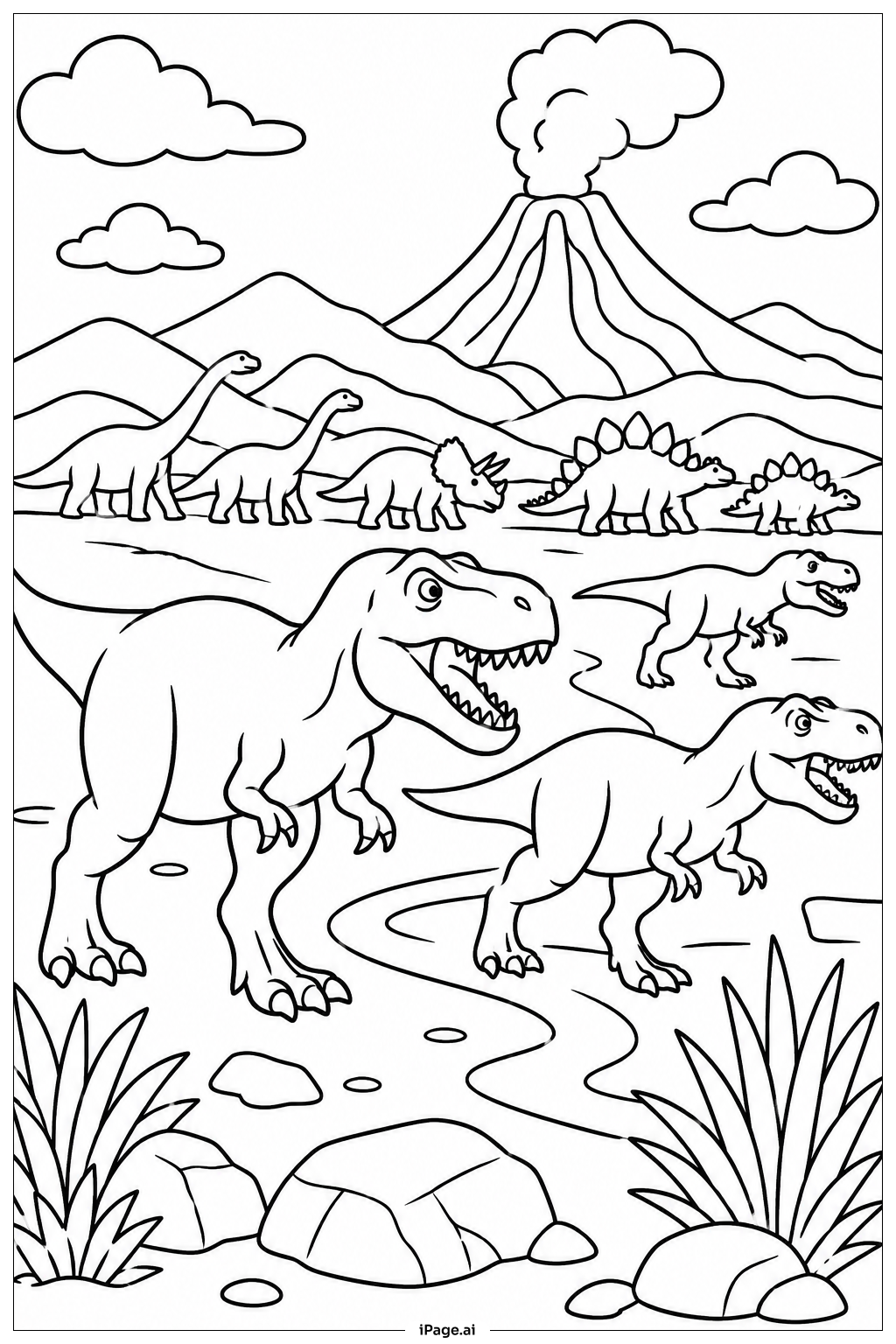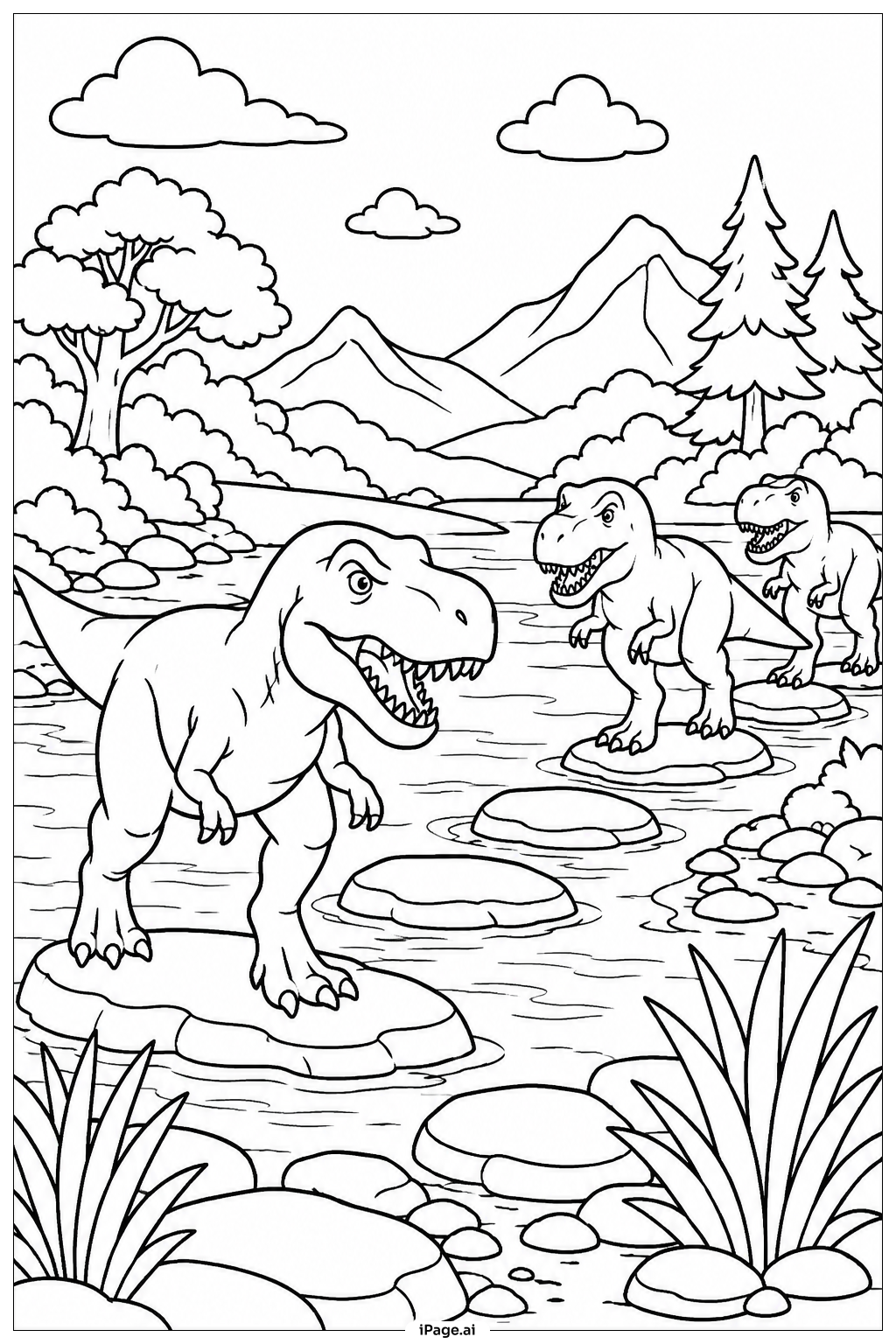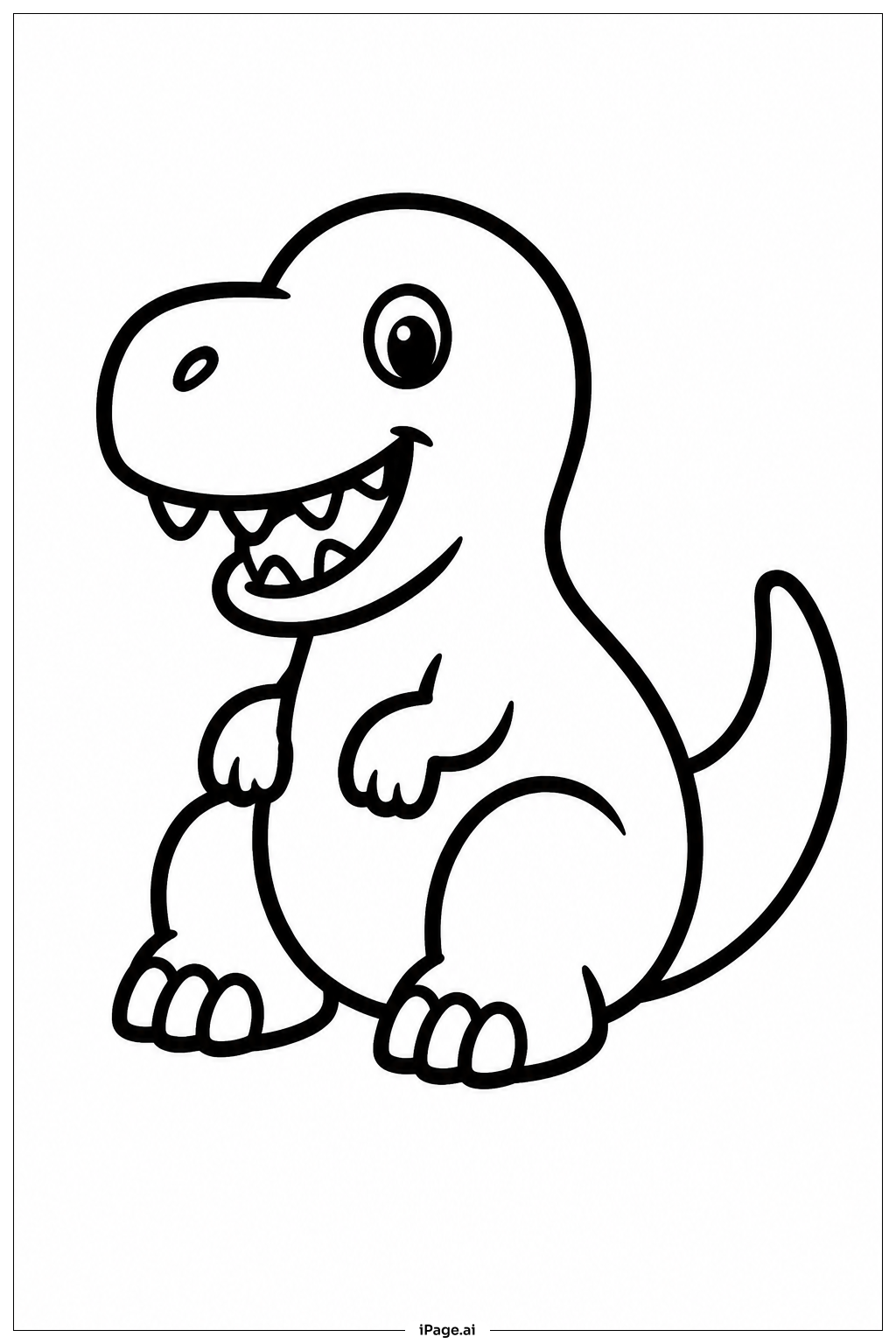
Coloring tips: How to color T Rex Sitting coloring page well?
Start with the body of the T Rex. Most T Rex dinosaurs are shown in shades of green, brown, or gray. You can use dark green for the back and top of the head, and a lighter tan or cream color for the belly area. Add some yellow or olive tones to create a natural, earthy look. Use a darker shade to color the wrinkles and skin folds so they stand out. For the eyes, try bright yellow or orange with a dark pupil to give the T Rex a fierce look. The teeth can be white or pale yellow, and the inside of the mouth can be pink or red. Feel free to get creative — some kids love coloring their T Rex in bold colors like blue, purple, or even rainbow patterns. There are no wrong choices. Use darker shades along the edges of the body to add depth and make the dinosaur look three-dimensional. Have fun and make your T Rex unique.
Coloring challenges: Which parts are difficult to color and need attention for T Rex Sitting coloring page?
• Skin Texture Details: The T Rex's body is covered in many small scales, bumps, and wrinkles. Coloring these tiny details evenly without going outside the lines can be tricky, especially in the neck and belly areas. Using a sharp colored pencil tip will help you stay precise in these tight spots.
• Shading and Depth: The T Rex has a large, rounded body with curved surfaces. Adding shading to show light and shadow on the dinosaur can be challenging for younger colorists. Try pressing harder with your pencil on the darker areas and lighter on the parts where the light would hit, such as the top of the head and back.
• The Tiny Front Arms: The T Rex has very small front arms compared to the rest of its huge body. These small limbs have little space to color inside, making it hard to fill them neatly without smudging into the body or background. A fine-tipped coloring tool works best here.
• The Mouth and Teeth: The open mouth area includes sharp teeth, a tongue, and the inside of the jaw. These sections are close together and require careful color changes between white teeth, pink gums, and a darker mouth interior. Switching between small tools is helpful to avoid mixing colors accidentally.
• Tail and Ground Contact: The curved tail stretches behind the T Rex and may overlap with the ground or background area. Keeping the tail color separate from any ground or shadow colors requires patience and attention to the outline boundaries.
Benefits of coloring books: Advantages of drawing T Rex Sitting coloring page
Coloring this T Rex Sitting page offers many great benefits for kids and dinosaur fans of all ages. First, it helps improve fine motor skills. Carefully coloring inside the lines of the scales, teeth, and small arms strengthens hand muscles and builds better pencil control, which is great for writing and drawing. Second, it encourages creativity and self-expression. Kids can choose any colors they like, from realistic greens and browns to wild and imaginative combinations. This freedom helps build confidence in making creative decisions. Third, it teaches focus and patience. The detailed textures on the T Rex's body require slow, careful coloring, which helps children practice concentration and sitting still for longer periods. Fourth, it sparks curiosity about dinosaurs and science. Coloring a T Rex can inspire kids to ask questions about what dinosaurs really looked like, what they ate, and when they lived. This natural curiosity supports learning beyond the coloring page. Finally, coloring is a calming and enjoyable activity that reduces stress and provides a sense of accomplishment when the page is complete. It is a wonderful, screen-free way to have fun and learn at the same time.