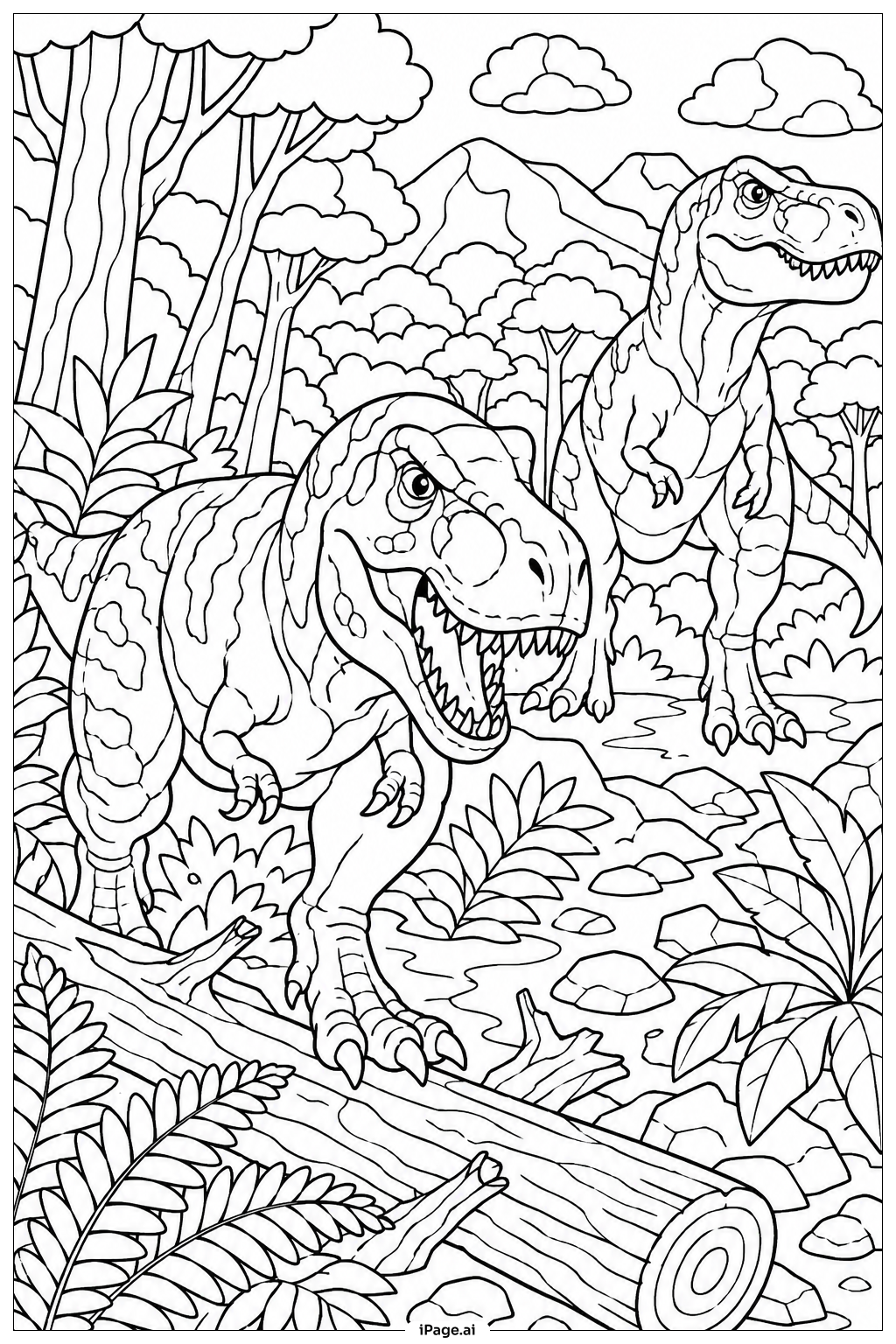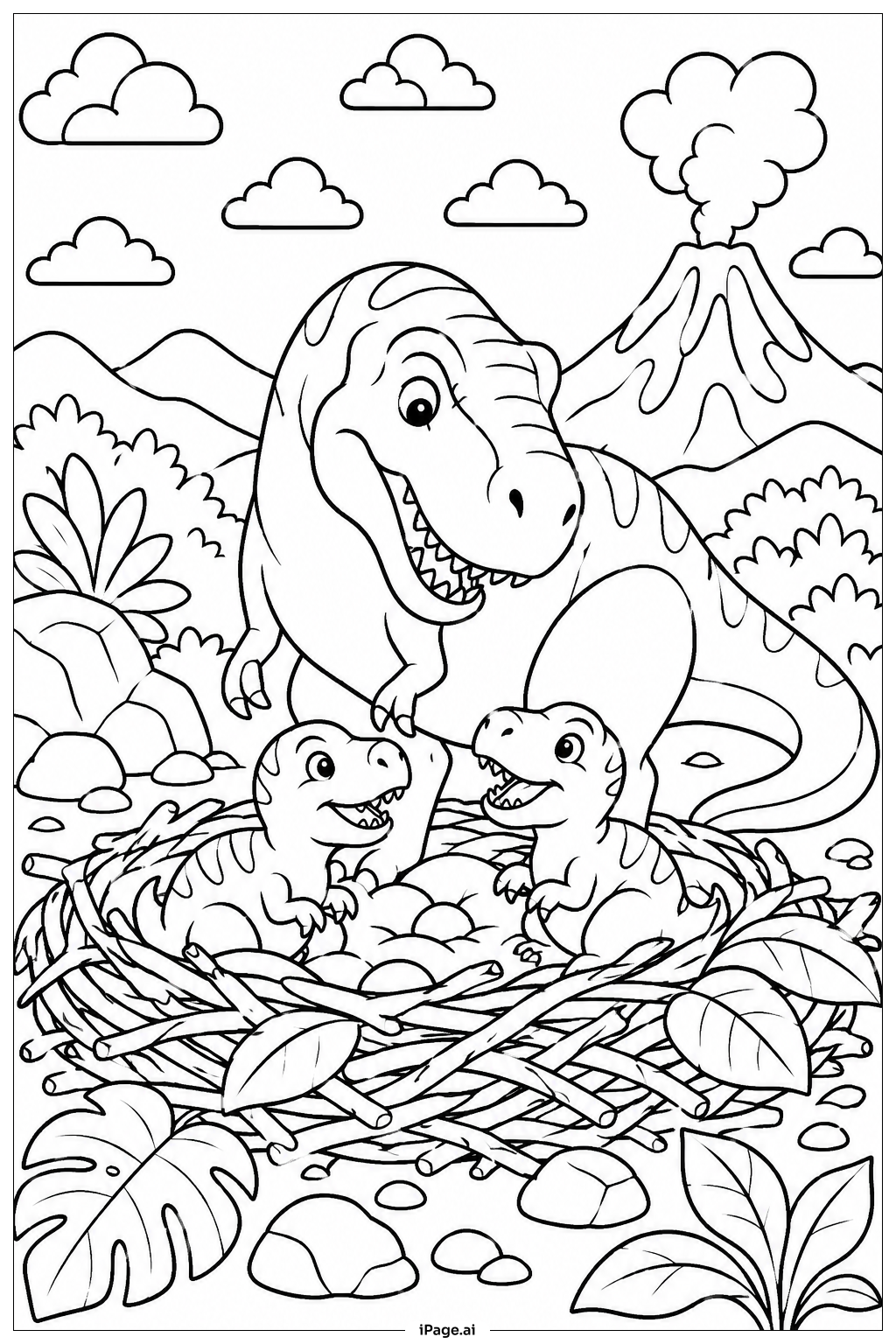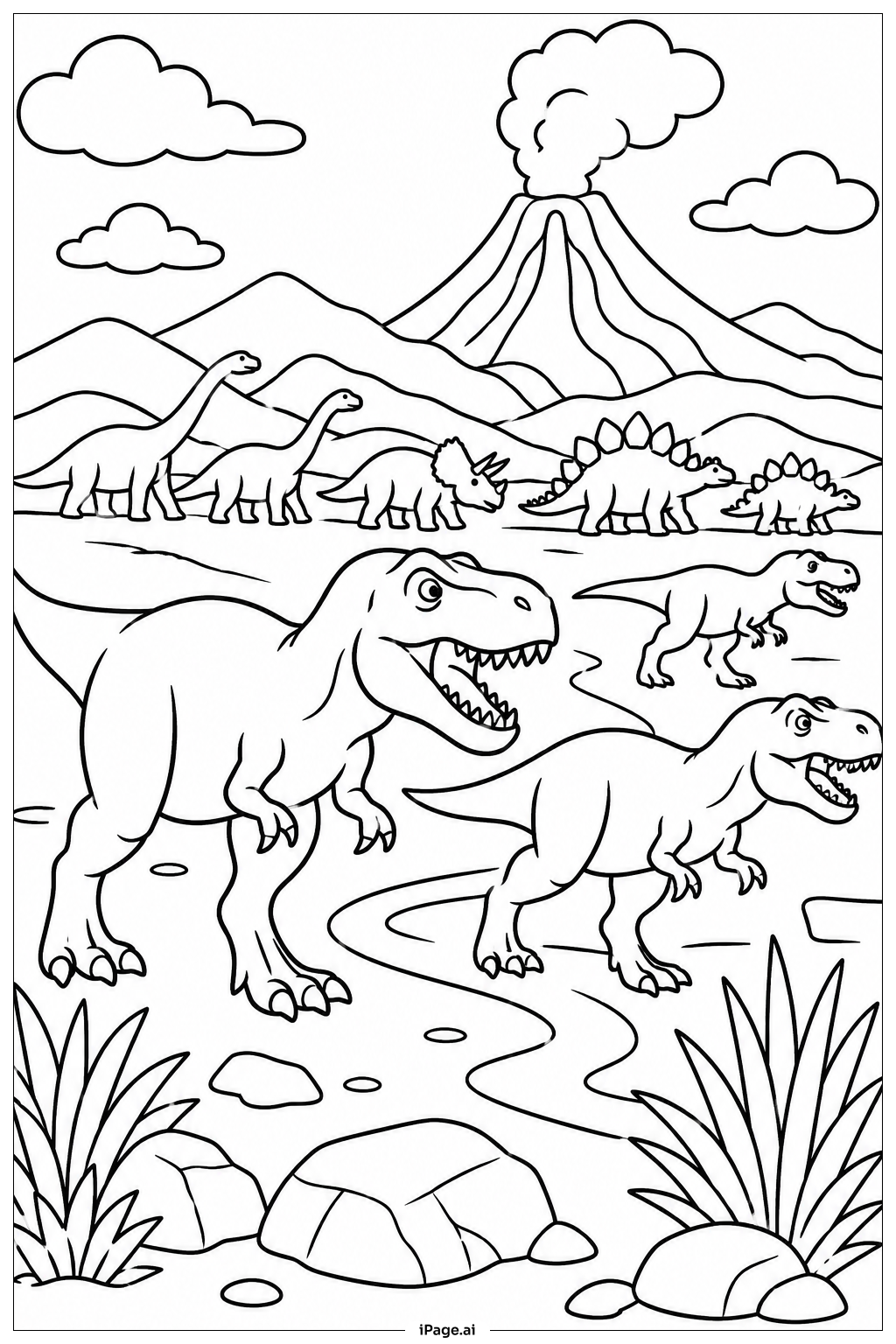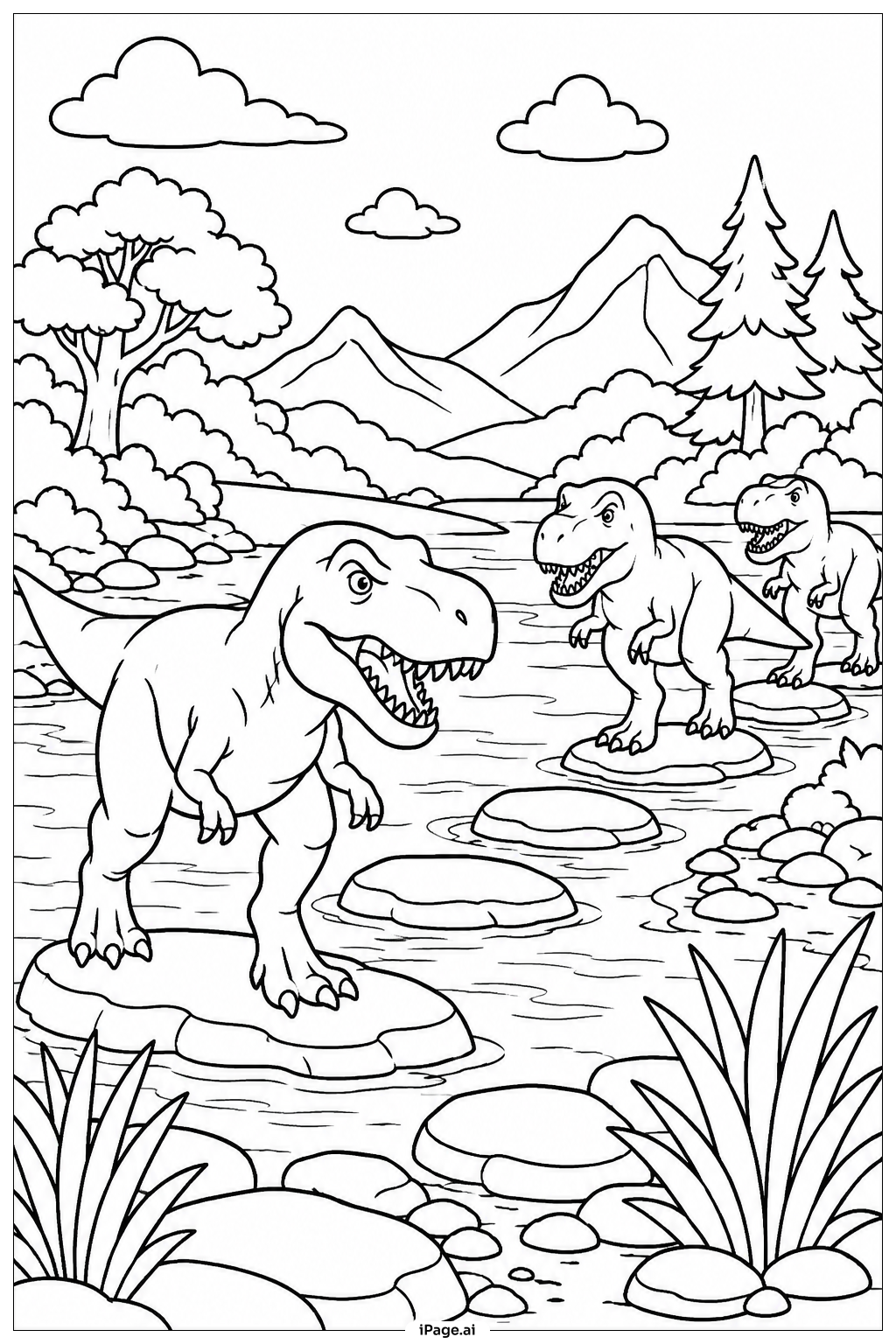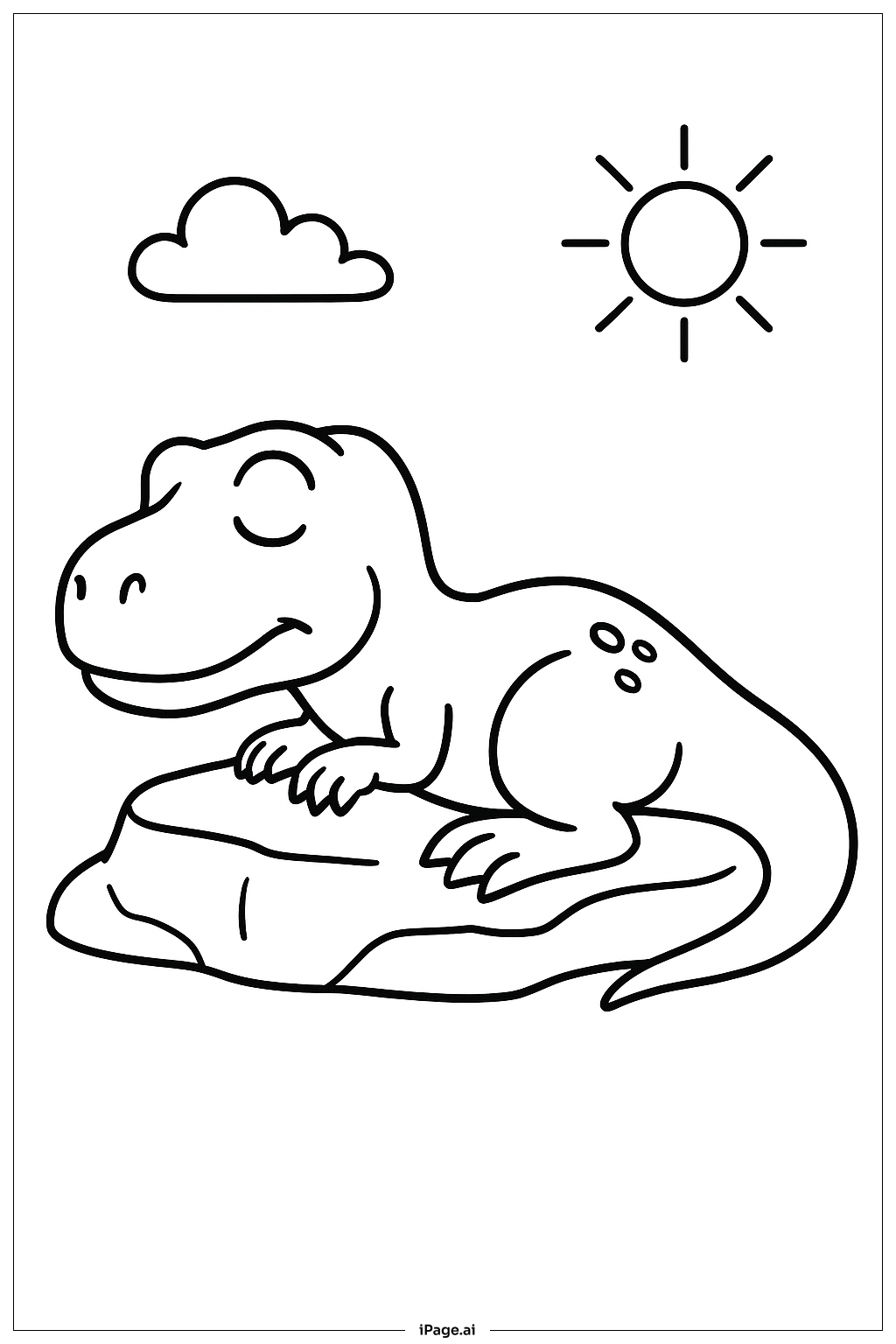
Coloring tips: How to color T Rex Resting on Rock coloring page well?
For this picture, use a mix of green, brown, and grey colors for the T Rex to make it look natural. The spots on its back can be a darker shade for contrast. The rock can be shaded with different greys and browns to show texture. Use bright yellow or orange for the sun to make it stand out. The cloud can be colored light blue or white with soft shading. Consider using crayons or colored pencils for smooth coloring, and try adding softly blended colors on the dinosaur’s body to show shadows and highlights. This will make the T Rex look more lively and three-dimensional.
Coloring challenges: Which parts are difficult to color and need attention for T Rex Resting on Rock coloring page?
1. Small Details: The tiny claws and spots on the T Rex require careful coloring to stay inside the lines.
2. Smooth Shapes: The curved shapes of the dinosaur’s body need even coloring to look natural and soft.
3. Rock Texture: Adding texture to the rock with different shades can be tricky for beginners.
4. Sun Rays: Coloring the sun’s rays evenly and brightly without crossing lines can be challenging.
5. Balancing Colors: Choosing the right mix of greens, browns, and greys to give a realistic dinosaur look might need some trial and error.
Benefits of coloring books: Advantages of drawing T Rex Resting on Rock coloring page
Coloring this T Rex image helps improve fine motor skills, especially when working on small details like claws and spots. It encourages focus and patience as children pay attention to staying inside the lines. Choosing colors to represent the dinosaur and environment promotes creativity and learning about nature. Coloring also offers relaxation and can be a fun way to learn about prehistoric creatures like the T Rex while expressing artistic ideas.