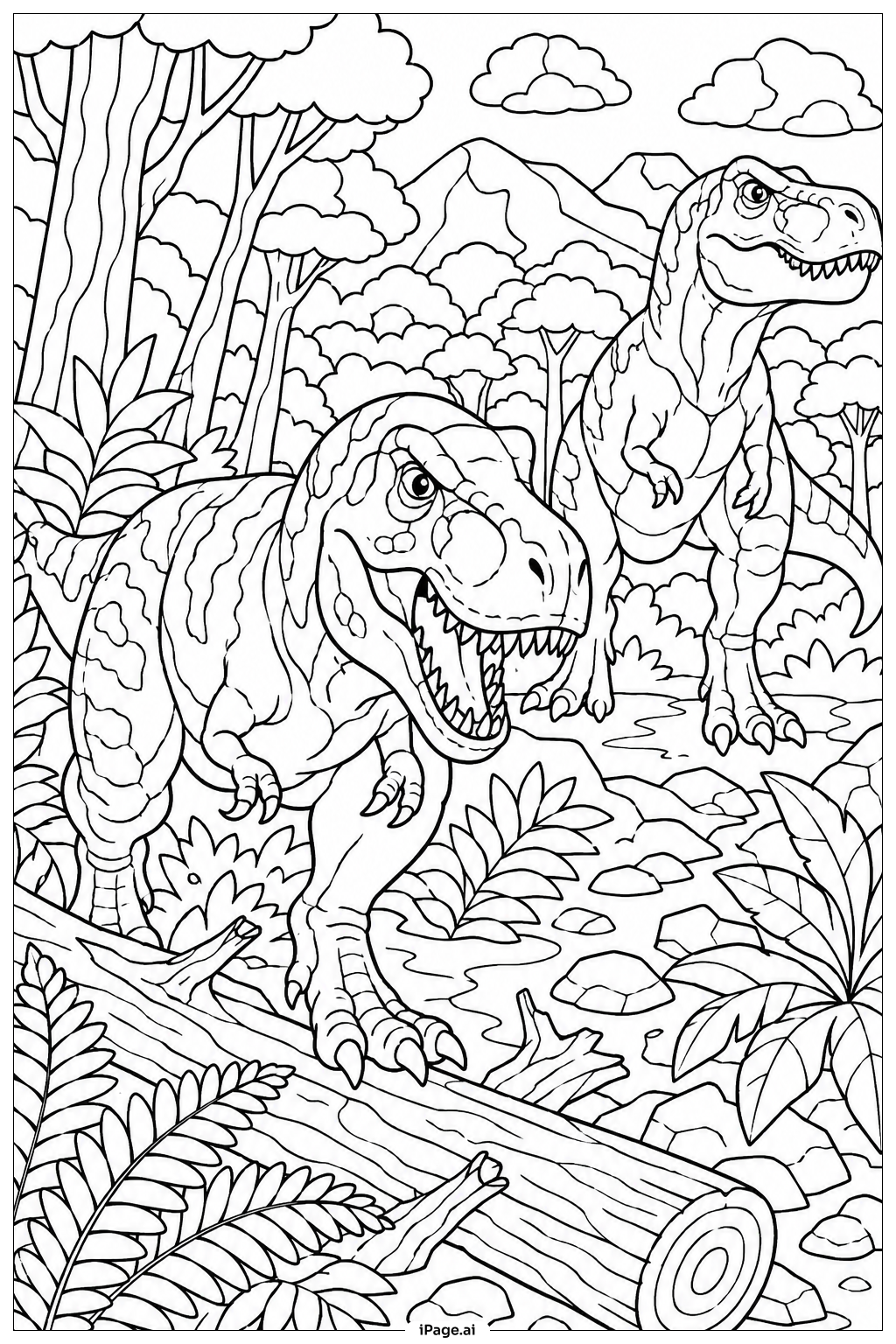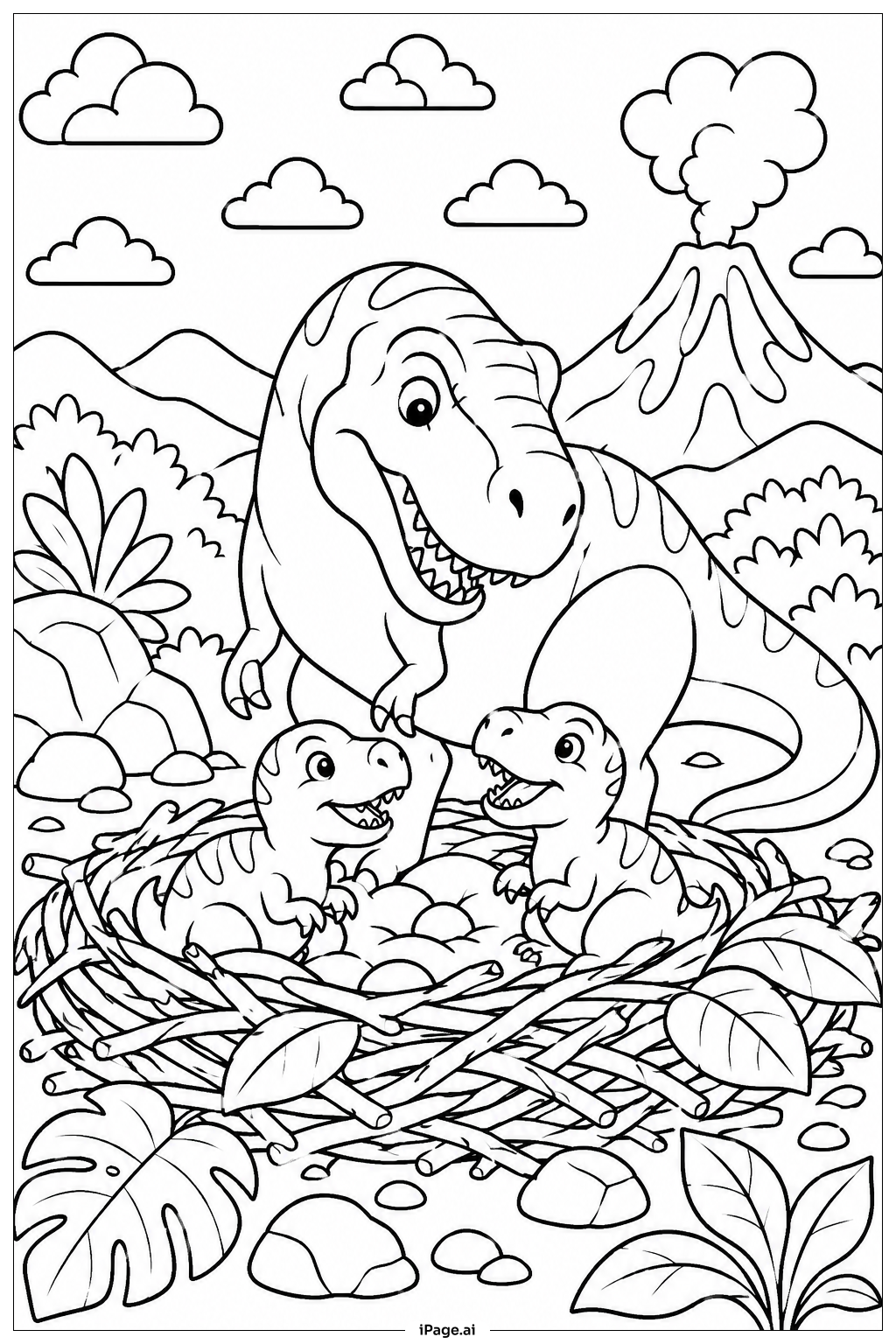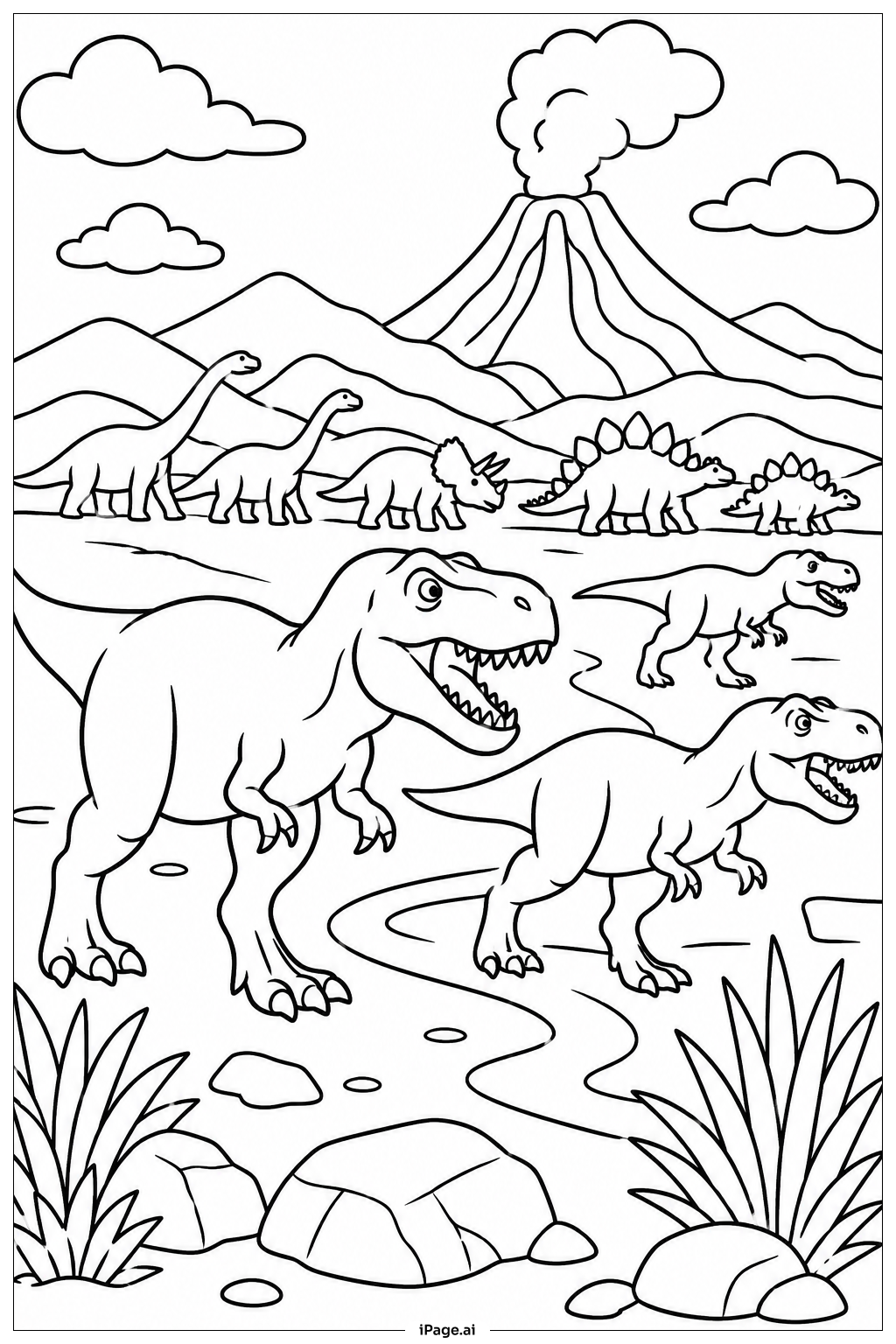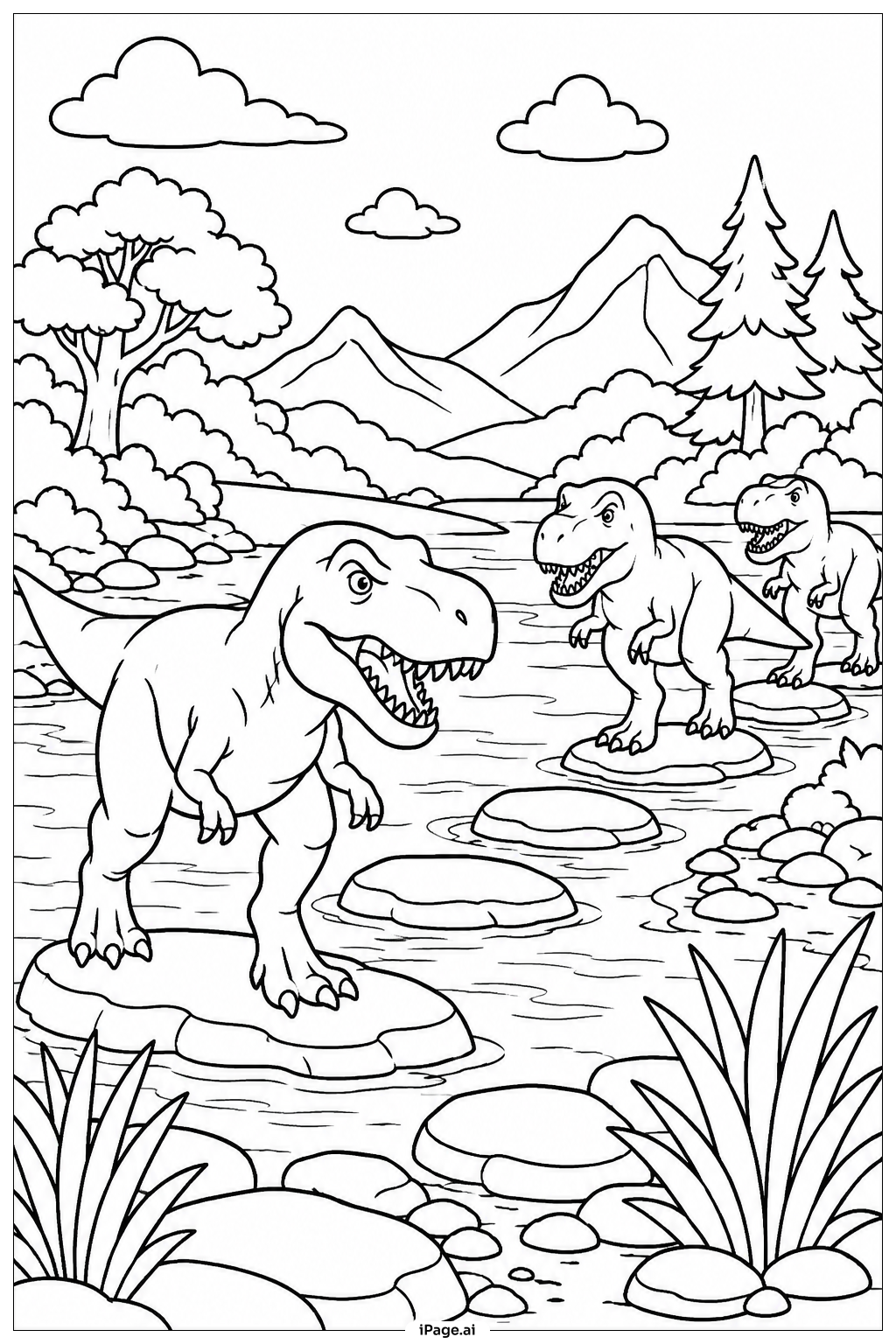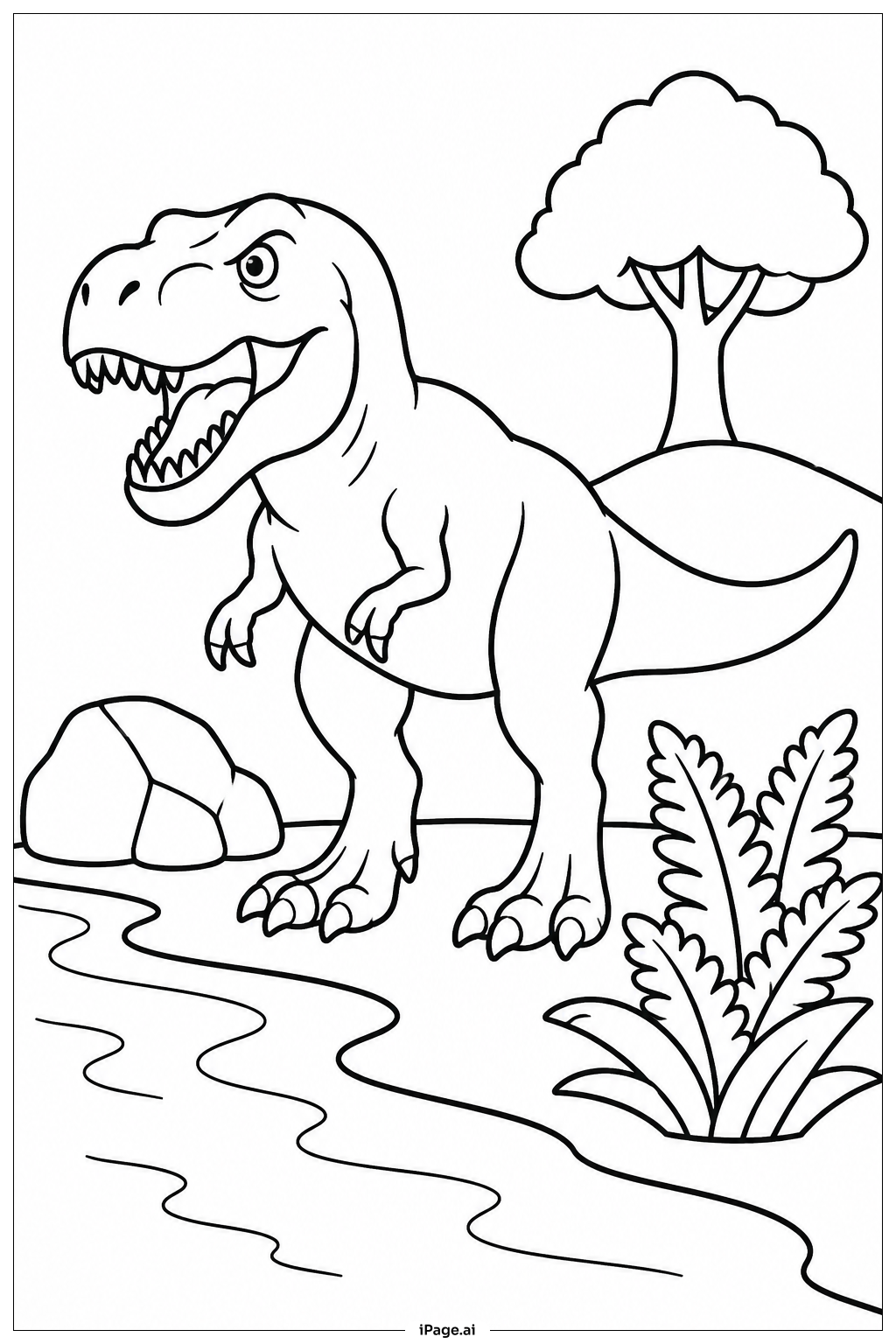
Coloring tips: How to color T Rex Near River coloring page well?
Try using different shades of green and brown for the T Rex’s skin to show texture and depth. You might add darker colors on the back and lighter ones on the belly to make it look more realistic. For the river, use blues and maybe some light grays or whites to show reflections and water movement. The plants and trees can be colored in various greens, with some yellows or browns for the leaves and branches. Don’t forget to color the rocks with grays and browns. You can also use bright colors for flowers or small animals if you want to add a fun touch. Feel free to be creative with the sky by choosing soft blues or even sunset colors like orange and pink.
Coloring challenges: Which parts are difficult to color and need attention for T Rex Near River coloring page?
• Fine Texture Details: The T Rex’s skin has many small scales and folds that require careful coloring to show a realistic and textured look without making it too messy. • Water Reflections: Coloring the river to look like flowing water with reflections can be tricky. You need to blend blues, whites, and grays smoothly to capture the water’s surface. • Natural Background: The trees, bushes, and riverbank have many small parts and different shapes which may be hard to color neatly and evenly. • Light and Shadow Effects: To make the scene look three-dimensional, you should add shading to the dinosaur and background, which can be challenging without making the image look dark or uneven. • Keeping Boundaries: Staying within the lines for detailed areas like the dinosaur’s claws, teeth, and tiny plants requires precision and patience.
Benefits of coloring books: Advantages of drawing T Rex Near River coloring page
Coloring this image helps children and adults improve their fine motor skills by working on detailed areas like the T Rex’s skin and the plants around the river. It encourages creativity by allowing you to choose and mix colors to bring the prehistoric scene to life. Coloring this image also teaches attention to detail, especially when shading to create light and shadow. The natural setting provides a relaxing and educational way to learn about dinosaurs and their environment. Overall, this coloring activity promotes focus, patience, and artistic expression while being fun and engaging.