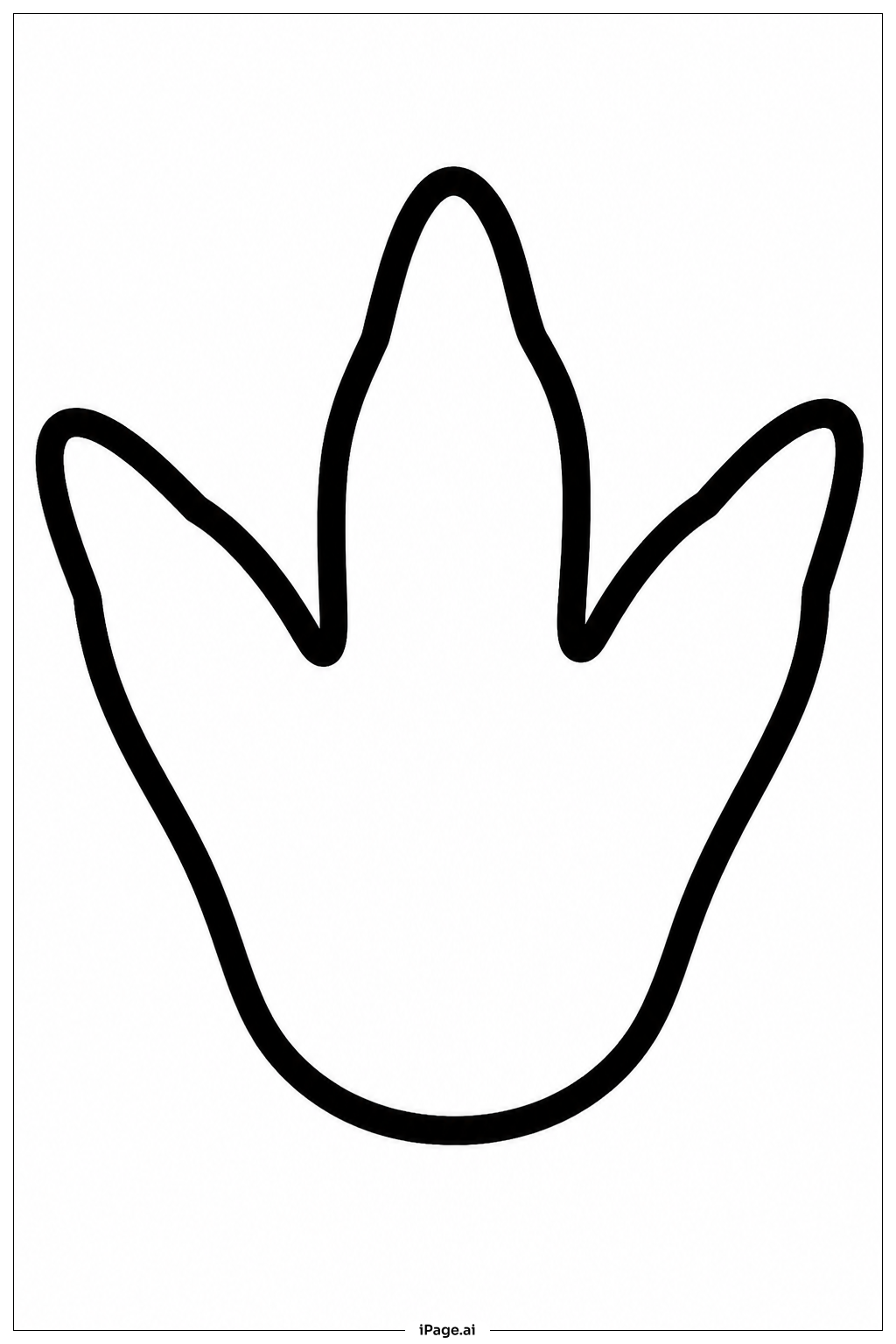
Coloring tips: How to color T Rex Footprint coloring page well?
Start with the footprint itself. Use warm, earthy colors like dark brown, tan, or muddy gray to fill in the main shape of the foot. This makes it look like it was pressed into soft ground long ago. For the claws, try a deeper shade of brown or charcoal gray to make them stand out. The cracks in the ground around the print can be colored in dark gray or black. The surrounding soil and scattered rocks look great in sandy beige, light brown, or dusty orange. If you want to add drama, use a dark reddish-brown for shadows along the edges of the toes. You can blend lighter and darker shades to give the print depth and a three-dimensional feel. Keep the background simple with earthy tones so the footprint stays the main focus. There are no wrong color choices here — just have fun and let your imagination travel back to the age of the dinosaurs!
Coloring challenges: Which parts are difficult to color and need attention for T Rex Footprint coloring page?
• Claw Detail Accuracy: Each claw has a curved, tapered shape that requires careful attention. Coloring within the narrow, pointed tips without going outside the lines can be tricky, especially for younger artists. Using a sharp-tipped colored pencil or a fine marker works best for these small areas.
• Texture and Scale Patterns: The surface of the footprint includes rough, bumpy texture lines that suggest dinosaur skin. Filling these small sections with consistent color while preserving the texture details takes patience and a light hand. Going too dark too quickly can make the texture disappear completely.
• Depth and Shading: Making the footprint look sunken into the ground requires shading. Without some variation in color — lighter near the top edges and darker toward the center and toe pads — the image can look flat. This kind of gradual blending can be a challenge, especially for beginners.
• Crack and Soil Details: The cracks radiating outward from the print are thin and closely spaced. Coloring these narrow lines evenly without smudging the surrounding soil area demands a steady hand. A fine-tip tool is strongly recommended for this part.
• Color Harmony Between Elements: Balancing the colors of the footprint, the claws, the cracks, and the background soil so they all look natural together is a subtle challenge. Each element uses similar earthy tones, so it takes thoughtful color selection to make sure each part is clearly visible and distinct from the others.
Benefits of coloring books: Advantages of drawing T Rex Footprint coloring page
Coloring this T Rex Footprint page offers a wonderful mix of fun and learning for children and dinosaur fans of all ages. First, it sparks curiosity about prehistoric life. As kids fill in the massive print, they naturally start to imagine how enormous the T Rex must have been — making learning about dinosaurs exciting and hands-on. Second, it builds fine motor skills. Carefully coloring within the claw tips, texture lines, and crack details requires focus and hand control, which strengthens the small muscles used for writing and drawing. Third, it encourages creativity. There is no single correct way to color this page. Children can experiment with different shades of brown, gray, and earthy tones, building confidence in their own artistic choices. Fourth, it promotes patience and concentration. A detailed image like this teaches kids to slow down, stay focused, and work through a task step by step — skills that help in school and everyday life. Finally, it is simply enjoyable. Completing a coloring page gives children a satisfying sense of achievement, boosts their mood, and provides a calm, screen-free activity. This T Rex Footprint page is a great choice for any young explorer who loves dinosaurs.