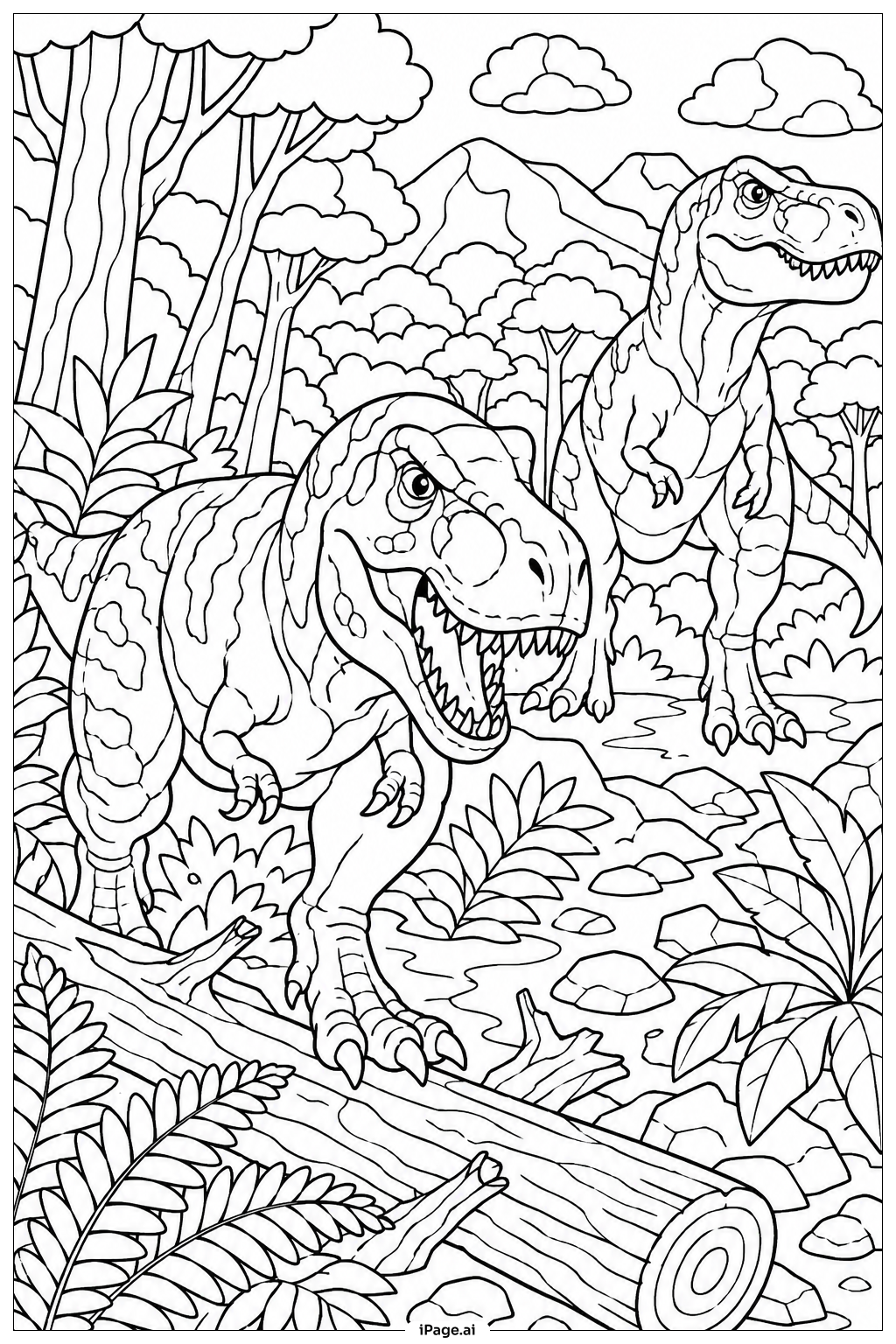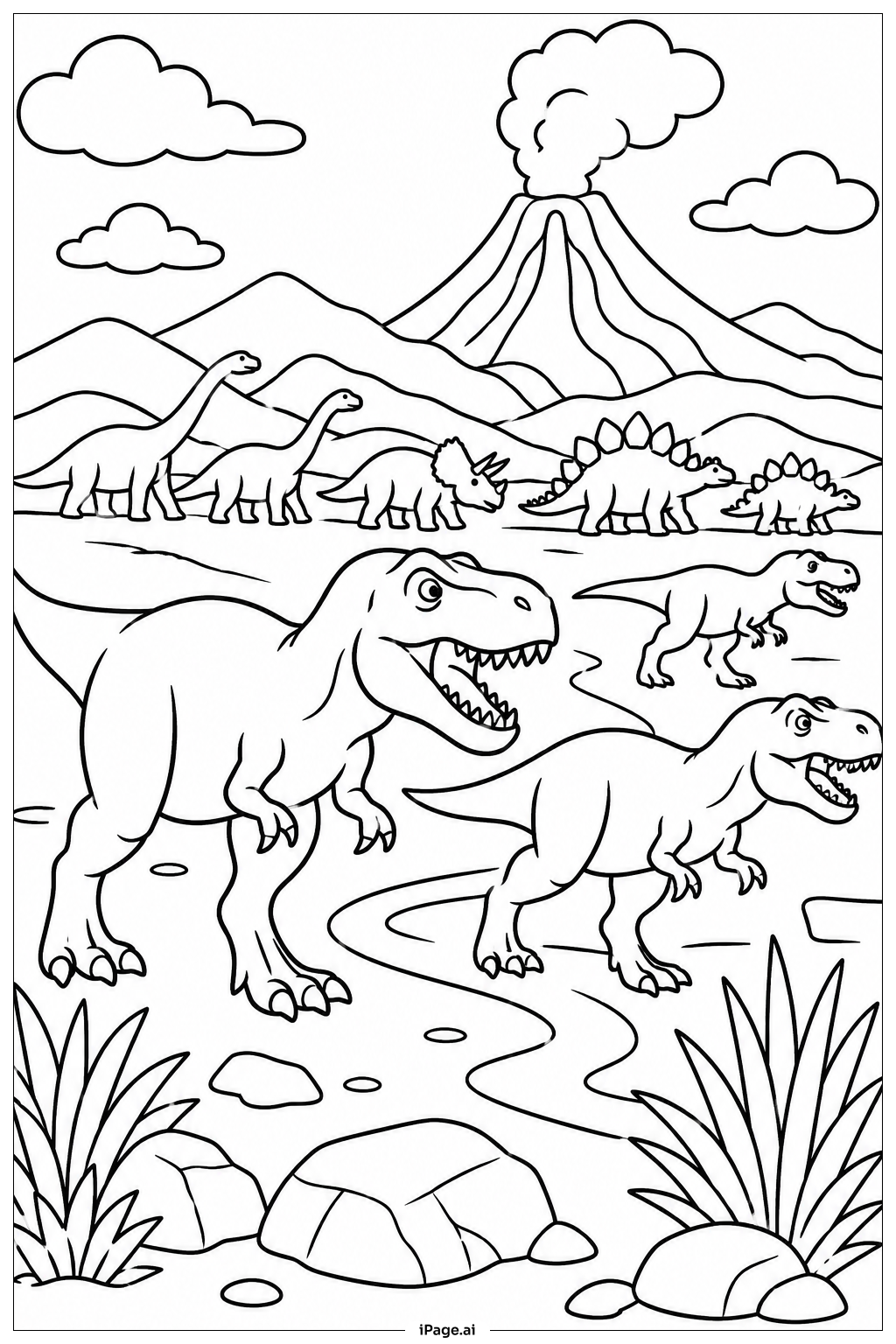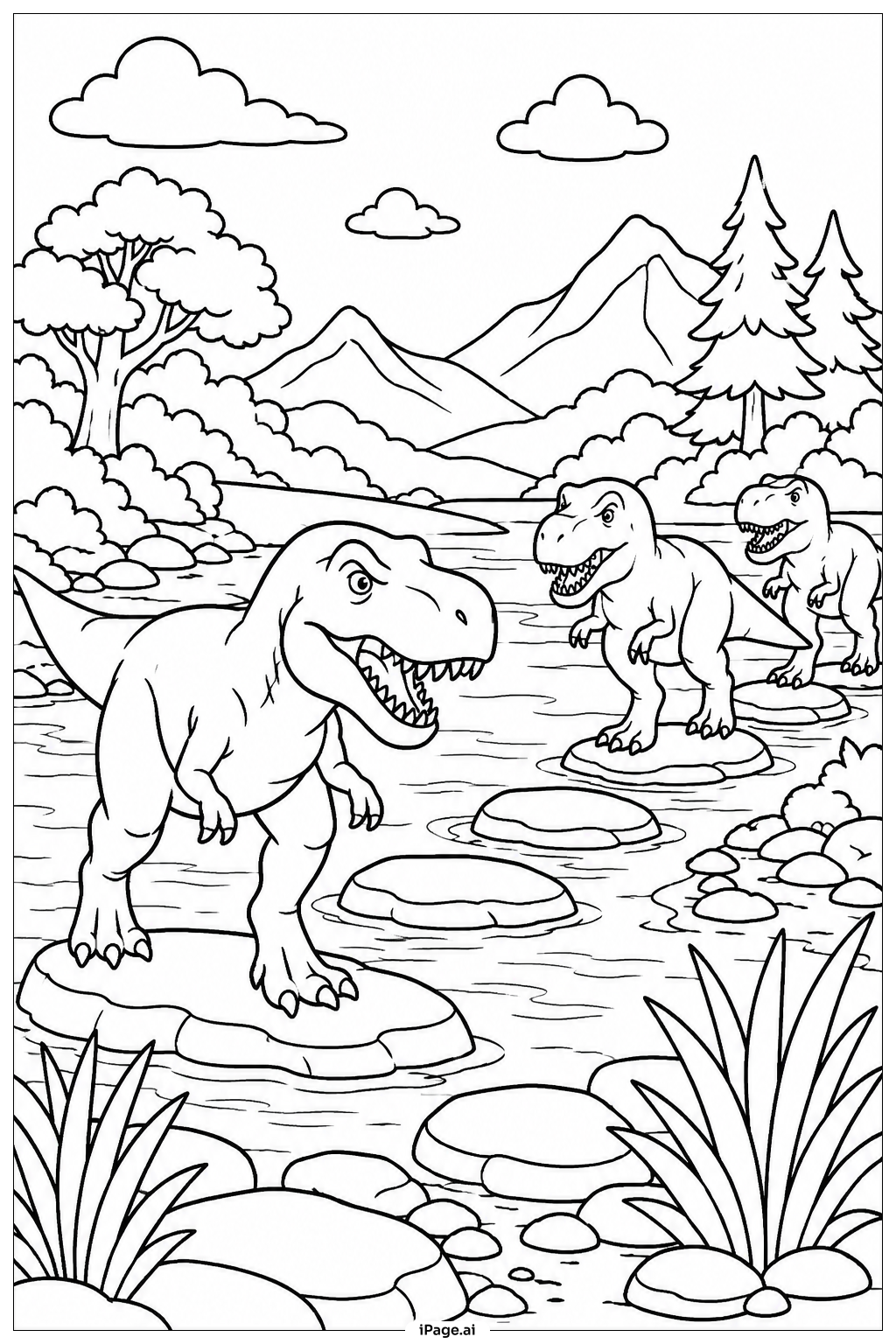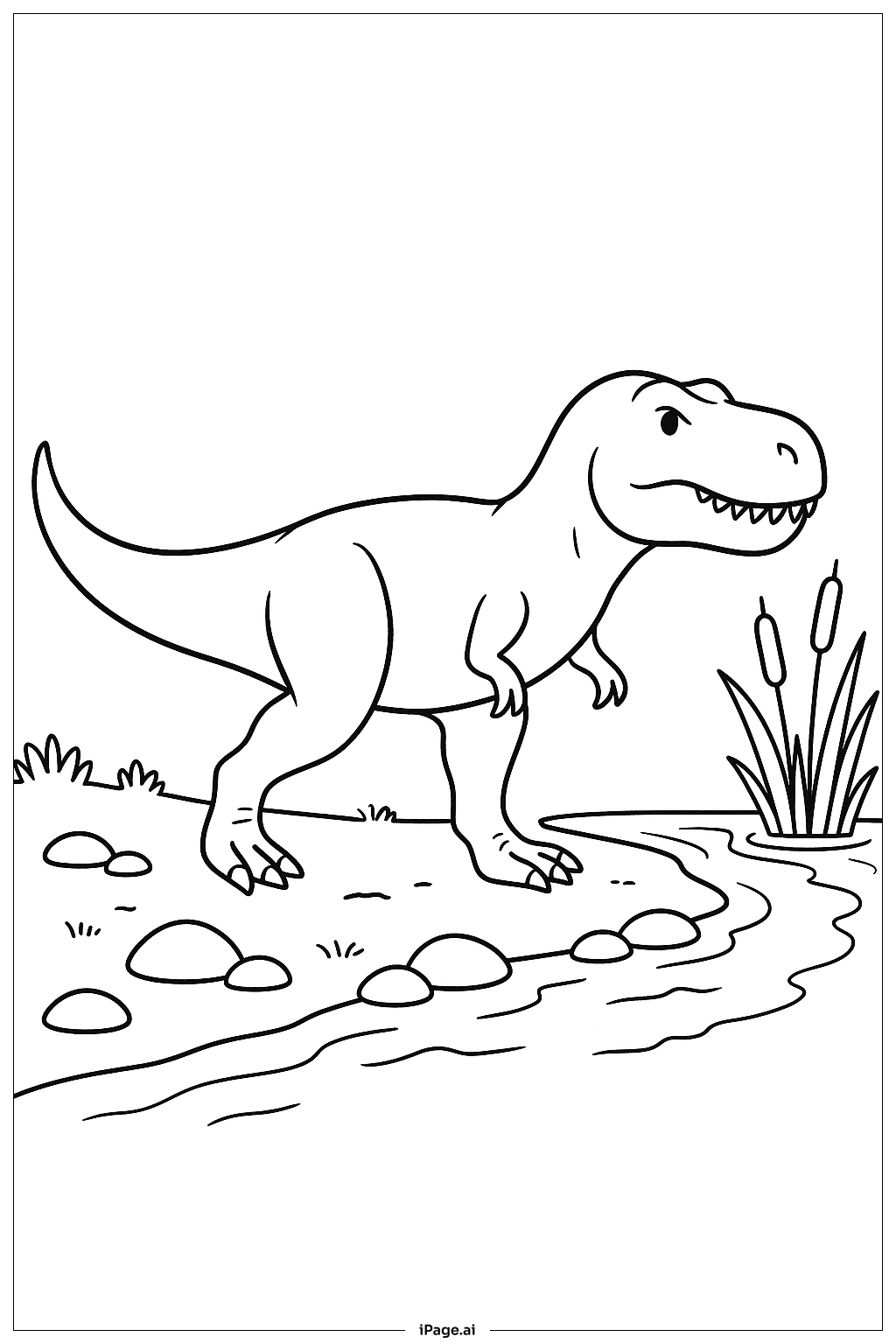
Coloring tips: How to color T Rex by the Riverbank coloring page well?
For the T Rex, children can use different shades of green, brown, or even gray to make it look realistic. The river can be colored in blues and light greens to show flowing water. Rocks can be gray, brown, or sandy colors. The cattail plants can be filled with green leaves and brown tops. Using darker colors near the edges and lighter colors in the middle can help create a 3D effect. Kids can also try blending colors to make the river look shiny and the dinosaur’s skin textured.
Coloring challenges: Which parts are difficult to color and need attention for T Rex by the Riverbank coloring page?
1. Coloring the T Rex may be tricky because its large body needs even shading to look natural.
2. The small claws and teeth require careful coloring to stay within the lines.
3. The rocks along the riverbank have different sizes, so coloring them to show depth needs attention.
4. The cattail plants have thin leaves that need precise strokes to color neatly.
5. Creating the water effect in the river can be challenging since it needs smooth color blending to appear fluid and reflective.
Benefits of coloring books: Advantages of drawing T Rex by the Riverbank coloring page
Coloring this T Rex by the riverbank helps children practice fine motor skills by coloring different shapes and details. It encourages creativity as kids choose colors for the dinosaur and natural elements. The activity also boosts focus and patience because of the small parts like claws and plants. Moreover, it teaches kids about prehistoric animals and natural environments in a fun way. Overall, it’s a great way for children to learn while enjoying art.