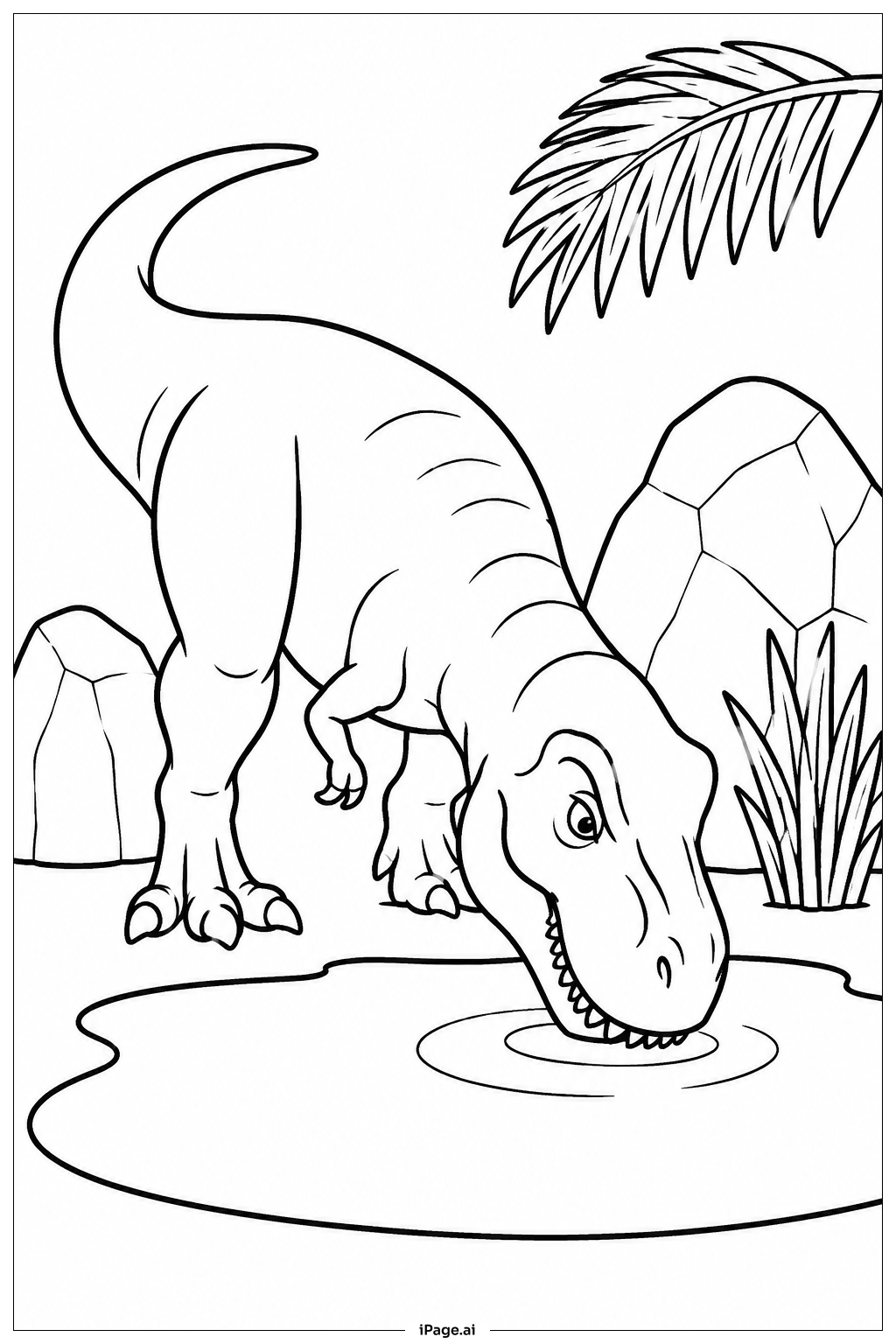
Coloring tips: How to color T Rex At Watering Hole coloring page well?
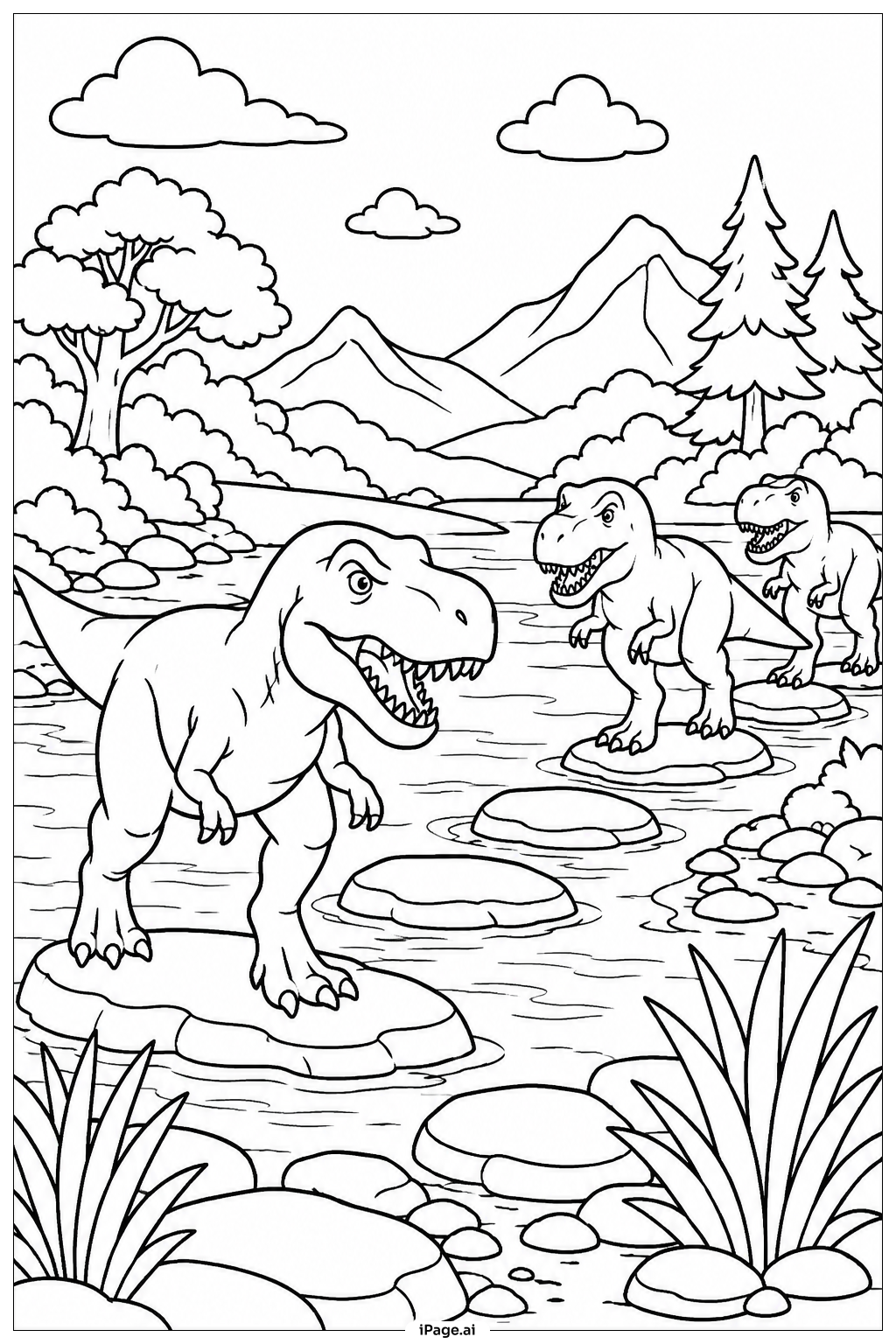
Start with the T Rex body. Use a mix of dark green, olive, and brown to create a realistic dinosaur look. Add lighter yellow-green on the belly for contrast. For the teeth, use bright white or pale ivory. Color the eyes a bold yellow or orange to make them stand out. The watering hole should be a calm blue with hints of teal and grey near the edges. Use different shades of green for the ferns and trees to add depth. Light green for young leaves and dark green for older ones works great. The muddy ground near the water can be done in brown and tan tones. Try adding a warm orange or pink sky in the background to suggest a sunset moment. Feel free to mix colors and experiment. This is your prehistoric world to bring to life!
Coloring challenges: Which parts are difficult to color and need attention for T Rex At Watering Hole coloring page?
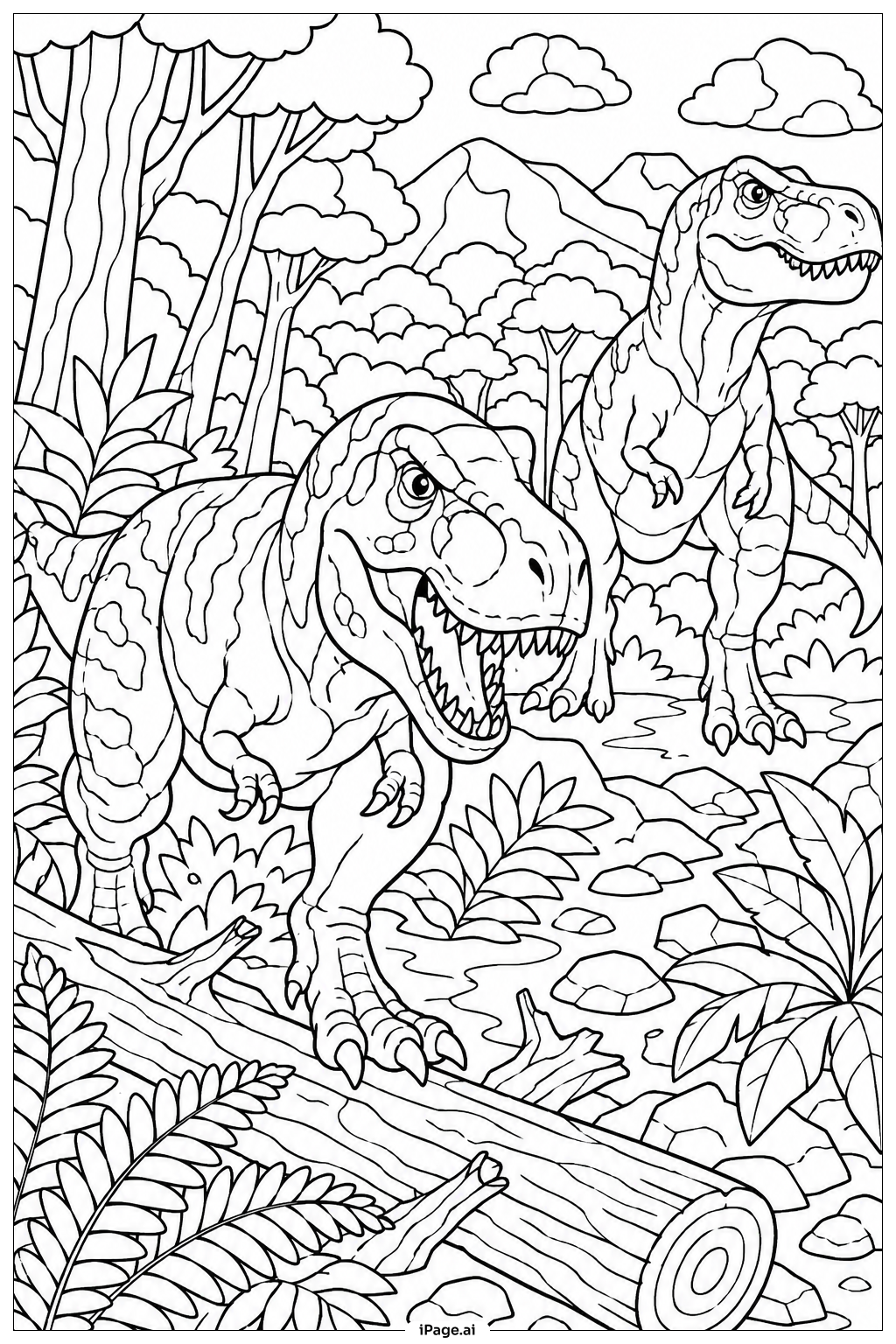
• T Rex Skin Texture: The dinosaur's skin has rough, bumpy details that require careful shading. Coloring between the small scales and ridges takes patience. Using the side of a colored pencil or a light blending technique can help create a natural texture effect without muddying the lines.
• Overlapping Body Proportions: The T Rex has a large head and body that overlap with background elements like plants and the water's edge. Keeping each element visually distinct requires choosing colors that contrast well with neighboring areas. This is especially tricky where the dark body meets the green foliage.
• Water Reflection Effects: Coloring the watering hole to look realistic is a challenge. Water reflects the surroundings, so you need to blend blues, greys, and greens smoothly. Adding subtle ripple lines in a slightly lighter or darker shade can mimic the look of real water without overcomplicating the area.
• Layered Vegetation Details: The background plants include multiple layers of ferns and trees at different depths. Each layer needs a slightly different shade of green to give the scene a sense of distance and space. Younger colorists may find it hard to manage so many overlapping green tones at once.
• Small Foreground Details: The ground near the water contains pebbles, mud patches, and plant roots. These tiny details require a fine-tipped tool to color neatly. Rushing through this area can cause colors to bleed into each other, losing the fine detail that makes the scene feel grounded and complete.
Benefits of coloring books: Advantages of drawing T Rex At Watering Hole coloring page
Coloring this T Rex At Watering Hole scene offers wonderful benefits for kids and young artists. First, it builds fine motor skills. Staying within the lines of a detailed dinosaur image trains hand control and pencil grip, which helps with writing too. Second, it sparks creativity. Choosing colors for a prehistoric scene encourages children to think imaginatively and make their own artistic choices. There are no wrong answers when designing your own dinosaur! Third, it teaches focus and patience. A detailed scene like this one takes time to complete. Children learn to slow down, concentrate, and feel proud of a finished result. Fourth, it introduces nature and science in a fun way. Kids learn about dinosaurs, ecosystems, and prehistoric life while they color. It makes learning feel like play. Fifth, it is calming and relaxing. The quiet, repetitive motion of coloring reduces stress and helps children feel settled and at ease. This makes coloring a great activity after a busy school day. Overall, this page is both fun and rewarding for Boys, Girls, and Adults alike.