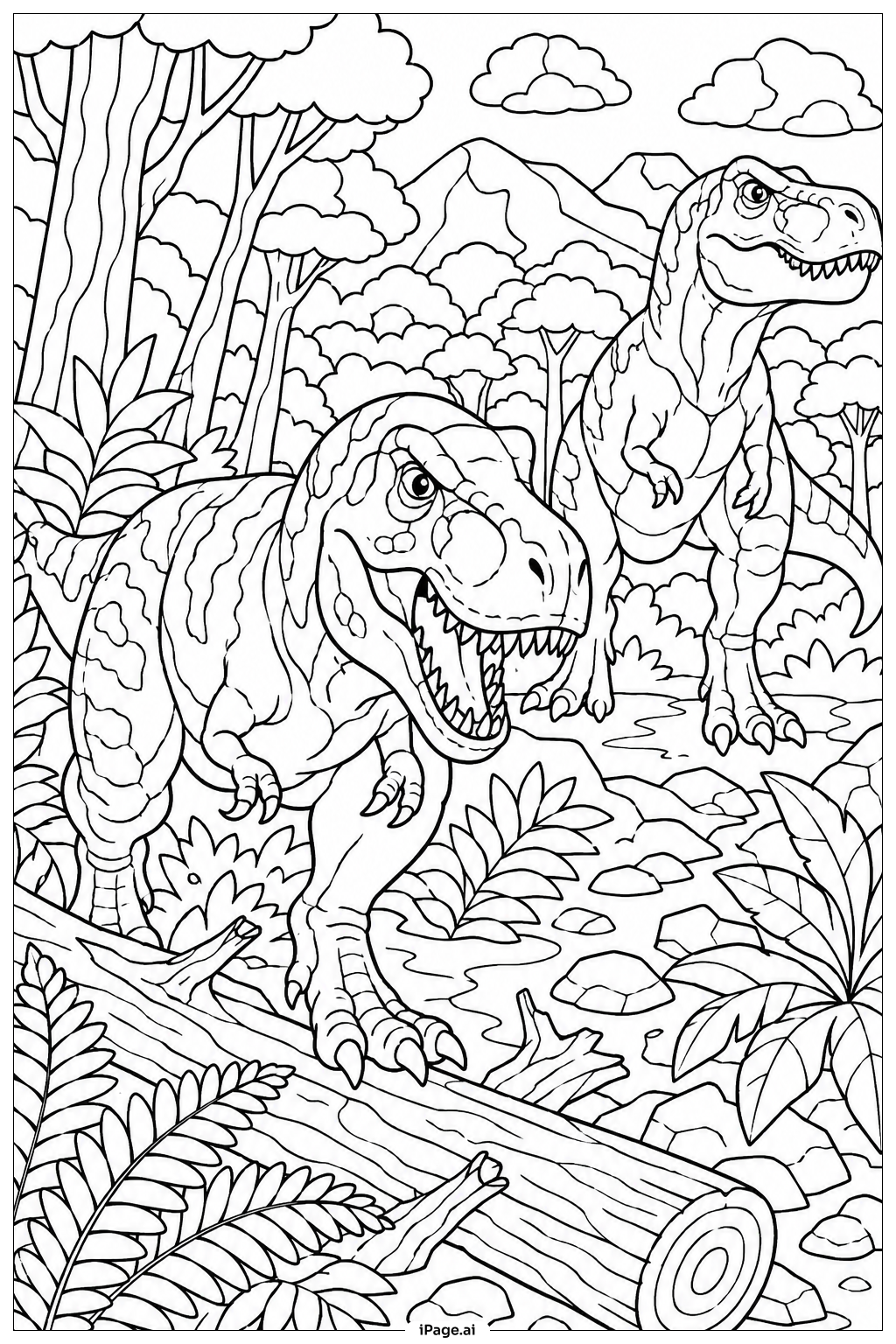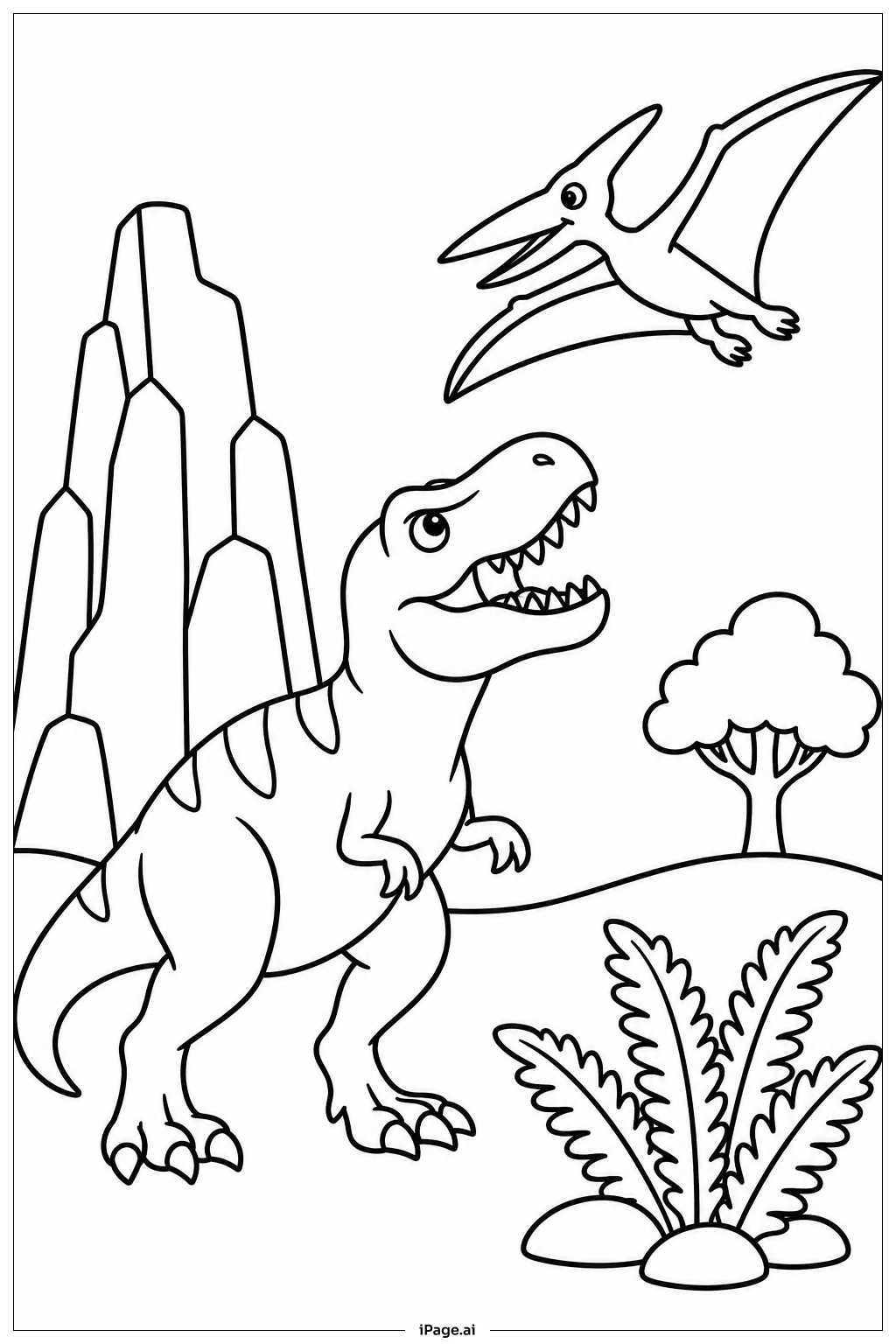
Coloring tips: How to color T Rex And Pterodactyl coloring page well?
Start with the T Rex by using deep forest greens or earthy browns for the body. Add darker shades along the back and tail to create a sense of depth and muscle definition. Use a lighter cream or pale yellow for the underbelly to contrast the top. Give the teeth a bright white or ivory tone, and color the eyes a vivid yellow or amber for an intense look. For the Pterodactyl, try a warm reddish-brown or dusty gray for the wings and body. Use a lighter tone on the underside of the wings to show how light hits them mid-flight. Color the long beak and head crest in orange or deep red to make it stand out. The rocky ground can be done in warm grays and sandy browns. Adding shadows under the T Rex and beneath the Pterodactyl will make the whole scene feel more alive and three-dimensional. Experiment with bold colors to bring the prehistoric world to life.
Coloring challenges: Which parts are difficult to color and need attention for T Rex And Pterodactyl coloring page?
• T Rex Skin Texture: The T Rex body is covered in bumpy, wrinkled skin that requires careful attention. Coloring each raised texture individually takes patience, and blending light and shadow across the bumps helps create a realistic look without losing detail in the process.
• Pterodactyl Wing Shading: The wide, leathery wings of the Pterodactyl are large flat surfaces that can look dull without proper shading. Gradually shifting from a darker edge to a lighter center mimics how light passes through thin skin, which is tricky but very rewarding when done well.
• Open Jaw and Teeth Detail: The T Rex has a wide-open mouth filled with many sharp teeth. Each tooth needs a clean white or ivory base, and the inner mouth area calls for deep reds and pinks with shadows near the throat. Keeping the lines crisp inside a small, busy area is a real challenge.
• Overlapping Figures and Background: The T Rex, Pterodactyl, rocks, and bones all overlap in different areas. Choosing colors that let each element stand out from the ones behind it requires planning ahead. Without contrast between layers, the scene can look flat and confusing.
• Small Forearm and Claw Details: The T Rex has tiny forearms with small claws that are easy to overlook. Coloring them neatly in a tight space without going outside the lines demands a fine-tipped tool and a steady hand, especially for younger colorists still building control.
Benefits of coloring books: Advantages of drawing T Rex And Pterodactyl coloring page
Coloring this T Rex And Pterodactyl page offers a wide range of benefits for children and young learners. Working on two detailed dinosaurs at once encourages focus and concentration, helping kids build the patience to complete a more complex image step by step.
Choosing colors for the prehistoric creatures sparks creative thinking and imagination. Kids get to decide what their dinosaurs look like, building confidence in their own artistic choices. There are no wrong answers, which makes the process feel fun and freeing.
The detailed textures on the T Rex skin and Pterodactyl wings give hands great fine motor practice. Carefully staying within lines and switching between small and large areas strengthens hand control and prepares younger children for writing skills.
Learning about two very different dinosaurs at the same time also feeds natural curiosity about history and science. Kids often ask questions about how these animals lived, what they ate, and whether they ever met, turning a coloring session into a springboard for discovery.
Finally, finishing a detailed scene like this gives a real sense of achievement. Displaying the completed artwork builds pride and motivates kids to take on bigger creative challenges next time.