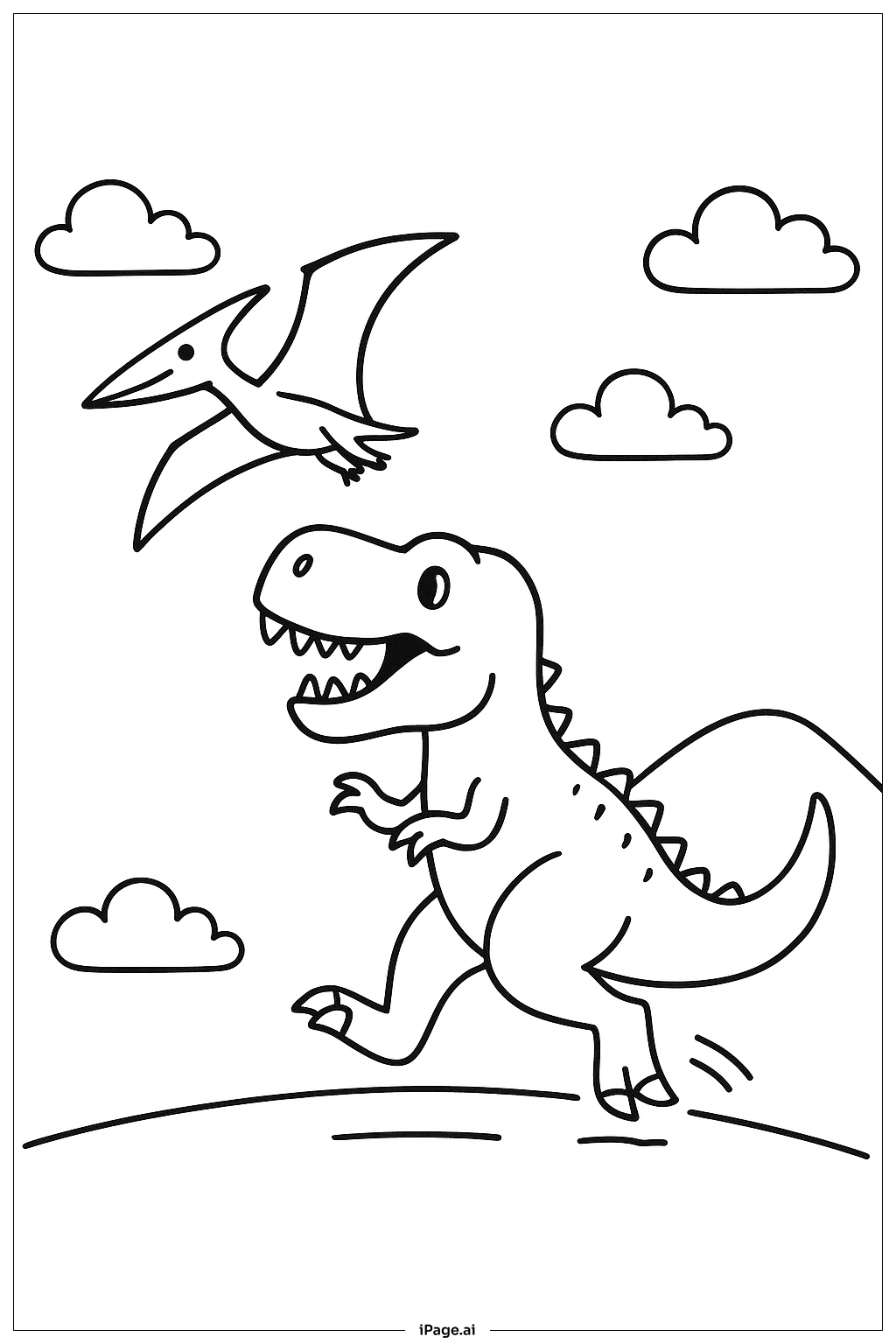
Coloring tips: How to color T Rex and Flying Pterodactyl coloring page well?
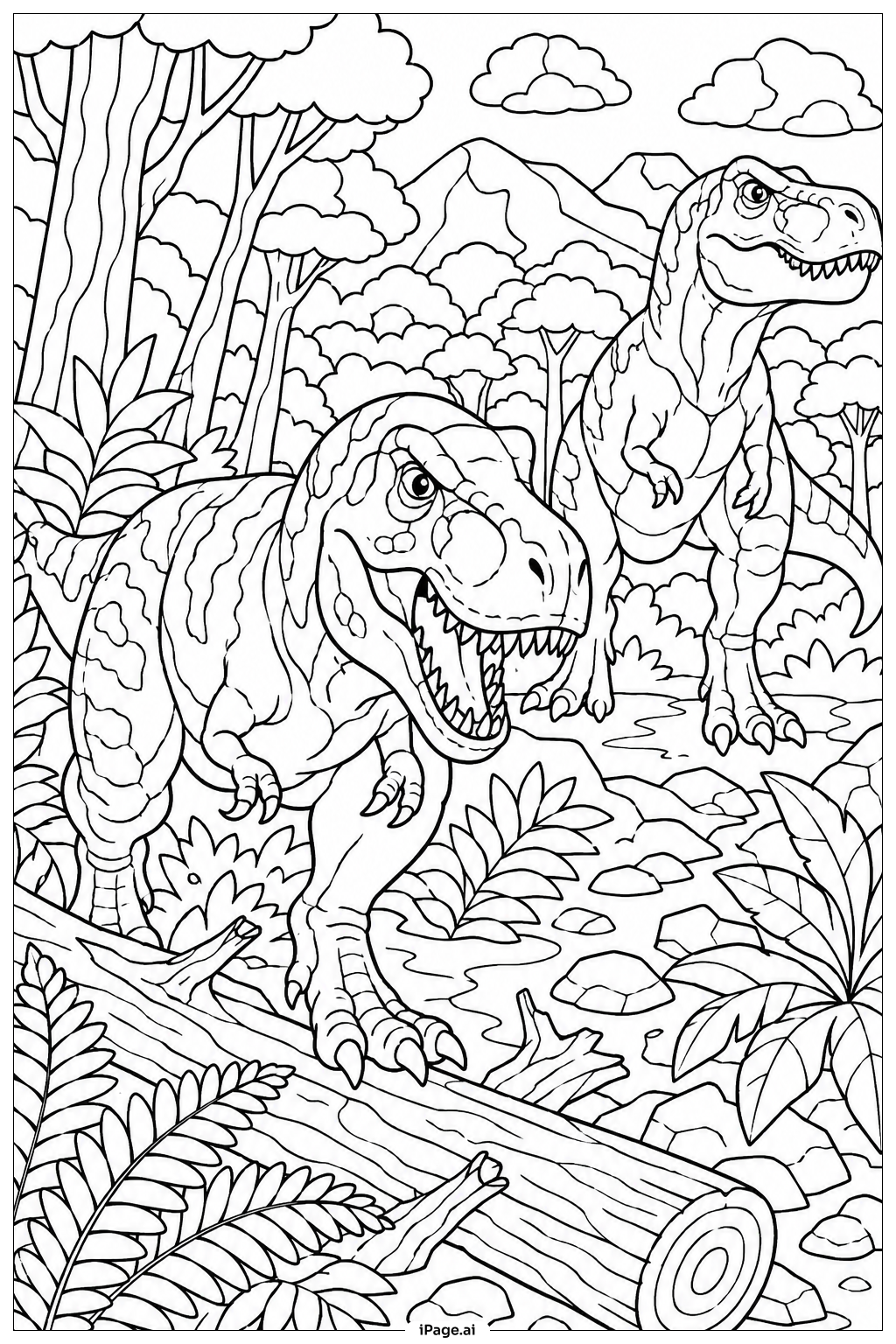
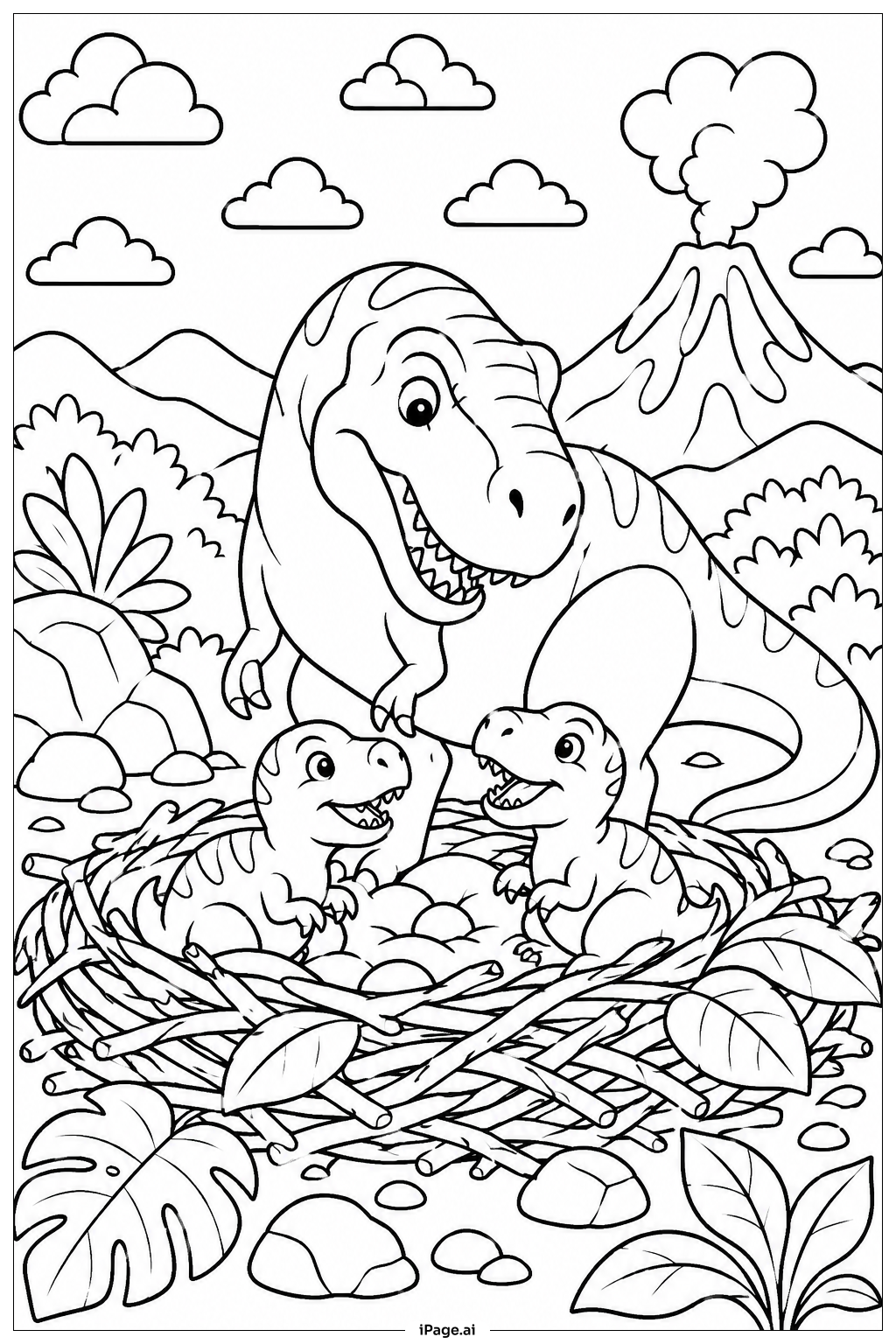
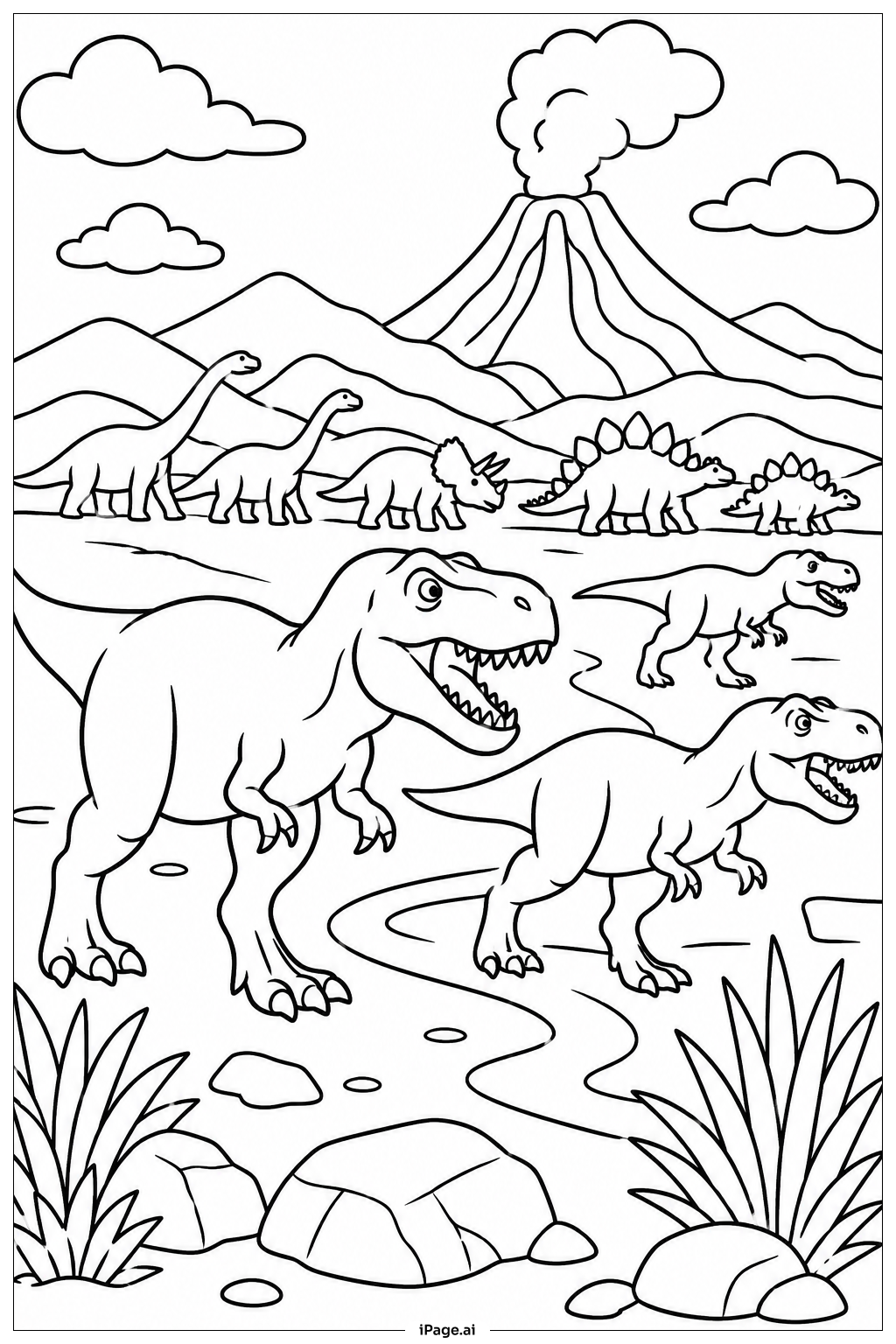
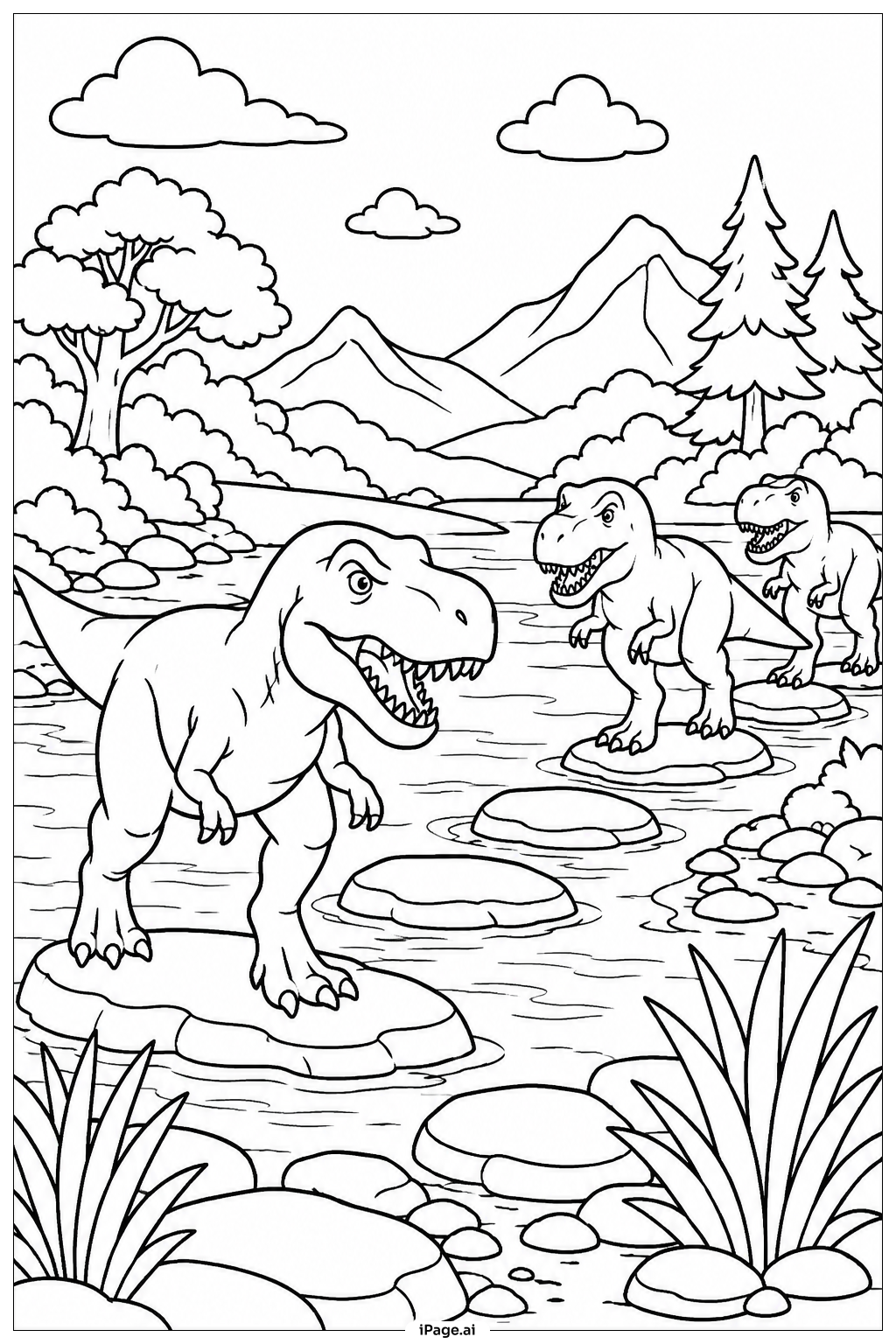
For the T Rex, try using various shades of green, brown, or even purple for the body, adding darker tones for shadows under the arms and legs. Color the teeth white or cream, and use red or pink inside the mouth. The Pterodactyl can be colored in earth tones like tan, brown, or gray, with lighter shades for the wing membranes to show translucency. Use orange or yellow for the sun, and create a gradient sky with blues fading to warm colors near the horizon. The rocky ground can feature browns, grays, and hints of red. Add depth by using darker colors in crevices and lighter highlights on raised surfaces. The mountains can be various shades of purple or blue to show distance.
Coloring challenges: Which parts are difficult to color and need attention for T Rex and Flying Pterodactyl coloring page?
• Scale and Texture Details: The T Rex's body features numerous small scales and skin textures that require patience and precision. Coloring each scale individually can be time-consuming, but using varied shades creates realistic depth. Children may find it challenging to maintain consistent pressure and color within these tiny areas without crossing lines.
• Wing Membrane Structure: The Pterodactyl's wings contain delicate membrane patterns with supporting bone structures. These thin sections require careful coloring to avoid tearing the paper if pressing too hard. Creating a translucent effect by using lighter pressure or colors demands advanced technique and control.
• Dimensional Shading: This image contains multiple depth levels with the T Rex in the foreground, mountains in the middle ground, and sky in the background. Achieving proper atmospheric perspective requires understanding how to use color intensity and value to show distance, which can be complex for younger colorists.
• Mouth Interior Details: The T Rex's open mouth reveals teeth, gums, and inner mouth structure requiring multiple colors in a confined space. Switching between colors for individual teeth while maintaining clean edges between the gums and teeth tests fine motor skills and concentration.
• Rocky Terrain Texture: The ground features irregular rock formations with cracks, shadows, and varied surfaces. Creating realistic stone texture involves layering multiple colors and using different stroke directions, which requires planning and experimentation with blending techniques.
Benefits of coloring books: Advantages of drawing T Rex and Flying Pterodactyl coloring page
Coloring this dinosaur scene helps children develop fine motor skills through detailed work on scales, teeth, and wing membranes. It encourages learning about prehistoric creatures, sparking curiosity about paleontology and natural history. The complex composition with foreground and background elements teaches spatial awareness and depth perception. Kids practice color theory by choosing complementary colors for the dinosaurs against the landscape. The variety of textures, from smooth sky to rough rocks and scaly skin, allows experimentation with different coloring techniques like shading, blending, and stippling. This engaging subject matter builds focus and patience as children work through the intricate details. Completing this challenging page boosts confidence and provides a sense of accomplishment while fostering creativity through personal color choices.