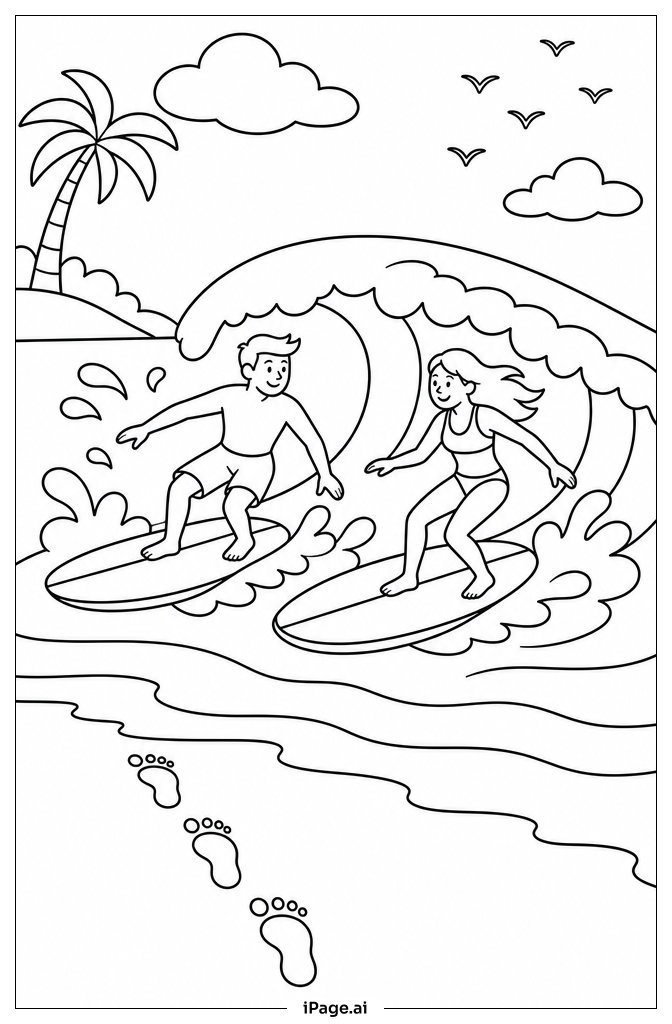
Coloring tips: How to color Surfer Riding Two Surfboards coloring page well?
Start with the surfer's skin using a warm tan or golden brown to capture that sun-kissed beach look. For the board shorts, try bold colors like bright red, orange, or electric blue to make the figure pop. The rash guard can be a contrasting color, such as yellow or white. Color the two surfboards with fun, vivid patterns — think stripes, flames, or tropical designs using neon colors. Use layers of blue and aqua for the ocean, adding white at the wave tips to show the foam and splash. Light blue or pale lavender works well for distant water. For the sky, blend soft blue with hints of white and yellow to suggest a sunny day. Add yellow highlights on the wave surfaces to show sunlight reflecting off the water. Use curved strokes when coloring the waves to follow their natural flow and give the scene a sense of motion and energy.
Coloring challenges: Which parts are difficult to color and need attention for Surfer Riding Two Surfboards coloring page?
• Balancing Two Surfboards: The two surfboards side by side can be tricky to color separately. Each board should have its own distinct color scheme or pattern so they look different from each other. Keeping neat edges between the boards and the water underneath takes careful attention and a fine-tipped tool.\n\n• Dynamic Wave Details: The waves in this image have many curved lines, foam edges, and splashing droplets. Coloring each wave section smoothly without muddying the colors together is challenging. It helps to work from the lightest blue tones first, then layer darker shades gradually to build depth.\n\n• Surfer's Body Proportions: The surfer is in an active, stretched pose with arms wide and legs apart. Coloring the skin, clothing, and hair neatly around this dynamic shape requires patience. Smaller areas like the hands, face, and feet need a thin brush or pencil to stay within the lines.\n\n• Water Splashes and Droplets: Small splashes and droplets scattered around the boards and feet are some of the smallest details in the image. Leaving these areas white or coloring them very lightly in pale blue helps them stand out and look realistic against the darker wave colors.\n\n• Clothing Patterns and Boardwear: Adding patterns to the board shorts or rash guard, such as stripes or geometric designs, can be rewarding but demands steady hands and consistent spacing. Planning the pattern before applying color will help achieve a clean, vibrant result.
Benefits of coloring books: Advantages of drawing Surfer Riding Two Surfboards coloring page
Coloring this surfer scene offers a wide range of fun and meaningful benefits for kids and young artists. First, working through the many wave lines and small splash details builds fine motor skills and helps improve hand control, which supports handwriting and other precise tasks. Choosing colors for the surfboards, outfit, and ocean encourages creative thinking and personal expression — there is no wrong answer, so kids feel free to experiment. The dynamic movement in the image sparks imagination and can inspire storytelling about adventures at the beach. Focusing on staying within the curved wave lines trains concentration and patience, two skills that carry over into schoolwork and daily life. The ocean theme also gently introduces children to the natural world, sparking curiosity about waves, tides, and coastal environments. Completing a detailed, action-packed image like this gives a strong sense of accomplishment and builds confidence. Whether done alone or with friends and family, this coloring page creates a relaxed, screen-free activity that reduces stress and brings genuine joy to the creative process.