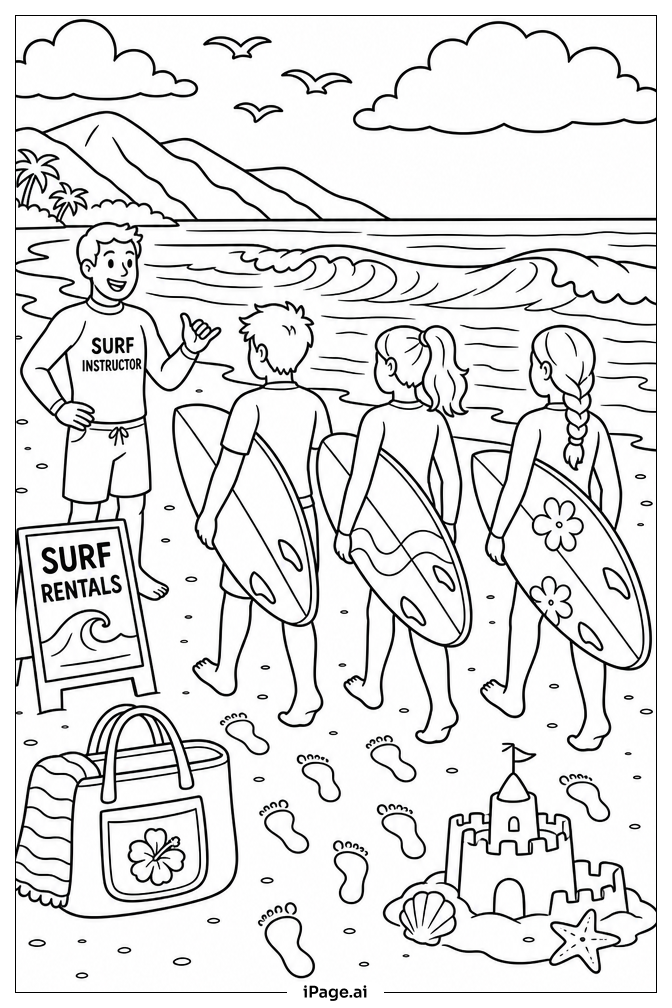
Coloring tips: How to color Surfboard Lessons Group coloring page well?
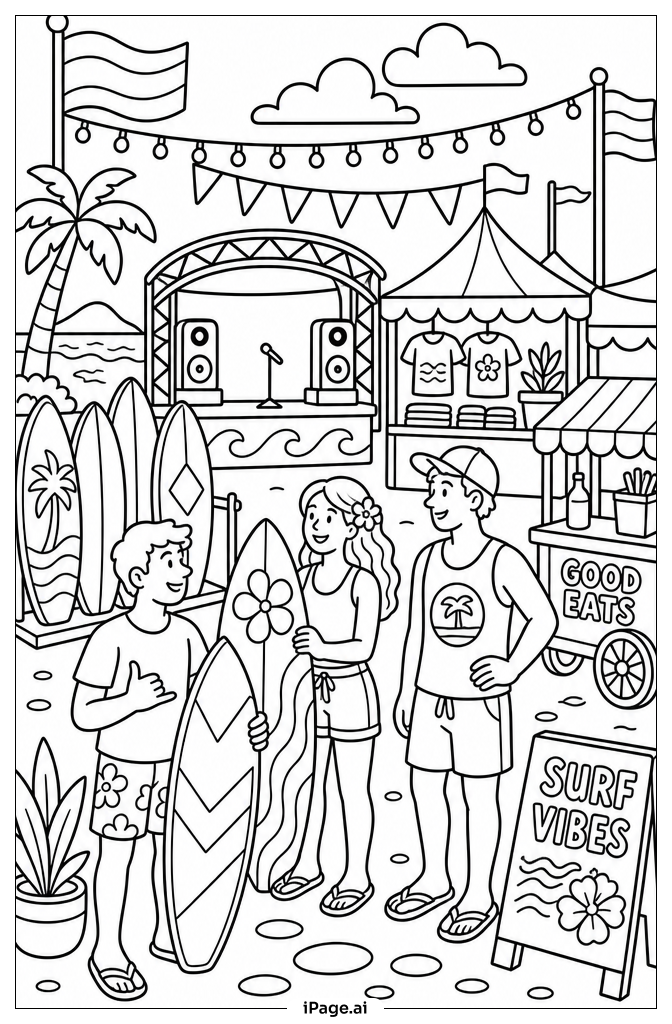
Start with the surfboards — they are the stars of the scene! Use bright, bold colors like red, yellow, blue, and orange. You can add fun patterns like stripes, zigzags, or flames to make each board unique. Color the ocean in shades of blue and teal. Add white tips to the waves for a realistic touch. Use warm sandy tones like tan and beige for the beach. The people can wear colorful swimsuits and rash guards — mix and match your favorite colors. Give the instructor a bright shirt to make them stand out. Color the palm trees with rich green leaves and a brown trunk. The sky can be a cheerful light blue with fluffy white clouds, or try a warm orange-pink sunset look. Feel free to add your own creative touches — stickers, patterns, or even a rainbow in the sky!
Coloring challenges: Which parts are difficult to color and need attention for Surfboard Lessons Group coloring page?
• **Surfboard Details and Patterns:** Each surfboard has its own shape and surface area. Staying neatly within the curved edges of multiple boards without colors bleeding into each other can be tricky. Using colored pencils or fine-tip markers helps maintain clean lines, especially along the rounded tips and rails of the boards.
• **Crowd of Figures:** With a group of people in the scene, each figure is relatively small and close together. Coloring individual clothing, skin tones, and hair without accidentally mixing colors between characters requires patience and a steady hand. Younger colorists may find it helpful to use a light pencil outline to separate figures before adding color.
• **Background Layering:** The scene includes multiple background elements — ocean, sky, sand, and palm trees — all layered together. Blending colors smoothly to show depth and distance (like the horizon line where sea meets sky) takes some practice. Watercolor pencils or soft crayons can help create gentle transitions.
• **Small Accessories and Gear:** Items like water bottles, bags, and scattered beach gear are small and detailed. These tiny elements need careful attention to avoid over-coloring and losing their shape. Fine-tip markers or sharpened colored pencils work best here.
• **Consistent Light Source:** To make the scene look natural, keeping a consistent light direction — such as sunlight coming from one side — is important. Shadows on the figures, boards, and sand should all align. This is a fun challenge for more experienced colorists who want to add depth and realism to their artwork.
Benefits of coloring books: Advantages of drawing Surfboard Lessons Group coloring page
Coloring this Surfboard Lessons Group page offers a wonderful range of benefits for kids and adults alike. For younger children, it builds fine motor skills and hand-eye coordination as they carefully fill in surfboards, figures, and ocean waves. Choosing colors for each element also strengthens decision-making and creative thinking.
The beach and surf theme naturally sparks curiosity about the ocean, marine environments, and water sports. Kids may become inspired to learn more about surfing or spend time outdoors near nature.
For older children and teens, the detailed crowd scene and multiple elements offer a satisfying challenge. Completing a complex image builds focus, patience, and a sense of accomplishment.
For Adults, this page provides a calming, mindful activity that helps reduce stress and quiet a busy mind. The bright, cheerful subject matter lifts mood and encourages positive thinking.
Coloring group scenes also encourages social awareness — children begin to notice different people, roles, and interactions within the image, supporting early social and emotional learning. Whether done solo or as a group activity, this page brings joy, creativity, and a little taste of sunny beach life to everyone who picks up a colored pencil or marker.