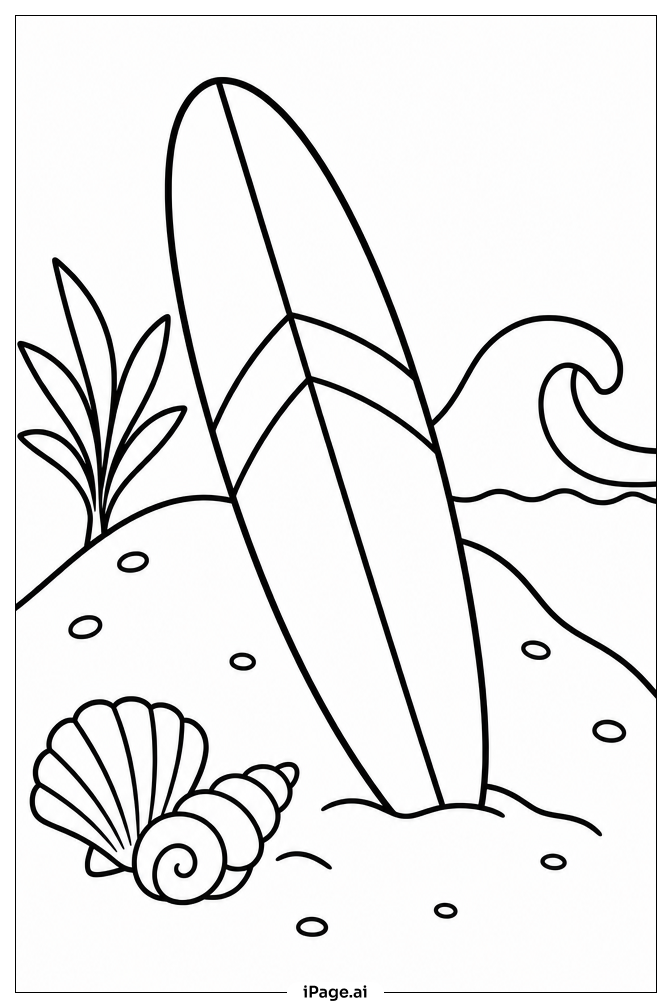
Coloring tips: How to color Surfboard Leaning On Dune coloring page well?
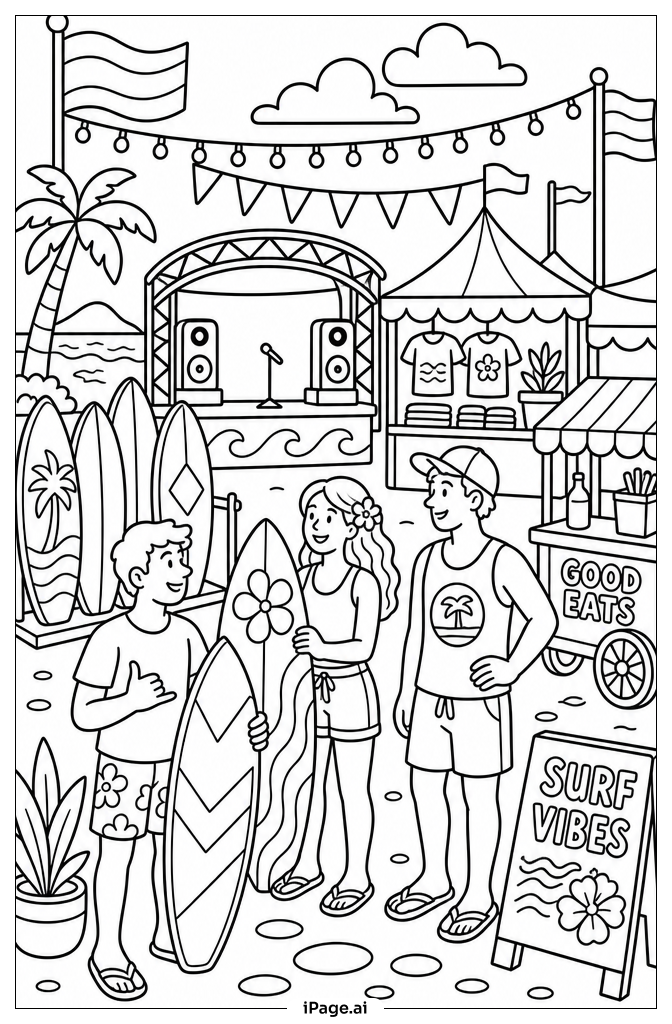
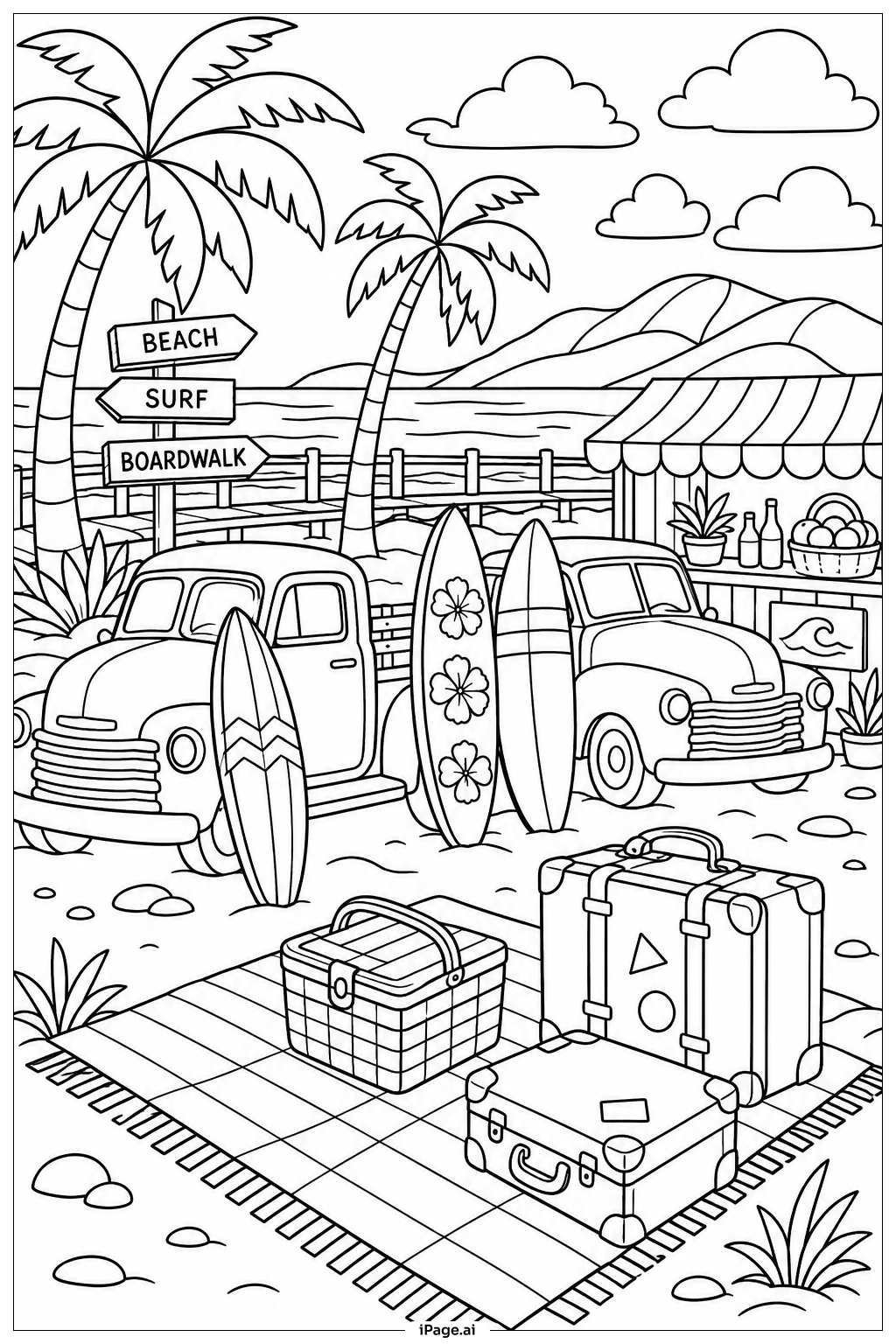
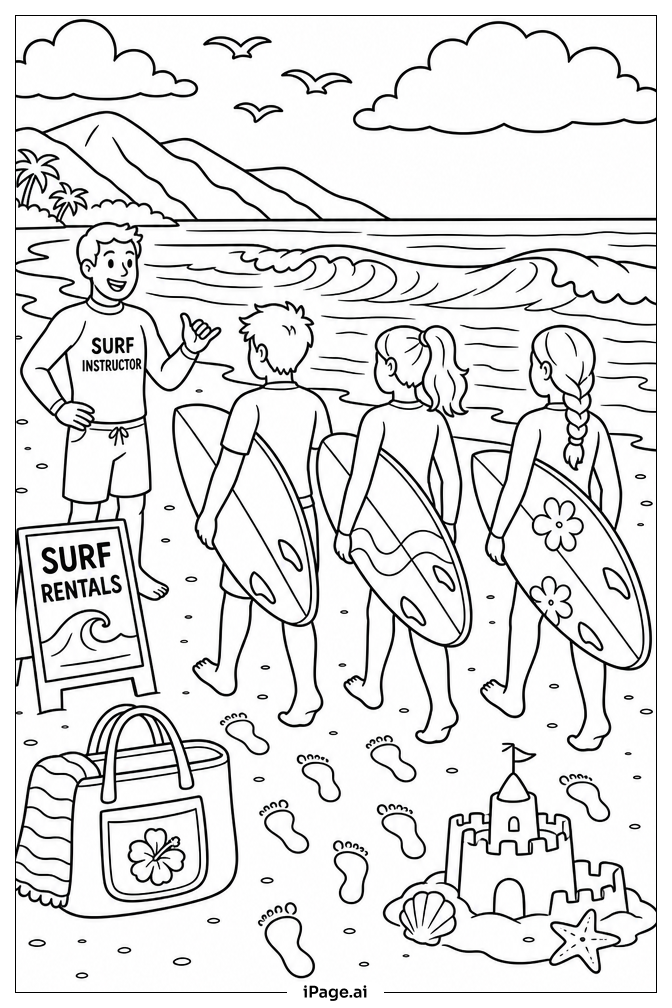
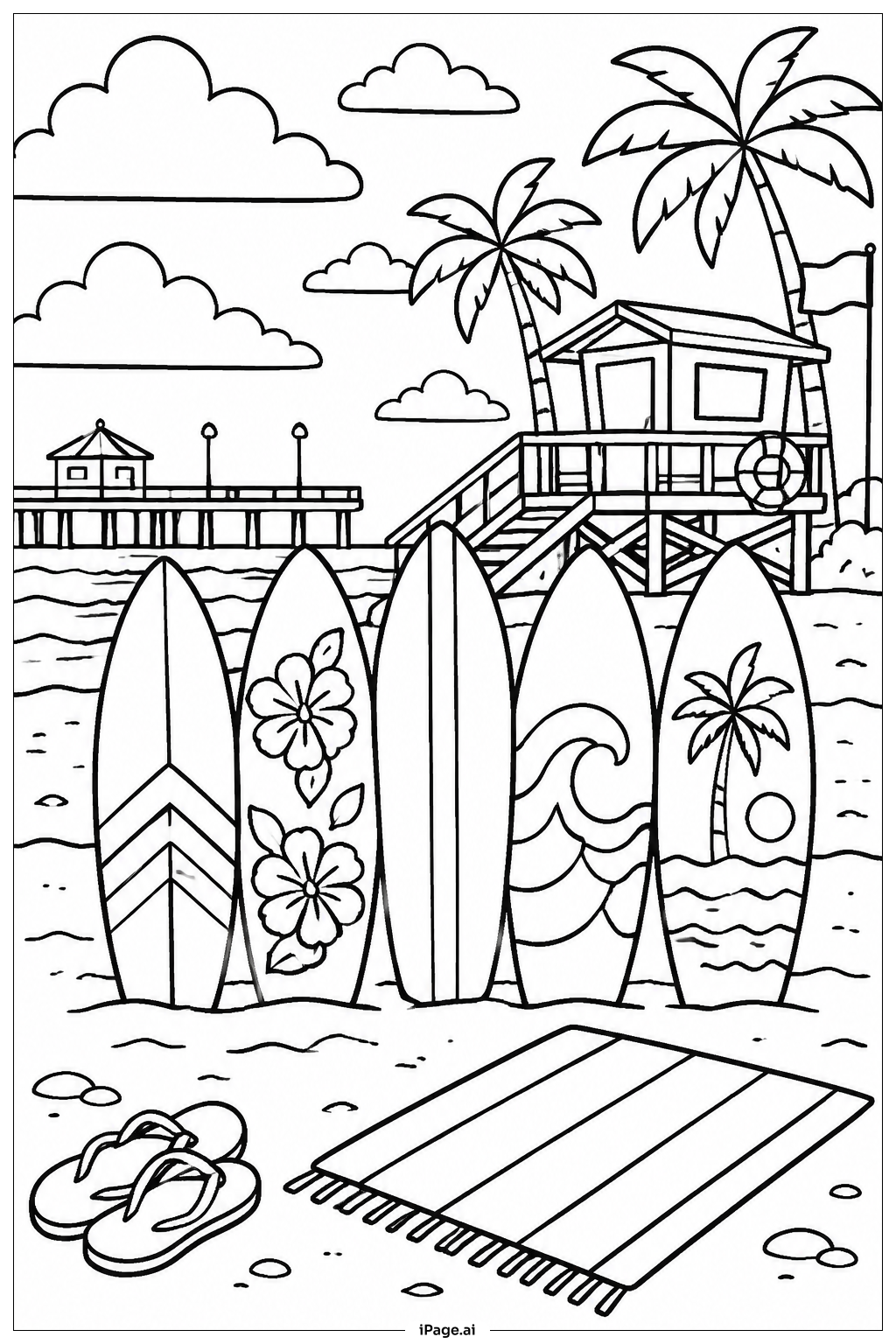
Start with the surfboard itself — this is the star of the image! Use bright, bold colors like red, yellow, blue, or neon orange. You can add fun stripes, zigzag patterns, or even flames and stars to make it your own design. For the sandy dune, use warm shades of tan, beige, or golden yellow. Blend in a little light brown near the base to show shadow and depth. The beach grass can be colored in soft greens — try mixing dark green at the roots and light yellow-green at the tips. If there is sky in the background, use a light sky blue or a warm peachy sunset tone. Don't be afraid to mix colors — layering light and slightly darker shades of the same color makes the sand and surfboard look more real and three-dimensional. Have fun and make it your own!
Coloring challenges: Which parts are difficult to color and need attention for Surfboard Leaning On Dune coloring page?
Coloring this image comes with a few fun challenges to keep in mind:\n\n• **Surfboard Design Details:** The surfboard's smooth, elongated shape can be tricky to color evenly without streaks or uneven patches. Using slow, steady strokes that follow the length of the board will help you get a clean, polished look. Adding patterns like stripes or swirls requires careful planning so lines stay neat and don't cross over into each other.\n\n• **Sand Texture on the Dune:** Sand looks simple, but capturing its soft, grainy texture is harder than it seems. Using short, light strokes in multiple warm tones — tan, beige, cream, and pale brown — can help create a realistic, sun-warmed surface. Avoid pressing too hard with one single color, as it can flatten the natural look of the dune.\n\n• **Beach Grass Details:** The thin, wispy blades of grass are some of the smallest and most delicate elements in the scene. Coloring each blade carefully without going over the lines takes patience and a sharp pencil or fine-tipped marker. Mixing two or three shades of green adds life and realism to these tiny plants.\n\n• **Shadows and Depth:** Creating a sense of depth — showing where the surfboard casts a shadow on the sand, or where the dune curves away from the light — requires blending darker tones in the right spots. This is a great skill-building challenge for more experienced young colorists who want their artwork to look dimensional and lifelike.
Benefits of coloring books: Advantages of drawing Surfboard Leaning On Dune coloring page
Coloring this beach scene is a wonderful and rewarding activity for kids and adults alike. Here are some of the great benefits:\n\n**Builds Creativity:** Designing your own surfboard colors and patterns lets you express your unique style. There are no wrong choices — every color combination tells a different story.\n\n**Improves Focus:** Carefully coloring the fine details of the grass blades and the smooth curves of the surfboard helps build concentration and patience — skills that are useful in school and everyday life.\n\n**Develops Fine Motor Skills:** Staying within the lines, blending colors on the sandy dune, and shading the surfboard all help strengthen hand control and coordination, especially for younger children.\n\n**Encourages Relaxation:** The calm, coastal theme of this image — a quiet dune, soft sand, and a surfboard at rest — creates a peaceful mood. Coloring it can feel like a mini mental vacation, reducing stress and calming the mind.\n\n**Sparks Curiosity About Nature:** This scene invites questions about beaches, dunes, ocean ecosystems, and surf culture, making it a natural starting point for learning about the natural world in a fun, engaging way.