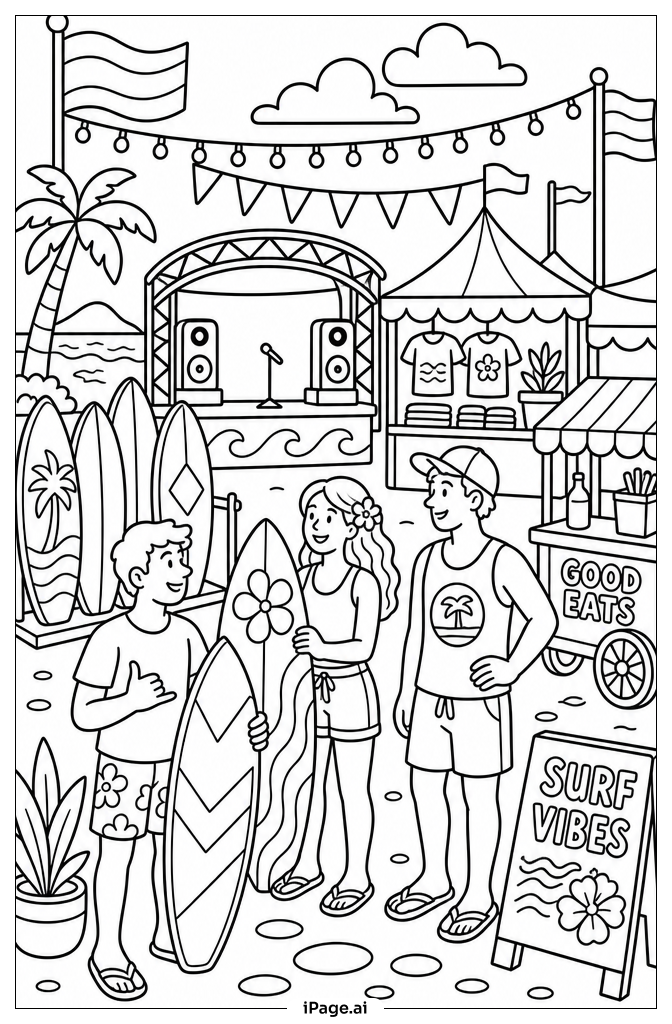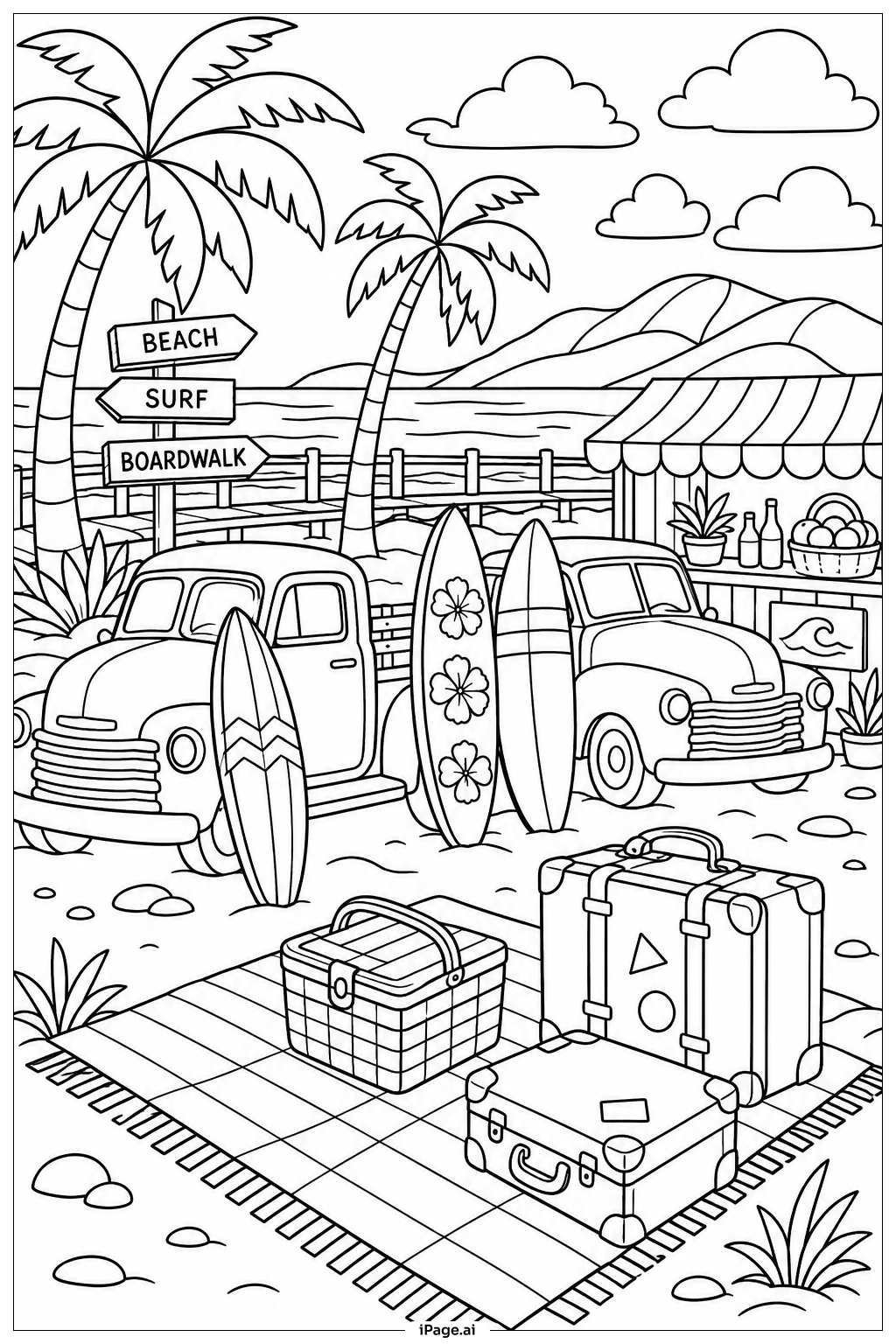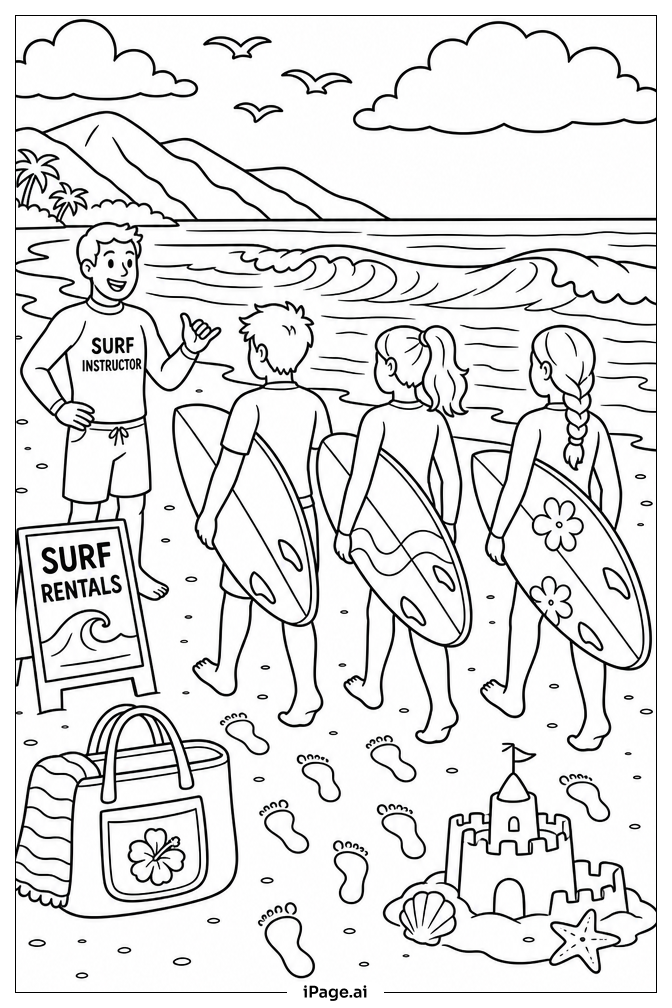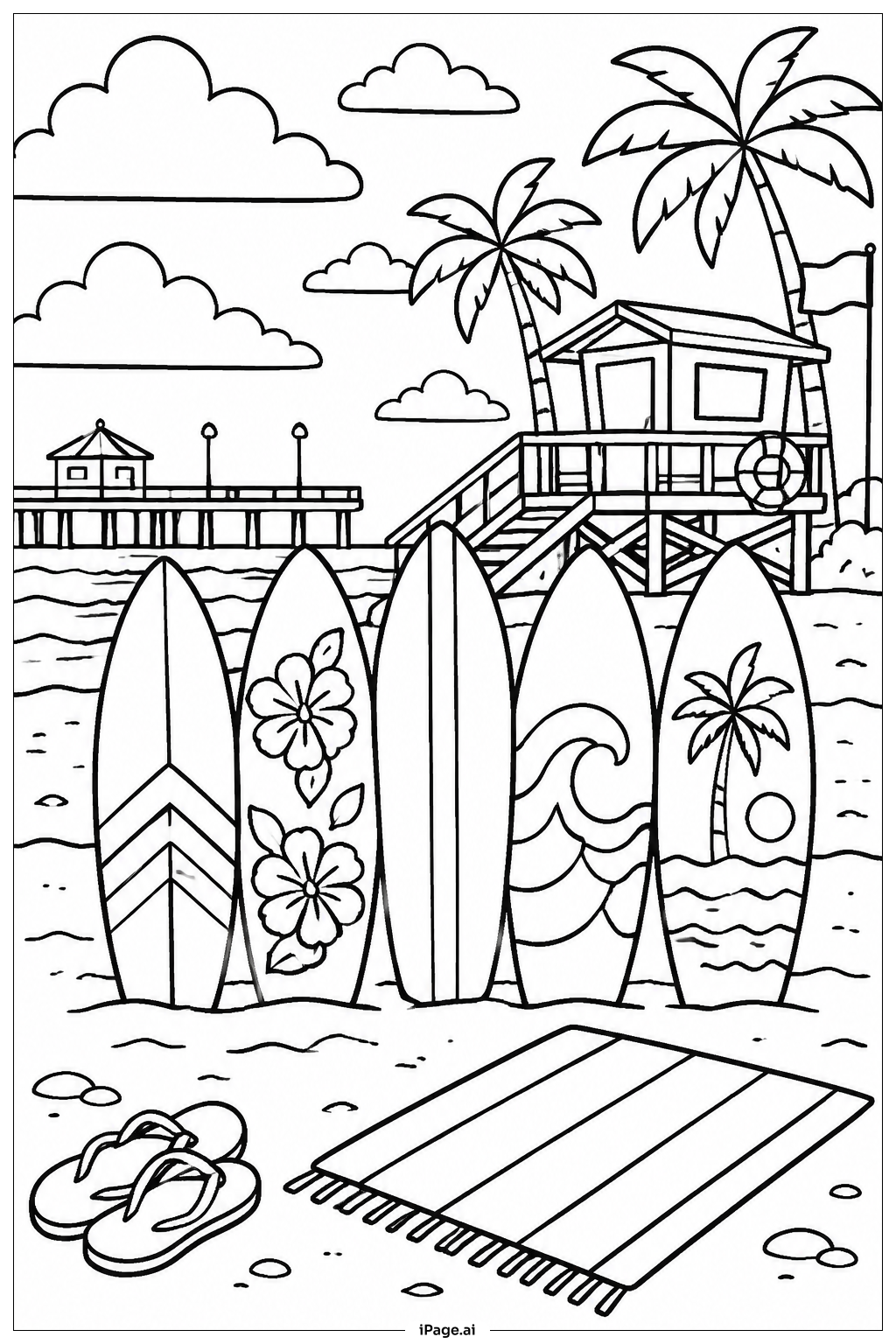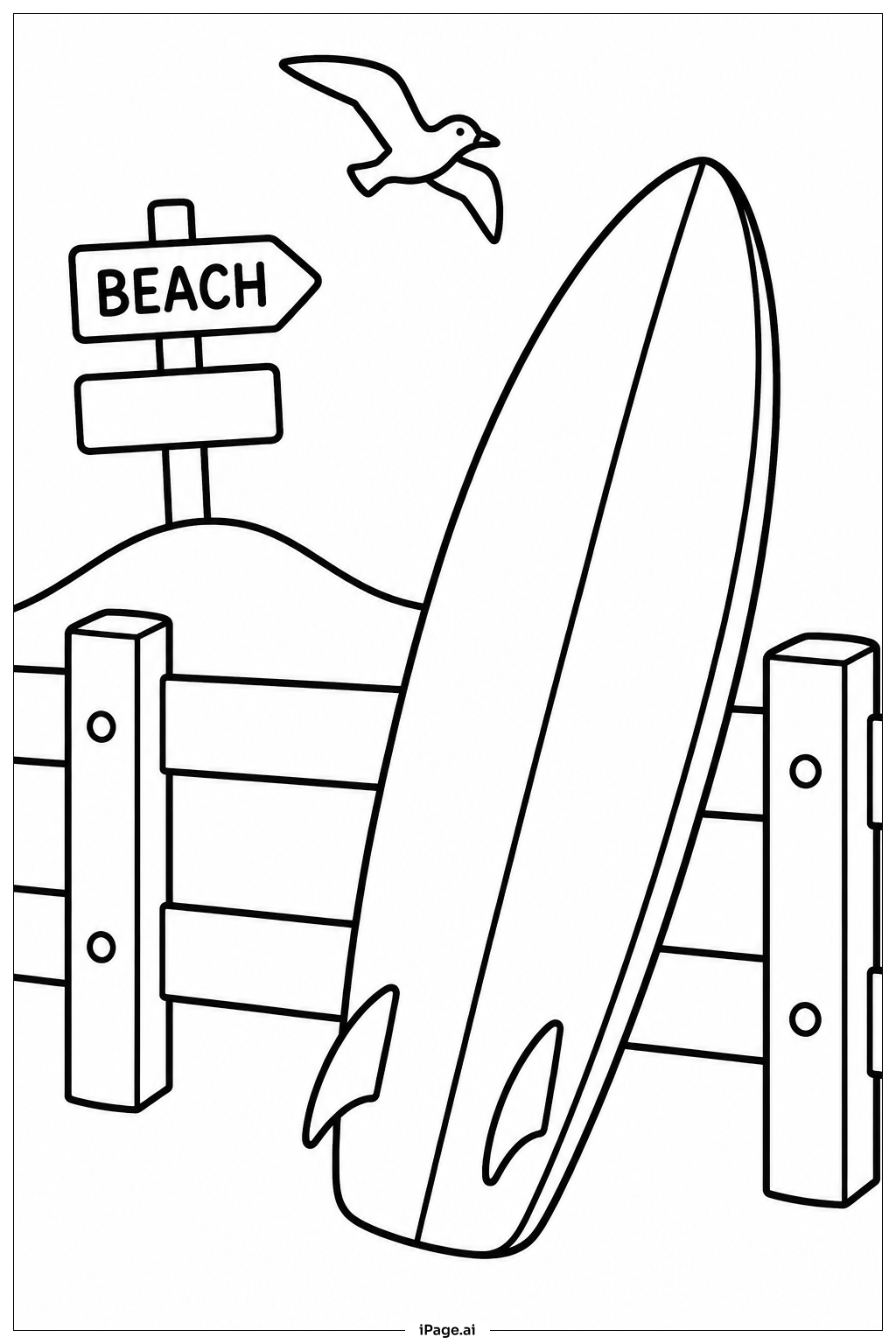
Coloring tips: How to color Surfboard By Wooden Fence coloring page well?
Start with the surfboard as the star of the page. Give it a bold, eye-catching design — try bright colors like turquoise, coral, yellow, or even a rainbow stripe pattern. You can add fun geometric shapes, flowers, or wave designs on the board to make it unique.
For the wooden fence, use warm browns and tans. Add darker brown streaks along the planks to mimic natural wood grain. You can also try a weathered gray-white look for a sun-bleached coastal feel.
Color the leaves in different shades of green — mix light and dark green for depth. Use soft pinks, purples, or yellows for any flowers.
For the ground, sandy beige or light golden tones work great. A soft blue sky in the background can complete the beach atmosphere. Don't be afraid to experiment — this is your artwork!
Coloring challenges: Which parts are difficult to color and need attention for Surfboard By Wooden Fence coloring page?
Coloring this image comes with several fun challenges that will help build your skills:
• **The Surfboard's Surface Design:** The surfboard has a large, smooth surface that invites creative patterns and color blending. Keeping colors neat within the board's curved edges can be tricky, especially near the pointed nose and rounded tail. Using a fine-tipped marker or colored pencil helps stay within the lines and add detail.
• **Wood Grain Texture on the Fence:** Recreating a realistic wood look requires layering colors. You need to apply a base brown tone and then add darker streaks along the planks to simulate grain. The fence posts and horizontal planks overlap at certain points, so planning which areas to shade differently takes a careful eye.
• **Small Decorative Details:** Any leaves, flowers, or small natural elements around the scene are compact and close together. Coloring these tiny areas without bleeding into neighboring sections demands patience and a steady hand, making this a great exercise in precision.
• **Consistent Light Direction:** For a more realistic result, deciding where the light source comes from and keeping shading consistent across the surfboard, fence, and ground can be challenging. Coloring the shadow side of each object slightly darker adds a professional three-dimensional look.
• **Background Balance:** Filling in the background without overpowering the main subjects — the surfboard and fence — requires color choices that feel harmonious. Using softer or lighter tones for the sky and ground helps keep the focus on the foreground details.
Benefits of coloring books: Advantages of drawing Surfboard By Wooden Fence coloring page
Coloring this Surfboard By Wooden Fence scene offers a wonderful range of benefits for kids and young artists alike.
**Creativity and Self-Expression:** Designing the surfboard's color scheme and patterns encourages free creative thinking. There are no wrong answers — every color choice makes the artwork uniquely yours.
**Fine Motor Skills:** Carefully coloring within the curved lines of the surfboard and the narrow planks of the fence helps strengthen hand control and coordination, skills that are useful in writing and everyday tasks.
**Focus and Patience:** Working through the detailed wood grain and small decorative elements trains concentration. Staying engaged with a task from start to finish builds healthy attention habits.
**Learning About Nature and Culture:** This scene introduces children to surf culture, coastal environments, and natural textures like wood. It sparks curiosity about the ocean and the world beyond the classroom.
**Relaxation and Stress Relief:** Coloring is a calm, meditative activity. The simple, peaceful beach setting naturally puts the mind at ease, making it a great way to unwind after a busy day.
**Color Theory Awareness:** Choosing colors for different elements — the board, fence, plants, and sky — helps young artists intuitively understand color harmony and contrast. It lays the groundwork for more advanced artistic thinking.