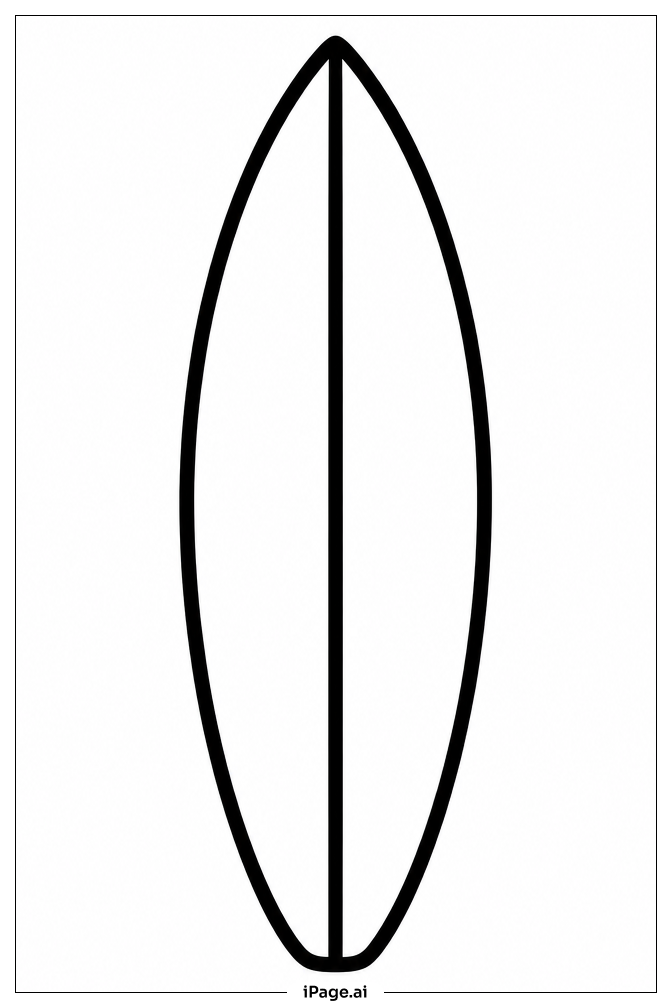
Coloring tips: How to color Shortboard Surfboard coloring page well?
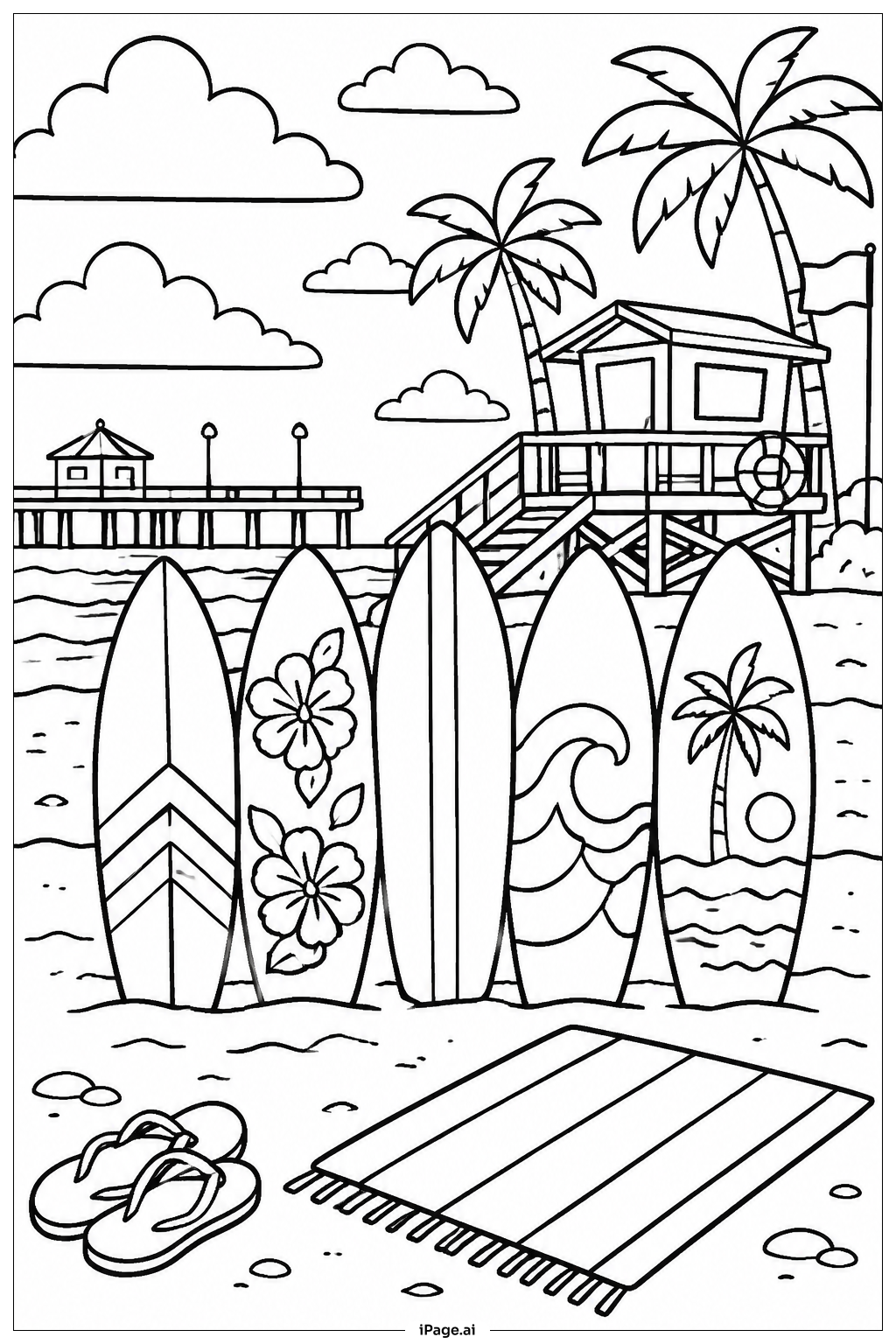
Start by choosing a base color for the main body of the board. Bright colors like neon yellow, electric blue, or fiery red work great and look just like real surf shop boards. Use a lighter shade of your base color along the center to show the curved shape of the deck. Color the fins a darker tone — dark gray, black, or deep navy — to make them stand out. For the decorative graphics, go bold. Try orange and white wave patterns, or mix purple and green for a funky retro look. Leave a thin white edge along the rails to give the board a clean, finished look. You can also add a gradient effect by blending two colors from nose to tail. The leash plug detail near the tail can be colored silver or metallic gold. Have fun mixing surf-inspired colors like turquoise, coral, and sunshine yellow to make your board totally unique.
Coloring challenges: Which parts are difficult to color and need attention for Shortboard Surfboard coloring page?
• Board Body Gradients: The sleek, elongated shape of the shortboard invites gradient coloring from nose to tail, but blending two or more colors smoothly along such a narrow surface can be tricky. Keeping the transition even without streaks or hard lines takes patience and a light hand, especially with colored pencils or markers.
• Fin Shading and Detail: The three fins at the tail are small and closely spaced. Coloring each one neatly without bleeding into the neighboring fin or the board's tail area requires a fine-tipped tool and careful control. Adding subtle shading to give the fins a three-dimensional look makes this even more challenging for younger colorists.
• Graphic Design Elements: The decorative patterns running along the board — such as wave shapes, stripes, or geometric figures — have tight borders and intricate lines. Staying within these small sections while using multiple colors demands precision and focus, particularly in areas where two pattern zones sit right next to each other.
• Rail Edge Definition: The thin outline along the rails of the board is a narrow strip that separates the deck color from the bottom color. Coloring this edge consistently in a contrasting tone without overlapping onto either side is a fine motor challenge, especially over the full length of the board.
• Consistent Color Balance: Because the board is long and symmetrical, both halves of any design need to look even and balanced. Keeping colors, patterns, and shading consistent from one side to the other requires attention and planning before you start filling in color.
Benefits of coloring books: Advantages of drawing Shortboard Surfboard coloring page
Coloring this Shortboard Surfboard page is a fun and rewarding activity for kids and teens who love the ocean, sports, or surf culture. Here are some great benefits:
It builds focus and concentration. Coloring within the detailed outlines and graphic patterns trains the brain to pay close attention to small areas for extended periods.
It develops fine motor skills. Using pencils, markers, or crayons to fill in narrow fins, rail edges, and decorative shapes strengthens hand-eye coordination and finger control — skills that help in writing and drawing too.
It sparks creativity. There is no single right way to color a surfboard. Kids get to experiment with colors, patterns, and styles, making every board one of a kind. This freedom builds creative confidence.
It teaches color theory in a practical way. Trying gradients, contrasting tones, and complementary color combinations on the board is a hands-on introduction to basic art concepts.
It is calming and stress-relieving. The rhythmic motion of coloring helps kids relax, unwind, and enter a focused, peaceful state — great after a busy school day.
It also connects kids to the exciting world of surfing and ocean sports, making this coloring page both educational and inspiring.