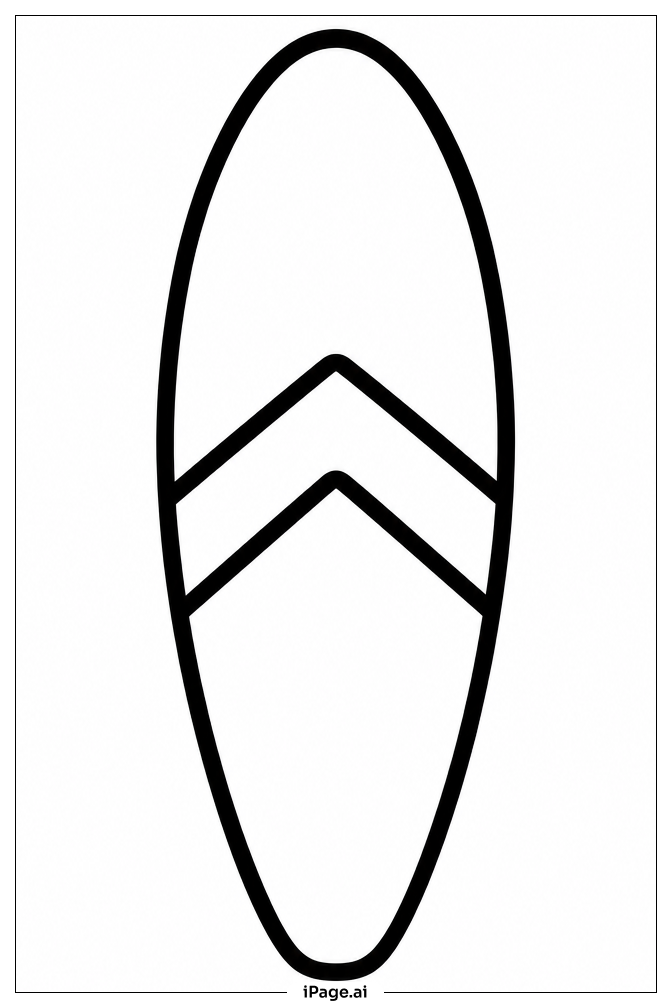
Coloring tips: How to color Retro Surfboard coloring page well?
Start with the main body of the surfboard. Choose a bright base color like yellow, orange, or sky blue for the large center panel — these colors remind people of sunny beach days. Use a contrasting color like red or deep purple for the bold stripes running along the sides. For the wave or tropical motif in the middle, try teal or aqua to bring in ocean vibes. Color the sunburst or flame designs in warm shades like orange, coral, and gold to make them pop. Fill in any stars with bright white or metallic gold. Keep the outline details clean by using a thin marker or colored pencil for small areas. Feel free to mix and match — retro surf style is all about bold, happy colors that look great together!
Coloring challenges: Which parts are difficult to color and need attention for Retro Surfboard coloring page?
Coloring this retro surfboard comes with a few fun challenges to watch out for:\n\n• **Staying within the fine decorative lines:** The surfboard features detailed stripes, sunburst patterns, and intricate motifs that have narrow borders. Keeping your colors neatly inside these small sections requires a steady hand and a sharp pencil or fine-tip marker. Younger artists may find this especially tricky.\n\n• **Choosing a balanced color scheme:** Because the board has many separate sections — the main panel, the side stripes, the center design, and small accent shapes — picking colors that all work together without clashing can be a real challenge. Going too random can make the final result look busy or confusing.\n\n• **Smooth, even coverage on large areas:** The long, flat panels of the surfboard are wide open spaces. Filling them in smoothly without streaks or uneven patches takes patience, especially when using colored pencils. Building up color in light layers helps, but it takes time.\n\n• **Transitioning between adjacent colors:** Many sections sit right next to each other with no gap between them. Preventing one color from bleeding into the next — especially with markers or watercolors — requires careful attention and letting each section dry fully before moving on.\n\n• **Maintaining the retro aesthetic:** Retro surf art relies on bold, confident color blocks. Using colors that are too soft or pastel can make the board lose its vintage energy. Committing to saturated, vivid tones while still keeping the design cohesive is one of the most rewarding — and demanding — parts of this page.
Benefits of coloring books: Advantages of drawing Retro Surfboard coloring page
Coloring this retro surfboard is a wonderful activity for kids and young artists of all skill levels. Here are some great reasons to pick up your colors and get started:\n\n**Builds focus and patience:** Working carefully within the detailed lines of the surfboard helps children practice concentration and develop a steady, patient approach to creative tasks.\n\n**Sparks creativity:** Choosing your own colors and designing your very own surfboard encourages imaginative thinking. There is no wrong answer — every color choice makes the board uniquely yours.\n\n**Teaches color theory:** Experimenting with complementary and contrasting colors on the different sections of the board is a fun, hands-on way to learn how colors interact with each other.\n\n**Introduces surf and beach culture:** This retro design gives kids a playful peek into the colorful history of surfing and vintage beach art, broadening their awareness of art styles from different times.\n\n**Reduces stress and promotes relaxation:** The rhythmic, focused activity of coloring is calming and enjoyable. It gives kids a healthy way to unwind and express themselves without screens.\n\n**Builds fine motor skills:** Carefully coloring within the detailed patterns strengthens hand control and coordination, skills that are valuable in writing, drawing, and everyday life.