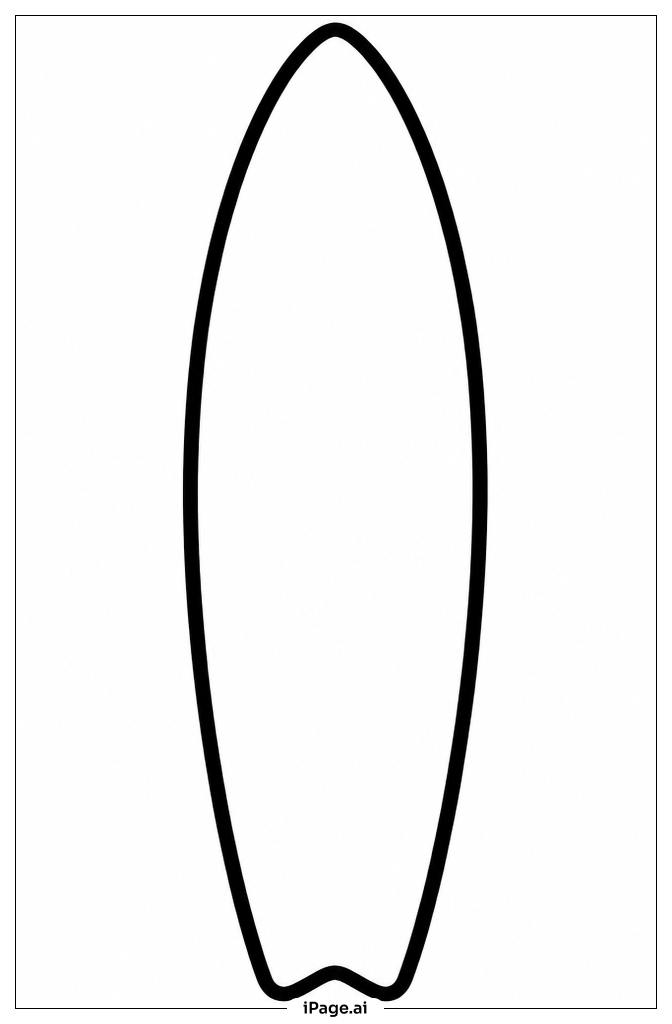
Coloring tips: How to color Plain Surfboard coloring page well?
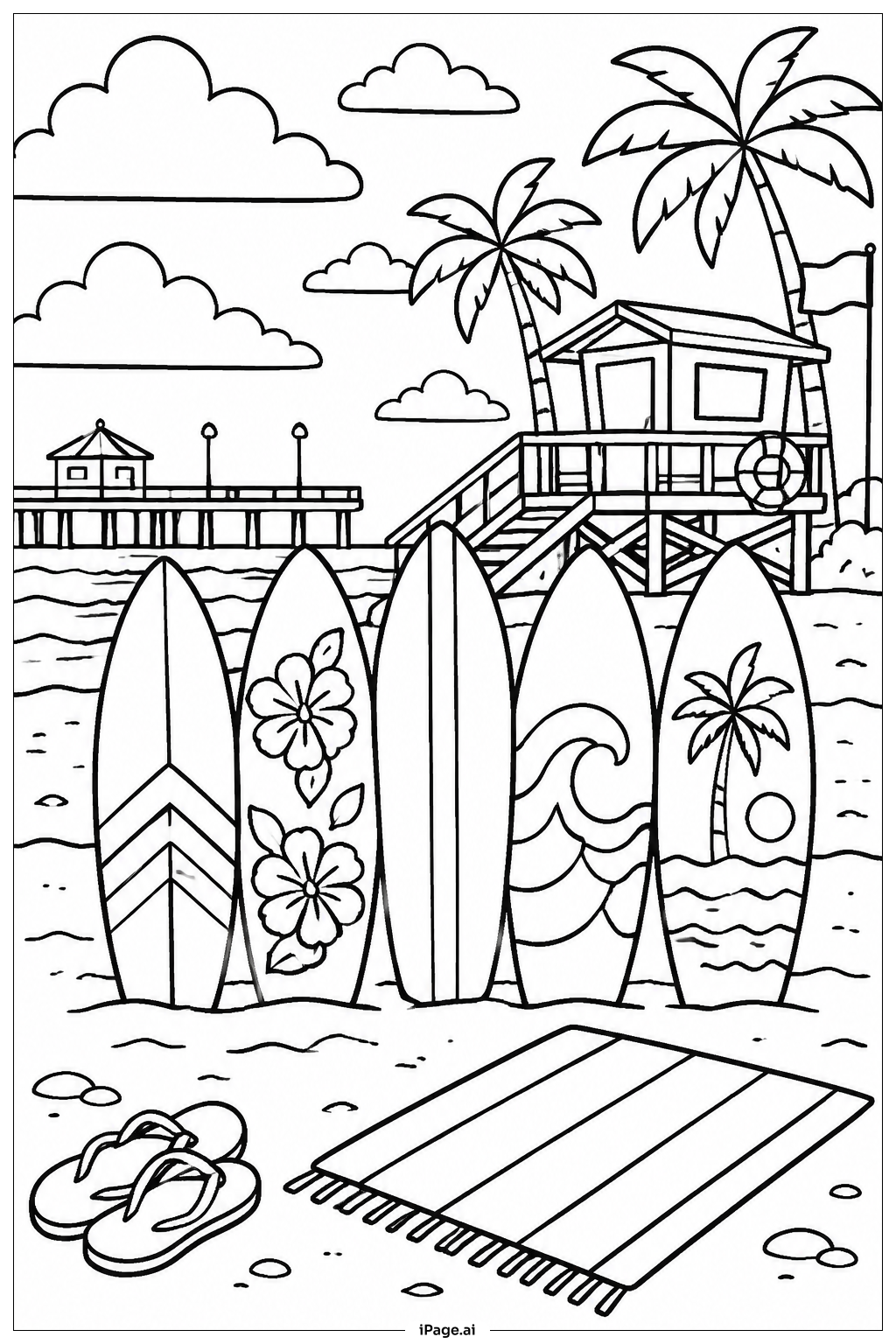
Start by picking a base color for the main body of the surfboard. Bright colors like yellow, orange, or sky blue work great and give the board a fun, beachy feel. You can also try a gradient effect by blending two colors together — for example, going from pink at the top to purple at the bottom. Once the base is done, add stripes, zigzag lines, or bold shapes to decorate the surface. Tropical designs like flowers, waves, or suns look amazing on a surfboard. Use a darker shade of your base color to add light shading along the edges to make the board look rounded and three-dimensional. Color the fin a contrasting color to make it stand out. Don't be afraid to mix patterns and colors — surfboards in real life are all about bold, creative designs!
Coloring challenges: Which parts are difficult to color and need attention for Plain Surfboard coloring page?
Coloring this surfboard image looks simple, but there are a few challenges to watch out for:\n\n• **Keeping edges clean and smooth:** The surfboard has long, curving edges that require a steady hand. Staying inside the lines along the narrow nose and tail areas can be tricky, especially for younger colorists. Using a fine-tipped marker or colored pencil first to outline the border before filling in the center can help a lot.\n\n• **Creating an even base color:** Because the surfboard's body is large and flat, applying color evenly across the whole surface without streaks or patches takes patience. Colored pencils should be applied in smooth, consistent strokes going in the same direction. Markers work well but may show overlap marks if not applied carefully.\n\n• **Adding depth and dimension:** A plain surfboard can look flat if colored with just one solid tone. Adding shading along the edges — using a slightly darker version of the main color — helps the board look curved and realistic. Blending two colors smoothly is a skill that takes some practice.\n\n• **Designing patterns without overcrowding:** Decorating the surface with stripes, waves, or other motifs is fun, but it's easy to make the design feel too busy. Planning the layout lightly in pencil before committing with color helps keep the design balanced and visually appealing.\n\n• **Coloring the small fin accurately:** The fin at the bottom is a small detail that requires careful attention. Using a fine-tipped tool and a steady hand ensures the fin is neatly colored without bleeding into the board's body.
Benefits of coloring books: Advantages of drawing Plain Surfboard coloring page
Coloring this Plain Surfboard page offers a wide range of benefits for kids and beginners alike. First, it helps build fine motor skills. Following the long, smooth curves of the surfboard trains hand steadiness and pencil control, which are important for writing and drawing. Second, it sparks creativity. The wide, open surface of the board is like a blank canvas — kids are encouraged to invent their own patterns, color combinations, and surf-inspired designs. This kind of open-ended activity boosts imaginative thinking. Third, it teaches color theory in a fun, hands-on way. Choosing colors that look good together, experimenting with gradients, and adding shading all introduce basic art concepts without any pressure. Fourth, it promotes focus and patience. Filling in a large surface evenly and decorating it with detail requires concentration, helping children practice sitting still and seeing a task through to the end. Finally, it connects kids to the world around them. Learning about surfboards can spark curiosity about ocean sports, beach environments, and coastal cultures, turning a simple coloring activity into a small window to the wider world.