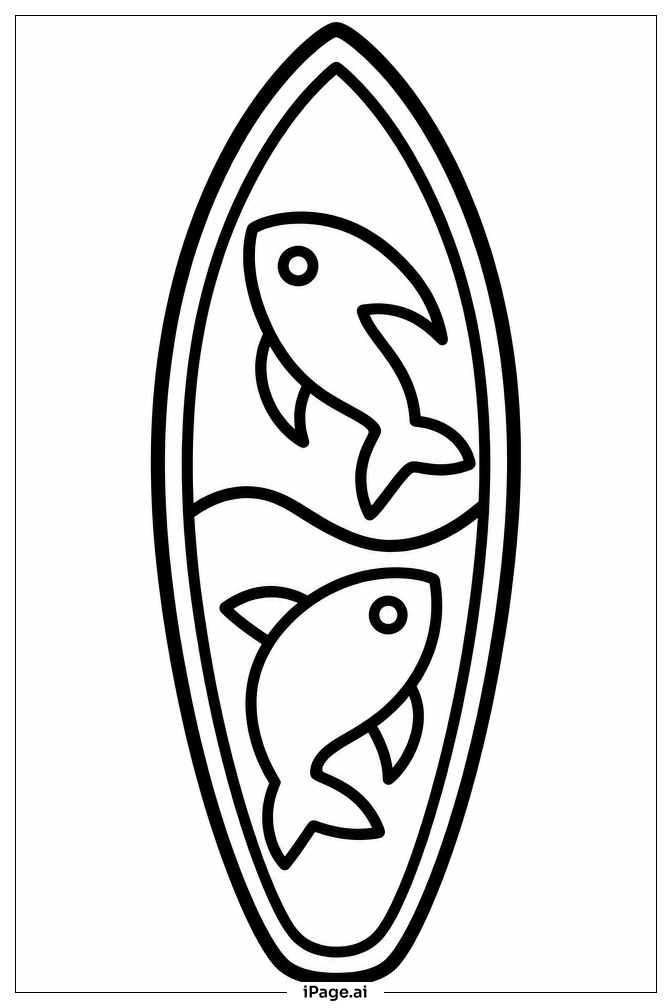
Coloring tips: How to color Fish Surfboard coloring page well?
Start with the fish-surfboard body. You can go with bright ocean colors like turquoise, coral, or sunny yellow to make it pop. Use a darker shade of the same color for the scales to add depth — just color every other scale slightly darker for a cool pattern effect. The tail and side fins look great in a contrasting color, like orange or lime green. For the eye, try a bold color like deep blue or black with a small white highlight dot to make it look alive. The background waves and bubbles can be filled in with soft light blues and aquas. Keep the bubble outlines light or leave them white so they look like real bubbles floating in water. If you want a sunset beach vibe, try warm pinks and oranges in the background instead. Don't be afraid to mix colors — this is your ocean adventure!
Coloring challenges: Which parts are difficult to color and need attention for Fish Surfboard coloring page?
Coloring this Fish Surfboard image is a fun challenge with a few tricky parts to watch out for:
• **Scale patterns:** The fish body is covered in overlapping scales, and coloring each one individually takes patience and a steady hand. Using colored pencils or fine-tipped markers will help you stay inside each small curved section without bleeding into the next one. Choosing two or three shades of the same color can make the scales look layered and realistic.
• **Small details around the fins:** The side fins and tail fin have fine line details inside them. These narrow sections are hard to color neatly, especially for younger artists. Thin markers or sharpened pencils work best here to avoid going outside the lines.
• **Background bubbles and waves:** The bubbles are small and round, making them easy to accidentally fill in too heavily. A light touch is important — use a soft color or gentle strokes so the bubbles still look transparent and airy rather than solid.
• **Staying consistent across the body:** Because the fish-surfboard is a large shape, keeping your colors even and smooth across the whole surface can be tricky. Colored pencils applied in one direction with gentle, repeated strokes help avoid streaks or blotchy patches.
• **Color balance between fish and background:** Making sure the fish stands out from the background without clashing requires some color planning. Choosing warm colors for the fish and cool colors for the water background — or vice versa — is a simple trick that always works well.
Benefits of coloring books: Advantages of drawing Fish Surfboard coloring page
Coloring this Fish Surfboard page offers a great mix of fun and learning for kids and beginners alike.
**Creativity boost:** The unique fish-surfboard design lets kids experiment freely with color combinations. There's no single "right" answer, so imagination takes the lead. Trying different ocean palettes or even wild fantasy colors builds creative confidence.
**Fine motor skills:** Carefully coloring the individual scales, fin details, and small bubbles helps young artists practice hand control and pencil grip. These are important skills that support handwriting and everyday dexterity.
**Focus and patience:** Working through the many small sections of this detailed image encourages children to slow down, concentrate, and finish what they start — building healthy attention habits.
**Ocean awareness:** The sea-themed design naturally sparks curiosity about marine life, waves, and ocean habitats. It can open up conversations about fish, surfing culture, and caring for our oceans.
**Relaxation and fun:** Coloring is a calm, screen-free activity that helps kids (and adults) unwind. The playful subject matter keeps it enjoyable from start to finish, making it easy to come back to again and again.