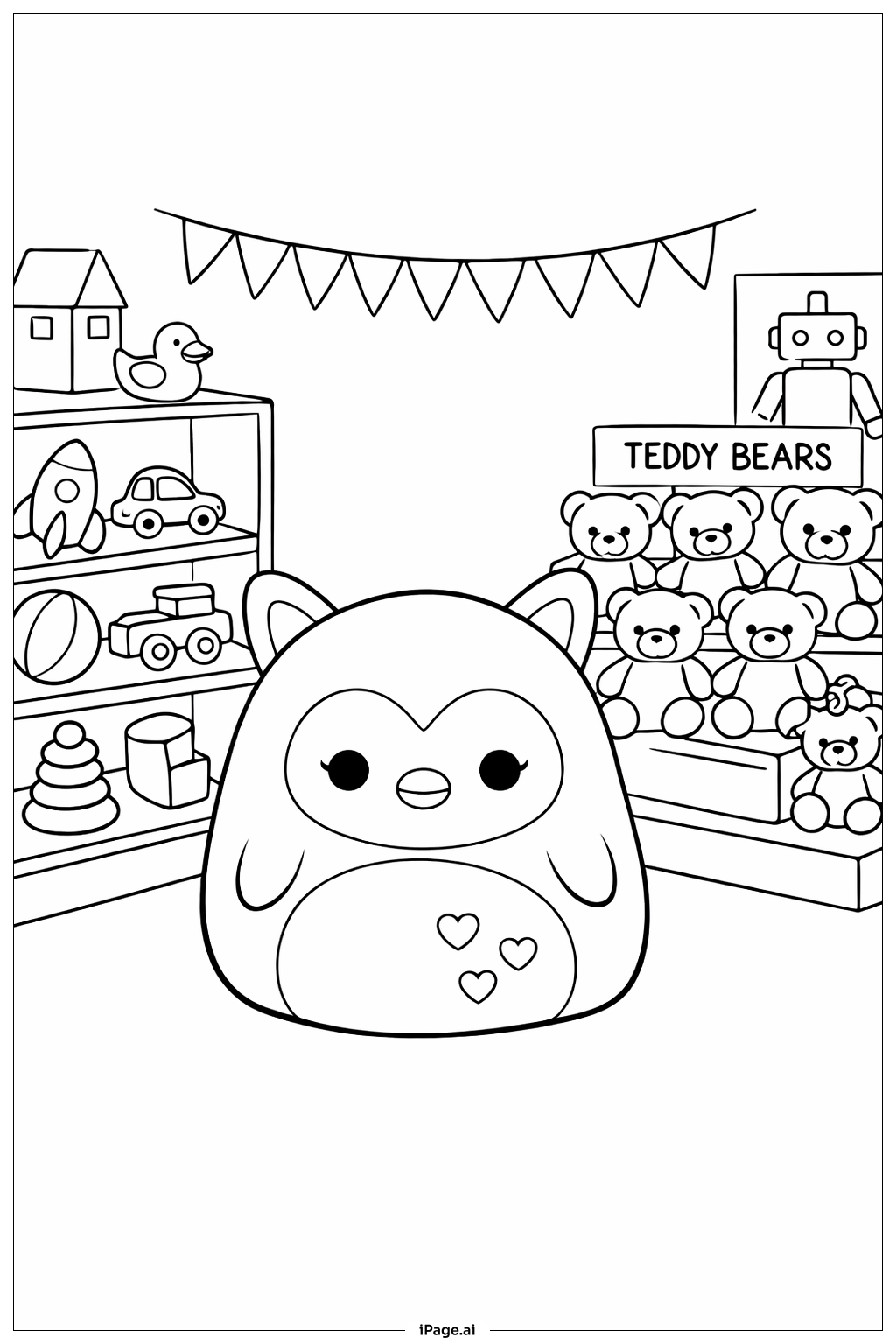
Coloring tips: How to color Squishmallow Toy Shop coloring page well?
Start with the Squishmallow characters on the shelves. Use soft, pastel shades like light pink, lavender, mint green, and baby blue to give them their signature sweet and cozy look. Each Squishmallow can have its own unique color combo — try yellow and white for the unicorn, soft green for the dinosaur, and pale pink for the axolotl. Use warm tan or peach tones for the shopkeeper's skin and clothing. Color the shop walls in a cheerful cream or light yellow. The shelves can be a light wood brown. Make the banners and balloons pop with bright colors like red, orange, and purple. For the display window, use a soft sky blue. Let kids choose their own color combinations for the Squishmallows on display — there are no wrong choices here. The more colorful and playful, the better. Use darker shades to add gentle shadows and give the Squishmallows their fluffy, rounded look.
Coloring challenges: Which parts are difficult to color and need attention for Squishmallow Toy Shop coloring page?
• Squishmallow Rounded Forms: Each Squishmallow has a soft, round, marshmallow-like body. Capturing the smooth, chubby shape with shading is tricky. You need to blend colors carefully to show their puffy, three-dimensional look without making them appear flat. Using circular shading strokes from the center outward can help give them a plush, rounded appearance.
• Crowded Shelf Layout: The shelves are packed with many Squishmallows of different sizes. Keeping each character visually separate while coloring in a tight space is challenging. Using slightly different color palettes for each Squishmallow and leaving thin uncolored borders between them can help define each one clearly.
• Facial Expressions: The tiny, delicate faces on each Squishmallow — with their small dot eyes, curved smiles, and blushing cheeks — require a very light and precise touch. Using fine-tipped colored pencils or thin markers works best for these details. The blush marks especially need a soft, feathered application to look natural and sweet.
• Decorative Elements: The shop is full of small details like banners, price tags, balloons, and bunting. These elements are small and close together, which makes them hard to color neatly without colors bleeding into each other. Patience and a light hand are key when working on these areas.
• Background Depth: The scene has a foreground (kids and counter), a mid-ground (shelves), and a background (walls and window). Creating a sense of depth by using lighter, cooler tones in the background and warmer, more saturated tones up front adds realism but requires planning before you begin.
Benefits of coloring books: Advantages of drawing Squishmallow Toy Shop coloring page
Coloring this Squishmallow Toy Shop scene offers a wide range of fun and developmental benefits for kids and young artists. First, it encourages creativity. With so many Squishmallow characters to color, kids get to experiment with different color palettes and make each plush toy their own. Second, it builds fine motor skills. Carefully coloring the small faces, tiny banners, and detailed shelves helps strengthen hand control and pencil grip, which are important skills for writing and everyday tasks. Third, it supports focus and concentration. A detailed scene like this invites children to slow down, pay attention to each section, and stay engaged for an extended period of time. Fourth, it sparks imagination. The toy shop setting naturally invites kids to dream up stories — maybe they are the shopkeeper, or they are picking out their favorite Squishmallow as a gift. This kind of storytelling through art supports emotional and social development. Finally, finishing the page gives a real sense of accomplishment and boosts confidence. Whether kids color it simply or spend time adding shading and detail, every completed page is something to be proud of. It is a joyful, screen-free activity the whole family can enjoy together.