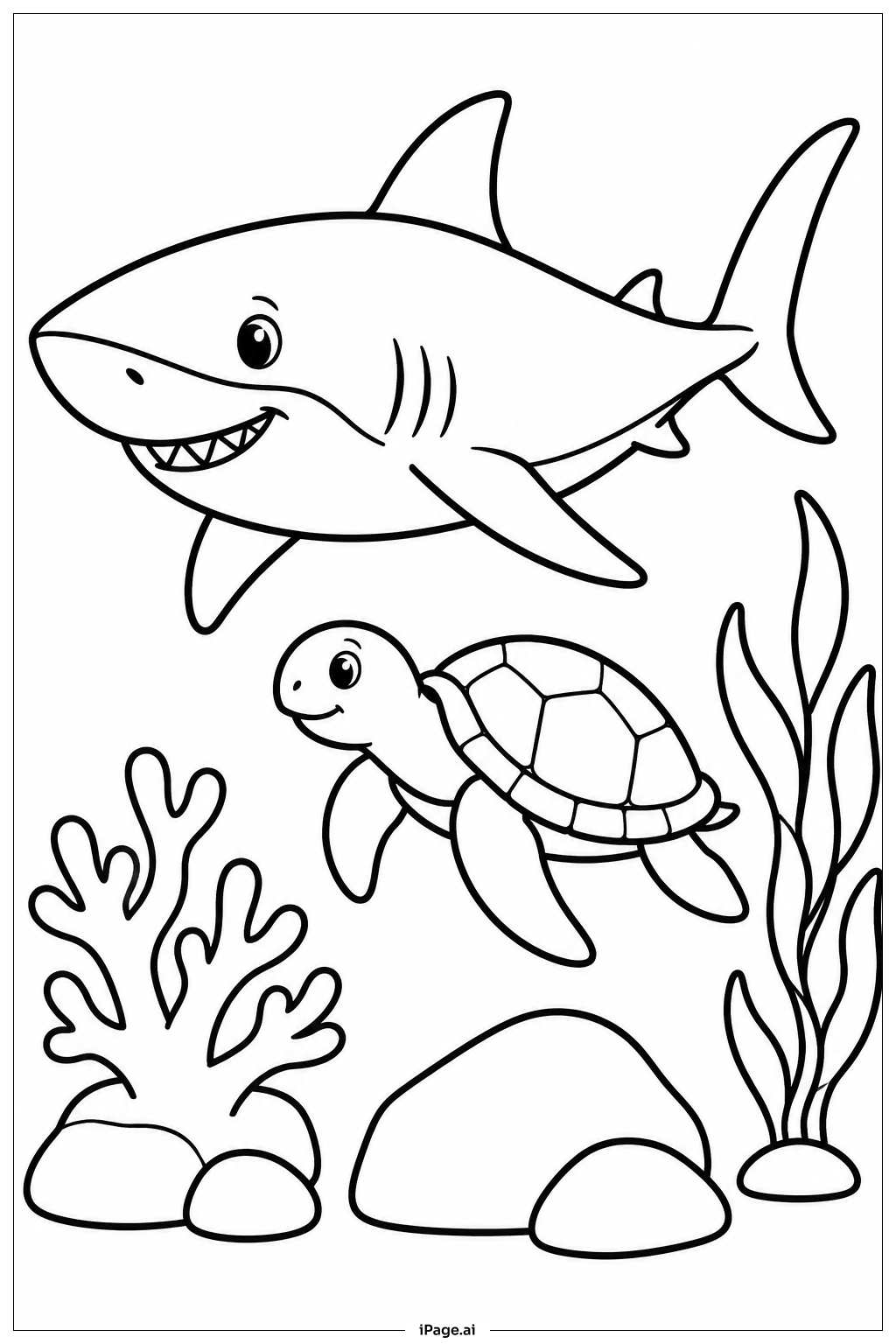
Coloring tips: How to color Shark With Sea Turtle coloring page well?
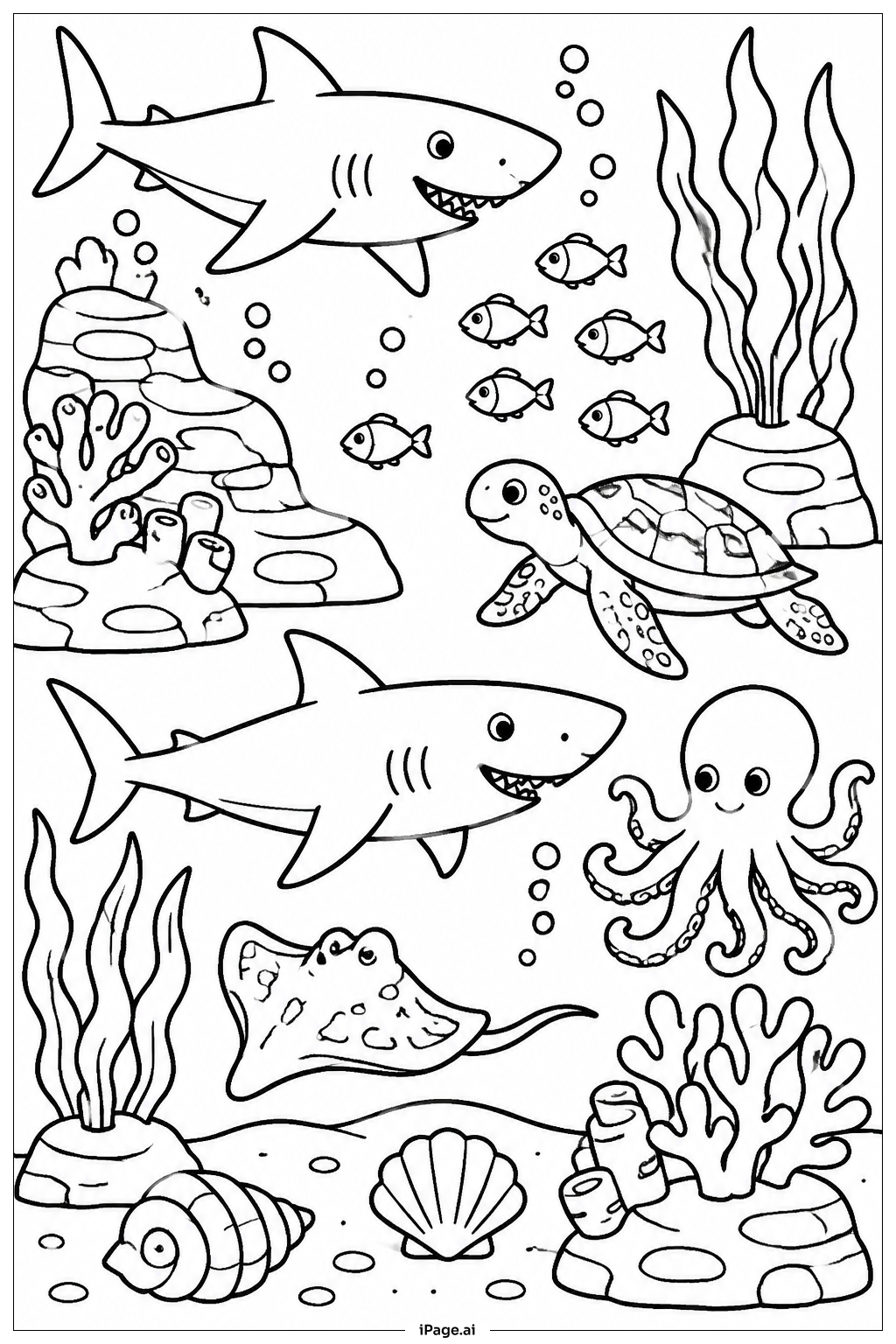
For this image, you can use shades of grey, blue, and white to color the Shark, as these colors closely resemble many real-life shark species. The Sea Turtle can be colored with earthy greens and browns for its shell and a softer green or yellow-green for its skin. Try using lighter blues for the ocean background to create a clear underwater feel. You can add some light shading on the Shark’s body to show its sleek texture. For the turtle’s shell, use different greens and browns to highlight the patterned plates. Don’t forget to color the bubbles with soft white or light blue to give them a shiny effect. Using a variety of blues and greens will make the ocean scene lively and inviting.
Coloring challenges: Which parts are difficult to color and need attention for Shark With Sea Turtle coloring page?
• Detailed Patterns: The Sea Turtle’s shell has many small patterned sections that require careful coloring to keep colors inside the lines and maintain the intricate look.
• Smooth Shading: The Shark’s smooth body surface needs gradual shading to create a realistic sense of form and depth, which can be challenging for beginner colorers.
• Color Balance: Balancing the natural colors of both animals with the blue underwater background is tricky because you want both to stand out without clashing.
• Small Elements: There are tiny bubbles and underwater plants that might be hard to color neatly due to their size and detail.
• Consistent Direction: Coloring the Shark’s body to show its streamlined shape means paying attention to coloring strokes, which should follow the body’s curves for a natural effect.
Benefits of coloring books: Advantages of drawing Shark With Sea Turtle coloring page
Coloring this image helps children develop fine motor skills through detailed patterns on the turtle’s shell and small underwater elements. It also encourages observation of nature, inspiring them to learn about marine animals like sharks and turtles. Working with shading and different color tones improves their understanding of light, depth, and blending techniques. This image promotes creativity by allowing kids to choose colors and experiment with ocean themes. Additionally, coloring animals that coexist peacefully can reinforce a positive message about harmony and respect in nature.