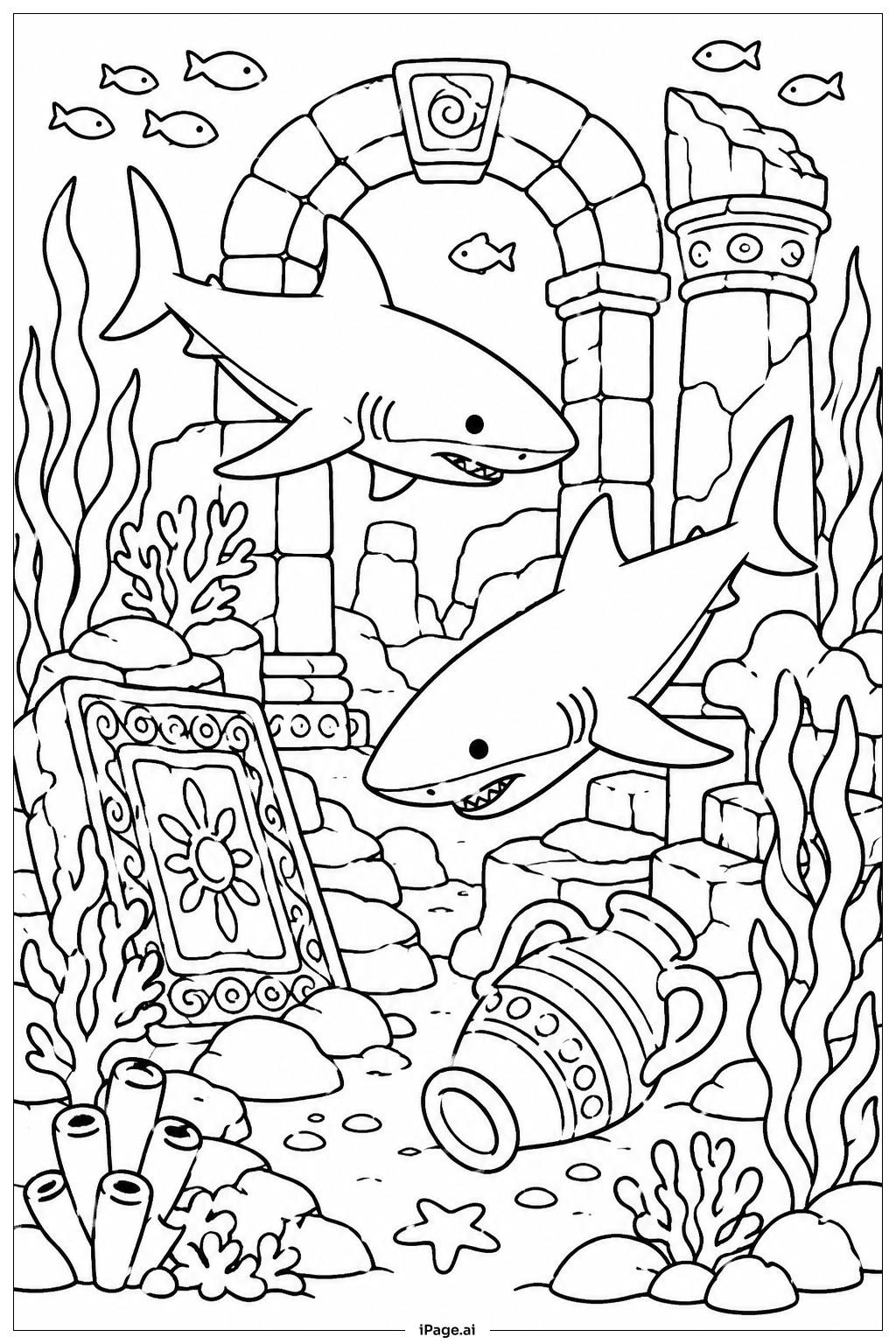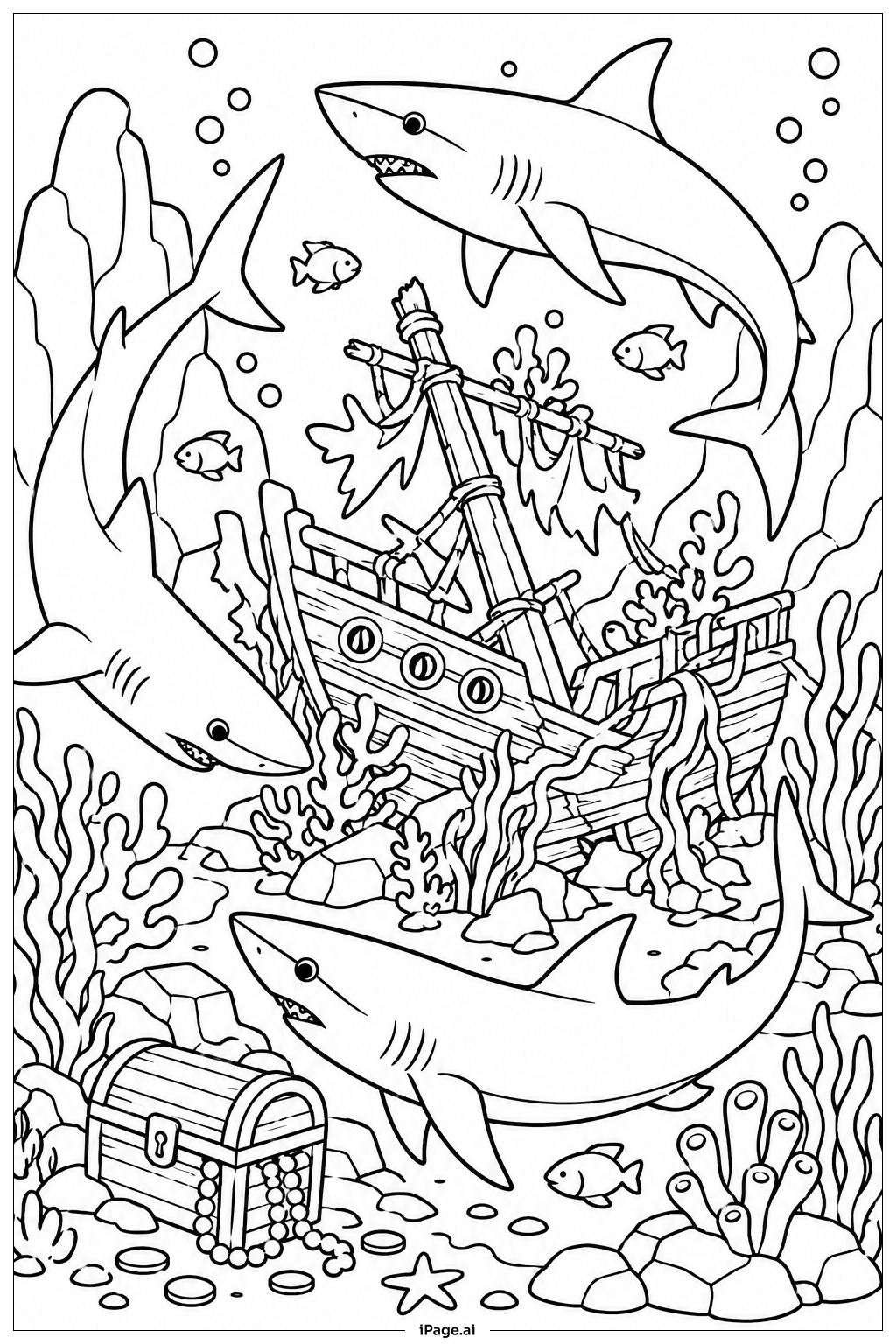
Coloring tips: How to color Shark Patrol Around Shipwreck coloring page well?
Use different shades of gray, blue, and white to color the sharks, giving them a natural and realistic look. The shipwreck can be colored with browns and rusty reds to show the old wood and metal parts. You can make the seaweed and corals bright green, orange, and purple to add bursts of vivid color. Color the background ocean in soft blues and turquoise to create a sense of depth. Try blending darker tones near the shipwreck and lighter blues near the surface. For extra fun, add colorful fish with bright yellows, reds, and blues swimming around the wreck to bring the whole underwater world alive.
Coloring challenges: Which parts are difficult to color and need attention for Shark Patrol Around Shipwreck coloring page?
• Shark Details: Coloring the sharks requires attention to shading to capture their smooth, streamlined bodies. Getting the right gradients can be tricky for younger colorers. • Shipwreck Texture: The shipwreck has many small broken parts and rough textures. Coloring these areas evenly while showing wood grain and rust is challenging. • Sea Plants: The seaweed and coral clusters are detailed and overlapping, needing careful coloring to keep each element distinct. • Depth and Water Effects: Creating a sense of underwater depth with blending in the ocean background may be difficult without practice. • Small Fish and Bubbles: The tiny fish and bubbles require fine motor skills to color inside small spaces accurately.
Benefits of coloring books: Advantages of drawing Shark Patrol Around Shipwreck coloring page
Coloring this image helps develop fine motor skills by practicing control over small spaces and detailed textures. It encourages creativity in choosing colors for underwater plants, fish, and the ocean backdrop. The activity also teaches observational skills as children learn how to add shading and highlights to make sharks appear lifelike. Additionally, it sparks curiosity about marine life and shipwrecks, fostering imagination and interest in ocean exploration. Coloring such dynamic scenes builds patience, focus, and a sense of accomplishment after completing a complex picture.