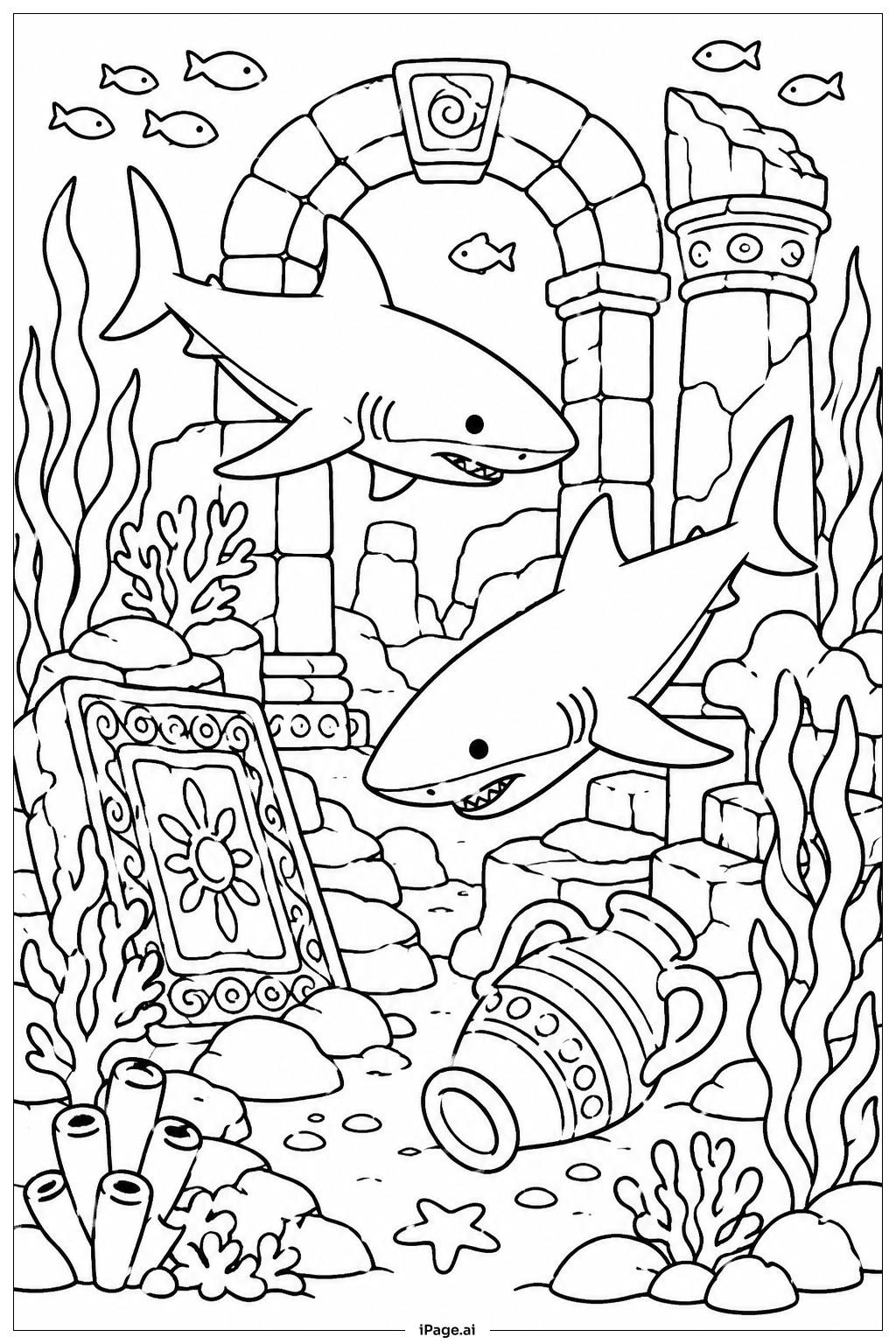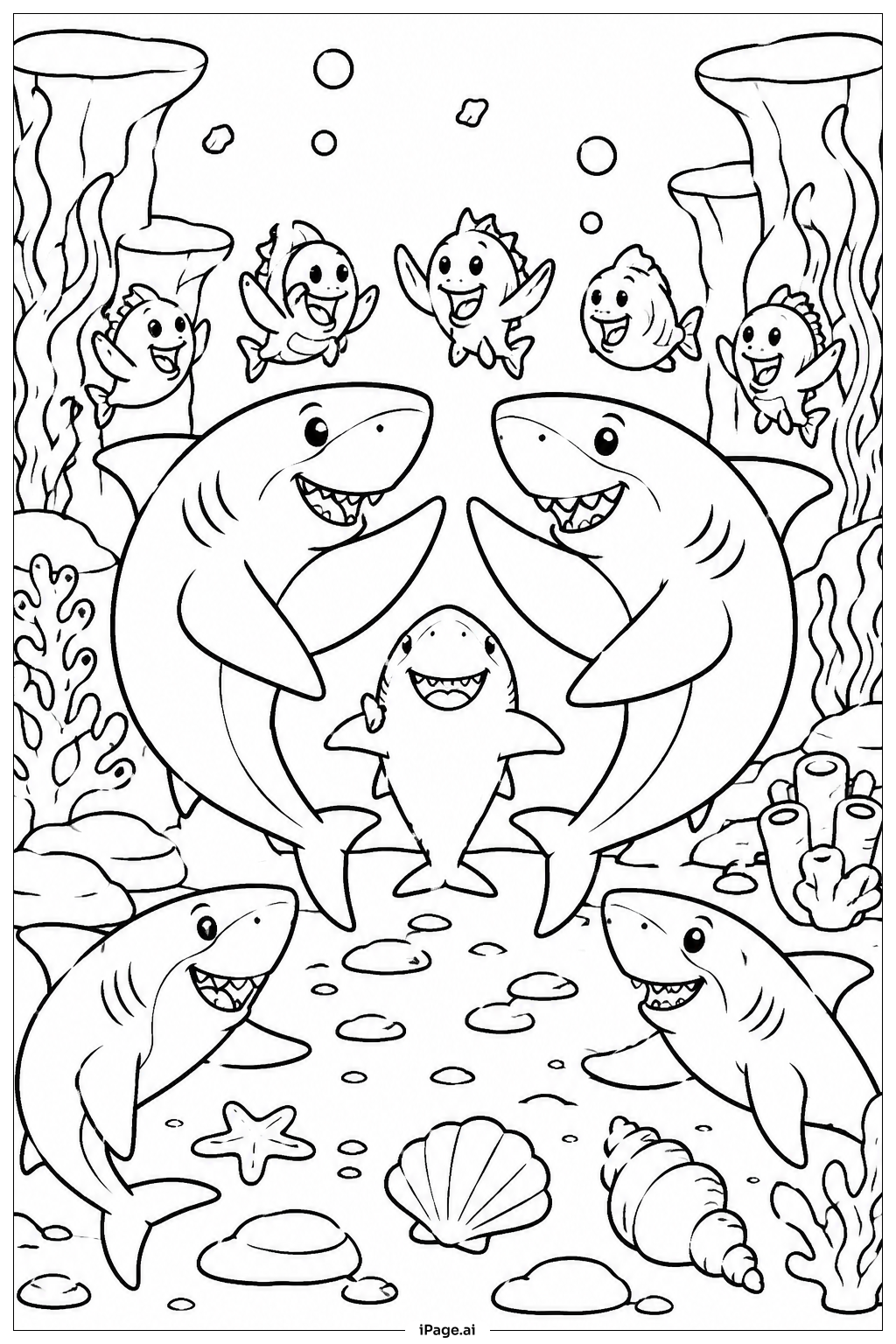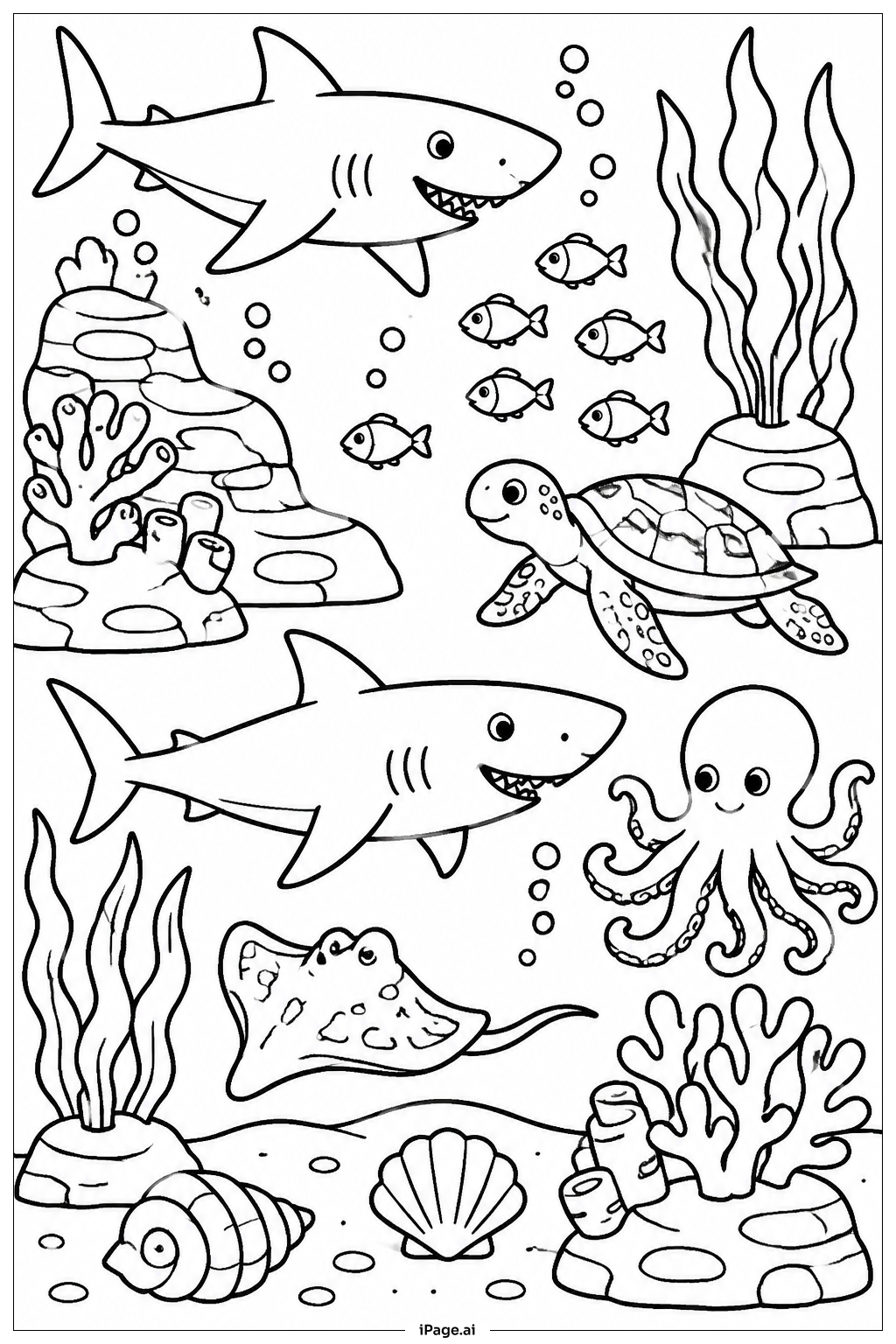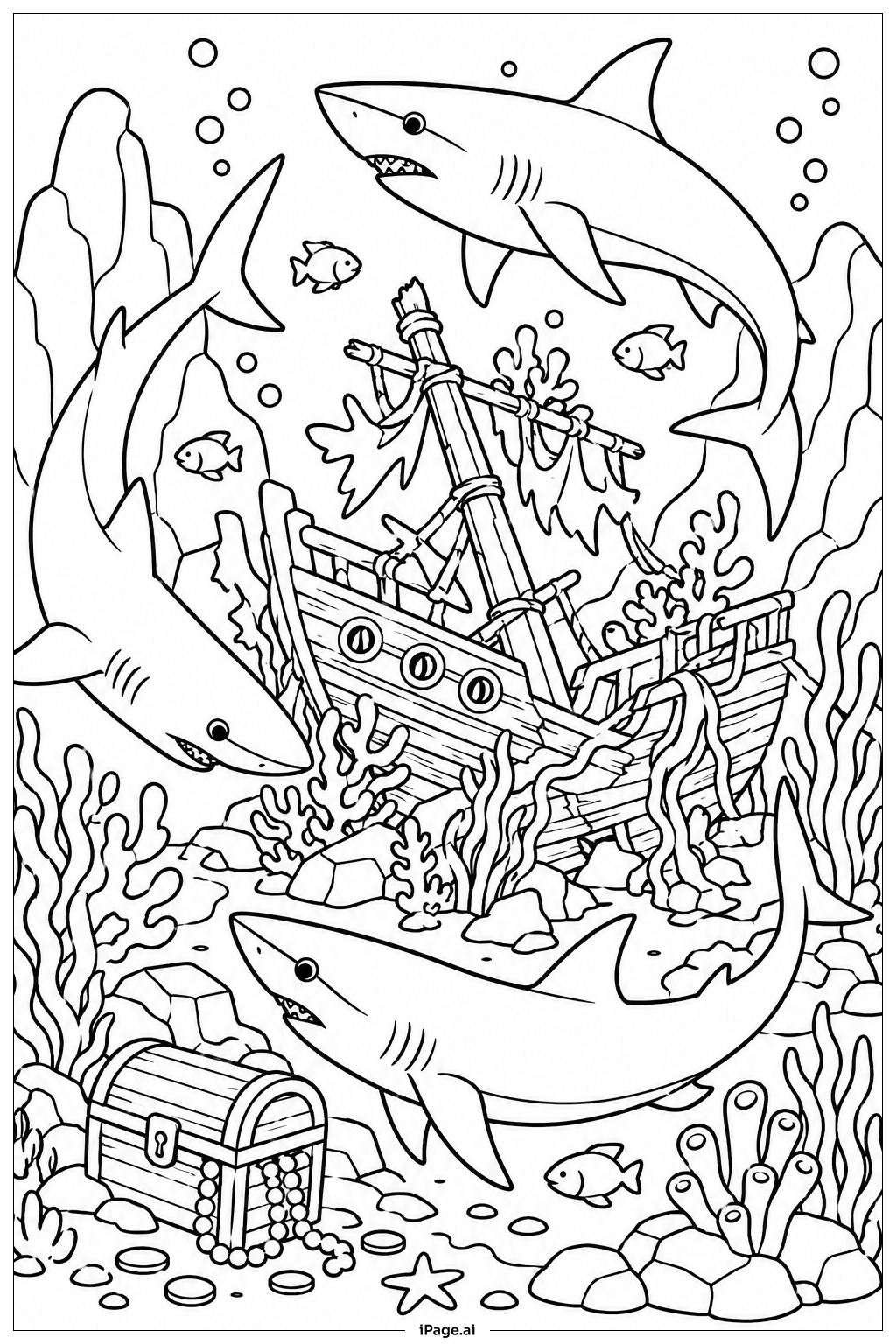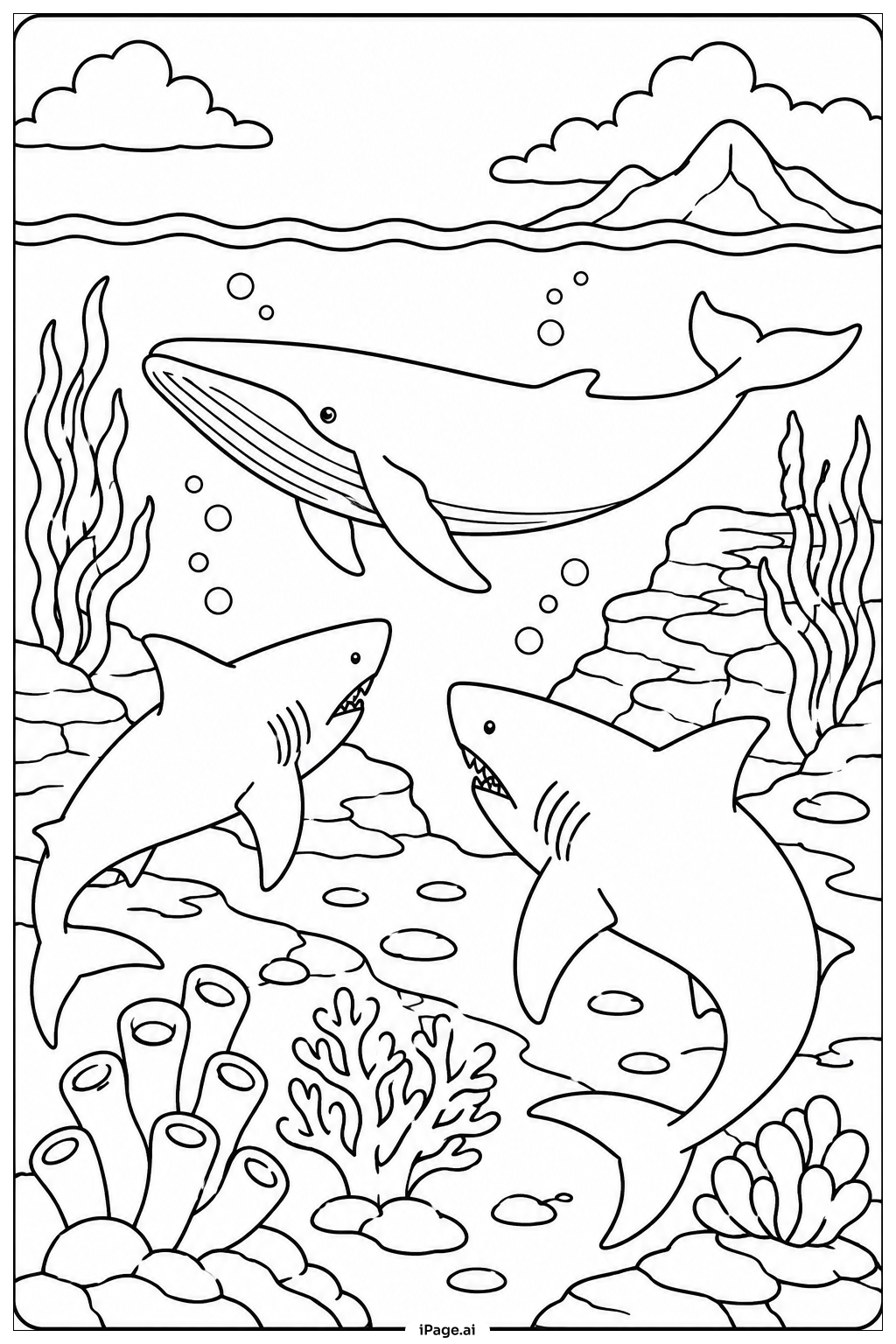
Coloring tips: How to color Shark And Whale Encounter coloring page well?
For the shark, try using shades of gray, blue-gray, or even bold blues for a more dramatic effect. The belly can be lighter, using white or pale cream. The whale offers wonderful opportunities for color—consider deep blues, grays, or even realistic humpback patterns with black and white contrast. Add depth to the ocean water using layers of blue, from light aqua near the surface to deeper navy in the background. The small fish can be bright yellows, oranges, or tropical colors to create visual interest. Ocean plants might work well in greens and browns. Don't forget to add highlights with white or light blue to show where sunlight filters through the water, creating a realistic underwater atmosphere.
Coloring challenges: Which parts are difficult to color and need attention for Shark And Whale Encounter coloring page?
• Size and Scale Management: The contrasting sizes between the shark and whale require careful color planning to maintain proper visual hierarchy. Younger colorists may find it challenging to keep colors consistent across the whale's large body area without streaking or uneven coverage, while the shark's smaller details demand steady hand control and precision.
• Texture Differentiation: Creating distinct textures for two different marine animals presents a unique challenge. The shark's smooth, sleek appearance requires even color application, while the whale's skin may need subtle shading techniques to show its massive, rounded form. Distinguishing between these textures without written labels requires thoughtful color choices and shading strategies.
• Water and Background Elements: Depicting transparent water currents and maintaining the underwater atmosphere is complex. Colorists must balance making the water visible without overwhelming the main subjects, requiring layering techniques and understanding of how to create depth. The flowing lines representing water movement need careful attention to avoid looking chaotic.
• Detail Work in Small Areas: The shark's teeth, gills, and eye require fine motor control and precision with coloring tools. Small fish and ocean plants scattered throughout the scene demand patience and steady hands, especially for younger children who are still developing these skills.
Benefits of coloring books: Advantages of drawing Shark And Whale Encounter coloring page
Coloring this underwater encounter helps children learn about marine biology and ocean ecosystems in an engaging way. It encourages curiosity about different sea creatures and their characteristics, fostering environmental awareness and respect for ocean life. The varying sizes and shapes in the image develop spatial reasoning and proportion understanding. Working with the flowing water elements enhances creativity as children imagine the underwater world and choose their own color interpretations. The detailed areas improve fine motor skills and hand-eye coordination, while larger sections allow for relaxing, broader strokes. This balance makes the page suitable for various age groups and skill levels, building confidence and patience throughout the coloring process.