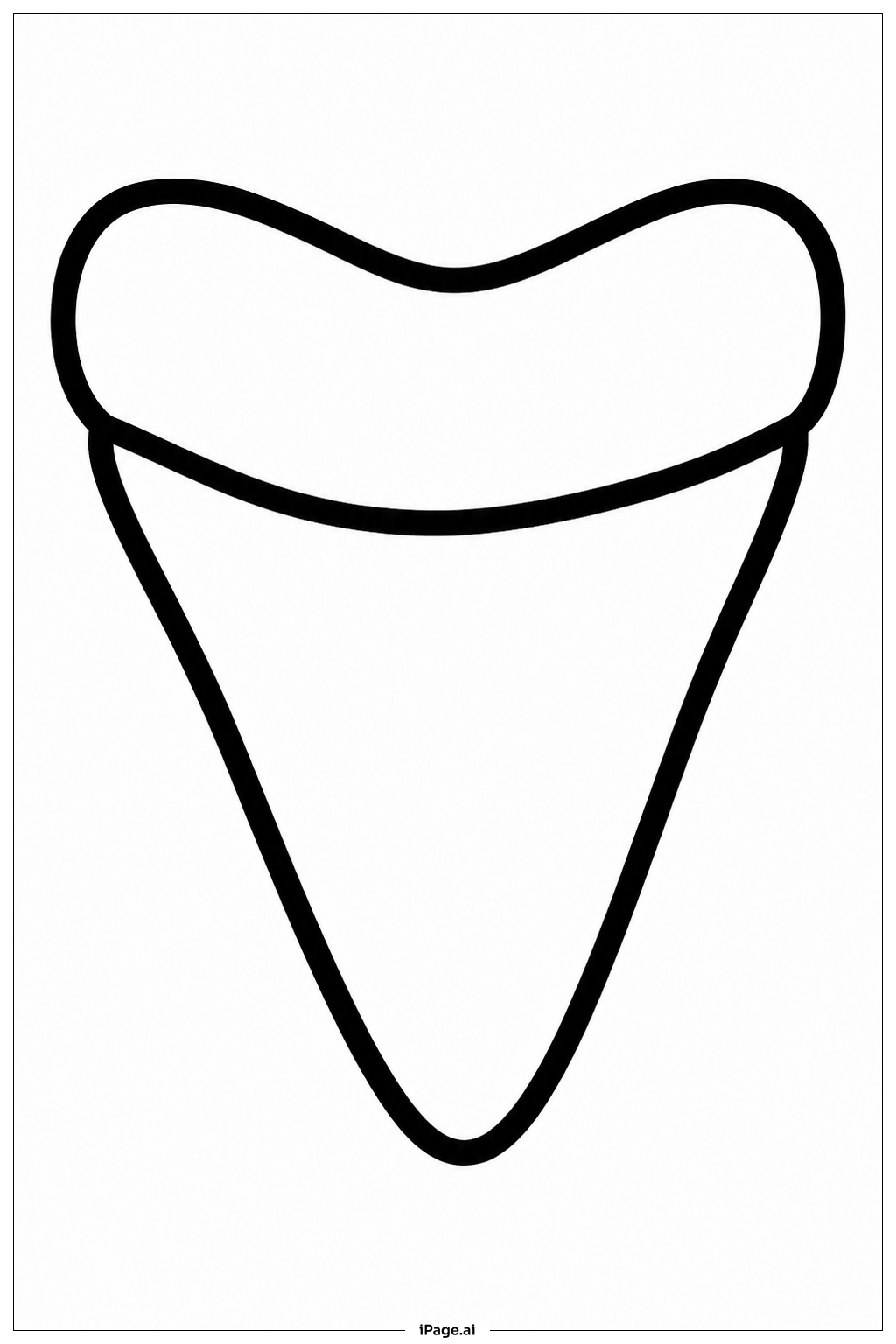
Coloring tips: How to color Shark Tooth Closeup coloring page well?
For realistic coloring, use shades of white, cream, and light gray for the teeth themselves, adding subtle shadows with darker gray tones in the crevices and grooves to create depth. The serrated edges can be highlighted with slightly darker shading to emphasize their sharpness. Color the gum tissue in shades of pink, coral, or pale red, blending to darker tones where the teeth meet the gums. Add touches of light blue-gray or pale yellow to suggest age or natural staining on older teeth. For a more dramatic approach, consider using cool grays and blues to create an underwater atmosphere, or experiment with metallic silver markers to give the teeth a gleaming, polished appearance. Background areas can be filled with deep ocean blues or greens to make the teeth stand out prominently.
Coloring challenges: Which parts are difficult to color and need attention for Shark Tooth Closeup coloring page?
• Serrated Edge Detail: The tiny triangular serrations along each tooth edge require precise coloring with fine-tipped tools. Maintaining consistent pressure while coloring these small, repetitive patterns can be challenging, especially when trying to create depth through shading. Children may need to work slowly and carefully to avoid coloring outside these delicate lines, which demands excellent fine motor control and patience.
• Layered Tooth Structure: The overlapping arrangement of multiple teeth in rows creates complex spatial relationships that can be confusing to color. Deciding which tooth is in front and which is behind requires careful observation and planning. Creating realistic shadows where teeth overlap demands understanding of light direction and gradual value transitions, which may be difficult for younger colorists to execute effectively.
• Texture and Surface Variation: Each tooth surface contains subtle grooves, ridges, and textural details that need different coloring techniques to appear three-dimensional. Achieving a glossy, enamel-like appearance requires smooth blending and strategic placement of highlights and shadows. The varying angles of teeth also mean each one catches light differently, requiring individual attention to shading direction.
• Gum Tissue Blending: The soft tissue areas require smooth color gradients and organic blending that contrasts with the hard-edged teeth. Creating realistic transitions between the pink gums and white teeth, while maintaining distinct boundaries, challenges colorists to switch between different coloring techniques within the same image.
Benefits of coloring books: Advantages of drawing Shark Tooth Closeup coloring page
Coloring this detailed shark tooth closeup offers excellent benefits for developing fine motor skills and hand-eye coordination through the precise work required for small details and serrated edges. The intricate patterns help improve focus and concentration as children carefully navigate the complex tooth structures. This image provides valuable lessons in understanding texture, depth, and three-dimensional form through shading techniques. It encourages scientific curiosity about marine biology and shark anatomy, making learning fun and engaging. The repetitive yet varied tooth patterns create a meditative coloring experience that can reduce stress and promote relaxation. Children gain confidence as they complete this challenging design, while also practicing decision-making skills in color selection and shading approaches. The subject matter appeals to kids fascinated by ocean life and predators, maintaining their interest throughout the coloring process.