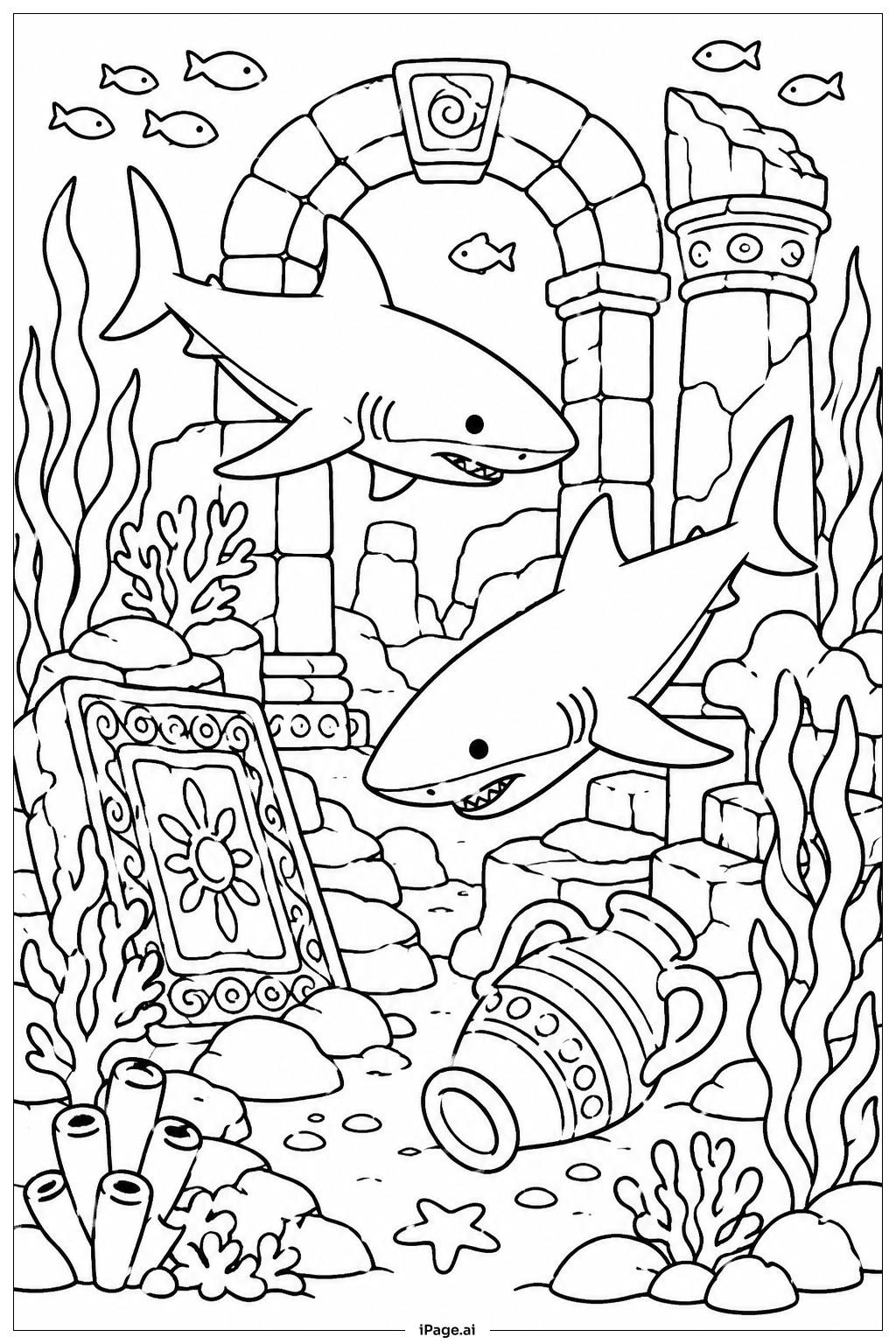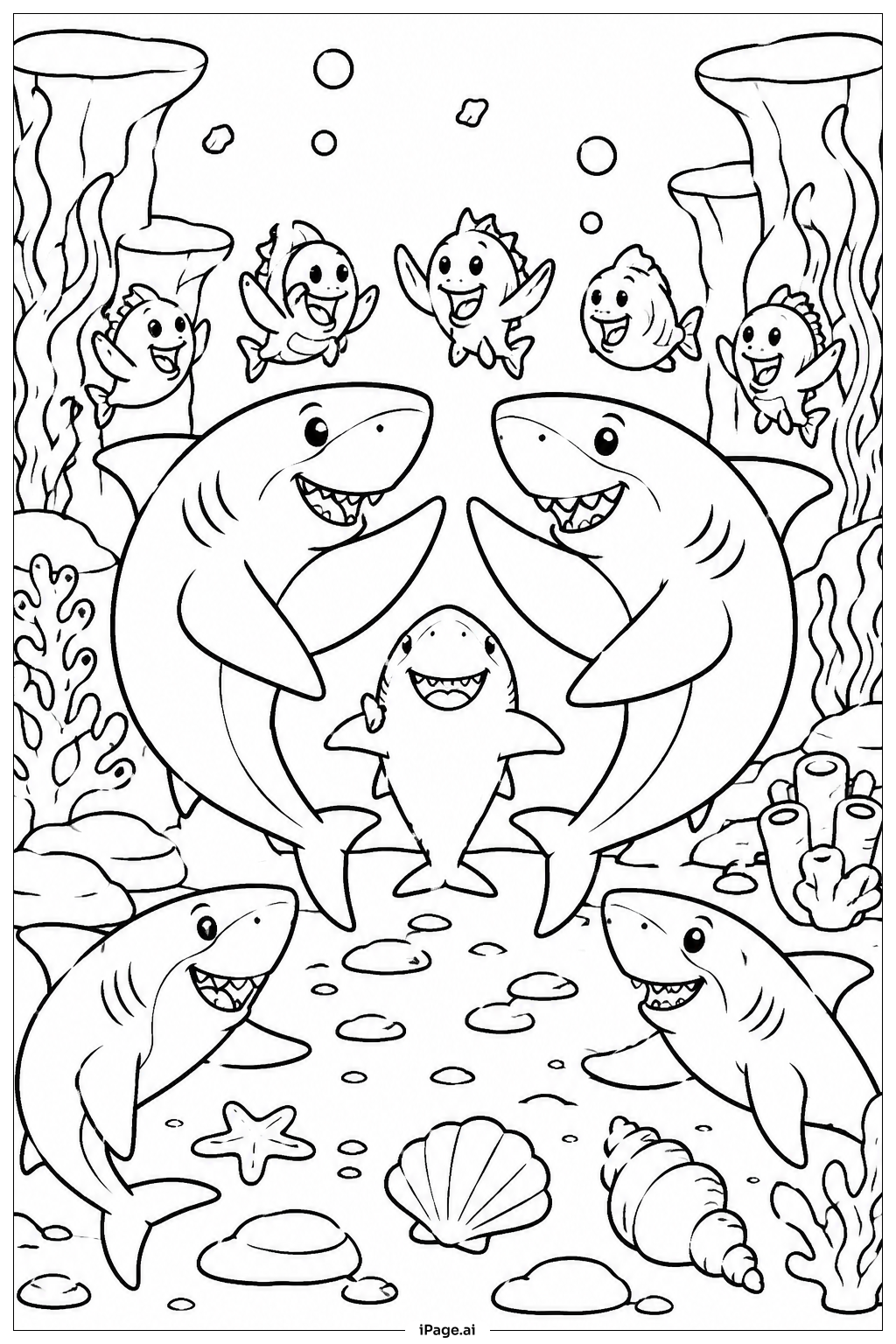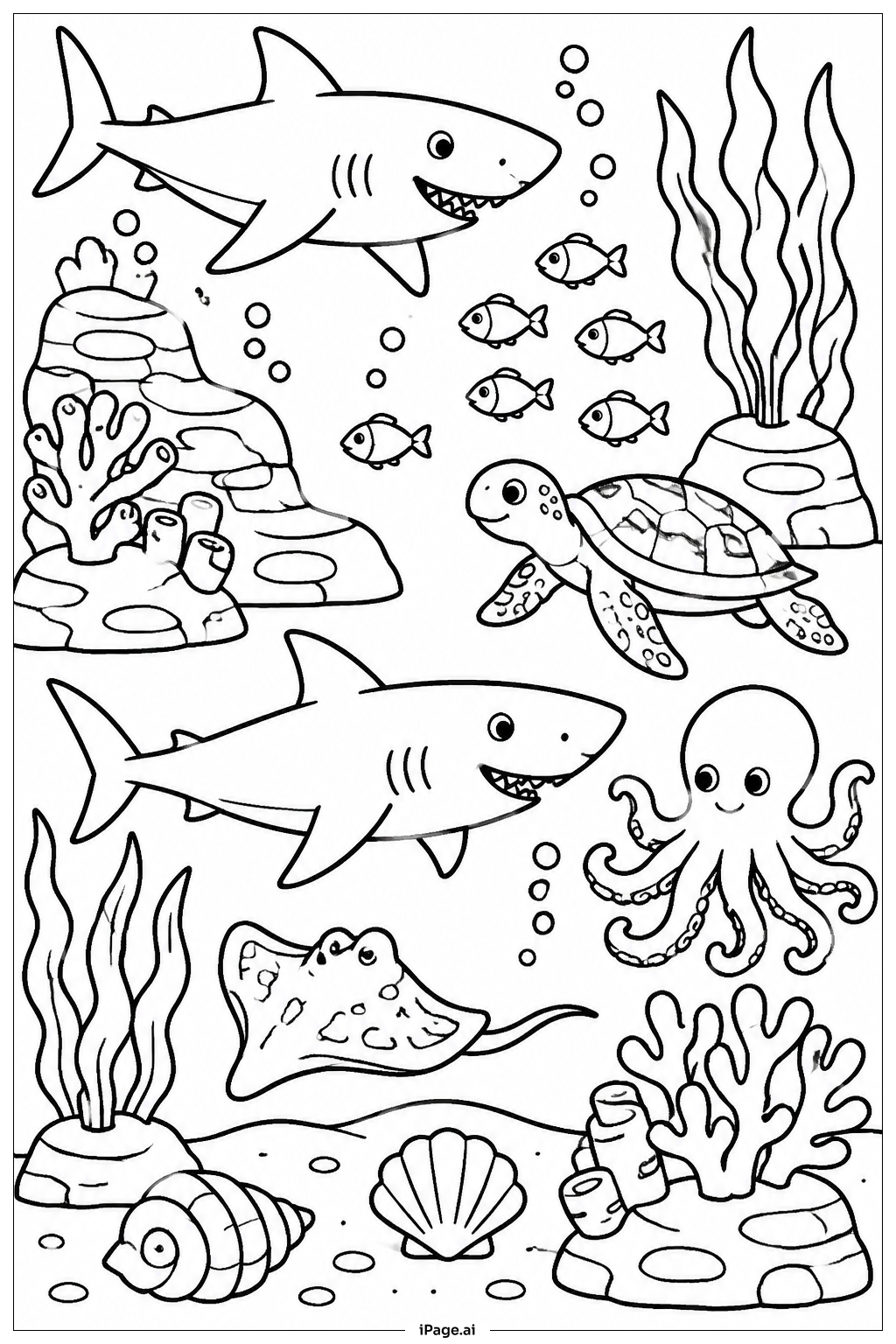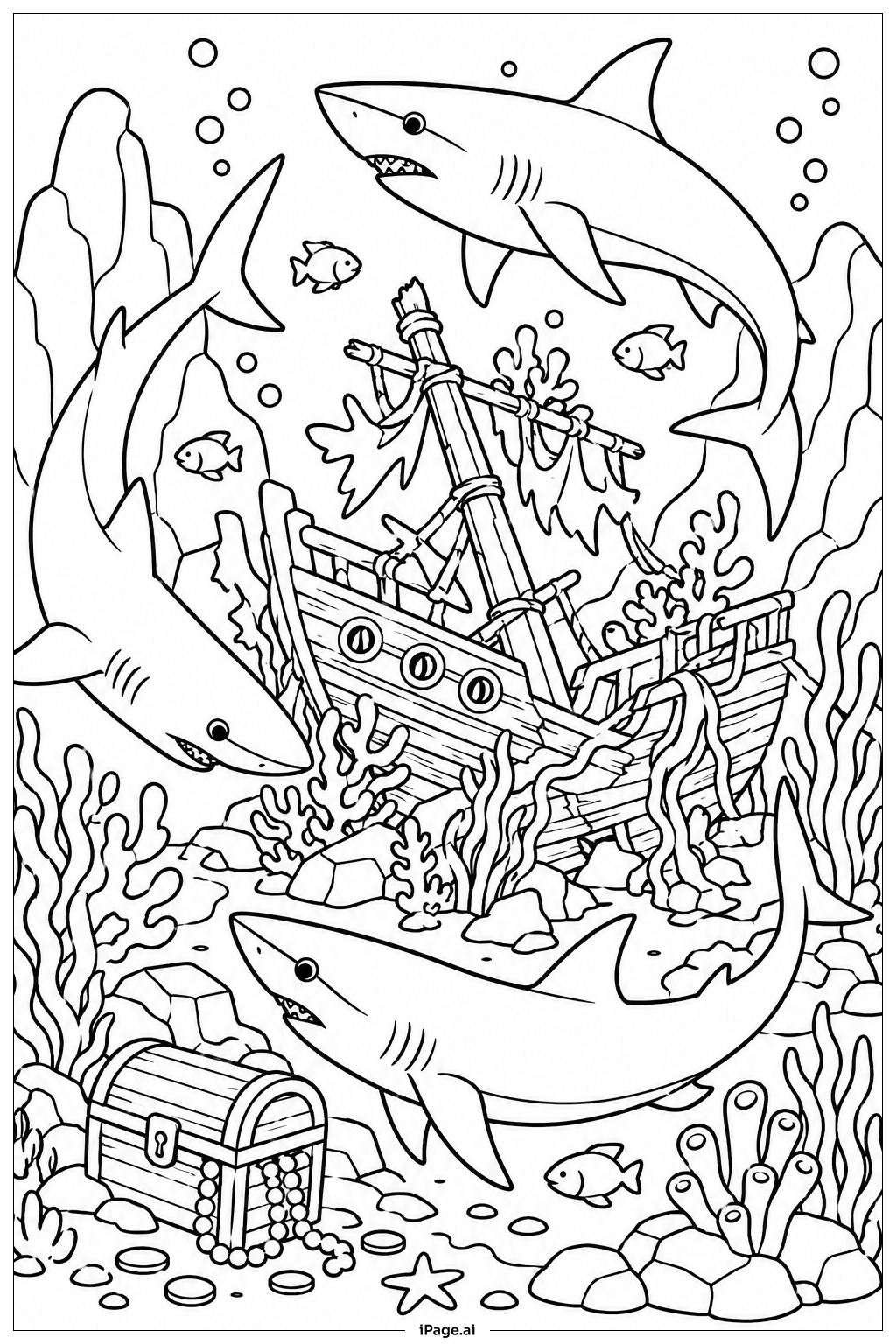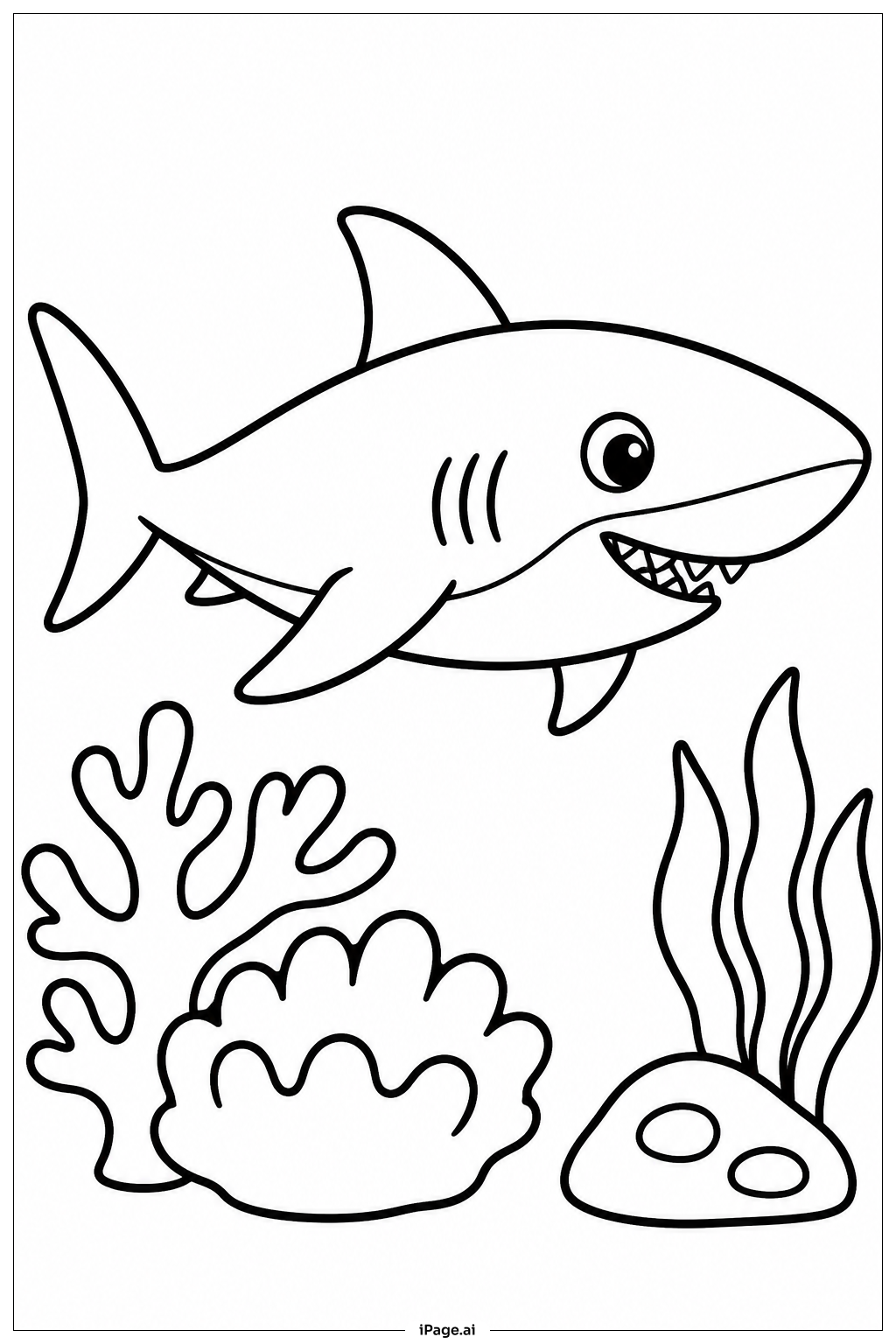
Coloring tips: How to color Shark Swimming Near Coral coloring page well?
Start with the shark's body using shades of gray and blue. Use a lighter gray or white on the belly to show how light hits from above. Add subtle darker tones along the shark's back and fins for depth and dimension.
For the coral, let your imagination run wild. Corals come in many natural colors — try warm oranges, pinks, reds, and purples. You can also use yellows and greens for sea plants and smaller organisms nearby.
Color the ocean water in soft, layered blues and teals. Use lighter shades near the surface and darker blues toward the bottom to give a sense of depth. Add touches of white for bubbles and water movement.
The small fish can be colored with bright, bold colors like orange, yellow, or stripes of black and white. Keep the shark in cooler tones so it stands out against the colorful reef. Take your time with each section and enjoy bringing this underwater world to life.
Coloring challenges: Which parts are difficult to color and need attention for Shark Swimming Near Coral coloring page?
• Shark Body Shading: The shark's smooth, curved body requires careful blending of light and dark grays to look three-dimensional. Without shading, the body can look flat. Try layering a lighter gray on the belly and a darker shade on the top and sides to mimic how underwater light falls from above. This technique takes patience but makes the shark look realistic.
• Coral Variety and Detail: The coral reef is made up of many different shapes and textures — branching corals, fan corals, and rounded clumps. Each type has tiny, repeating details that take time to color carefully. Switching between different colors for each coral cluster helps them stand out from one another. Staying inside small, irregular shapes without going outside the lines can be tricky.
• Water and Background Depth: Creating a convincing underwater atmosphere means blending multiple shades of blue and teal smoothly. If the background is colored in a single flat tone, it loses the feeling of depth and distance. Building up layers from lighter to darker blue helps, but requires even, controlled strokes.
• Small Fish and Tiny Elements: The small fish and bubbles scattered throughout the scene are very small and detailed. Coloring tiny shapes neatly without smudging nearby areas is one of the hardest parts of this image. Using a fine-tipped colored pencil or marker helps maintain control.
• Color Balance Across the Scene: With so many elements — the shark, the coral, the fish, and the water — keeping the overall image visually balanced is a real challenge. Making sure no single area becomes too dark or too bright helps the whole scene feel harmonious and complete.
Benefits of coloring books: Advantages of drawing Shark Swimming Near Coral coloring page
Coloring this shark and coral reef scene offers a wonderful range of benefits for kids and beginners alike.
First, it builds focus and patience. The many details in the coral and the shark's body encourage children to slow down, concentrate, and work carefully — skills that help in school and everyday life.
Second, it sparks creativity. Choosing colors for the coral, fish, and ocean water lets kids express themselves freely. There are no wrong choices, which builds confidence and imagination.
Third, it teaches about nature. As children color the scene, they naturally become curious about sharks, coral reefs, and ocean life. This can lead to fun conversations and a deeper love for the natural world.
Fourth, it develops fine motor skills. Coloring within the lines of small, detailed shapes — like coral branches and tiny fish — strengthens hand-eye coordination and pencil control, which supports writing development.
Finally, it is simply relaxing and enjoyable. Spending time creating something beautiful is a great way for children to unwind, reduce stress, and feel proud of their finished artwork. This coloring page turns learning into a fun, hands-on adventure under the sea.