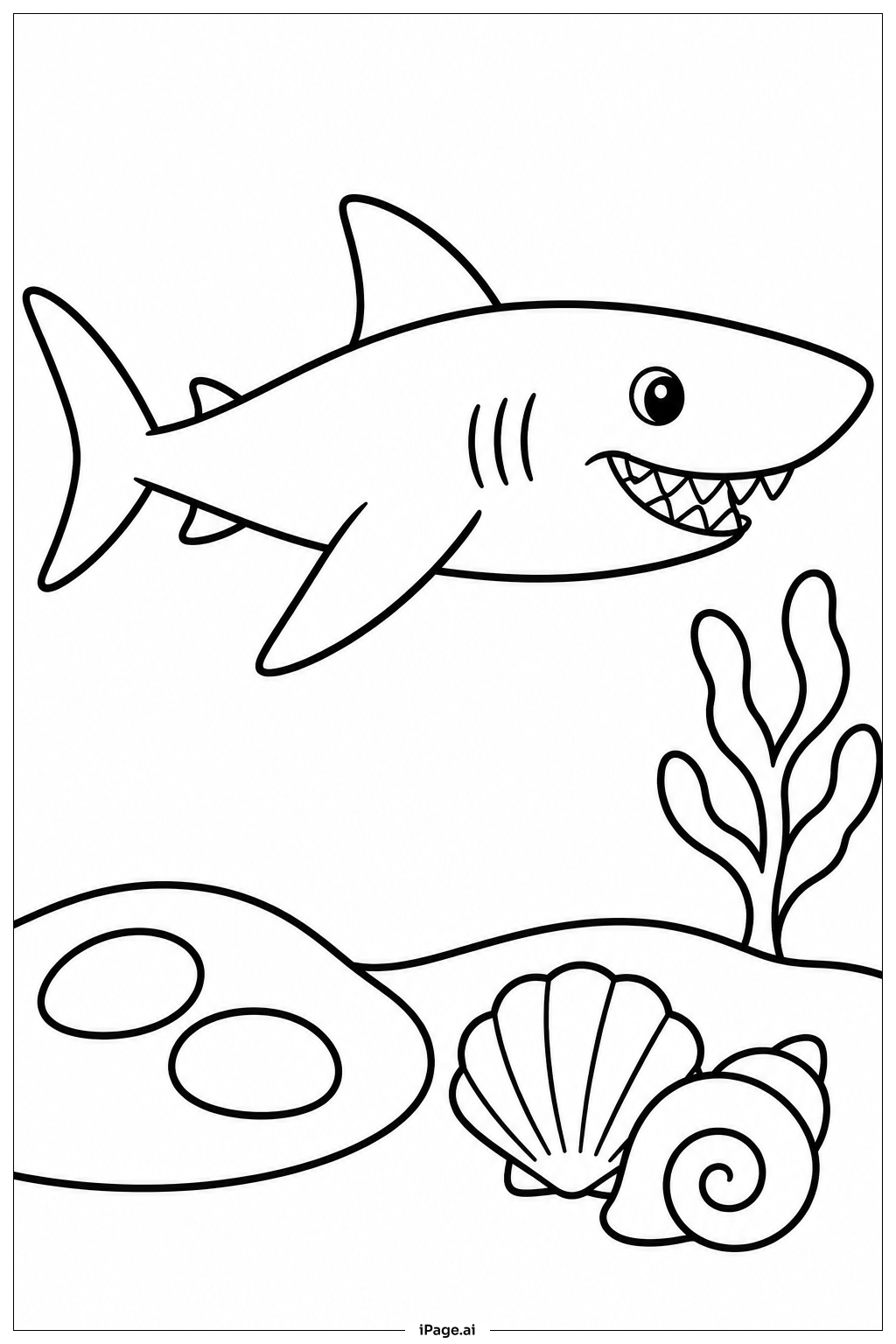
Coloring tips: How to color Shark Near Sandy Seabed coloring page well?
For coloring this image, start with cool shades of gray and blue for the Shark’s body to give it a realistic look. You can add darker tones around the fins and tail to create a sense of depth. The sandy seabed can be colored in light beige, tan, or pale yellow to make it look warm and natural. Try using soft gradients for the sand to show different textures. For the small fish and plants, use brighter colors like green, orange, or red to add contrast and bring life to the underwater scene. Feel free to add a light blue or turquoise tint in the background to suggest water. Using different shades will help make the Shark and seabed look more dynamic and interesting.
Coloring challenges: Which parts are difficult to color and need attention for Shark Near Sandy Seabed coloring page?
• Shark Body Shading: The Shark’s smooth, curved body requires careful shading to show its three-dimensional form. Flat coloring might make it look unnatural, so blending colors is a challenge. • Fine Details: Small parts like the Shark’s eyes, gills, and fins need precise coloring to keep them clear and realistic. Missed details can make the image lose its impact. • Textured Seabed: The sandy seabed has many small bumps and waves that need subtle shading to look realistic, demanding patience and attention. • Small Underwater Life: Coloring tiny fish and plants near the seabed can be tricky because their small size requires steady hand control and good fine motor skills. • Color Harmony: Balancing cool colors of the Shark with the warm sandy floor and colorful fish is important to create a pleasing overall look. It can be difficult to choose colors that complement each other well without overwhelming the scene.
Benefits of coloring books: Advantages of drawing Shark Near Sandy Seabed coloring page
Coloring this image helps improve fine motor skills because it involves detailed work on both large and small shapes. It encourages creativity as children can choose various colors to bring an underwater world to life. The image also promotes learning about marine life and the natural environment of Sharks. Focusing on shading and blending develops color theory understanding and patience. Additionally, coloring can be calming and help reduce stress while allowing kids to express themselves artistically. Overall, this image is a fun way to practice concentration, color coordination, and knowledge about ocean creatures.