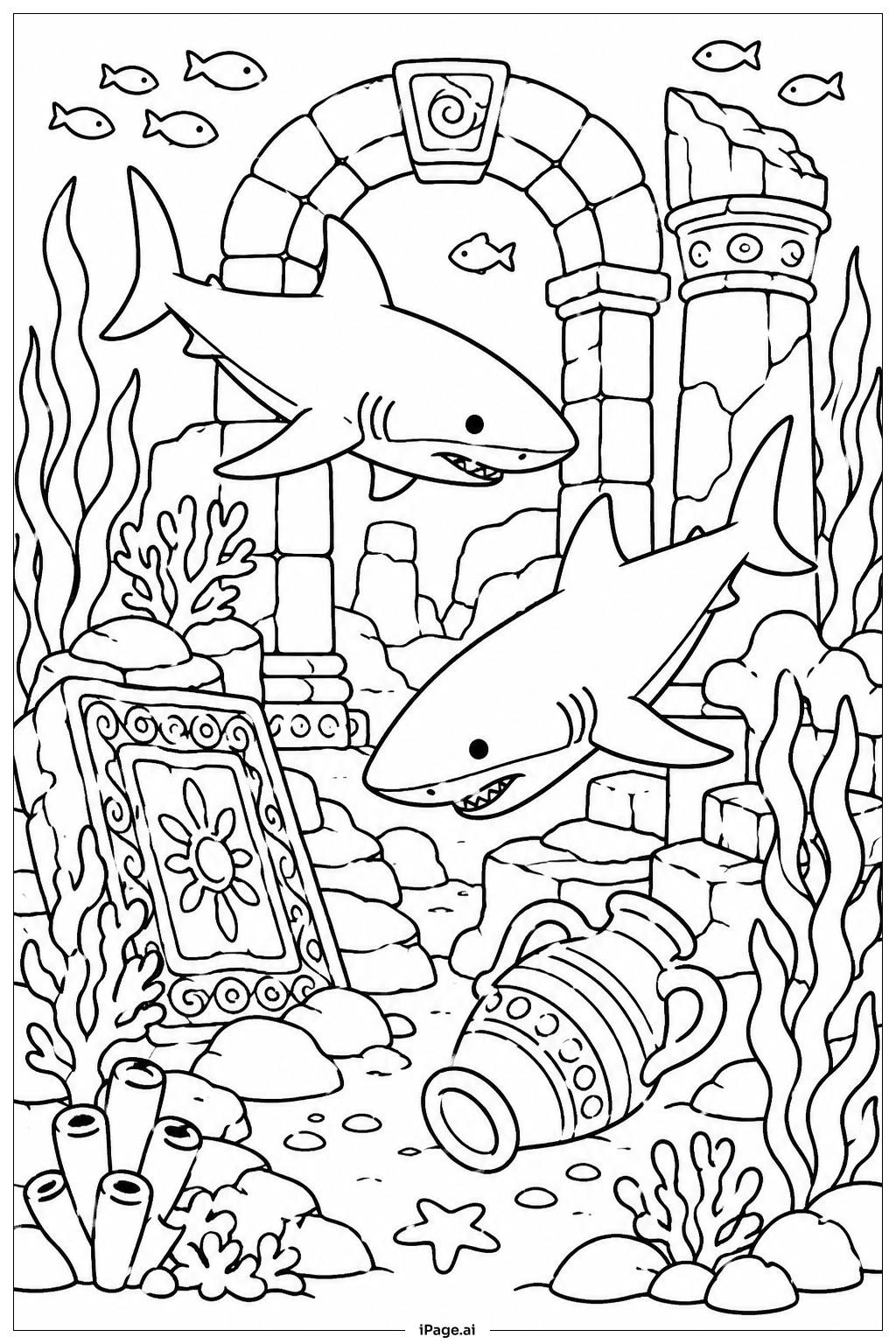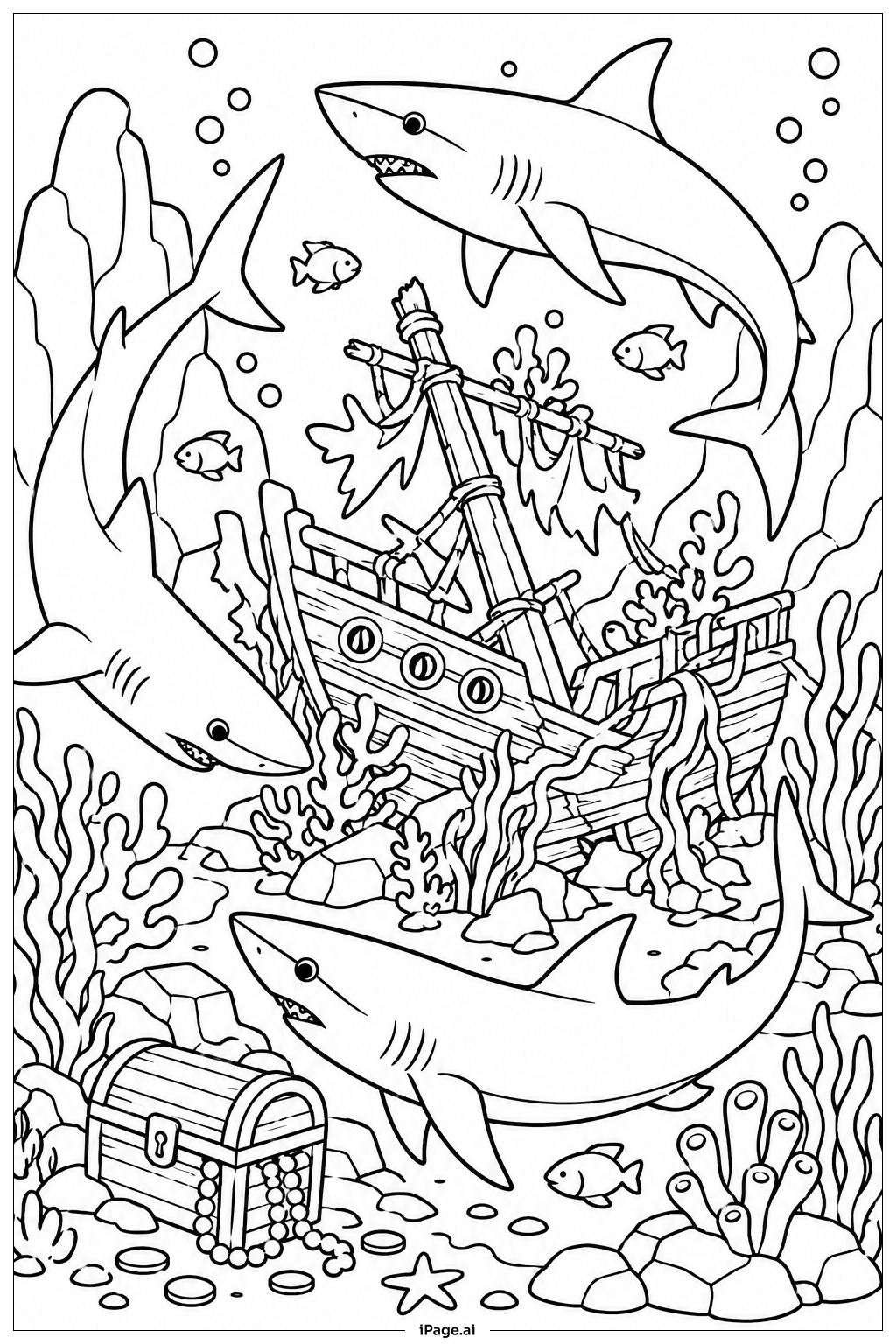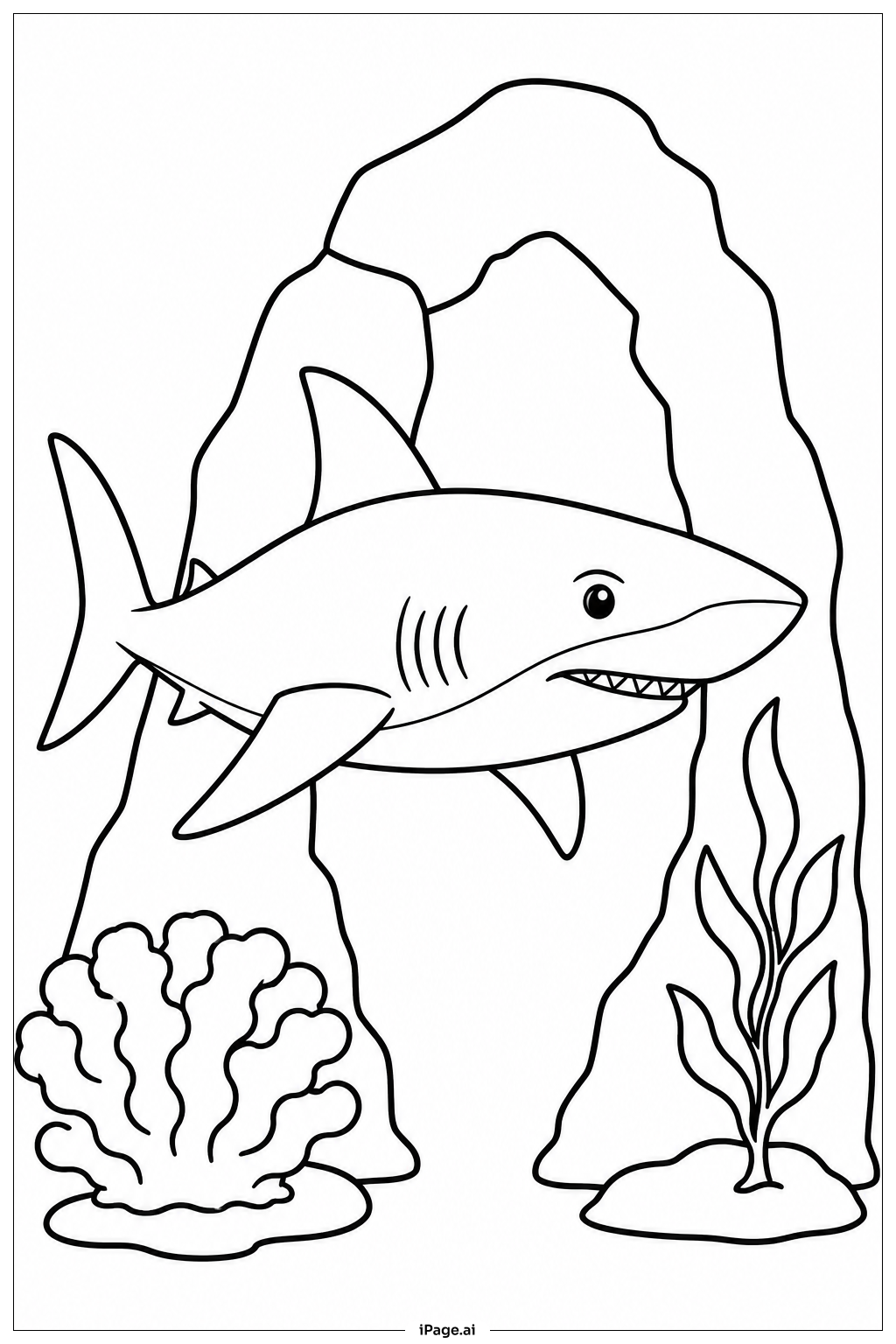
Coloring tips: How to color Shark Near Rock Arch coloring page well?
For this coloring page, try using shades of gray and blue for the shark to show its sleek skin. You can use darker blues for the deep water background and lighter blues or greens near the rock arch to show light filtering through. The rock arch can be colored with browns, tans, and grays to highlight its rough texture. Adding hints of green and brown for seaweed or underwater plants will make the scene more lively. Don’t forget to color the bubbles with light blues or white to make them stand out. Using shading and blending in these areas will help to show depth and make the scene feel more three-dimensional. You can also use your creativity to add bright colors for a fun, artistic look!
Coloring challenges: Which parts are difficult to color and need attention for Shark Near Rock Arch coloring page?
• Shark Details: Capturing the streamlined shape and smooth texture of the shark’s body can be tricky, especially around its fins and tail where smooth shading is important to show motion.
• Rock Texture: The rock arch has a lot of rough surfaces and cracks that need careful coloring to make them look natural and realistic rather than flat.
• Depth and Light: Showing the difference between deep water and areas closer to the surface requires blending multiple shades of blue and green. Getting this gradient effect right can be challenging.
• Small Elements: Bubbles and underwater plants are small but important details that need delicate coloring to avoid overpowering the main focus but still adding interest.
• Contrast Balance: Balancing the dark colors of the shark and rock with lighter areas to maintain good visual contrast takes attention and layering skills.
Benefits of coloring books: Advantages of drawing Shark Near Rock Arch coloring page
Coloring this image helps develop focus and patience as you carefully fill in detailed areas like the shark’s body and rock texture. It encourages creativity by allowing you to experiment with different shades of blues, grays, and browns to capture an underwater scene realistically or with a personal twist. Coloring the shapes also improves hand-eye coordination and fine motor skills, especially when working on small details like bubbles and plants. Additionally, this image can be a fun way to learn about marine life and ocean habitats while relaxing and enjoying artistic expression. Overall, coloring this shark near the rock arch promotes both skill-building and imagination.