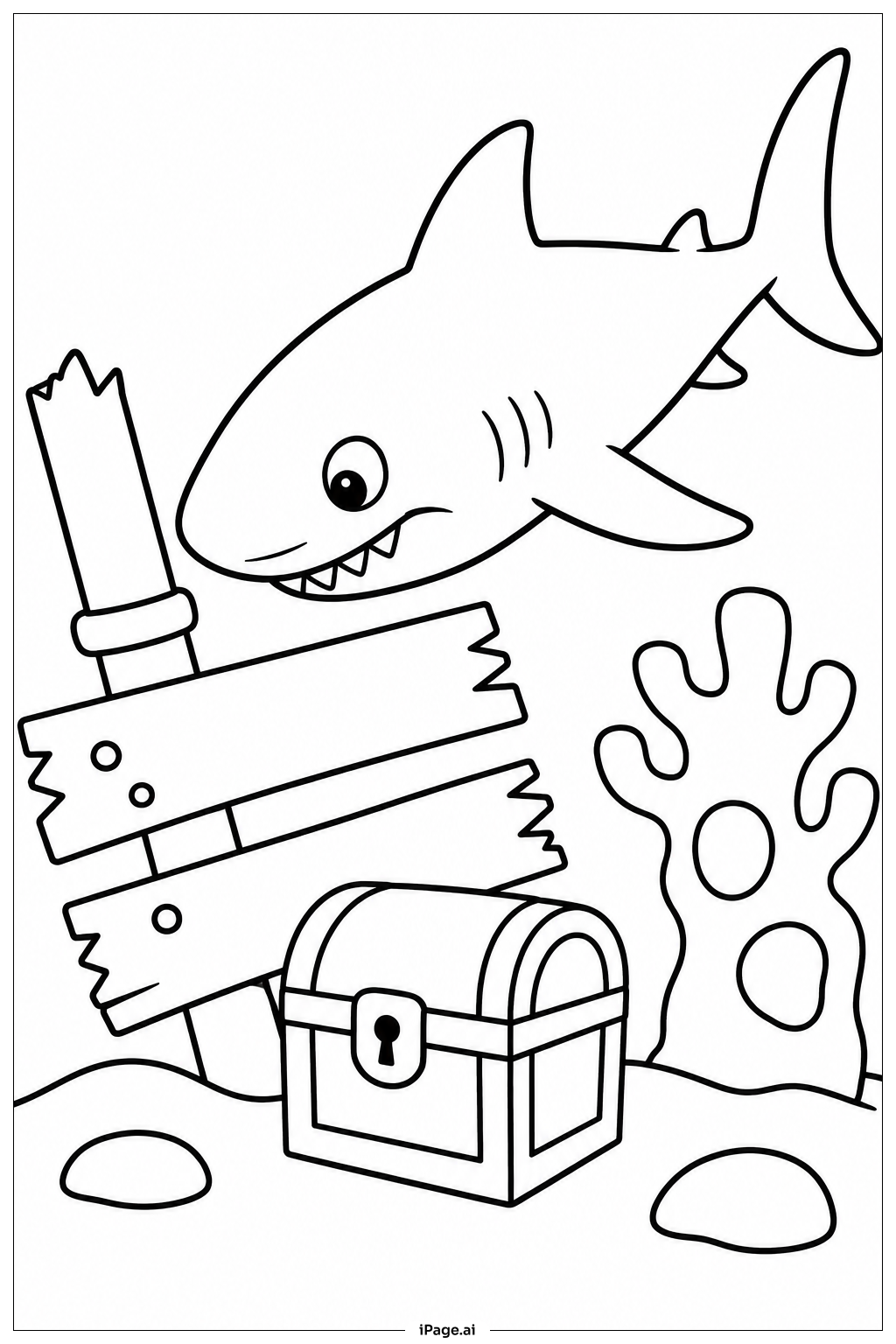
Coloring tips: How to color Shark Exploring Shipwreck coloring page well?
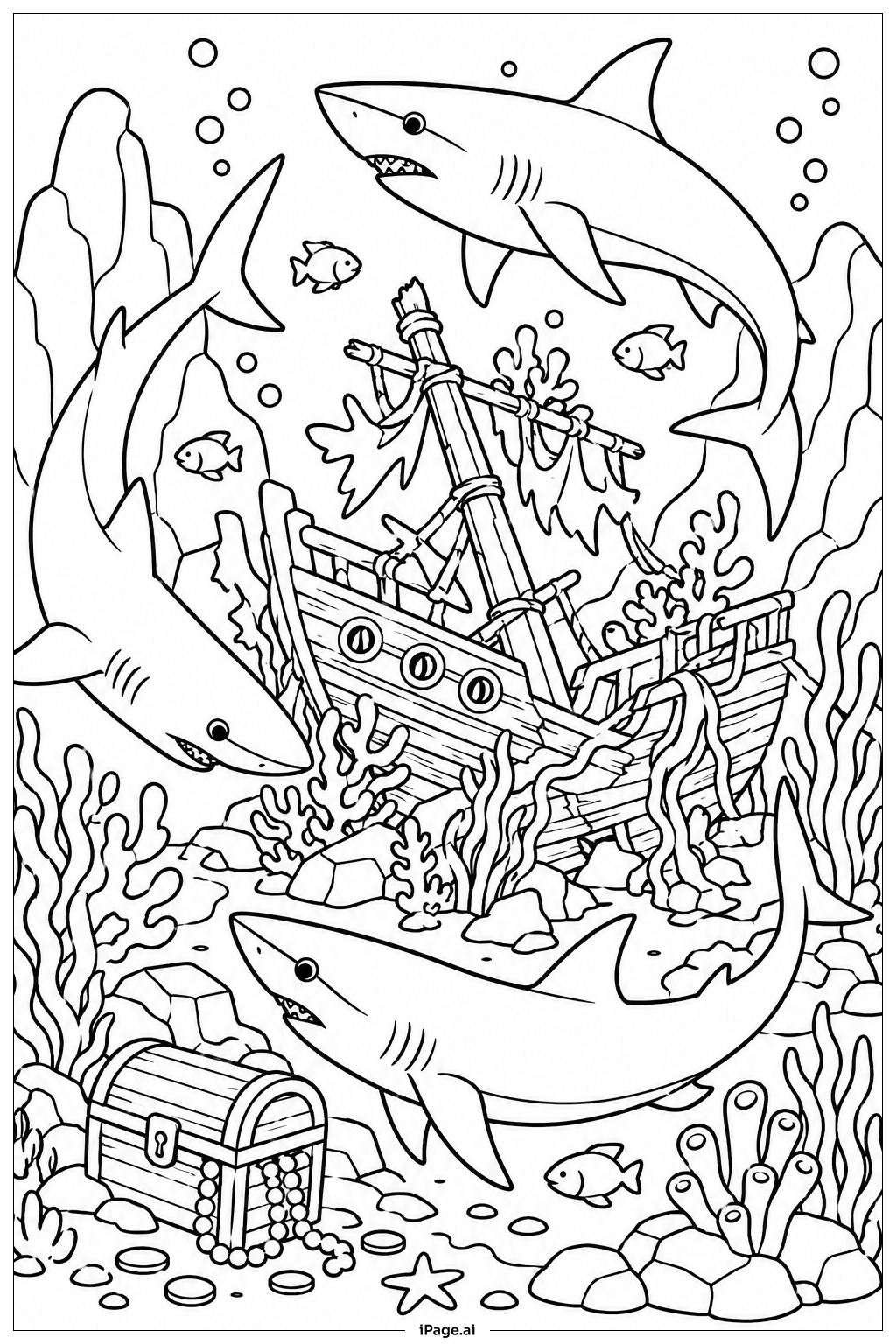
For this image, you can use shades of gray or blue for the Shark’s body to make it look strong and mysterious. Use browns and dark reds for the wooden shipwreck to show its old, broken parts. Bright greens and purples work well for the seaweed and coral to give the underwater scene a lively feeling. Try adding soft blues or turquoise in the background to show the water around everything. Small fish can be colored in bright yellows or oranges to make them stand out. Feel free to blend colors lightly to give a watery effect, especially around the bubbles and edges of the shipwreck.
Coloring challenges: Which parts are difficult to color and need attention for Shark Exploring Shipwreck coloring page?
• Fine Details: The shipwreck has many small, tangled ropes and broken wood pieces that require careful coloring to keep the lines clear and not overlap.
• Texture Variation: Coloring the rough textures of old wood and the smooth skin of the Shark differently can be tricky but important to make the image more realistic.
• Layering Colors: Blending multiple colors in the water, coral, and seaweed takes patience and control to avoid muddiness.
• Small Fish: The tiny fish need precise strokes to keep their outlines sharp while coloring them in bright contrasting colors.
• Bubble Effects: Adding shading and highlights to the bubbles to make them look round and transparent can be challenging but adds depth to the picture.
Benefits of coloring books: Advantages of drawing Shark Exploring Shipwreck coloring page
Coloring this Shark Exploring Shipwreck image helps children develop fine motor skills through handling both large and small shapes. It encourages creativity by choosing colors for underwater life and the mysterious shipwreck. The different textures in the picture strengthen attention to detail and improve concentration. Working on the coloring also introduces basic concepts of underwater environments and marine animals like sharks. Overall, it offers a fun and educational activity that supports hand-eye coordination and imagination in kids from 4 to 16 years old.