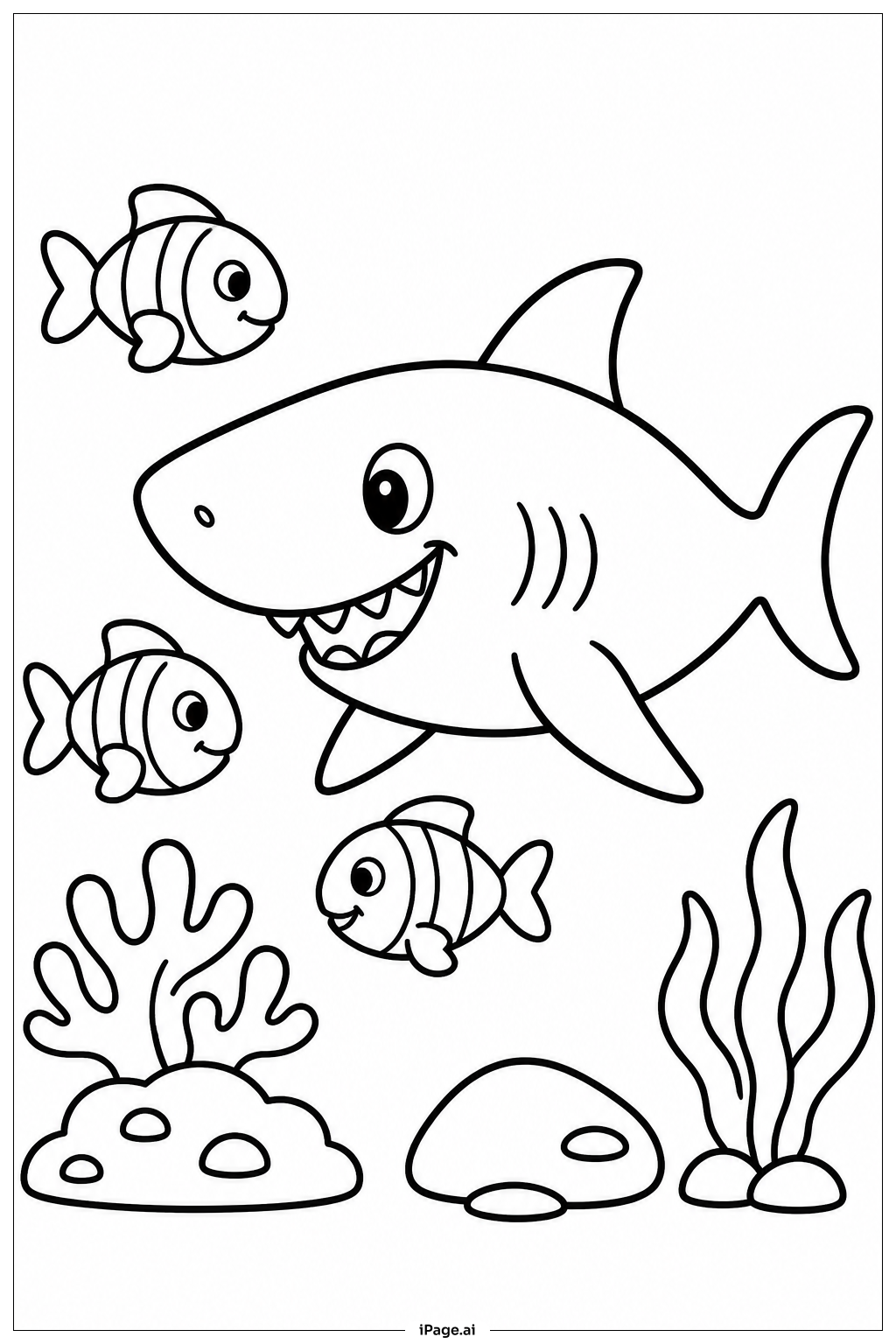
Coloring tips: How to color Shark And Little Fish coloring page well?
Start with the shark's body using shades of gray or blue-gray. Add a lighter tone on the belly area to give the shark a natural look. For the little fish, try bright and cheerful colors like orange, yellow, red, or green to make them pop against the shark. You can make each small fish a different color to add variety and fun. Use a light blue or turquoise for the ocean background to create a sense of water. Color the bubbles with very light blue or leave them white. Add darker blue tones to the deeper areas of the water to give the scene depth. Seaweed or coral details can be colored green or reddish-brown. Keep the shark's eyes dark with a small white highlight to make them look lively. This image is great for experimenting with gradients and blending, especially on the shark's body and the water background.
Coloring challenges: Which parts are difficult to color and need attention for Shark And Little Fish coloring page?
• Shark Body Shading: The shark's large body requires careful shading to look three-dimensional. You need to blend lighter tones on the belly with darker shades on the back and sides. Without smooth gradients, the shark can look flat and lifeless. Young colorists may find it tricky to blend two or more shades together in a large area without streaks or harsh lines.
• Small Fish Details: The little fish are tiny and closely grouped, which makes them hard to color neatly. Staying within the small outlines without going outside the lines takes steady hands and a sharp colored pencil or fine-tipped marker. Choosing colors that are different enough from each other also requires thought so the fish do not blend into one another visually.
• Bubble Coloring: Bubbles look simple but are actually tricky to color well. They need a very light touch to look translucent and round. Pressing too hard or using too dark a color can make them look like solid dots instead of floating air bubbles. A soft light blue with a tiny white highlight works best.
• Water Background: Filling in a water background evenly and realistically is a challenge, especially for beginners. Darker patches near the edges and lighter areas around the characters help create depth, but achieving this effect smoothly takes practice and patience.
• Balancing Colors: With a large shark and many small fish, keeping the overall color balance is important. If the background is too dark or the fish colors are too similar to the shark, the image can look crowded and hard to read at a glance.
Benefits of coloring books: Advantages of drawing Shark And Little Fish coloring page
Coloring this Shark And Little Fish page offers many wonderful benefits for kids and beginners alike. First, it helps build fine motor skills. Carefully coloring within the lines of the small fish and the shark's detailed fins trains hand control and precision. Second, it encourages creativity. Choosing colors for the shark, fish, and ocean lets children express themselves and make unique artistic choices. There is no single right answer, and that freedom builds confidence. Third, it teaches about ocean life in a fun, relaxed way. Kids become curious about real sharks and fish while they color, sparking an interest in nature and science. Fourth, the activity promotes focus and patience. Spending time on a detailed image like this one helps children practice sitting still and working carefully toward a finished goal. Fifth, it is a calming and stress-relieving activity. The repetitive, gentle motion of coloring helps both children and adults relax and unwind. Finally, completing the page gives a real sense of accomplishment. Seeing a finished, colorful underwater scene is rewarding and motivating, encouraging kids to keep creating and exploring their artistic abilities.



