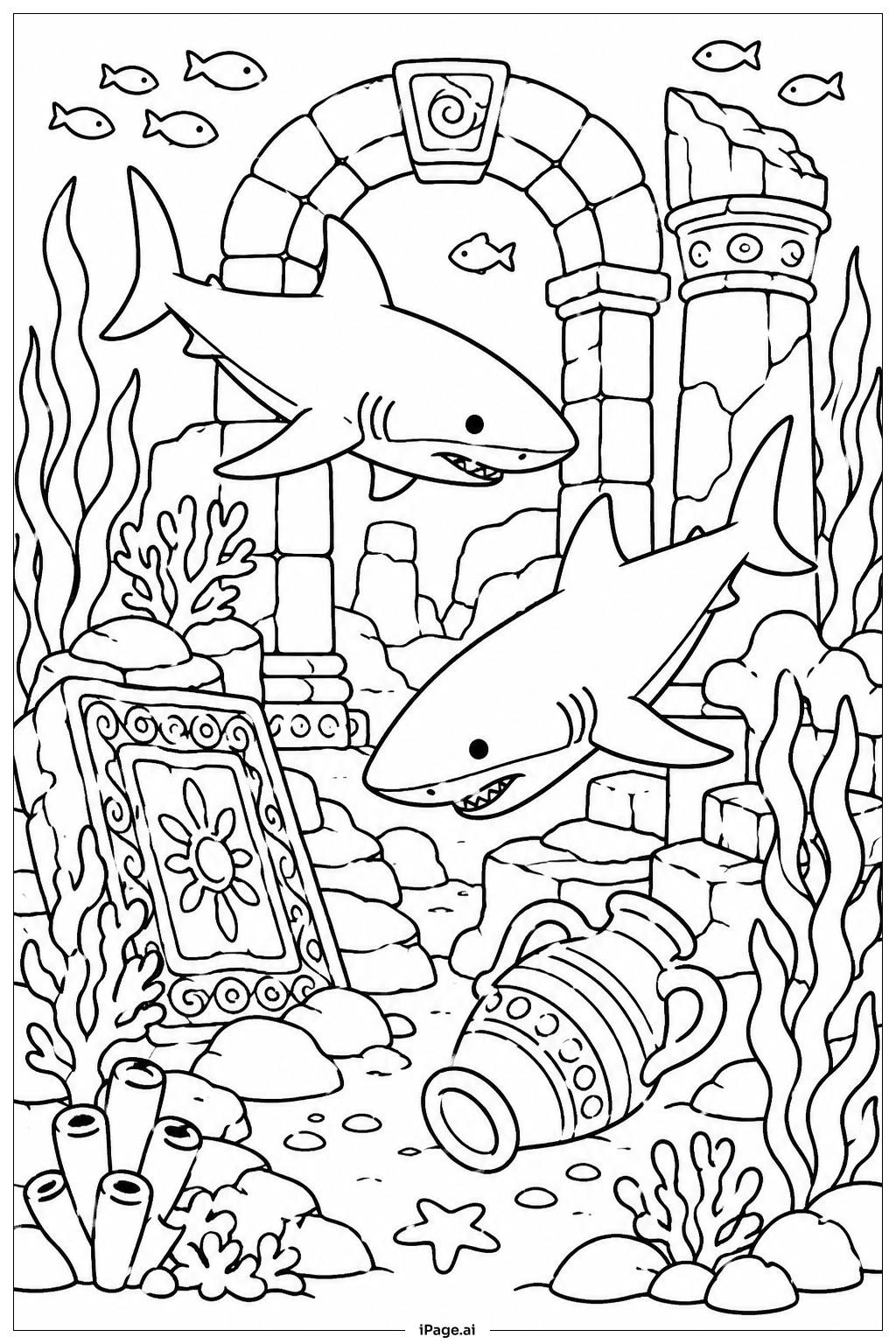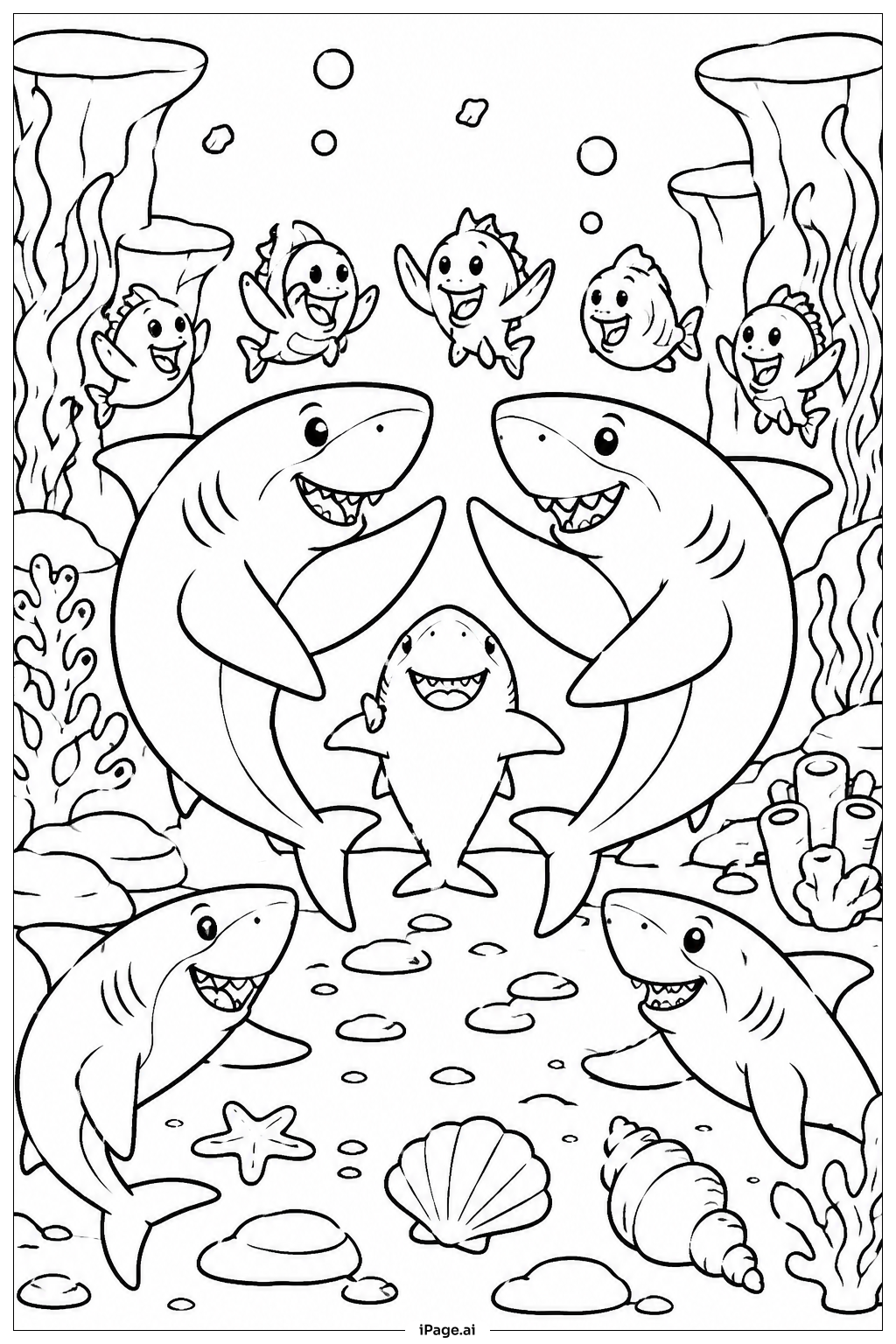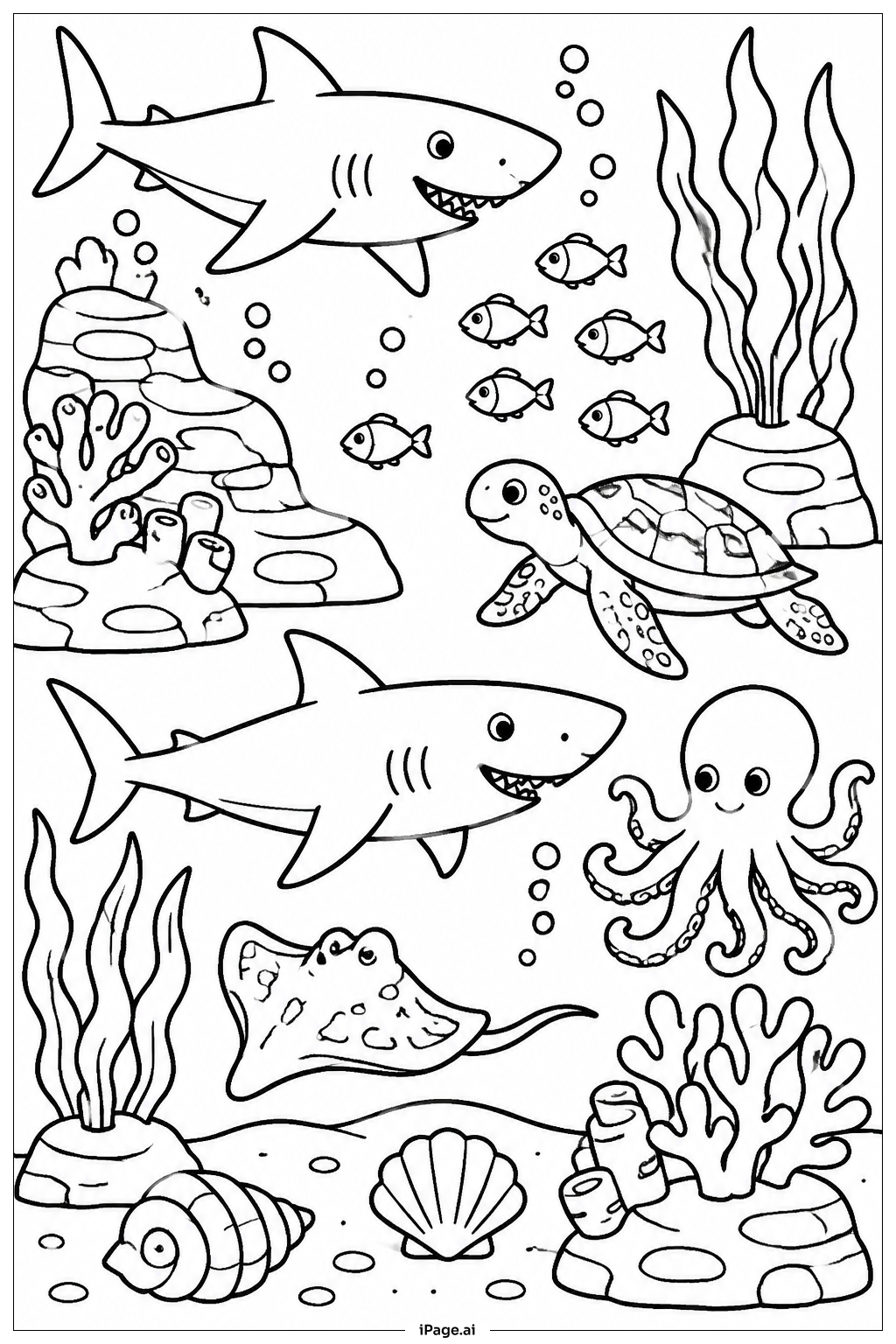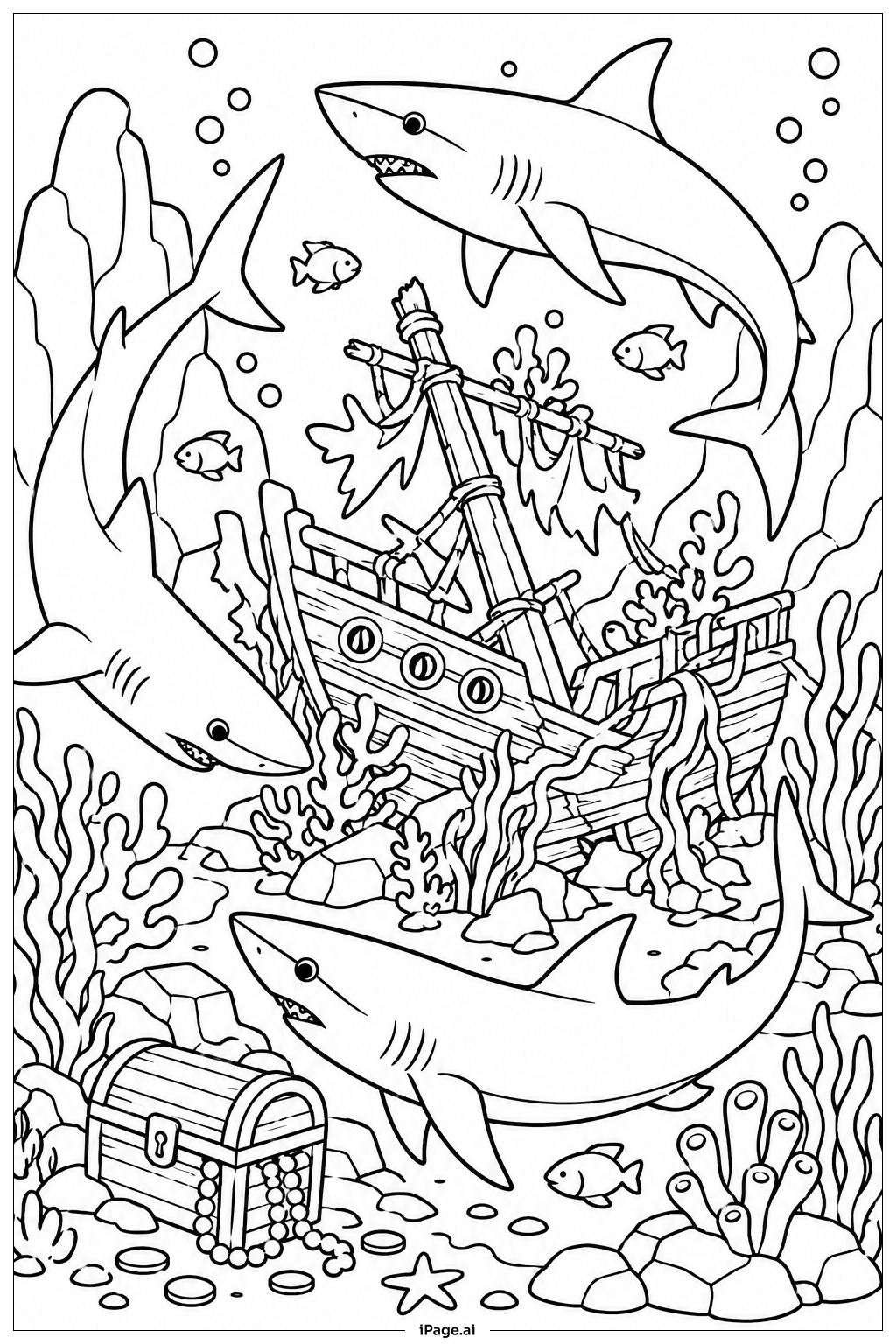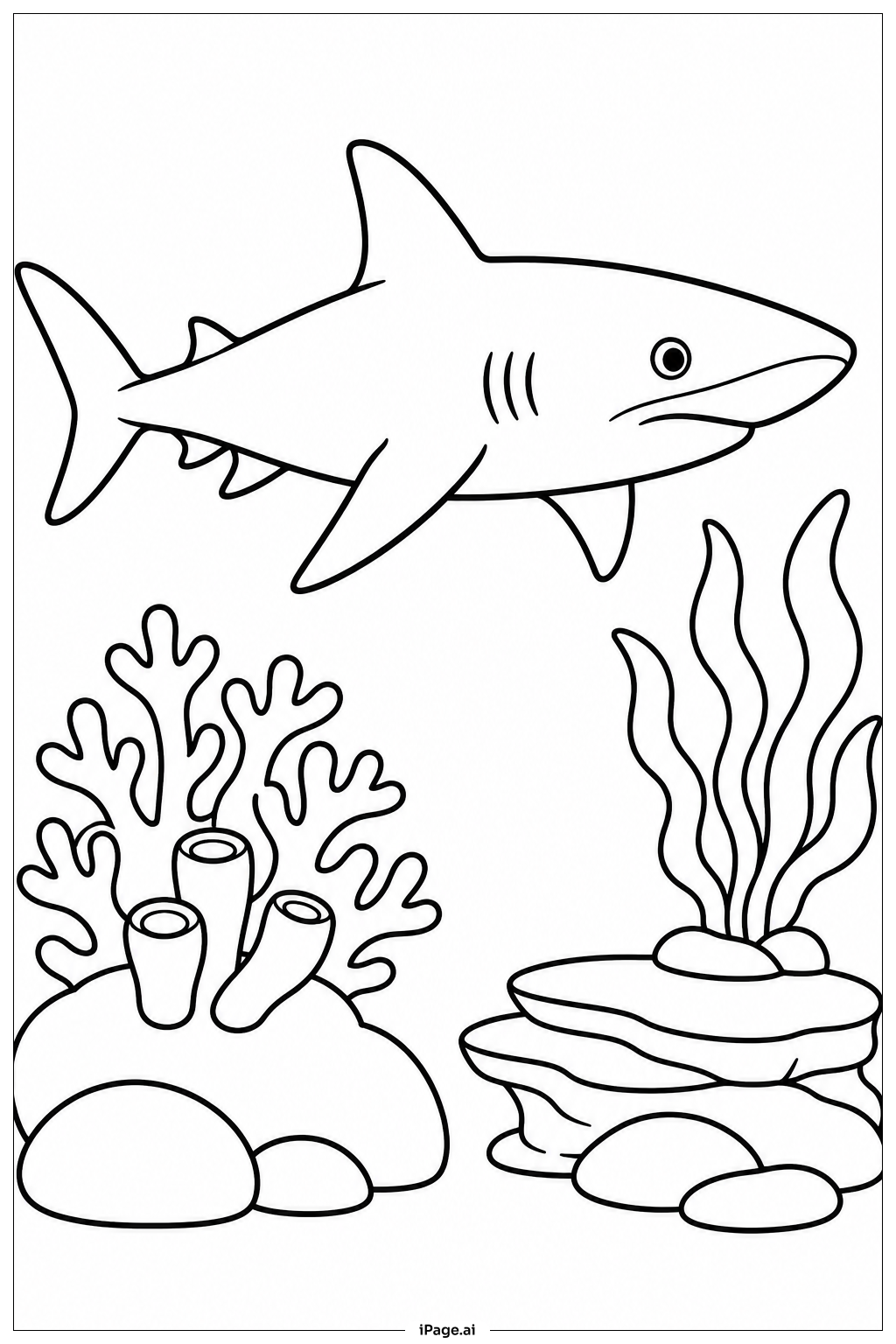
Coloring tips: How to color Shark Above Coral Reef coloring page well?
Start with the shark using shades of gray or blue-gray for a realistic appearance. Consider adding a lighter belly to show the natural countershading sharks have. For the coral reef, use a rainbow of colors including oranges, pinks, purples, yellows, and reds to create a vibrant underwater garden. Brain corals look beautiful in warm tones like coral pink or orange, while branching corals can be purple or blue. Add variety by using different shades for each coral type. The small fish can be colored in bright tropical hues like yellow, blue, or orange with contrasting stripes or spots. For the water background, use light blues or leave it white to make the main subjects stand out. Add depth by using darker blues in shadowed areas beneath the shark and around the coral bases. Consider using colored pencils for smooth blending or markers for bold, vibrant results.
Coloring challenges: Which parts are difficult to color and need attention for Shark Above Coral Reef coloring page?
• Shark Body Texture: The shark's smooth skin requires careful color blending to achieve a realistic three-dimensional appearance. Young colorists may struggle with creating the subtle gradient from darker back to lighter belly, which is essential for capturing the shark's natural countershading. Maintaining consistent pressure and direction while coloring the large body area can be challenging, especially when trying to avoid visible stroke marks or uneven patches.
• Coral Reef Details: The intricate coral formations present numerous small spaces and complex patterns that require precision and patience. Different coral types have varying textures from smooth rounded surfaces to delicate branching structures with tiny gaps. Children may find it difficult to color within these fine lines without crossing boundaries, and choosing appropriate color combinations that make each coral stand out while maintaining harmony can be overwhelming.
• Small Fish and Background Elements: The tiny fish swimming among the corals have very small areas that demand fine motor control and careful attention. Using markers or crayons in these confined spaces without bleeding into adjacent areas requires steady hands. Additionally, deciding whether to color the water background and how to create depth perception without overwhelming the main subjects presents a compositional challenge.
• Layering and Depth Creation: Creating a sense of underwater depth requires understanding how to use color intensity and shading. The foreground elements should appear closer and more vibrant, while background corals might need lighter tones. This concept of atmospheric perspective can be abstract for younger children, making it difficult to achieve a cohesive three-dimensional underwater scene.
Benefits of coloring books: Advantages of drawing Shark Above Coral Reef coloring page
Coloring this underwater scene offers excellent educational value by introducing children to marine biology and ocean ecosystems. As they color different coral types and fish species, they naturally develop awareness about biodiversity and the importance of ocean conservation. The detailed shark anatomy helps demystify these often-misunderstood creatures, promoting respect rather than fear. The intricate coral details provide outstanding fine motor skill development, requiring careful hand-eye coordination and precision that strengthens the small muscles used in writing. The variety of textures from smooth shark skin to bumpy corals encourages creative decision-making about color selection and technique. This complex scene promotes sustained focus and patience, as completing it requires dedicated attention over an extended period. The calming underwater theme can have meditative effects, reducing stress and anxiety while encouraging mindful coloring. Children also practice spatial awareness by navigating the layered composition of foreground shark, middle-ground reef, and background elements, developing important visual-spatial skills useful in mathematics and reading.