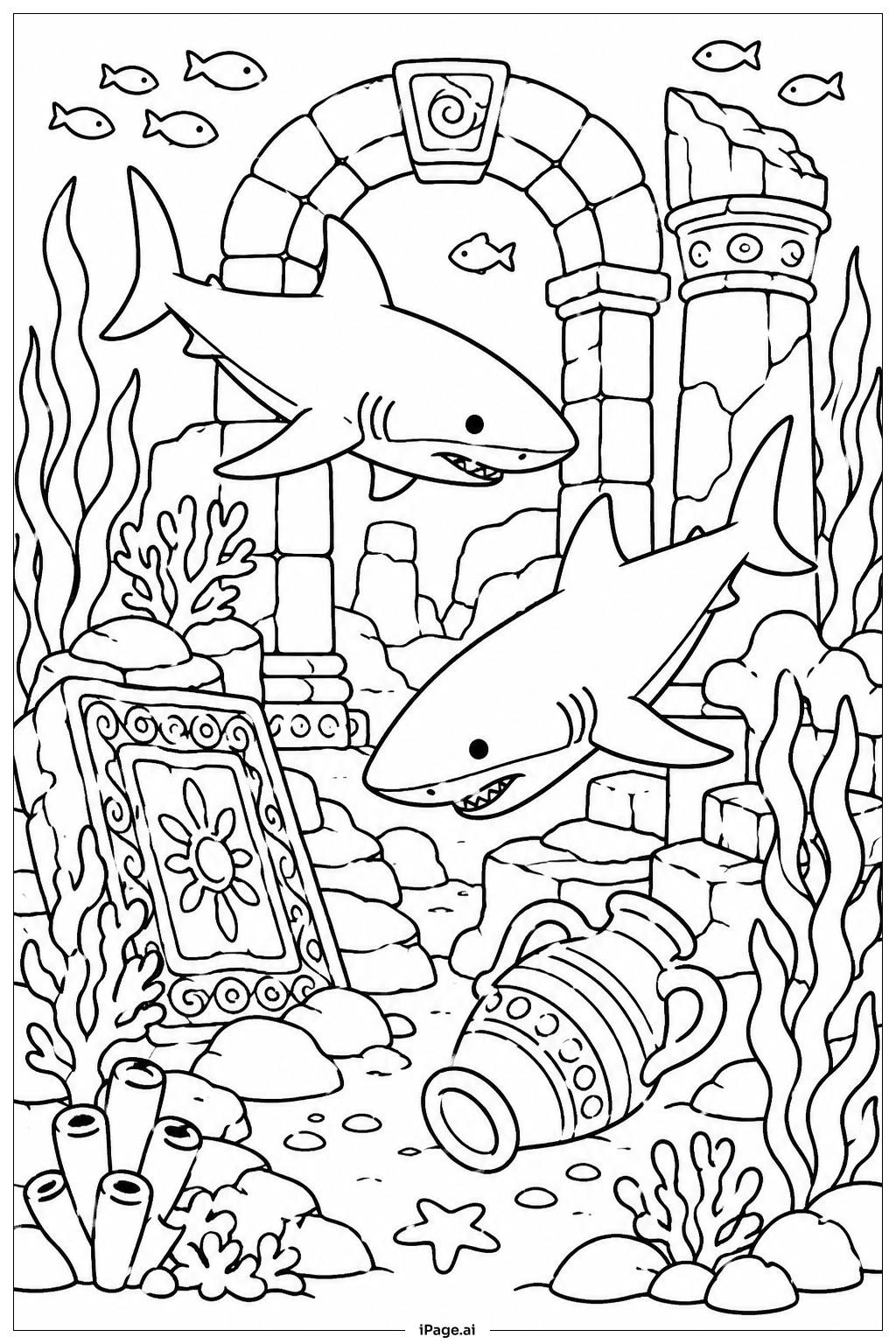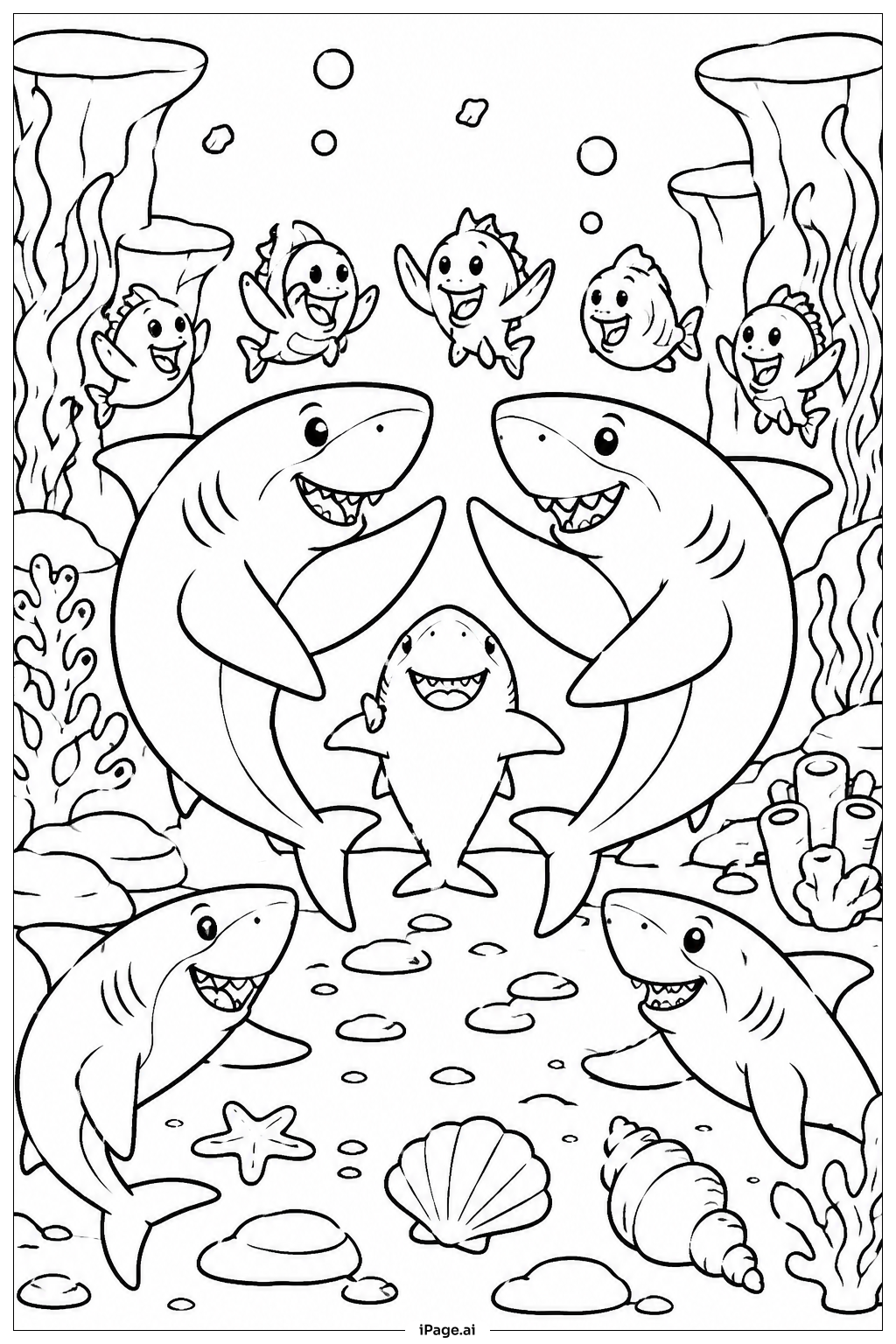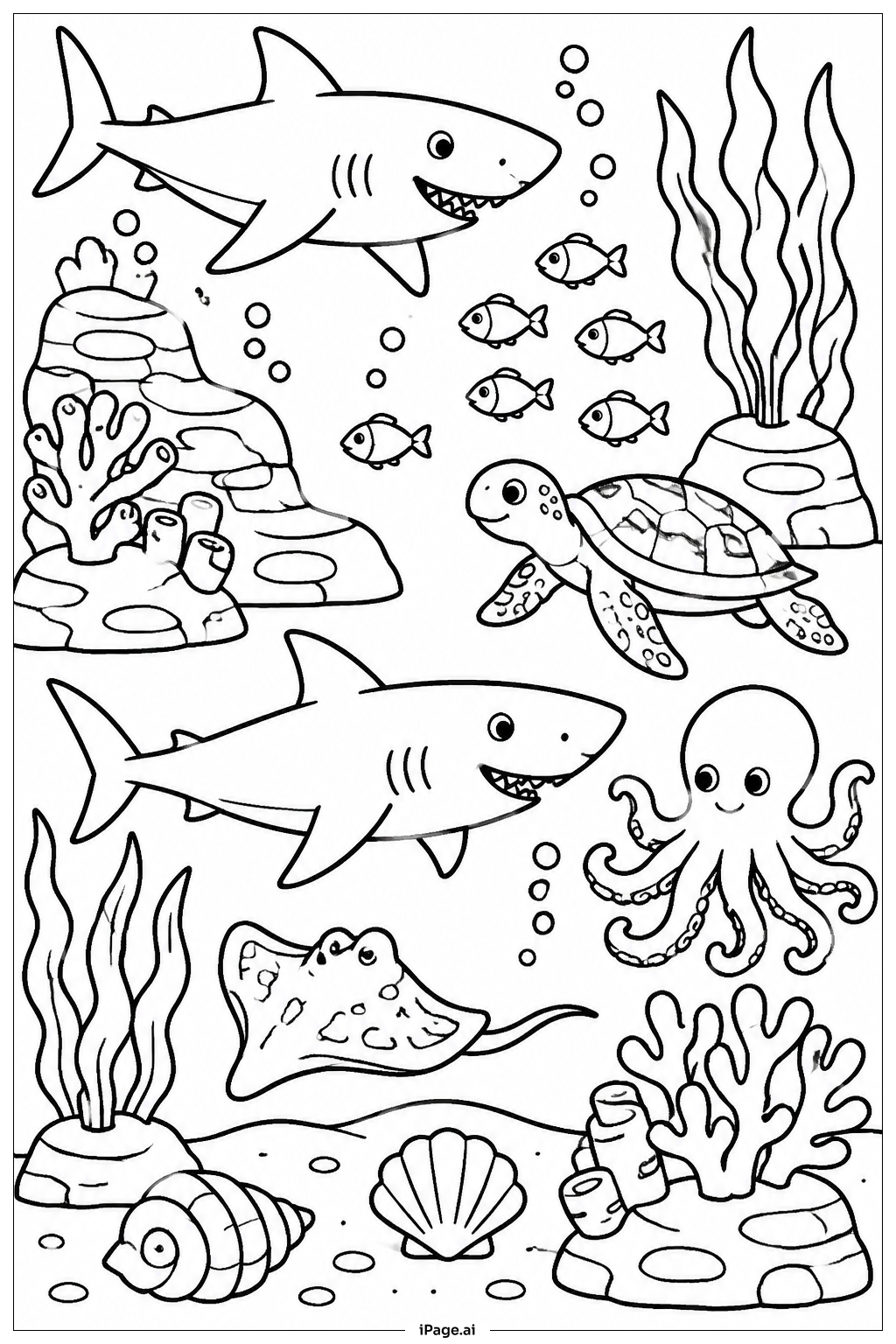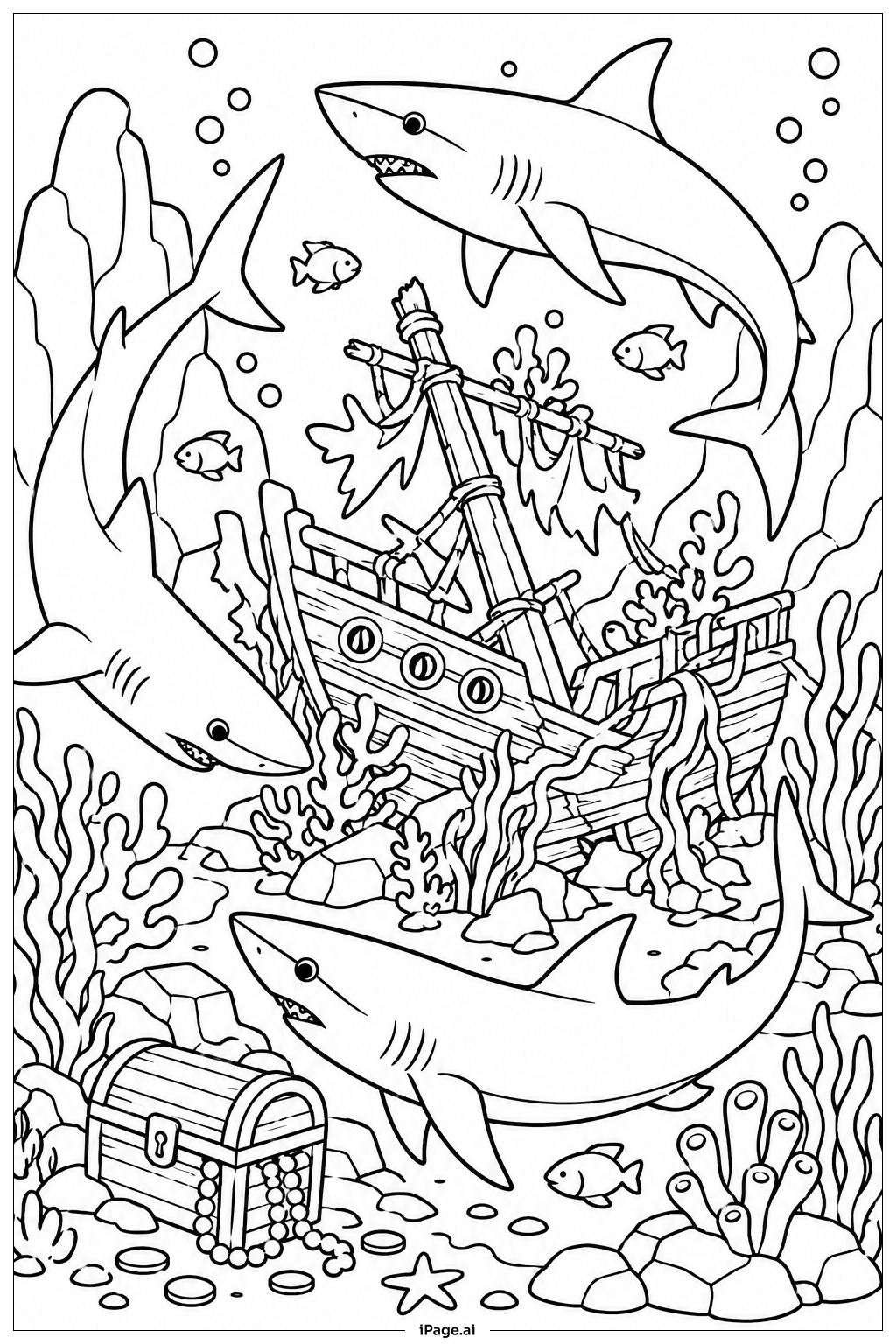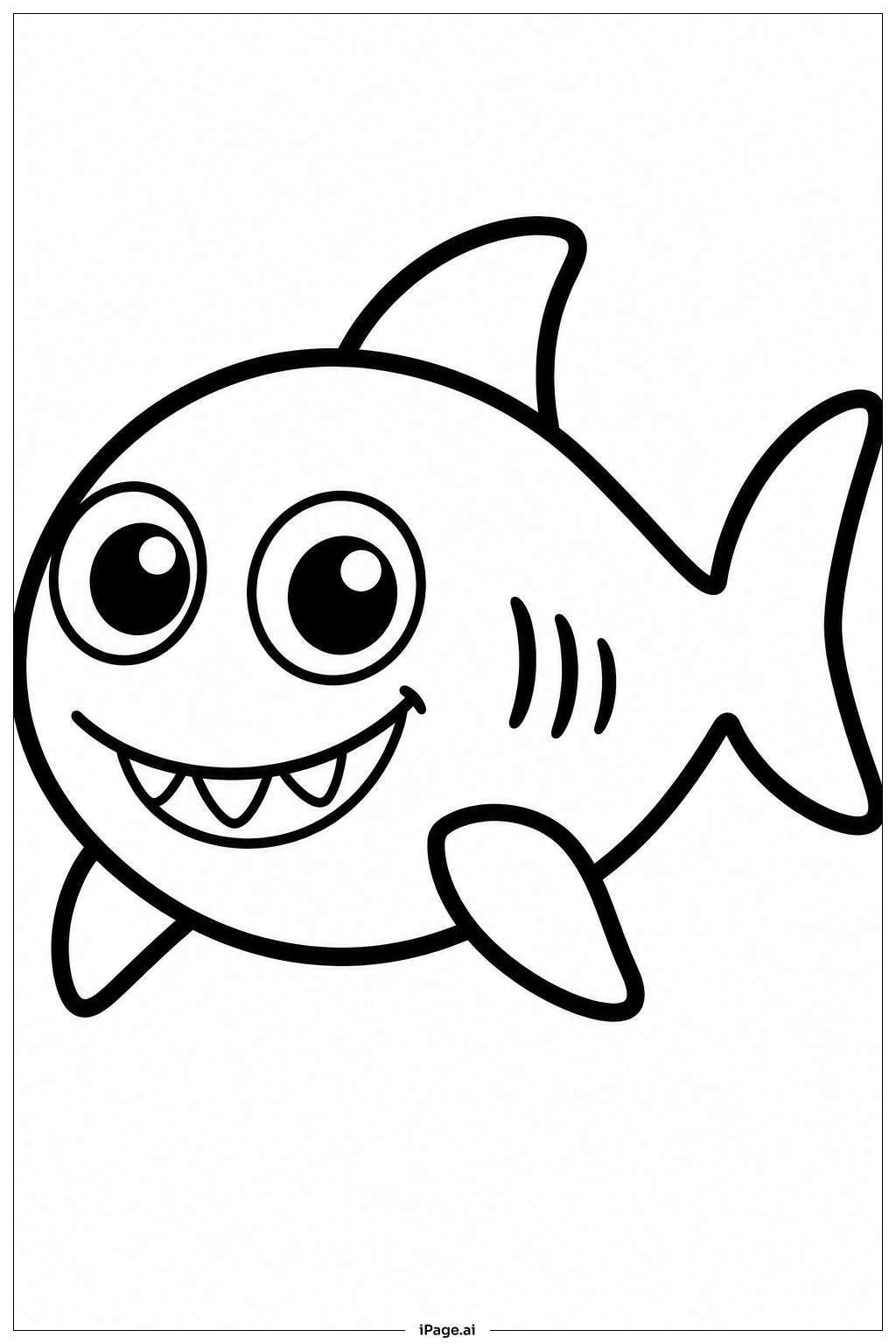
Coloring tips: How to color Big-Eyed Shark coloring page well?
Start with the shark's body using shades of blue-gray or steel blue. Leave the belly area lighter — white or pale cream — to mimic the natural two-tone coloring of real sharks. For the big eye, use a deep black or dark brown for the pupil and a lighter color like golden yellow or amber for the iris to make it pop. Add a tiny white dot highlight to bring the eye to life. Use different shades of blue for the background water — darker blues in the upper corners and lighter blues near the center — to create a sense of depth. You can add soft green or teal tones to suggest the ocean environment. Keep the fin edges slightly darker than the body to define the shapes clearly. If you want a more playful look, try using purple or teal for the shark's body instead of traditional gray.
Coloring challenges: Which parts are difficult to color and need attention for Big-Eyed Shark coloring page?
• The Large Expressive Eye: The shark's oversized eye is the focal point of the image and requires careful coloring. Fitting multiple layers — the outer ring, iris, pupil, and highlight dot — into a small circular space can be tricky, especially for younger children. Using the wrong colors or going outside the lines can make the eye look flat or lifeless instead of lively and expressive.
• Body Gradient and Shading: Real sharks have a gradual color shift from a darker back to a lighter belly. Recreating this smooth gradient effect on paper takes patience and blending skill. Younger colorists may find it hard to blend two colors smoothly without creating harsh lines, while older colorists may struggle to keep the transition even across the entire body.
• Fin Definition: The shark has multiple fins — the dorsal fin on top, two pectoral fins on the sides, and the tail fin at the back. Each fin needs to be colored slightly differently from the body to stand out. If all fins are colored the same shade, they can blend into the body and lose their distinct shape.
• Background Water Lines: The wavy lines in the background represent flowing water. Choosing the right blue tones and keeping them consistent without accidentally coloring over the shark's outline is a common challenge. Using too dark a color for the water can overwhelm the shark and flatten the overall composition.
• Small Line Details: The gill slits and subtle body curves are fine lines that need a steady hand. Filling in the areas around them neatly without smudging or overlapping requires focus and control, which can be especially challenging for beginners.
Benefits of coloring books: Advantages of drawing Big-Eyed Shark coloring page
Coloring this Big-Eyed Shark page offers a wonderful mix of fun and learning for kids of all ages. The friendly shark design helps children who might feel nervous about ocean creatures develop a positive and curious attitude toward marine life. As they choose colors for the shark's body, eye, and fins, kids practice color recognition and decision-making in a low-pressure, creative setting. Working carefully to stay within the lines and blend shades helps build fine motor skills and hand-eye coordination — important foundations for writing and other detailed tasks. The challenge of shading the body from darker to lighter tones encourages older children to experiment with artistic techniques like blending and layering. Completing the page gives children a real sense of accomplishment, which builds confidence and self-esteem. The calm, focused nature of coloring also makes it a great activity for winding down, reducing stress, and improving concentration. Parents and kids can color together and chat about sharks, the ocean, and sea life, turning a simple coloring session into a fun learning moment. Overall, this page is a great tool for creativity, education, and relaxation.