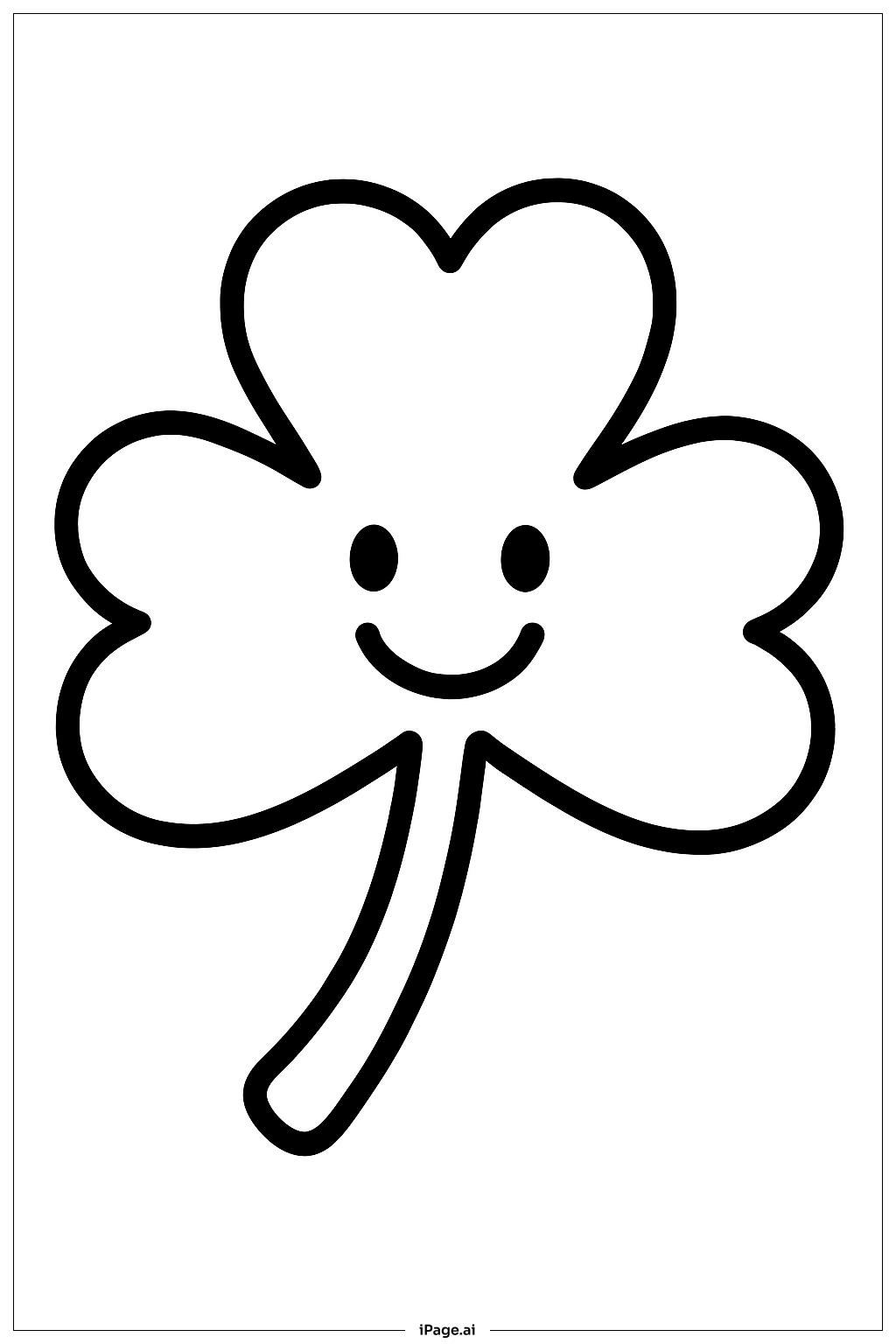
Coloring tips: How to color Smiling Shamrock Face coloring page well?
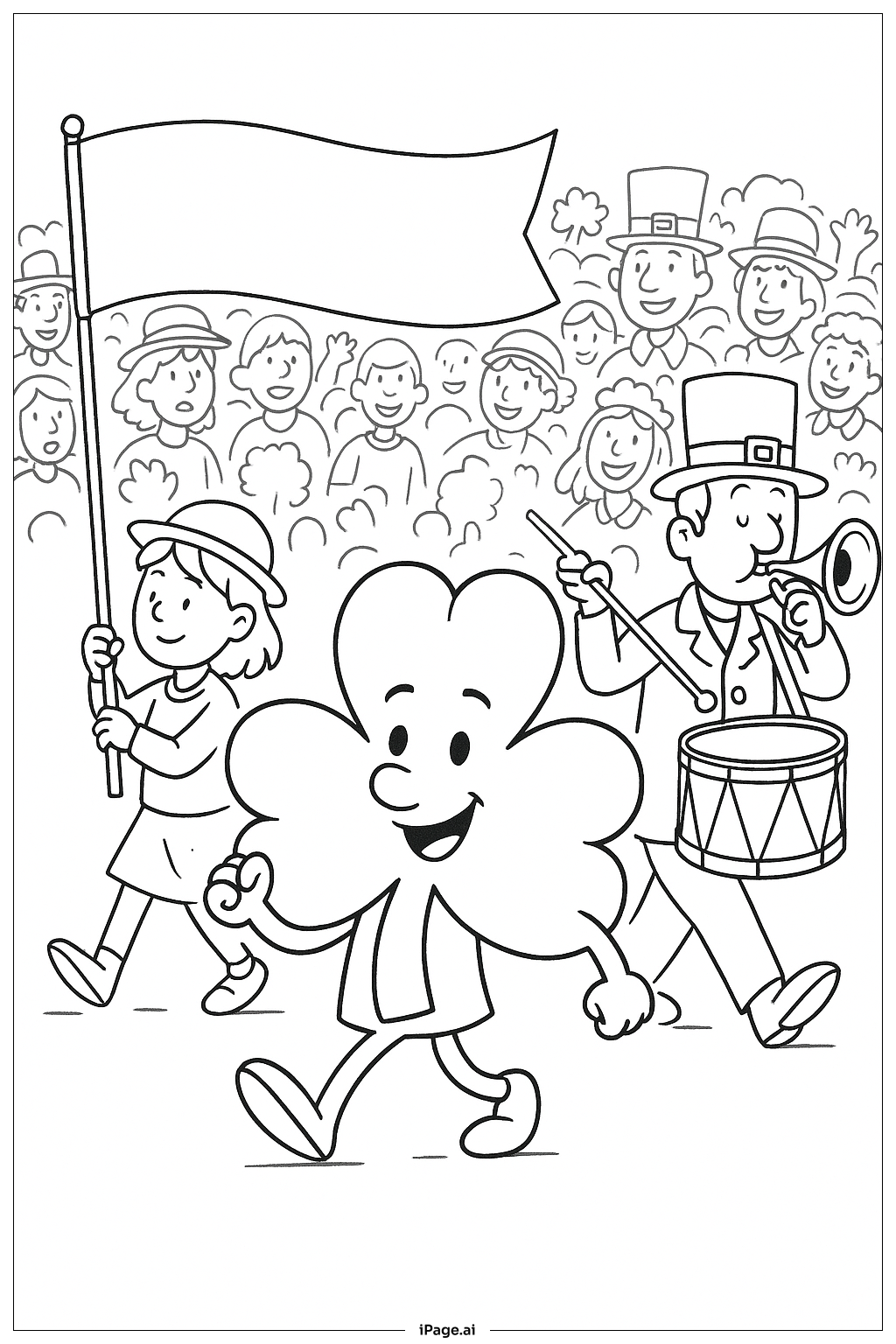
For this cheerful shamrock character, start with the classic green palette for the three heart-shaped leaves. You might choose different shades of green for each leaf to add depth—perhaps emerald, lime, and forest green. The face offers wonderful creative opportunities: try peach or light yellow for the facial area, rosy pink for the cheeks, and bright colors like blue or brown for the eyes. The smile can be colored in red or kept as a simple black outline. Consider adding highlights to the eyes with white or light blue to make them sparkle. The stem can be a darker green or brown to ground the character. For a magical touch, add small dots or patterns within the leaves, or create a gradient effect moving from light green at the edges to darker green at the center. Don't forget to add shading along one side of each leaf to create dimension and make your shamrock truly come alive.
Coloring challenges: Which parts are difficult to color and need attention for Smiling Shamrock Face coloring page?
• Heart-Shaped Leaf Symmetry: Each of the three leaves has a heart shape with curves that need balanced coloring on both sides. Maintaining even color intensity across the curved surfaces while keeping the symmetry visually pleasing requires careful hand control, especially when blending multiple green shades or creating gradient effects within each leaf.
• Facial Feature Detailing: The eyes and smile contain smaller enclosed areas that demand precision. Coloring inside the eye shapes without crossing lines, adding highlights or pupils accurately, and keeping the smile area neat all require steady hands and focused attention. Young children may find the eye details particularly challenging when trying to create expressive, lifelike features.
• Color Transition Management: Creating smooth transitions between the leaves, the central face area, and the stem involves managing multiple color zones that meet at boundaries. Deciding where one color ends and another begins, especially around the face-to-leaf connection points, requires planning. Avoiding color bleeding between the green leaves and the skin-toned face area takes patience and careful technique.
• Maintaining Character Consistency: Since this is a character rather than a realistic plant, colorists must balance natural shamrock colors with cartoon character conventions. Choosing whether to keep it botanically accurate or make it more fantastical with unusual colors requires creative decision-making. Ensuring the final result looks cohesive and that the facial features stand out appropriately against the leaf colors adds an extra layer of artistic consideration.
Benefits of coloring books: Advantages of drawing Smiling Shamrock Face coloring page
Coloring this Smiling Shamrock Face offers wonderful developmental and emotional benefits. The combination of simple curves and detailed facial features helps children practice fine motor control and hand-eye coordination, building skills essential for writing and other precision tasks. The friendly, happy expression promotes positive emotions and can boost mood, making coloring time a joyful experience. Working with the traditional shamrock symbol introduces cultural awareness about Irish heritage and St. Patrick's Day traditions in an engaging, hands-on way. The clear, defined spaces allow younger children to experience success and build confidence, while the opportunity for creative color choices and shading techniques keeps older children and adults engaged. The character's cheerful personality encourages emotional connection to the artwork, making the coloring process more meaningful. Completing this project provides a sense of accomplishment and creates a charming decoration perfect for seasonal displays, helping colorists feel proud of their creative work.