Coloring tips: How to color Shamrock Botanical Study Page coloring page well?
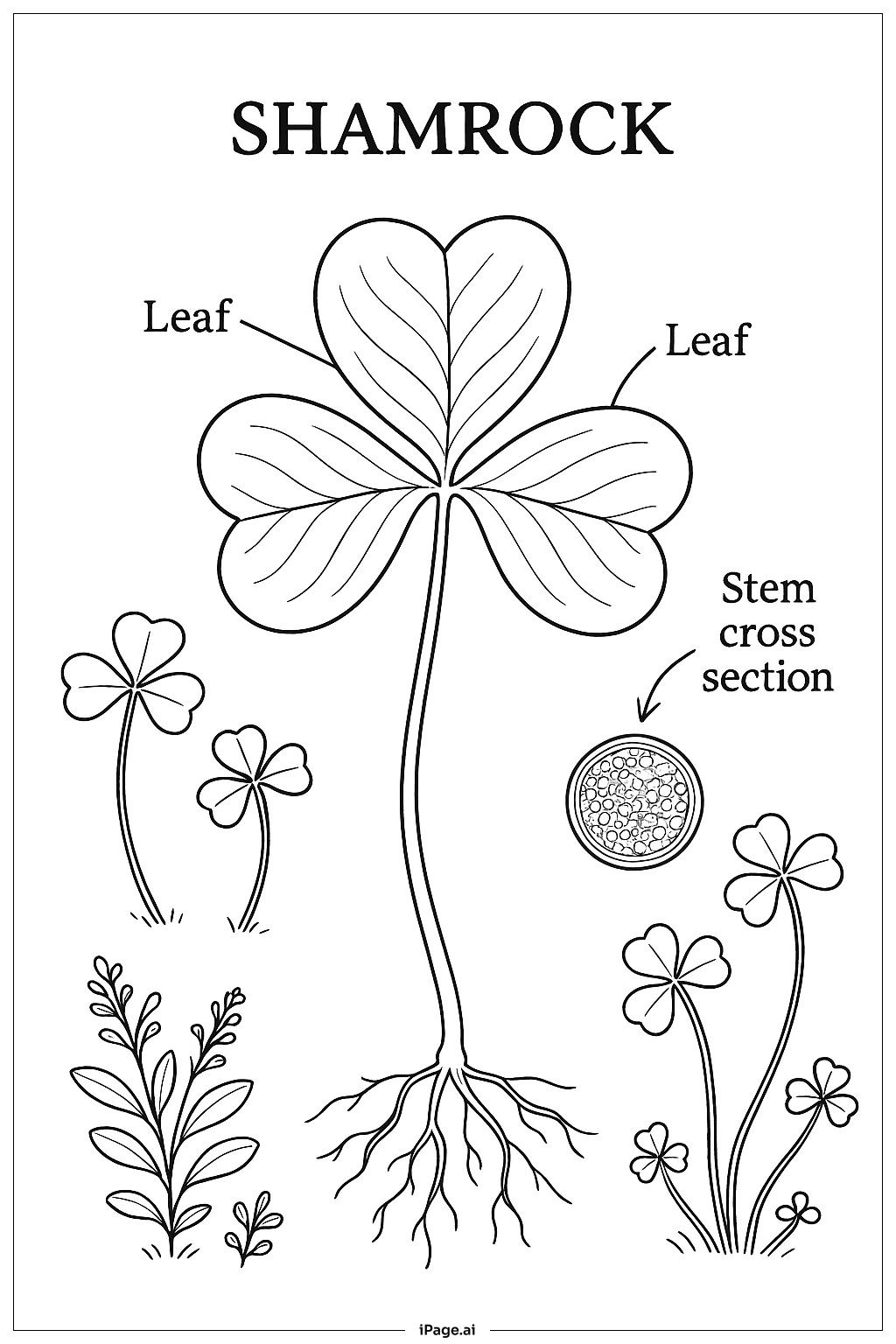
Use different shades of green to color the shamrock leaves and stems. You can try light green for new leaves and darker green for older ones. Color the veins on the leaves with a slightly darker shade to make them stand out. For the roots, use light brown or beige to show they are underground. You can add some soft colors to the small plants to make the picture more lively. The cross section of the stem can be colored with different browns and greens to highlight its structure. Try to stay inside the lines to keep the picture neat and clean. Feel free to experiment with blending shades to create a natural look.
Coloring challenges: Which parts are difficult to color and need attention for Shamrock Botanical Study Page coloring page?
1. Small details like leaf veins require careful coloring to avoid going outside the lines.
2. The stem cross section has many tiny circular details that need patience and precision.
3. Differentiating between similar green shades can be tricky, needing focus to show depth.
4. Coloring roots with subtle tones might be difficult due to their thin and irregular lines.
5. Balancing colors on different plants to keep the picture harmonious requires good color choice.
Benefits of coloring books: Advantages of drawing Shamrock Botanical Study Page coloring page
Coloring this shamrock page helps improve fine motor skills as children work on small details and precise lines. It encourages attention to detail and patience. Learning to use different shades promotes color recognition and creativity. The botanical study theme teaches kids about plant parts in a fun way, combining education with art. These skills support overall development and build confidence in coloring abilities.