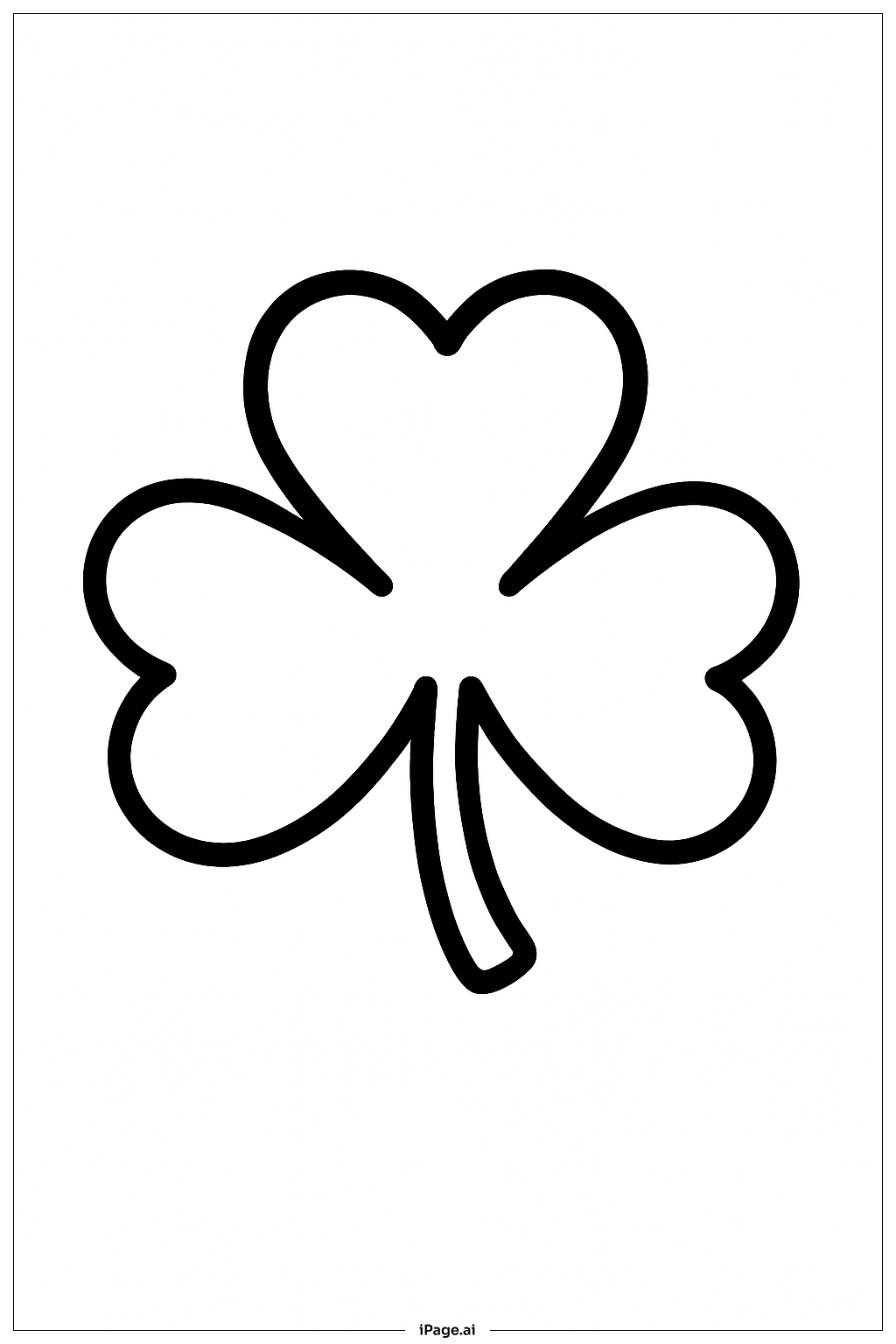
Coloring tips: How to color Shamrock With Tiny Stem coloring page well?
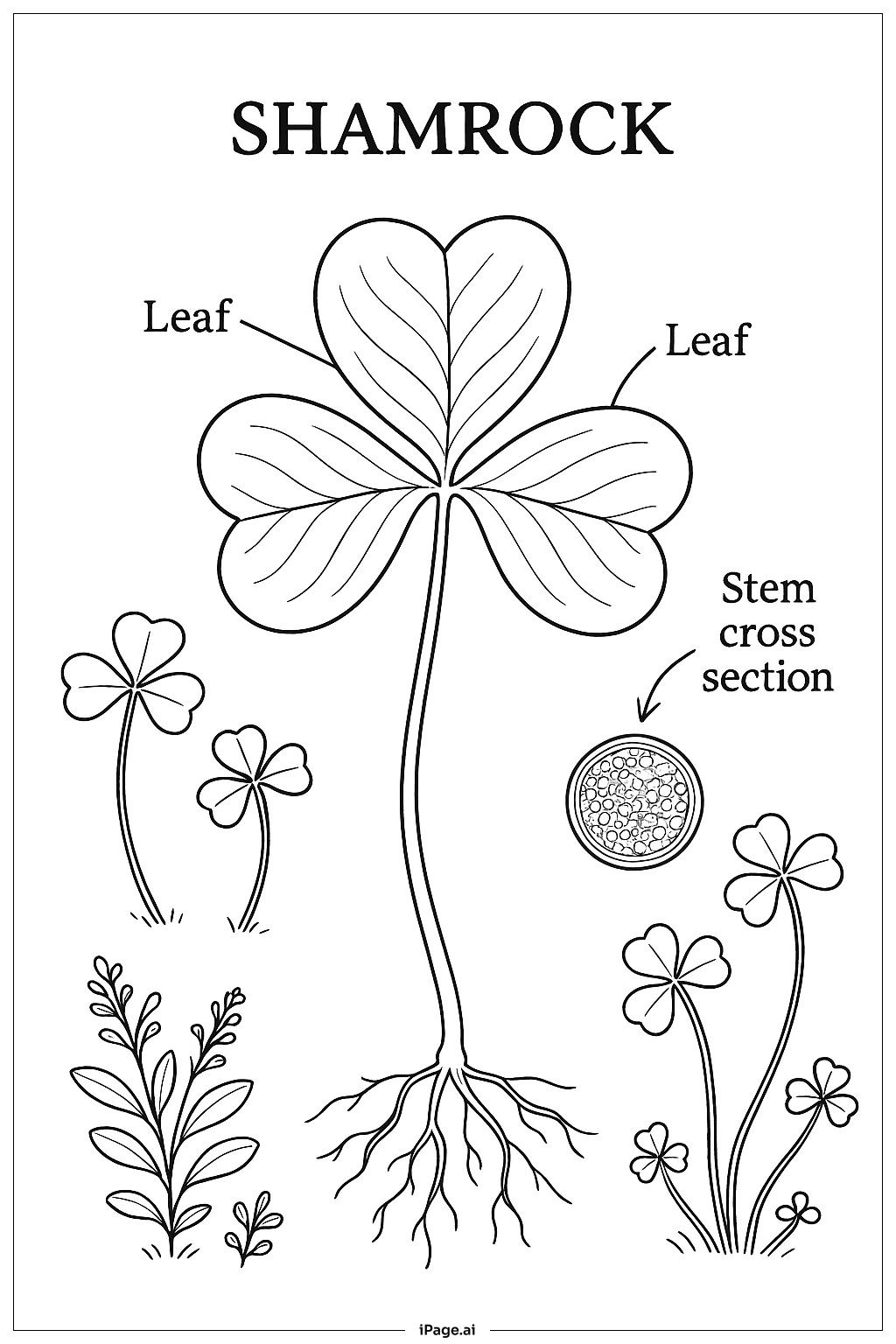
For this shamrock, traditional green is the classic choice for all three leaves, but you can explore different shades to add depth. Try using a lighter green for the leaf edges and a darker green toward the center of each heart-shaped leaf. The tiny stem can be colored in a deeper forest green or even a brown tone to make it look more natural. For a festive touch, add a hint of yellow-green or lime to create highlights where sunlight might hit the leaves. You can also experiment with non-traditional colors like blue, purple, or rainbow shades for a creative twist. Consider adding tiny white dots or lines to suggest dewdrops or veins within the leaves. The background can remain white or be filled with soft pastel colors to make the shamrock stand out.
Coloring challenges: Which parts are difficult to color and need attention for Shamrock With Tiny Stem coloring page?
• Leaf Symmetry and Uniformity: Maintaining consistent color intensity across all three heart-shaped leaves can be challenging, especially when trying to create uniform shading or gradients. Since the leaves are identical in shape and size, any variation in coloring technique becomes immediately noticeable. Children may find it difficult to apply the same pressure or blend colors equally on each leaf, which can result in one leaf appearing darker or lighter than the others. Practicing even strokes and checking progress frequently helps achieve a balanced look across all three leaves.
• Tiny Stem Precision: The small stem requires careful coloring within tight boundaries, which can be difficult for younger children or those still developing fine motor control. The narrow width means that coloring tools like crayons or thick markers might cover the entire stem in one stroke, making it hard to add detail or shading. Staying within the lines of such a small element demands focus and a steady hand. Using finer tools like colored pencils or thin markers works best for this delicate area.
• Heart-Shaped Leaf Curves: The curved edges of the heart-shaped leaves present a challenge when trying to color smoothly along the rounded borders. The dips and curves require careful attention to avoid going outside the lines or leaving white gaps near the edges. Younger colorists might struggle with the coordination needed to follow these organic shapes precisely. Taking time to color slowly around the curves and rotating the page to a comfortable angle can help achieve cleaner results and build confidence with more complex outlines.
Benefits of coloring books: Advantages of drawing Shamrock With Tiny Stem coloring page
Coloring this shamrock offers wonderful benefits for children and beginners. The simple three-leaf design helps young artists practice symmetry and pattern recognition as they work to make each leaf look similar. The large, open spaces within each heart-shaped leaf are perfect for experimenting with different coloring techniques like shading, blending, or adding texture without feeling overwhelmed. This image builds fine motor skills and hand-eye coordination, especially when carefully coloring the tiny stem and staying within the curved leaf edges. The shamrock also provides a gentle introduction to cultural symbols, sparking conversations about Irish traditions, St. Patrick's Day, and the meaning of lucky charms. Completing this friendly design gives children a sense of accomplishment and confidence, encouraging them to try more detailed coloring pages in the future.