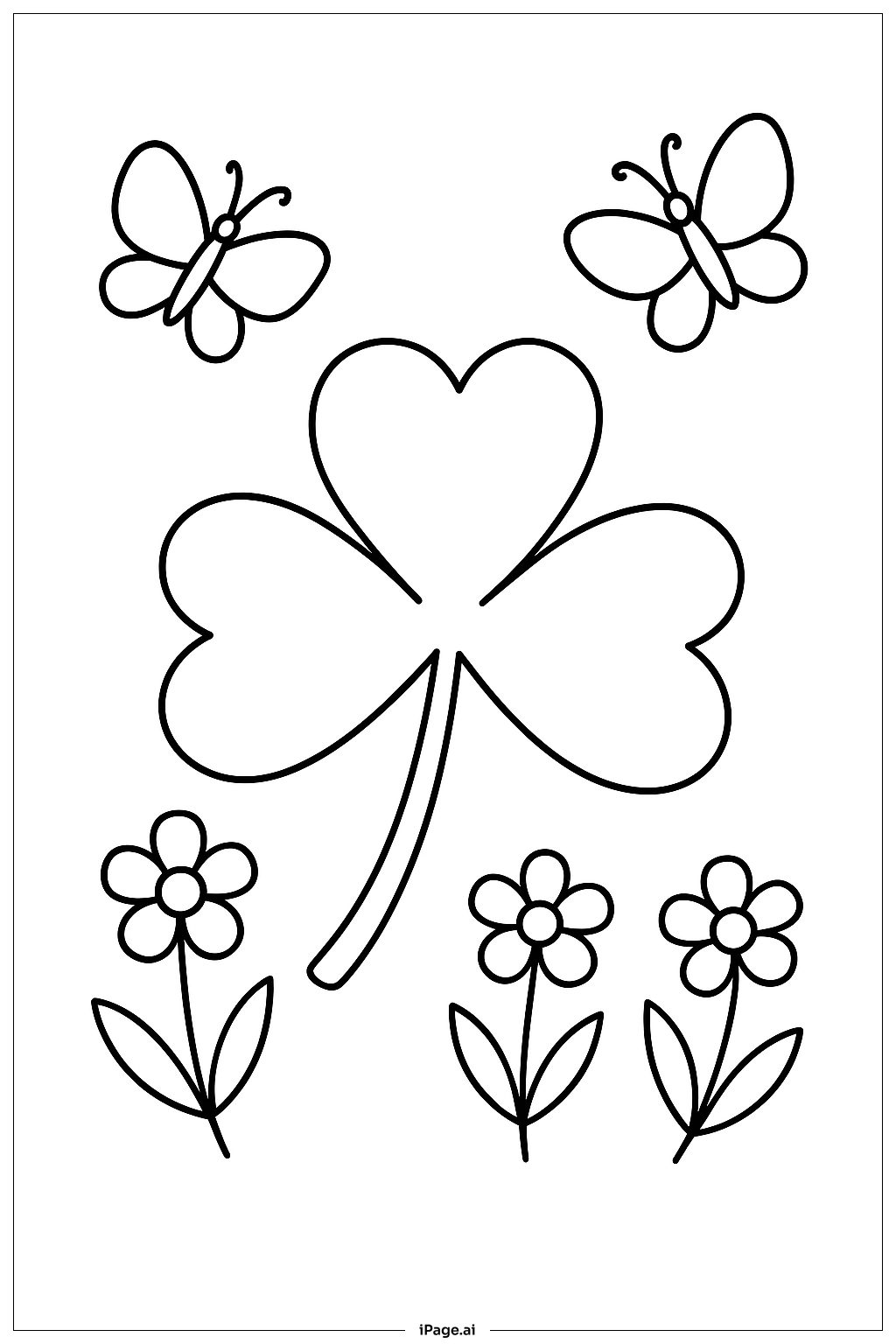
Coloring tips: How to color Shamrock With Butterflies coloring page well?
For the shamrock, try using different shades of green, from light mint to deep emerald, to create depth in each leaf. You could color each leaf a slightly different green tone or use gradient techniques. The decorative patterns inside the shamrock offer a great opportunity to use contrasting colors like yellow, white, or even purple to make them stand out. For the butterflies, let your imagination soar! Consider using bright, cheerful colors like orange, pink, blue, and yellow. Each butterfly can have its own color scheme, or you can create a coordinated palette. Try coloring the wing patterns in contrasting colors to the main wing color for a striking effect. The small dots and sparkles can be colored in metallic gold, silver, or bright yellow to add a magical touch. Don't forget to color the background in a soft pastel shade like light blue or pale yellow to make the shamrock and butterflies pop off the page.
Coloring challenges: Which parts are difficult to color and need attention for Shamrock With Butterflies coloring page?
• Intricate Pattern Details: The shamrock contains numerous small decorative elements including swirls, dots, and curved lines that require careful coloring within tight spaces. Young children may find it challenging to stay within these tiny areas without crossing lines. Using fine-tipped markers or colored pencils can help, and taking breaks to avoid hand fatigue is important. Patience and a steady hand will result in a beautifully detailed shamrock.
• Butterfly Wing Symmetry: Each butterfly has detailed wing patterns with circles, curves, and geometric shapes that ideally should be colored symmetrically on both sides. Maintaining consistent colors and patterns on matching wings requires planning and attention to detail. It helps to color one side of the butterfly completely before moving to the other side, so you remember which colors you used where.
• Multiple Elements Coordination: With one large shamrock and five separate butterflies, deciding on a cohesive color scheme that makes all elements work together harmoniously can be challenging. You need to balance making each butterfly unique while ensuring the overall composition looks unified. Consider planning your color palette before starting, perhaps sketching color choices lightly in pencil first.
• Small Scattered Details: The tiny dots and sparkles scattered throughout the background are small and numerous, requiring precision and patience. Coloring each one without smudging nearby areas takes concentration. Younger colorists might choose to leave some uncolored or use a dabbing technique with markers to fill them quickly.
Benefits of coloring books: Advantages of drawing Shamrock With Butterflies coloring page
Coloring this shamrock and butterflies page offers wonderful benefits for children and adults alike. The intricate patterns help develop fine motor skills and hand-eye coordination, especially when working within the small detailed areas. This activity encourages focus and concentration, as completing the detailed shamrock and multiple butterflies requires sustained attention. The nature theme promotes learning about springtime, Irish symbols, and butterfly varieties, sparking curiosity about the natural world. Choosing colors for each element exercises decision-making skills and color theory understanding. The repetitive motion of coloring has a calming, meditative effect that can reduce stress and anxiety. Completing this detailed page builds confidence and provides a sense of accomplishment. The cheerful subject matter promotes positive emotions and creativity. This page also offers opportunities for family bonding when colored together, and the finished artwork makes beautiful seasonal decoration for spring or St. Patrick's Day celebrations.