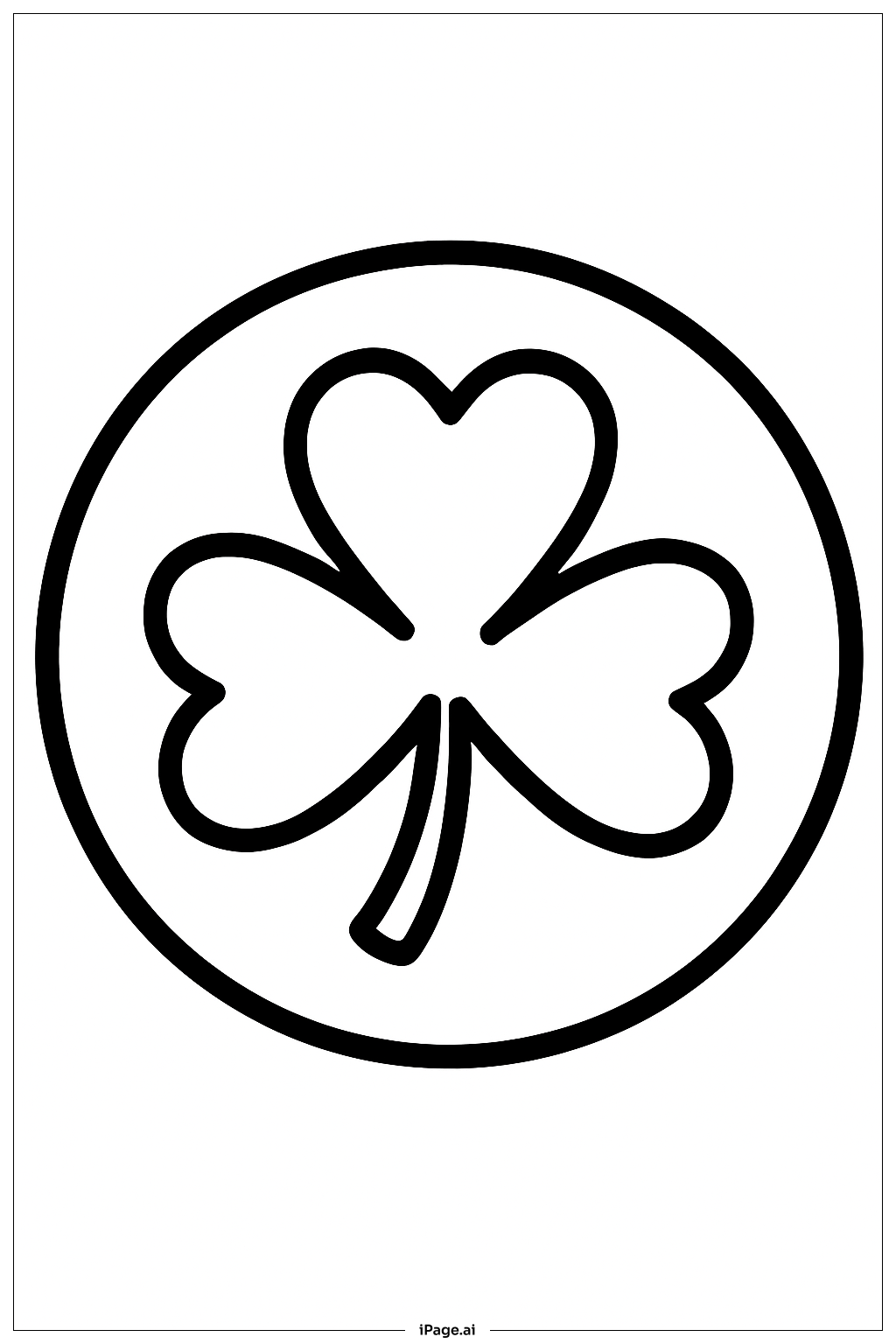
Coloring tips: How to color Shamrock On Circle Base coloring page well?
For this shamrock design, start with the classic green for the three leaves, using different shades to add depth. Try a bright kelly green for the main leaf color, then add darker forest green along the edges or in shadowed areas. The stem can be colored in a lighter lime green or yellow-green to show it's different from the leaves. For the circular base, consider using brown or tan to make it look like wood, or try gray stone tones for a different effect. You could also use gold or yellow for a magical, decorative base. Add highlights by leaving small areas lighter or using white colored pencil on top. For a festive look, add tiny dots of gold or sparkles around the shamrock. Younger children might enjoy using multiple shades of green, while older colorists can experiment with blending techniques and realistic shading.
Coloring challenges: Which parts are difficult to color and need attention for Shamrock On Circle Base coloring page?
• Smooth Leaf Curves: The heart-shaped leaves feature continuous curved edges that require steady hand control to color neatly within the lines. Young children may find it challenging to follow these rounded contours without going outside the boundaries, especially at the points where the curves change direction. The symmetrical nature means any wobbles will be noticeable across all three leaves, requiring patience and careful attention.
• Shading and Dimension: Creating realistic depth on the shamrock leaves involves understanding where light would naturally hit and where shadows would fall. Blending from light to dark green smoothly across each leaf section takes practice and control. The central area where the three leaves connect is particularly tricky, as this junction needs darker tones to show overlap and depth, which requires planning before coloring.
• Uniform Color Application: Keeping the color consistent and even across larger areas like the circular base can be challenging. Streaks, gaps, or uneven pressure create a patchy appearance. The circle's continuous shape means there's nowhere to hide mistakes, and maintaining the same intensity all the way around requires good motor control and patience.
• Fine Detail Work: The points where the leaves meet the stem and where the stem connects to the base require precision coloring. These small connecting areas need careful attention to avoid color bleeding into adjacent sections. Younger artists may struggle with these tight spaces, while older colorists will want to add fine details like veins in the leaves, which demands excellent fine motor skills.
Benefits of coloring books: Advantages of drawing Shamrock On Circle Base coloring page
Coloring this shamrock design offers wonderful developmental benefits for children. The simple yet elegant shape helps younger kids practice staying within lines, building their fine motor skills and hand-eye coordination. The three identical leaves provide natural opportunities to practice color consistency and pattern recognition. As children work on each leaf, they develop focus and patience, learning to complete similar tasks with care. The symmetrical design also introduces basic concepts of balance and geometry in a fun, approachable way. For older children and adults, this image serves as a relaxing mindfulness activity, allowing them to experiment with shading techniques and color blending without overwhelming complexity. The shamrock's cultural significance can spark conversations about Irish heritage, St. Patrick's Day traditions, and the symbolism of luck and nature, adding educational value to the creative experience.