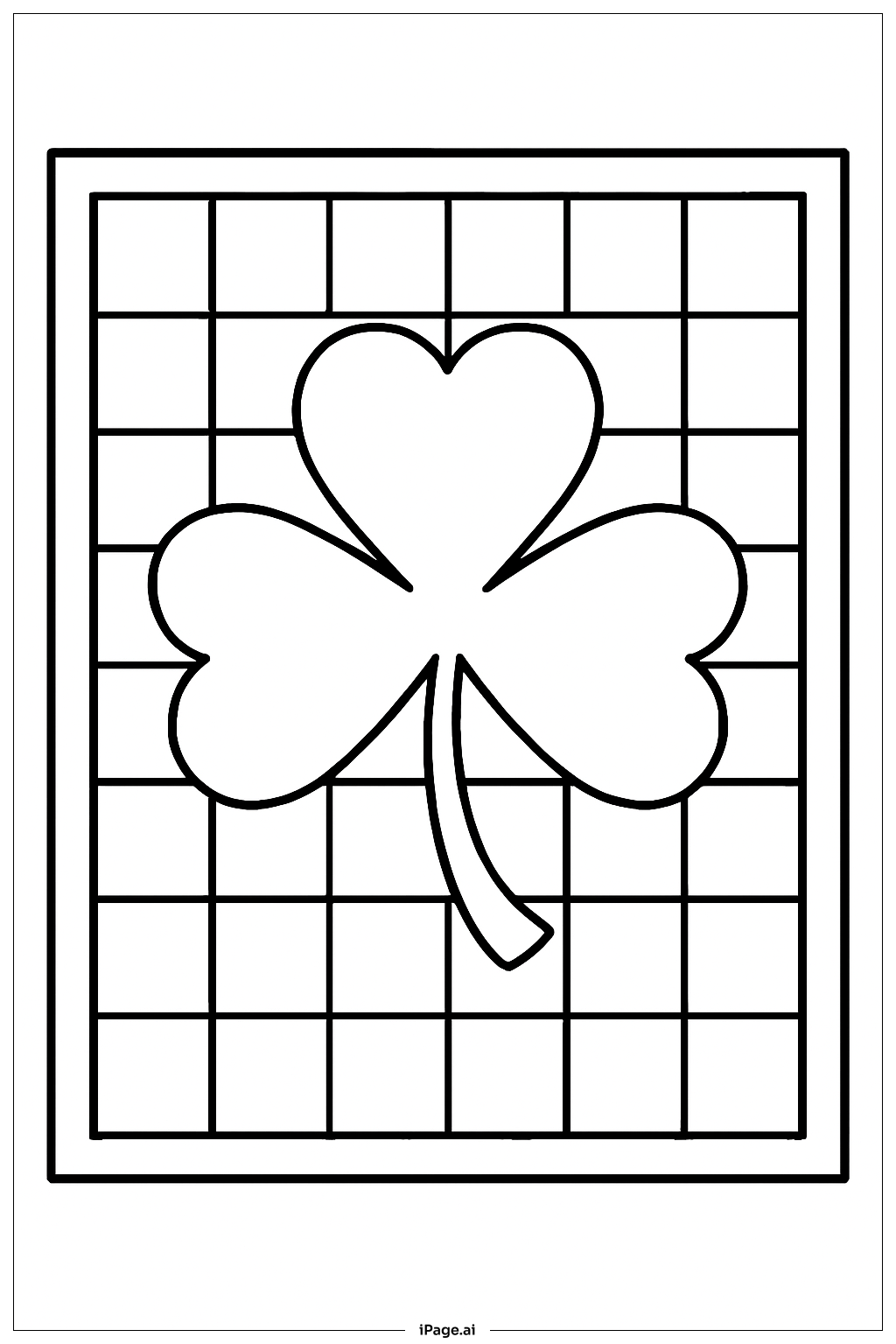
Coloring tips: How to color Shamrock On Checker Mat coloring page well?
Start with the shamrock leaves. Use different shades of green for each leaf to give the plant a lively, natural look. Try bright green for one leaf, a deeper forest green for another, and a softer lime green for the third. Add a slightly darker green along the center vein to create depth. Color the stem in a warm brown or dark green. For the checker mat, use two alternating colors for the squares. Classic choices are red and white, or black and tan. You could also go bold with two bright colors like orange and yellow. Keep your lines steady inside the small squares. Take your time and work square by square for a neat finish. Use colored pencils for more control in tight areas.
Coloring challenges: Which parts are difficult to color and need attention for Shamrock On Checker Mat coloring page?
• Leaf Curve Accuracy: The three shamrock leaves each have soft, rounded edges that curve inward toward the center stem. Staying inside these gentle curves without smudging into neighboring leaves can be tricky, especially near the meeting point at the top of the stem. Young colorists may need to work slowly along each curve with a sharp pencil or fine-tip marker.
• Center Vein Detailing: Each leaf has a thin vein running from base to tip. Coloring around this vein without covering it completely requires a steady hand. Using a slightly darker shade along the vein, rather than a single flat color, will make the leaf look more realistic and three-dimensional.
• Checker Grid Consistency: The mat is divided into many small, evenly spaced squares. Keeping each square filled with a consistent, flat color without going over the grid lines takes patience and concentration. This is one of the more time-consuming parts of the image, as there are many individual squares to fill.
• Color Alternation Pattern: The checker pattern requires two colors to alternate in a regular sequence across every row and column. Losing track of the pattern midway through is easy, especially for younger children. Lightly marking squares with a dot before coloring can help maintain the correct alternation.
• Contrast Between Shamrock and Mat: Choosing colors that make the shamrock stand out clearly against the checker mat background is an important visual challenge. If the mat colors are too similar to the green of the shamrock, the image can look flat and hard to read.
Benefits of coloring books: Advantages of drawing Shamrock On Checker Mat coloring page
Coloring this Shamrock On Checker Mat page offers a range of great benefits for kids and beginners. The checker mat section is perfect for building focus and attention to detail. Filling in each small square trains the eye and hand to work together carefully. This kind of repetitive, structured coloring helps children develop patience and improve their fine motor skills over time. The shamrock itself introduces organic shapes, teaching colorists how to handle curves and flowing lines, which is different from straight-edged coloring. Choosing colors for the image also encourages creative thinking. Deciding which shades of green to use for the leaves, and which two colors to alternate on the mat, builds early color theory skills in a fun, low-pressure way. Completing the full image gives a strong sense of accomplishment, which boosts confidence and encourages kids to try more complex coloring pages. Overall, this page balances structure and creativity in a way that is both educational and enjoyable.