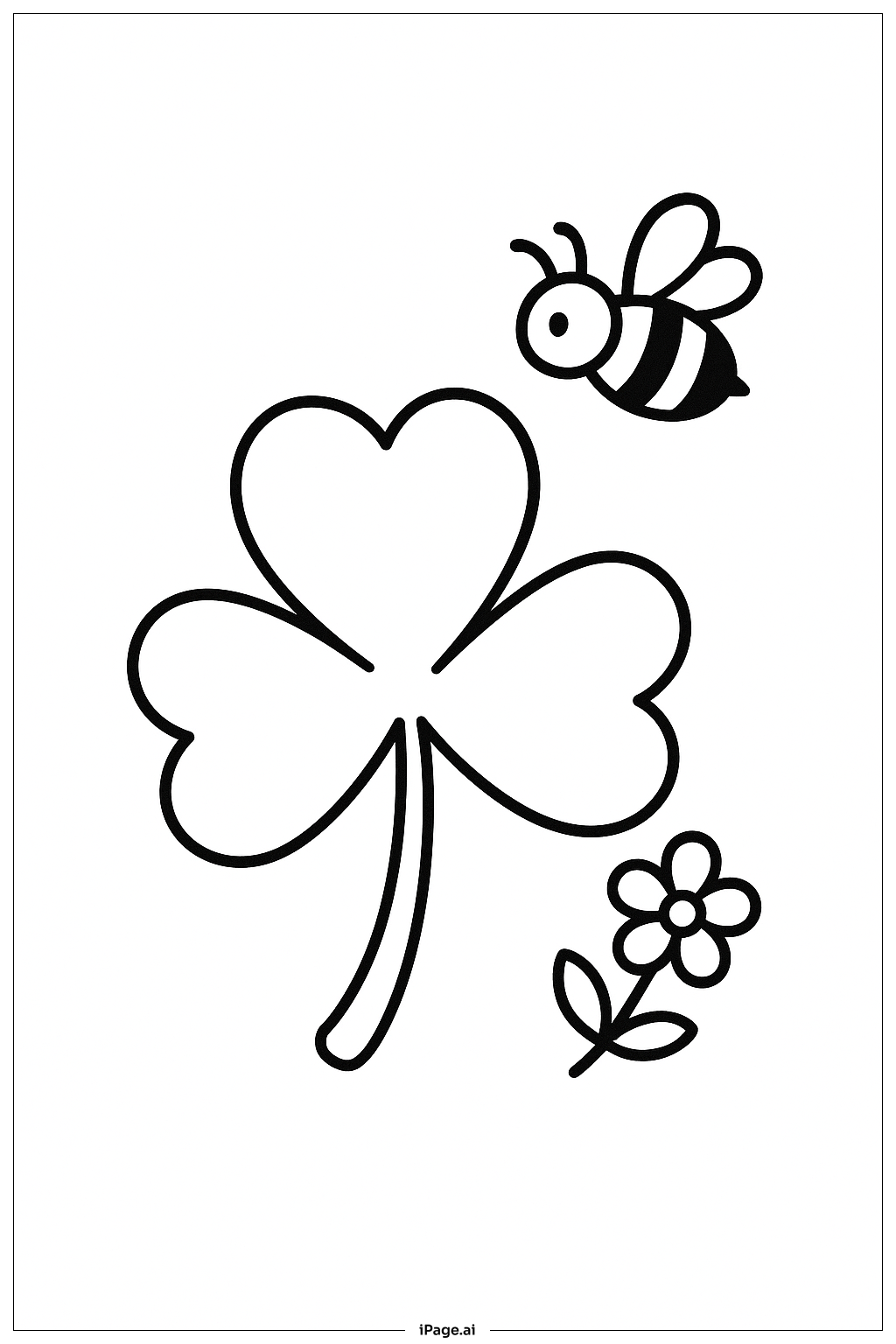
Coloring tips: How to color Shamrock And Tiny Bee coloring page well?
Use different shades of green for the shamrock to give it a fresh and lively look. Consider coloring the bee with yellow and black stripes to make it stand out. The wings of the bee can be colored light blue or left white with some shading to show transparency. For the flower, choose bright colors like red, pink, or orange for the petals, and use green for the leaves and stem. You can also add some yellow in the center of the flower. Try blending colors gently to create a natural effect. Feel free to use crayons, markers, or colored pencils for smooth coloring and fun textures.
Coloring challenges: Which parts are difficult to color and need attention for Shamrock And Tiny Bee coloring page?
1. Coloring the tiny bee's small parts like the antennae and stripes may require careful attention to avoid coloring outside the lines. 2. The heart-shapes of the shamrock leaves are large but have curved edges, which may be tricky for younger children to color neatly. 3. The flower’s petals and leaves are small and close together, needing precise coloring skills to keep colors inside the lines. 4. Shading the bee’s wings to represent transparency can be hard for beginners. 5. Maintaining clean edges around the shamrock and flower requires good control with coloring tools.
Benefits of coloring books: Advantages of drawing Shamrock And Tiny Bee coloring page
Coloring this picture can help improve fine motor skills, especially hand-eye coordination, by focusing on small details like the bee and flower. It encourages creativity through choosing colors and blending shades. Children learn about nature symbols such as the shamrock and bees, connecting art with the natural world. Coloring also supports concentration and patience. This simple but engaging design is suitable for kids to practice steady coloring and enjoy the calming effects of art.