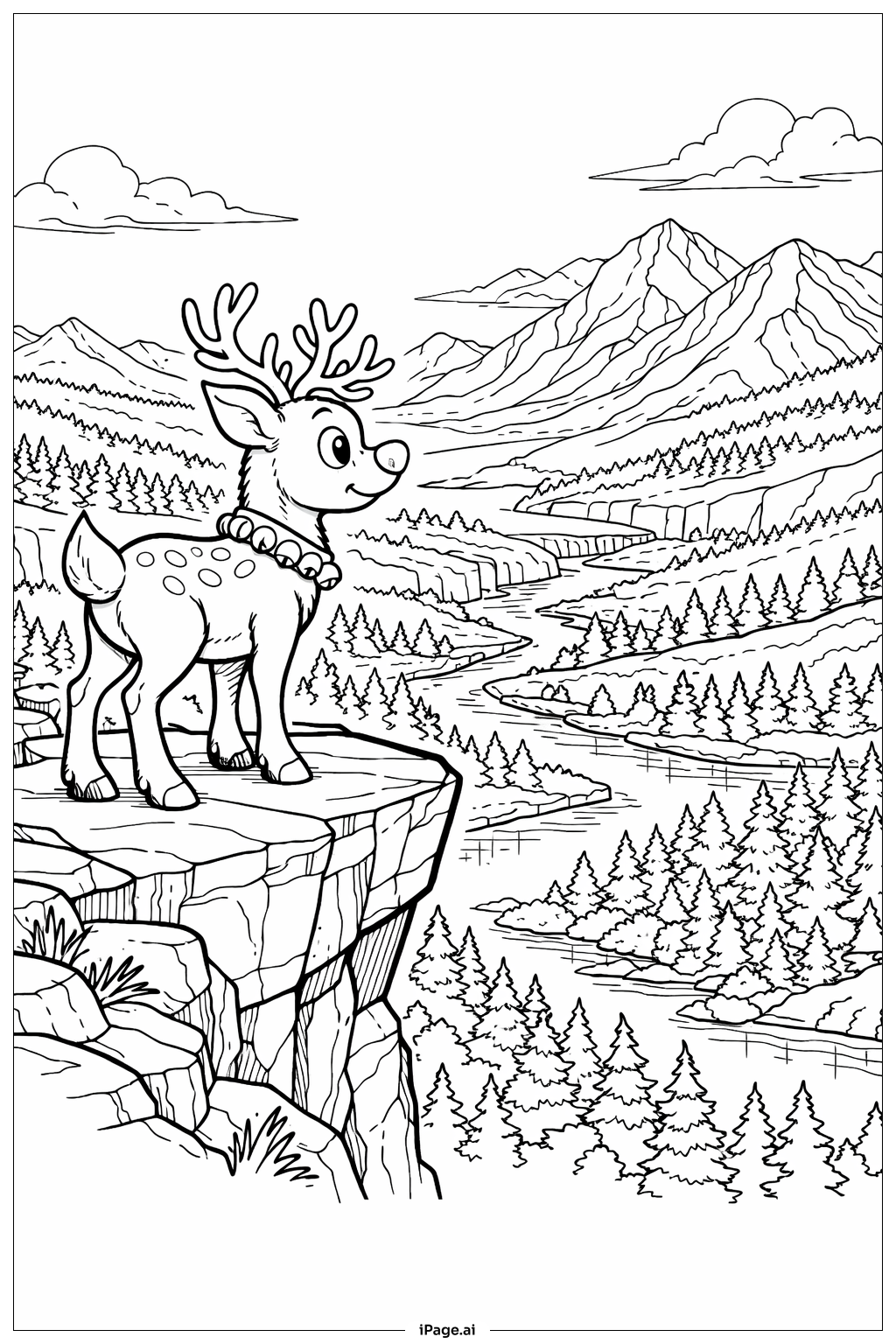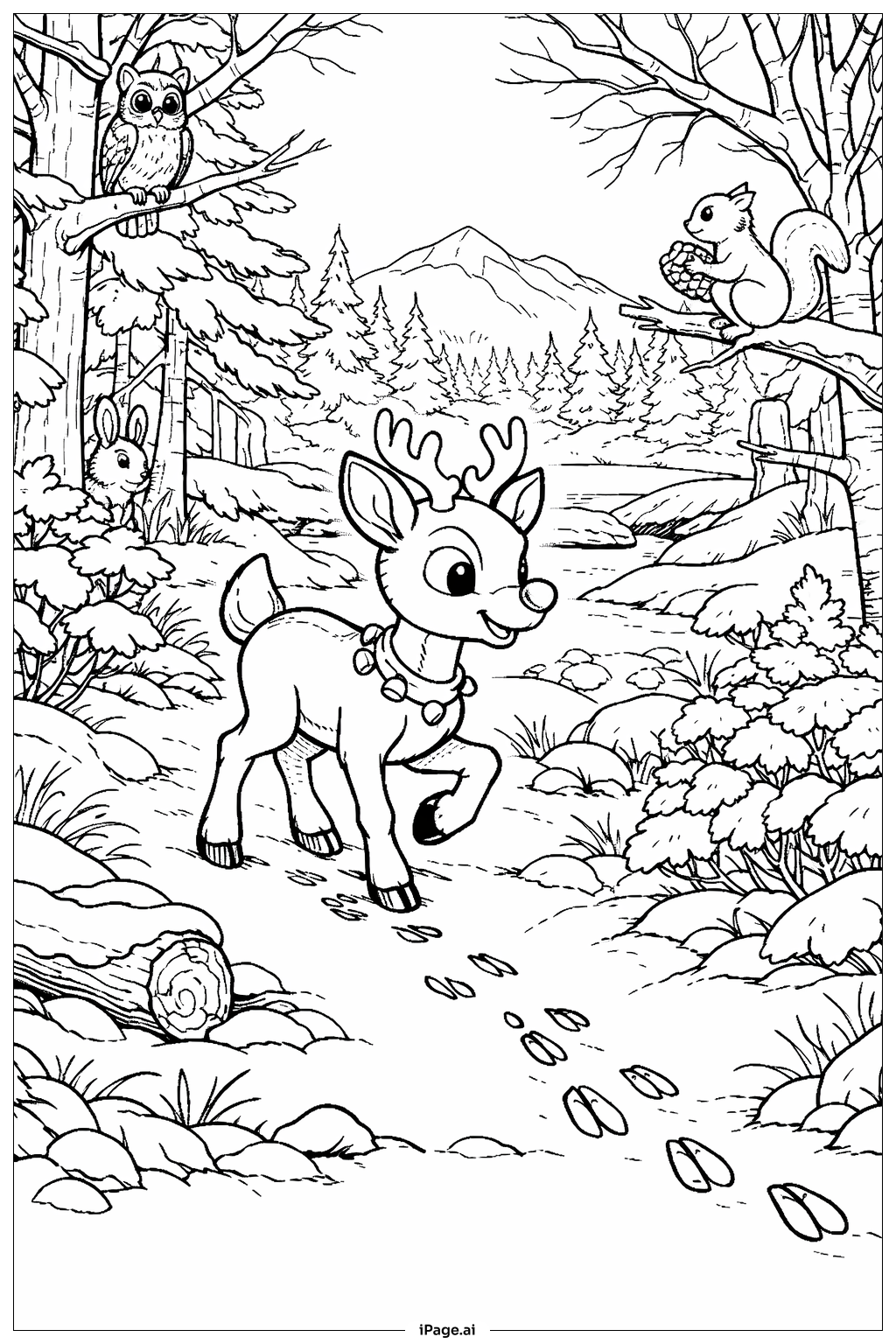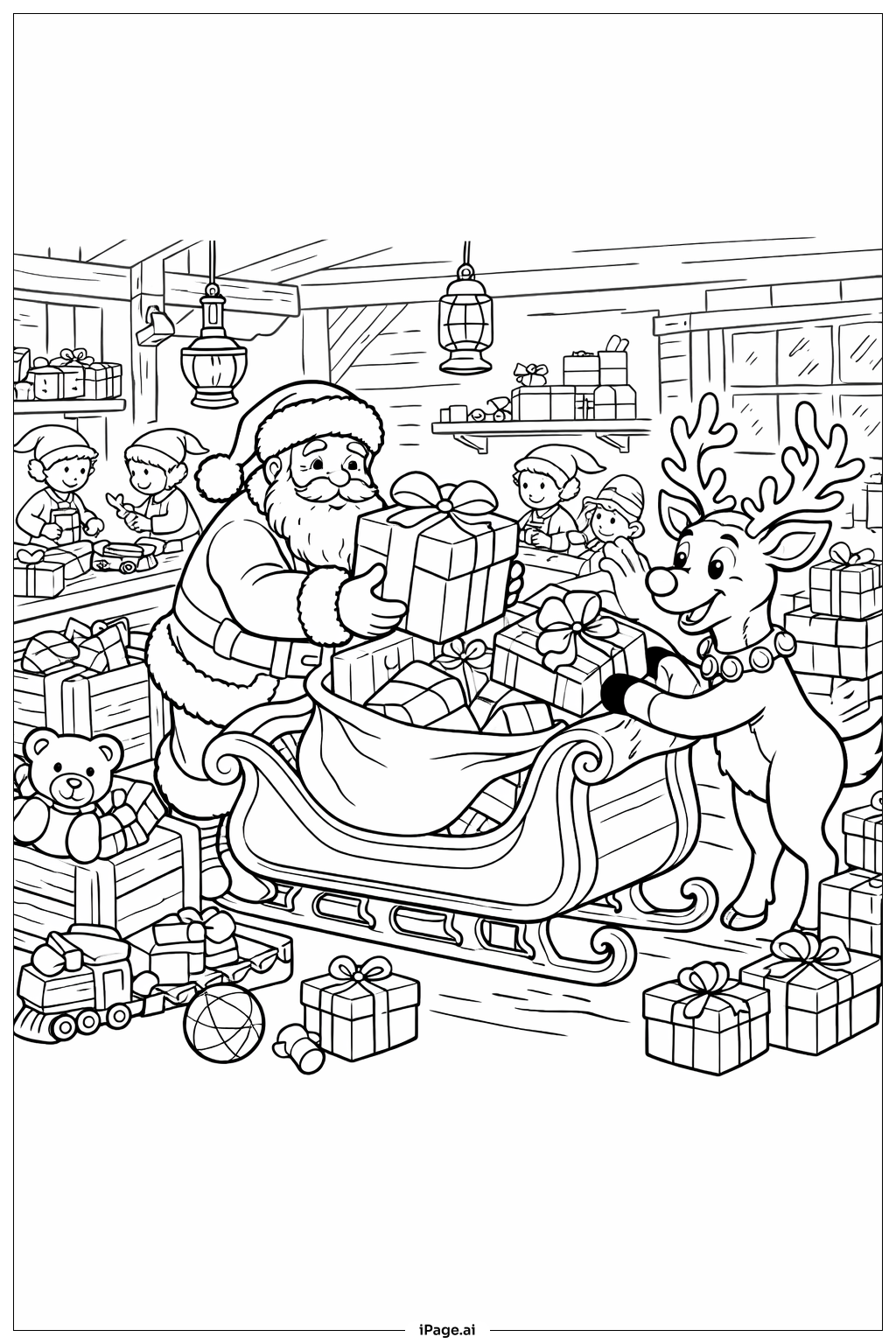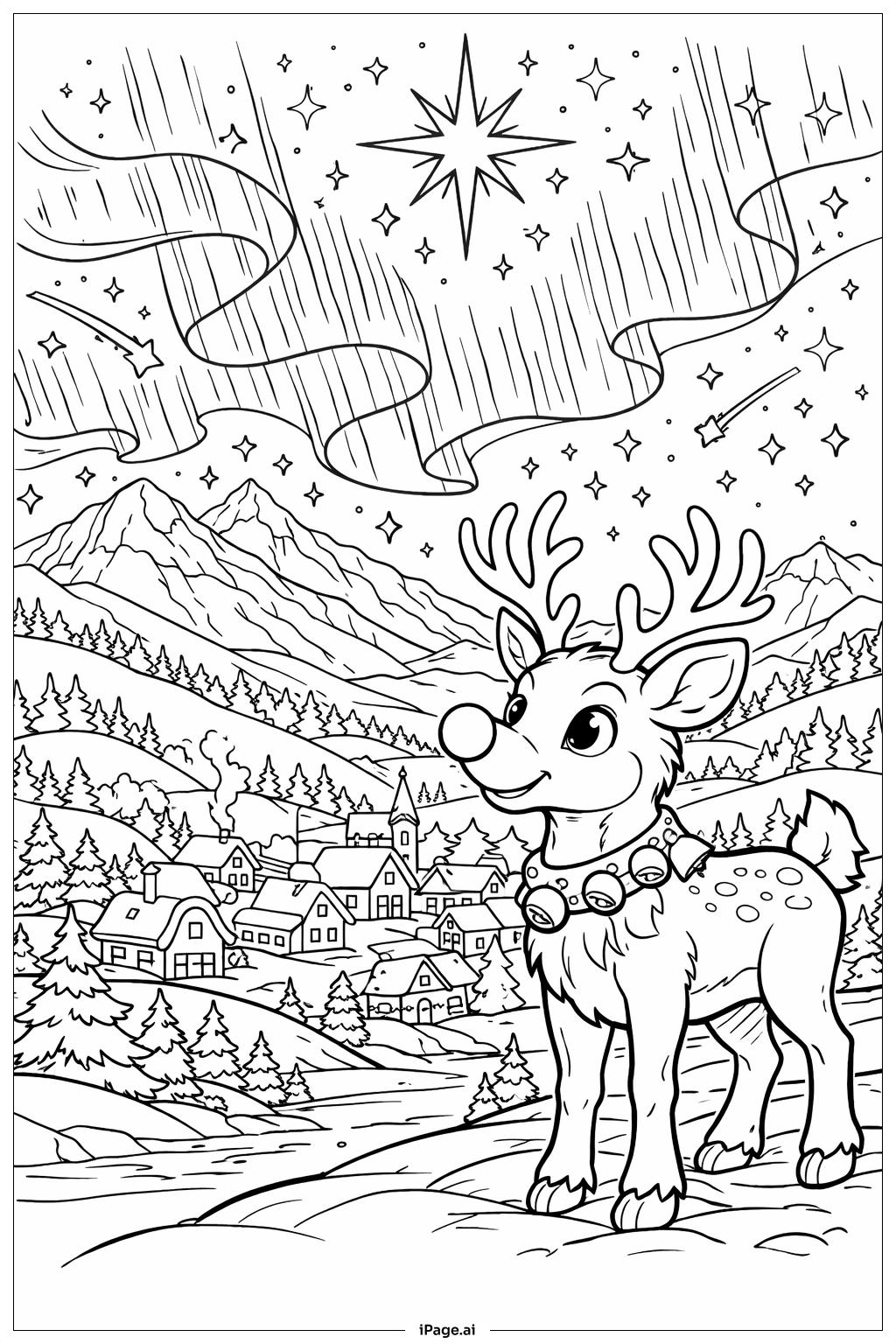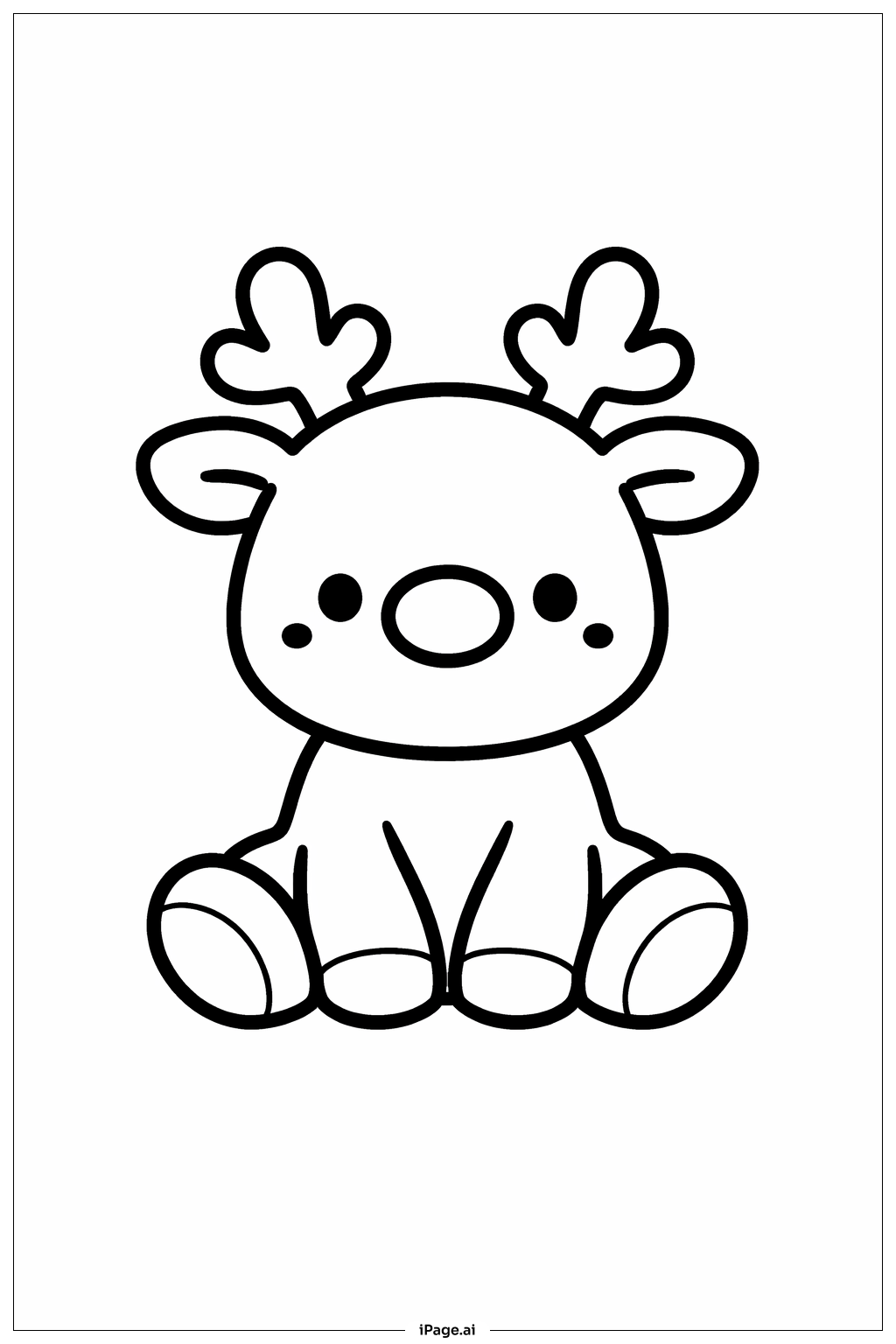
Coloring tips: How to color Rudolph Sitting coloring page well?
Start with Rudolph's most famous feature: his bright red nose. Use a vibrant red crayon or marker to make it shine. For his body, choose warm brown tones ranging from light tan to rich chocolate brown. You can add depth by using lighter shades on his belly and darker tones along his back and legs. His antlers look wonderful in beige, tan, or light brown colors. Consider adding white highlights to the antlers to give them a realistic bone-like appearance. The hooves can be colored in dark brown or black. For his eyes, use black for the pupils with a tiny white spot to create a sparkly, lively look. Don't forget to add rosy pink to his inner ears. You might also want to create a festive background with snowflakes, stars, or a winter landscape to complete the holiday scene.
Coloring challenges: Which parts are difficult to color and need attention for Rudolph Sitting coloring page?
• Nose Shading and Dimension: Rudolph's iconic red nose requires special attention to make it appear round and glowing rather than flat. Children may find it challenging to create the illusion of a three-dimensional sphere using only coloring tools. Applying darker red around the edges and leaving a lighter spot or white highlight in the center helps achieve this effect, but it requires understanding of light and shadow concepts that younger colorists might still be developing.
• Fur Texture and Color Blending: Creating realistic fur texture on Rudolph's body presents a moderate challenge. Simply filling in with one solid color can make him look flat and cartoon-like. To achieve a more natural appearance, children need to blend different shades of brown, using lighter tones on areas where light would naturally hit such as the chest and belly, and darker shades on the back, legs, and under the neck. This requires patience and layering skills that take practice to master.
• Antler Details and Structure: The branching antlers contain multiple curves and points that require careful attention. Staying within the lines of these narrow, curved sections can be tricky for younger children or those still developing fine motor control. Additionally, adding realistic coloring to antlers by incorporating highlights and shadows to show their bone-like texture and three-dimensional form adds another layer of complexity.
• Proportional Color Distribution: Maintaining consistent color intensity throughout larger areas like Rudolph's body while avoiding streaks or white gaps requires steady hand control and patience. Children may rush through these sections, resulting in uneven coverage that can detract from the finished appearance of their artwork.
Benefits of coloring books: Advantages of drawing Rudolph Sitting coloring page
Coloring this Rudolph Sitting page offers wonderful benefits for children. It helps develop fine motor skills and hand-eye coordination as they carefully fill in the various shapes and stay within the lines. The different-sized areas, from the large body to the detailed antlers, provide opportunities to practice pencil grip and control. This activity also encourages focus and patience, as completing the entire image requires sustained attention. Children can express creativity by choosing their own color schemes, perhaps creating a traditional brown reindeer or experimenting with imaginative colors. The holiday theme connects to seasonal learning and cultural traditions, making it educationally enriching. Coloring can be very calming and meditative, helping children relax and manage stress. Completing the page provides a sense of accomplishment and boosts confidence. It's also a perfect opportunity for family bonding during the holiday season, creating memories while developing artistic skills.