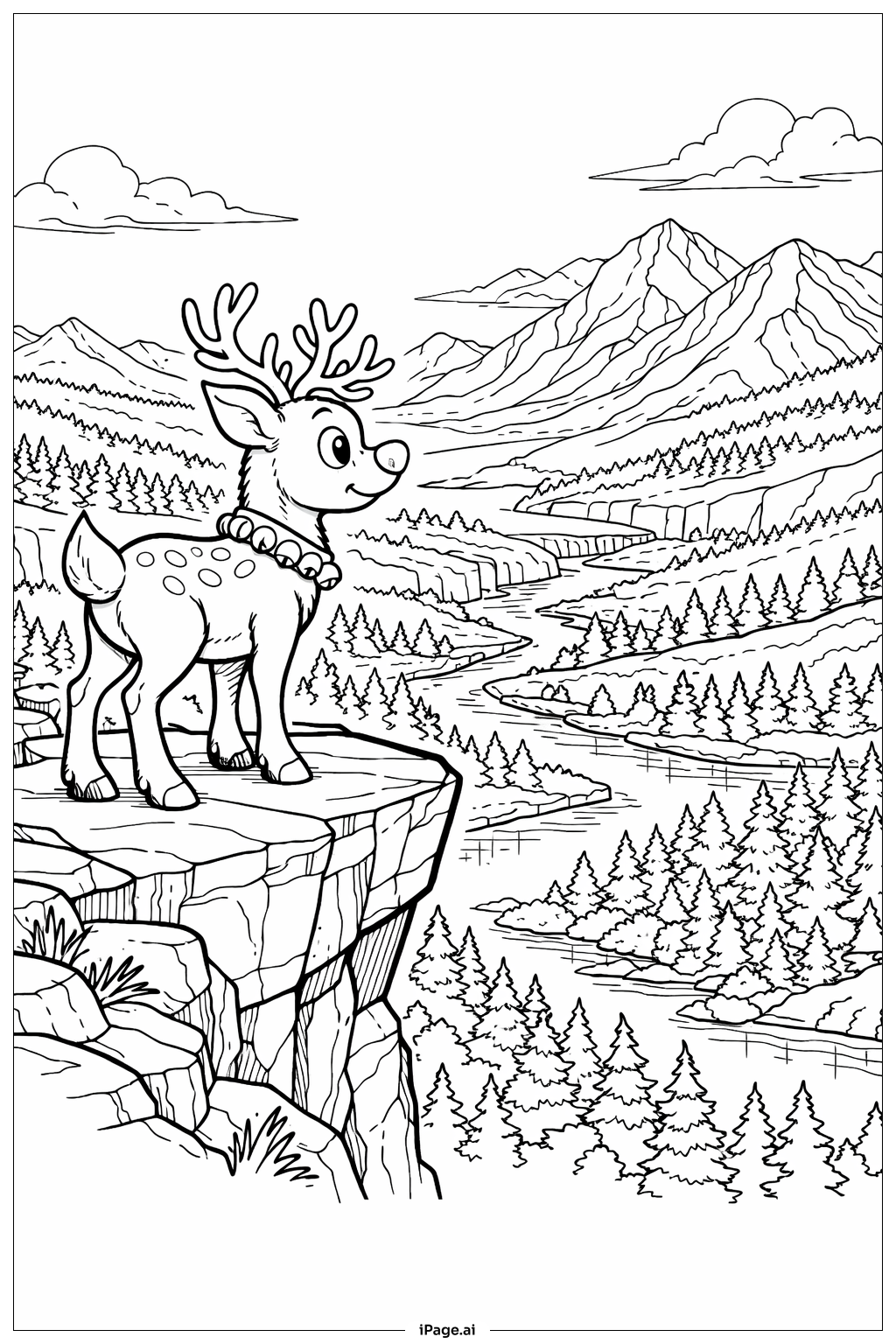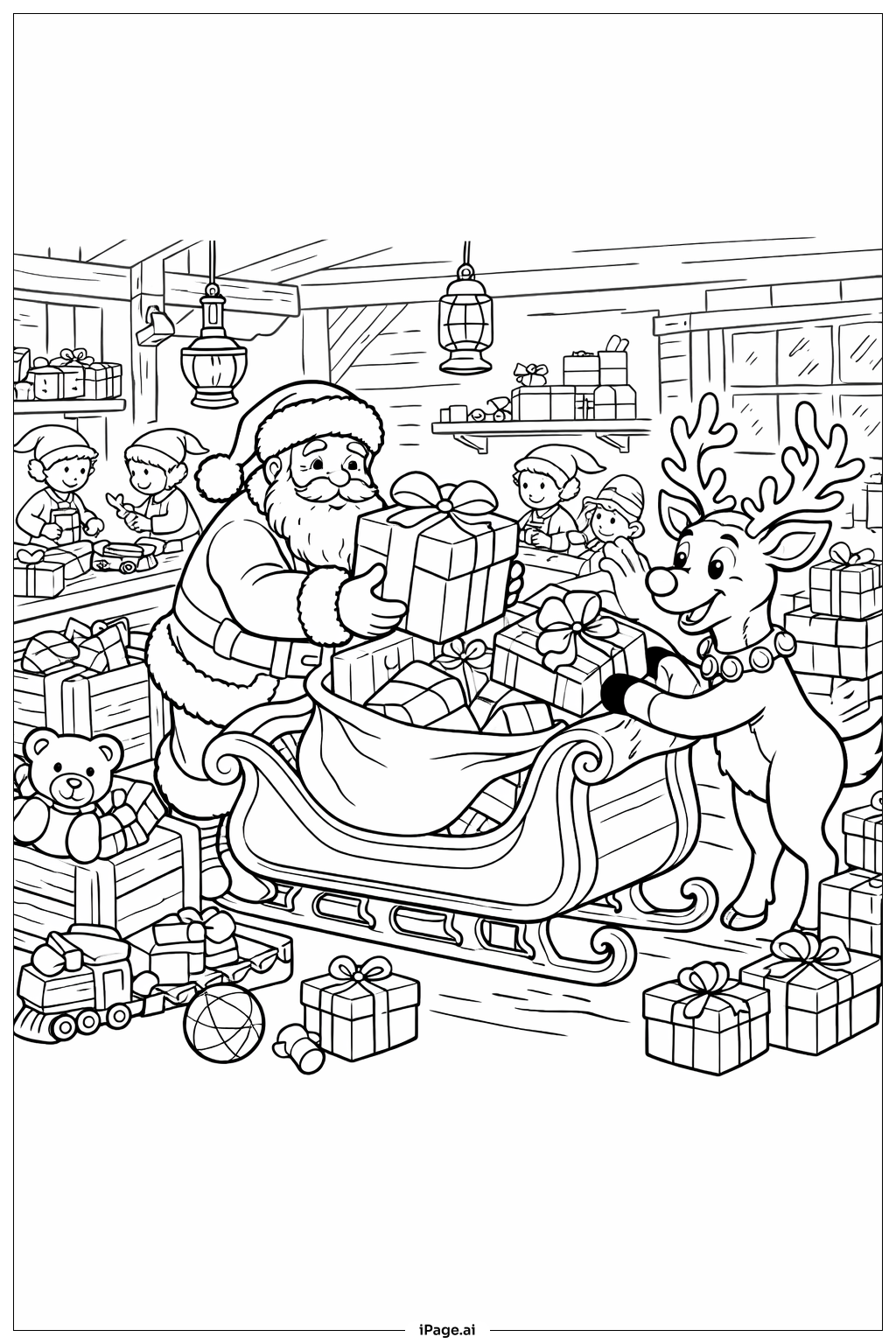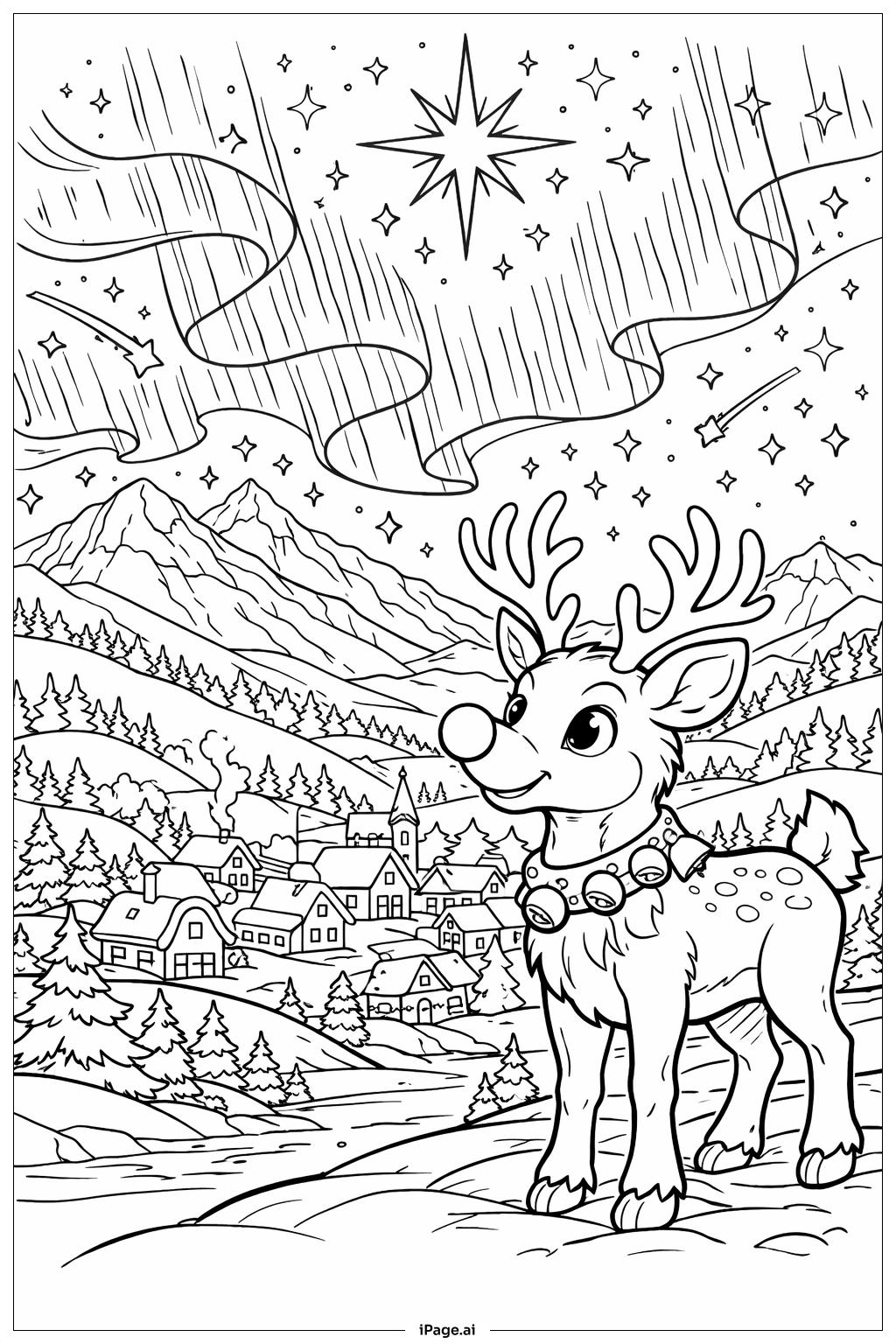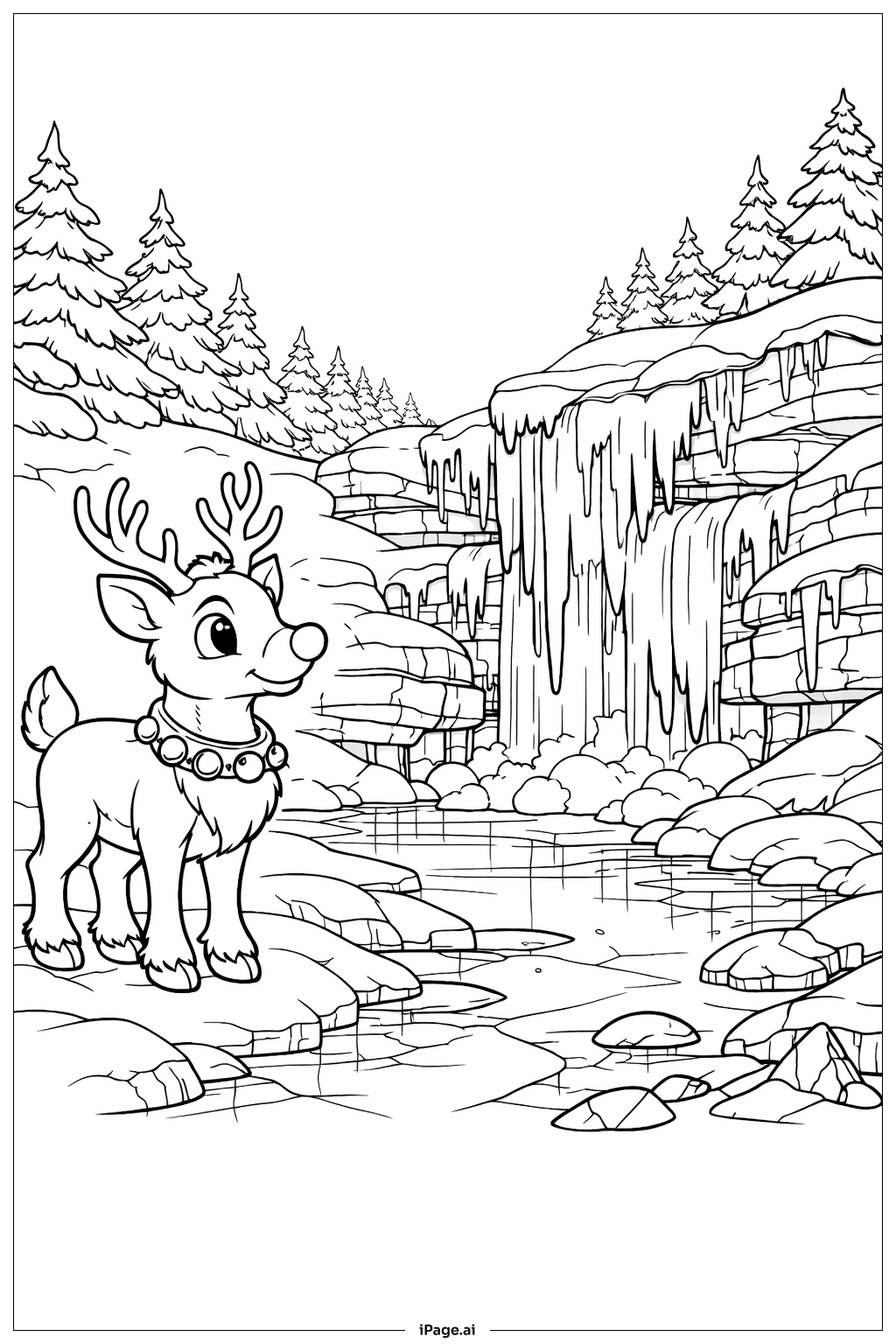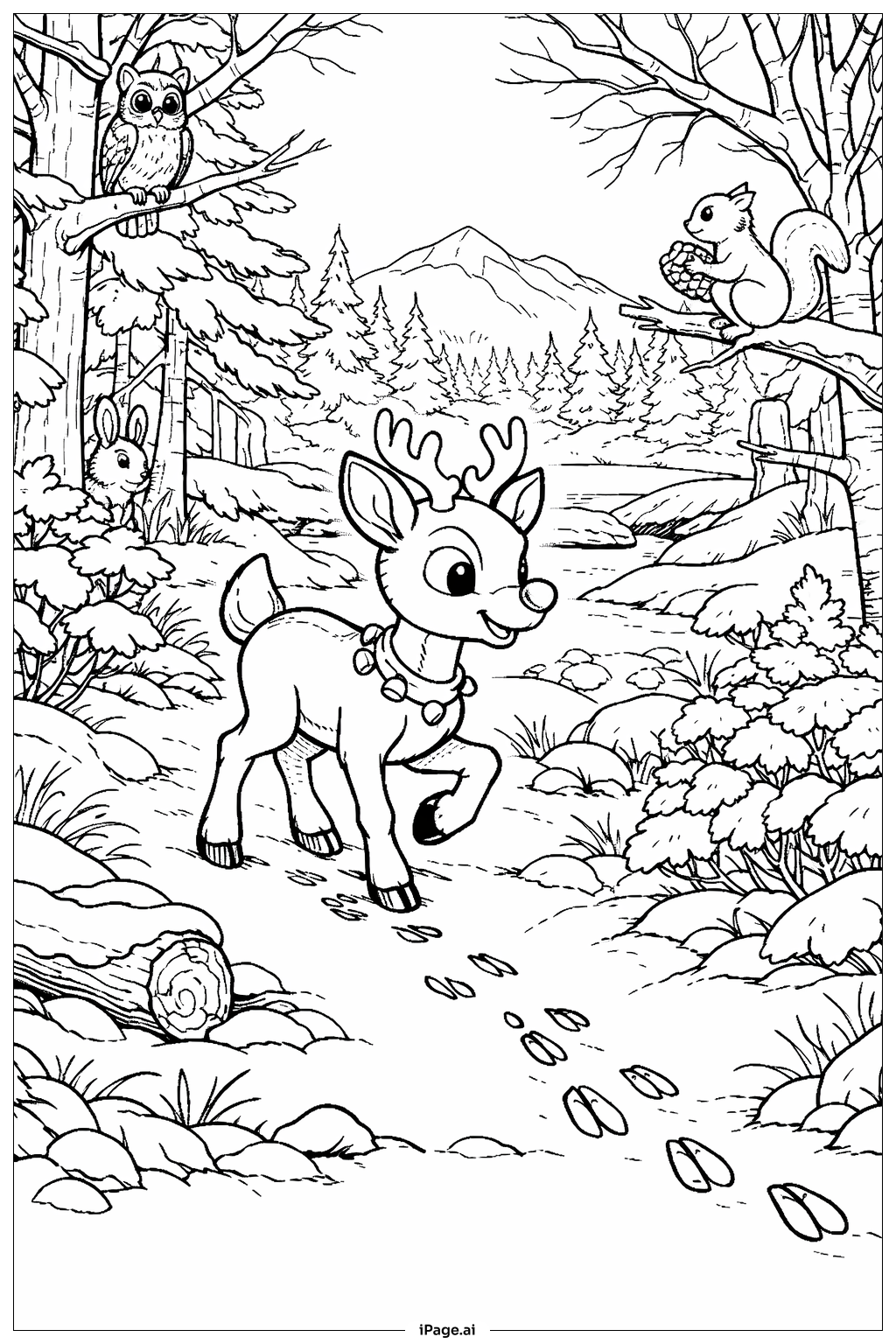
Coloring tips: How to color Rudolph Exploring Snowy Forest coloring page well?
Start with Rudolph's famous nose using bright red to make it glow. Color his fur in warm brown or tan shades, leaving his belly lighter for contrast. His antlers can be colored in natural browns or beiges. For the snowy forest, use various shades of blue and purple for shadows on the snow to create depth. The evergreen trees look wonderful in dark greens, with lighter green highlights on the needles. Add touches of white or light blue to suggest fresh snow on branches. The sky can be colored in soft winter blues or even sunset pinks and oranges for a magical effect. Consider using silver or light blue for snowflakes, and add darker browns and grays to tree trunks for realistic texture. Don't forget to blend colors gently to capture the soft, peaceful feeling of a snowy forest.
Coloring challenges: Which parts are difficult to color and need attention for Rudolph Exploring Snowy Forest coloring page?
• Fine Detail Work: The pine needles on the evergreen trees require careful coloring to maintain their delicate, pointed shapes. Children may find it challenging to stay within these small lines, especially where multiple branches overlap. Using fine-tipped markers or colored pencils helps achieve better control in these intricate areas.
• Texture Variation: Creating realistic snow texture presents a unique challenge. Colorists must decide between leaving snow white or adding subtle blue and purple shadows to show dimension. The snow on tree branches versus ground snow requires different techniques, and understanding where to add shading takes practice and observation skills.
• Fur and Antler Details: Rudolph's fur requires directional coloring to look natural, with strokes following the body's contours. His antlers have multiple branches that need consistent shading to appear three-dimensional. Young artists may struggle with maintaining steady pressure and direction to create smooth, realistic fur textures.
• Depth and Layering: The forest scene has multiple layers with trees in the foreground and background. Children need to understand color intensity and value to make closer objects darker and more detailed while keeping distant trees lighter and simpler. This concept of atmospheric perspective can be challenging for younger colorists.
• Color Blending: Achieving smooth transitions between colors, especially in the sky and snow shadows, requires blending skills. Creating gradients without harsh lines takes patience and the right tools, whether using layered colored pencils or careful marker application.
Benefits of coloring books: Advantages of drawing Rudolph Exploring Snowy Forest coloring page
Coloring this Rudolph winter scene offers wonderful developmental benefits for children. It enhances fine motor skills through detailed work on pine needles, fur texture, and small snowflakes. The page encourages color recognition and creative decision-making as children choose their palette for the magical forest. Working with different textures like soft fur, rough bark, and fluffy snow builds understanding of how colors create visual effects. The peaceful winter theme promotes relaxation and focus, helping children practice mindfulness while creating art. This page also connects to holiday traditions and storytelling, making coloring an opportunity to discuss Rudolph's adventures and winter nature. Completing this detailed scene builds confidence and patience, as children see their careful work transform the page into a beautiful winter masterpiece. It's an excellent activity for developing concentration, hand-eye coordination, and artistic expression.