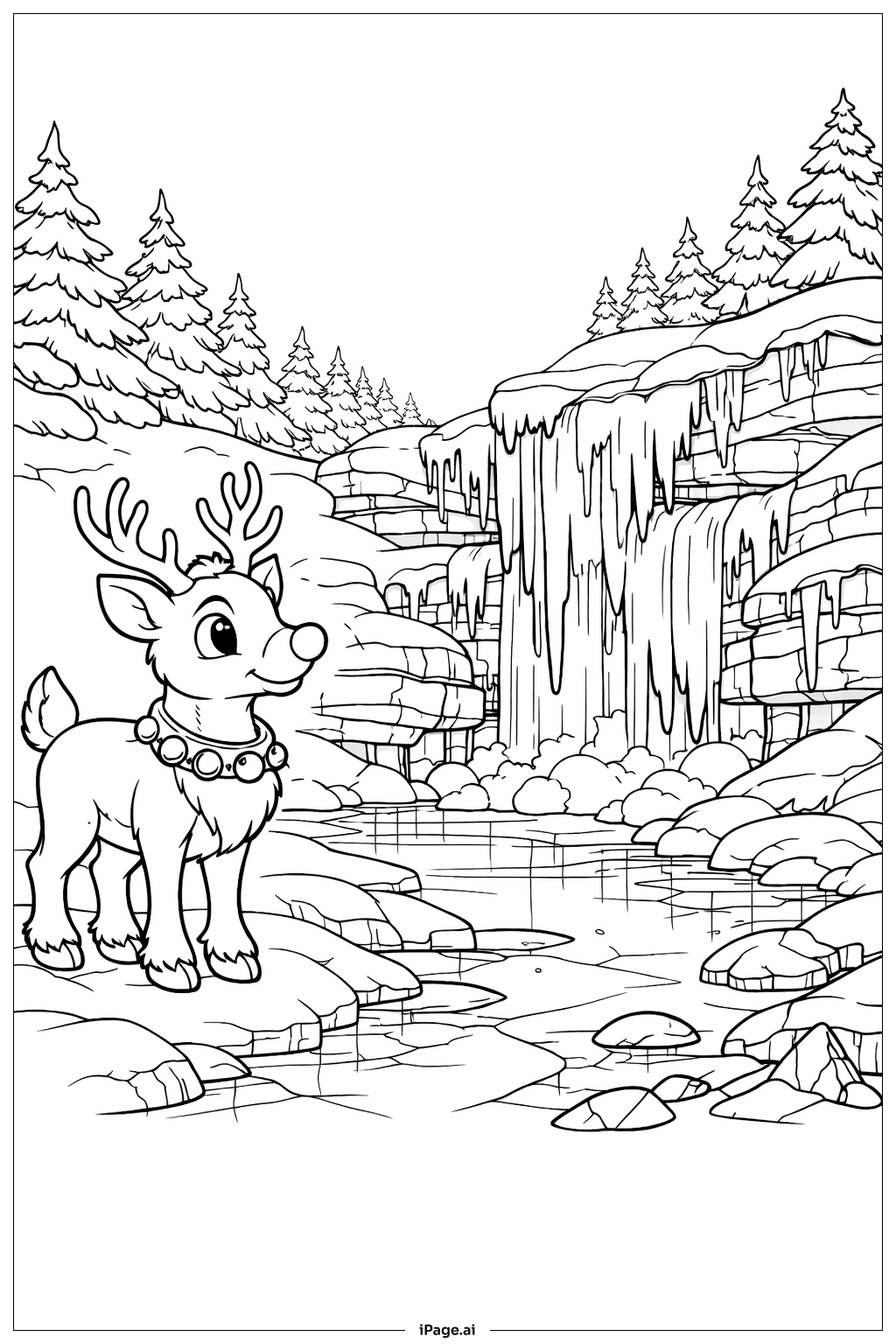
Coloring tips: How to color Rudolph Near Icy Waterfall coloring page well?
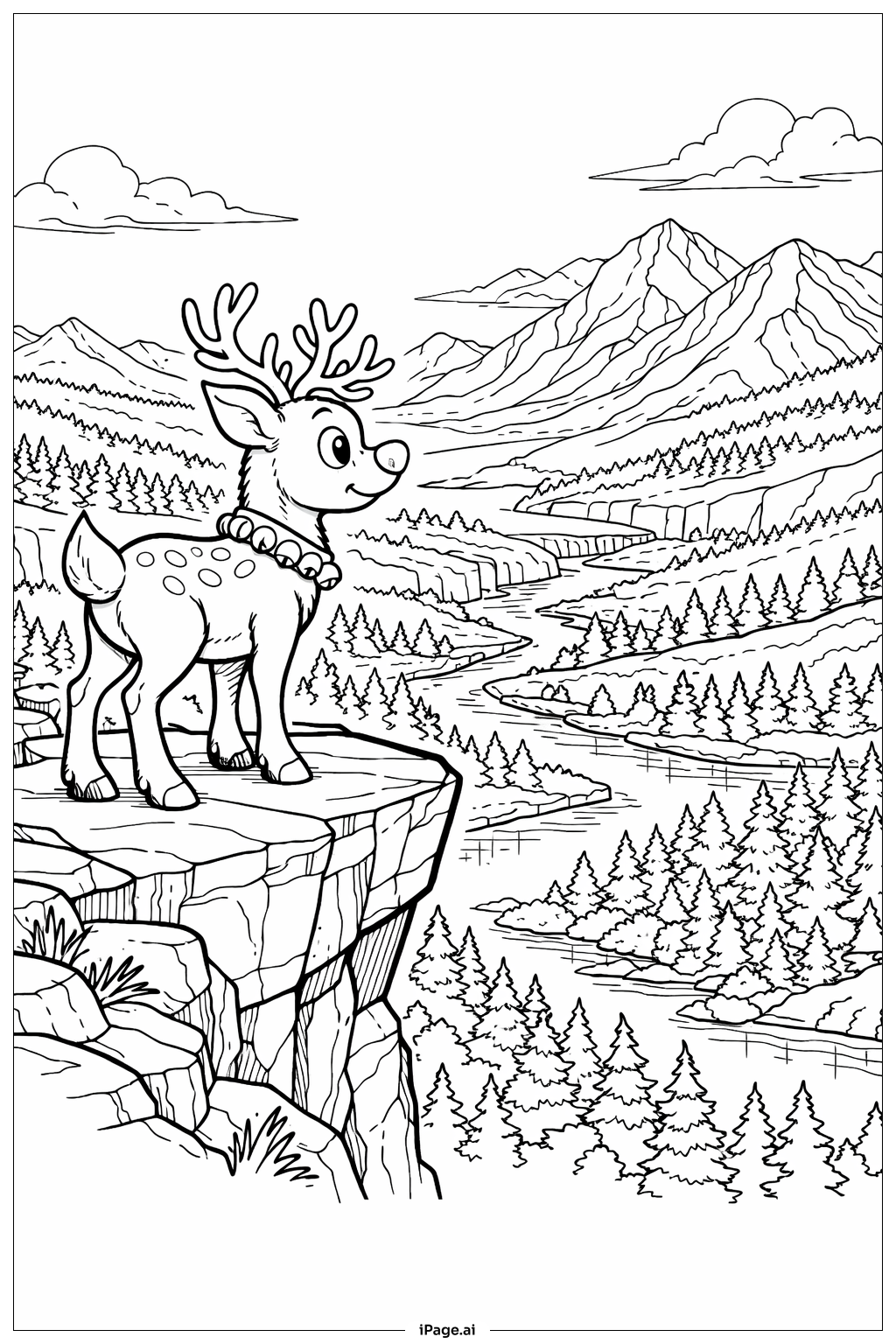
Start with Rudolph's famous red nose using a bright cherry or crimson color. For his fur, use warm browns ranging from light tan to chocolate, adding darker shades around the edges for depth. His antlers can be colored in light beige or cream tones. The waterfall offers exciting opportunities: use light blues, whites, and silvers to create an icy effect, blending colors to show water movement. Add touches of pale blue and lavender to the ice formations for a frosty shimmer. Color the surrounding rocks in grays and dark browns, leaving white highlights for snow caps. The pine trees can be deep forest greens with white accents for snow. For the sky, try soft blues fading to pink or purple for a winter sunset effect. Use white or very light blue for the snowy ground, adding subtle shadows in pale gray or blue beneath objects.
Coloring challenges: Which parts are difficult to color and need attention for Rudolph Near Icy Waterfall coloring page?
• Waterfall Texture and Flow: Creating the illusion of flowing water that appears frozen requires careful blending of multiple shades of blue and white. The challenge lies in maintaining the sense of movement while also conveying the icy, crystalline quality. Colorists need to pay attention to light and shadow patterns that follow the natural direction of water flow, using lighter colors where light hits the water and darker blues in shadowed crevices.
• Ice Formation Details: The icicles and frozen edges of the waterfall contain intricate details that demand precision. Each icicle needs careful attention to create a translucent, glassy appearance. Using colored pencils to layer whites, pale blues, and hints of silver or gray can achieve this effect, but it requires patience and a steady hand to stay within the fine lines.
• Depth and Perspective: This scene contains multiple layers from foreground to background, including Rudolph, the waterfall, rocks, trees, and sky. Creating realistic depth requires understanding which elements should be darker and more saturated versus lighter and more muted. The background trees should appear softer and lighter than foreground elements to create proper atmospheric perspective.
• Fur Texture on Rudolph: Rendering Rudolph's fur realistically involves using multiple brown tones and creating directional strokes that follow the natural growth pattern of deer fur. The challenge is avoiding a flat, uniform appearance while maintaining smooth color transitions between light and dark areas, especially around the face, legs, and body contours.
Benefits of coloring books: Advantages of drawing Rudolph Near Icy Waterfall coloring page
Coloring this Rudolph Near Icy Waterfall page offers numerous developmental benefits for children. It enhances fine motor skills through precise coloring of detailed elements like icicles and fur texture. The complex scene encourages focus and concentration, helping children practice patience and attention to detail. Working with cool winter colors and warm earth tones develops color recognition and understanding of color harmony. The natural elements teach children about seasonal changes and winter landscapes. Planning which areas to color first and how to blend colors builds problem-solving skills and artistic decision-making. The familiar character of Rudolph provides emotional comfort while encouraging creativity. Completing this detailed page boosts self-confidence and gives a sense of accomplishment. The calming nature of coloring winter scenes can reduce stress and promote relaxation, making it an excellent mindful activity for children of all ages.