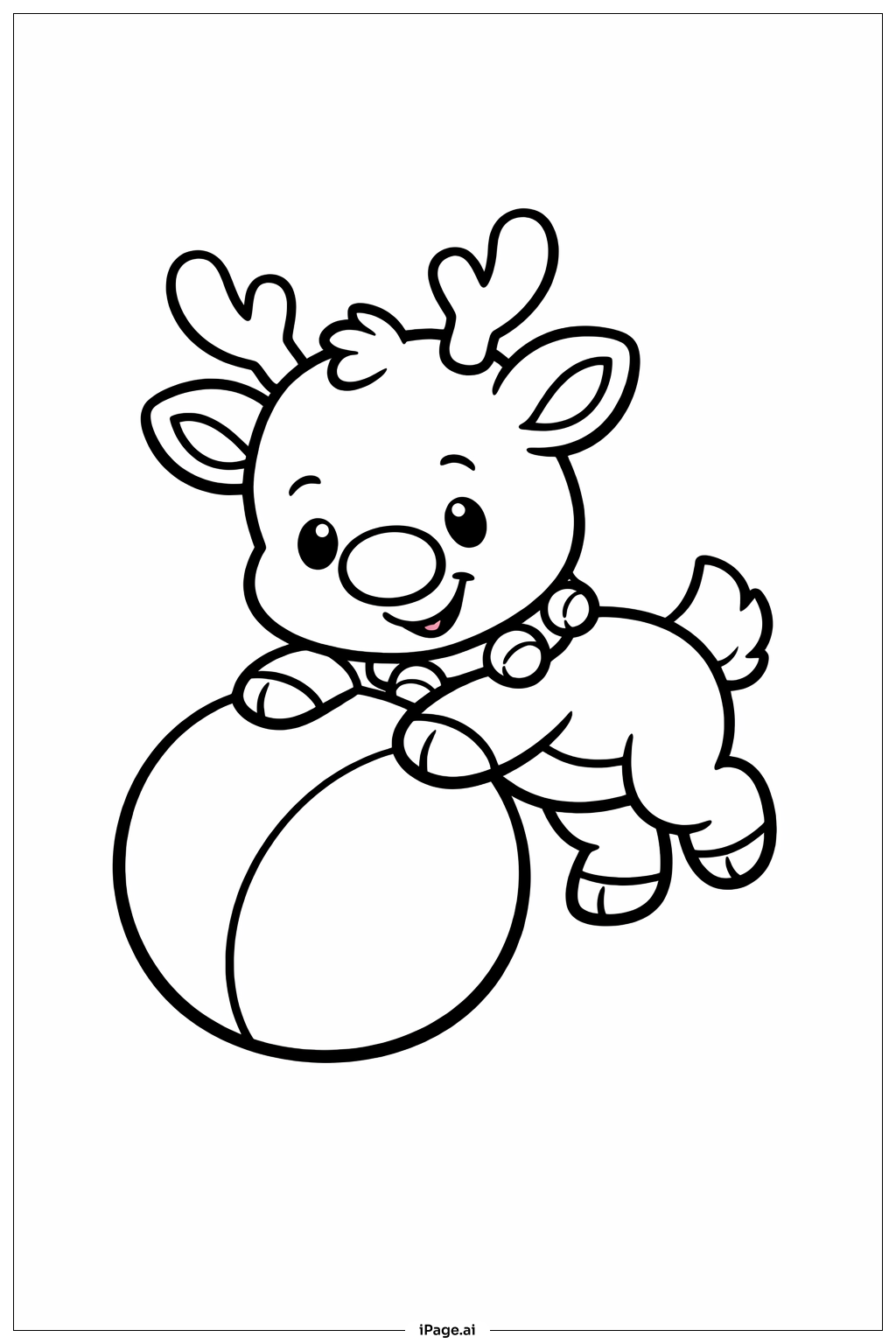
Coloring tips: How to color Rudolph Playing Ball coloring page well?
Use bright and cheerful colors for Rudolph and the ball. Rudolph can be mainly brown with a red nose, and pink can be used inside his ears and on his tongue. For the ball, use vibrant colors like red, yellow, blue, or green in large sections to make it stand out. Color the bells in gold or yellow to give a shiny effect. Keep the antlers light brown or beige for contrast. Use soft shading for Rudolph’s body to add some depth and make the picture lively.
Coloring challenges: Which parts are difficult to color and need attention for Rudolph Playing Ball coloring page?
1. Coloring small details such as Rudolph's eyes and the bells on his collar can be tricky because they need careful attention to stay inside the lines.
2. The antlers are narrow and have curves, so coloring them evenly without going outside the lines might be hard for younger children.
3. Creating a nice contrast between Rudolph's body color and the ball colors requires choosing the right shades to avoid blending too much.
4. Coloring Rudolph’s face with expressions intact needs careful layering to keep the smile and eyes clear and bright.
5. Trying to make the picture look 3D with shading can be a challenge but adds to the fun when done well.
Benefits of coloring books: Advantages of drawing Rudolph Playing Ball coloring page
Coloring this picture helps children develop fine motor skills by carefully coloring small parts like the eyes and bells. It also encourages creativity in choosing bright and fun colors. Coloring Rudolph playing ball teaches kids about joy, activity, and teamwork. It can improve concentration and patience as they make sure to color within the lines. Overall, it’s a fun way to build hand-eye coordination and artistic expression.