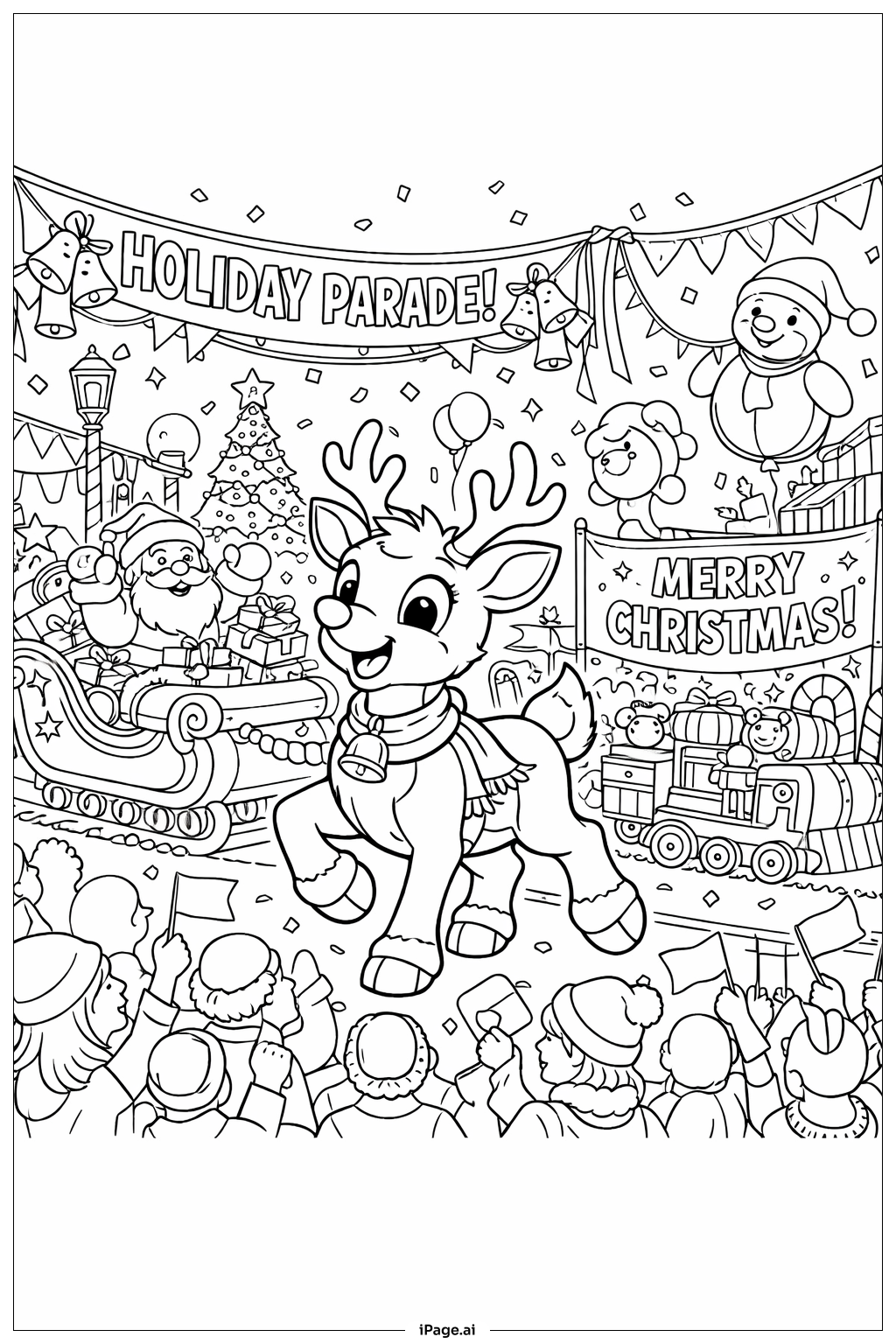
Coloring tips: How to color Rudolph At Festive Parade coloring page well?
Start with Rudolph's iconic bright red nose to make it the focal point of the image. Use warm browns and tans for his fur, and add darker brown shading around his legs and face for depth. His harness can be colored in festive reds and greens with gold bells. For the parade float, try vibrant holiday colors like red, green, gold, and silver. The garlands can be evergreen with pops of red berries. Use light blue or purple for the sky and soft white or light blue for the snowflakes. The spectators can wear colorful winter clothing in various bright shades. Add yellow or golden highlights to the lights and decorations to create a warm, glowing effect. Consider using glitter or metallic markers for extra sparkle on the ornaments and bells.
Coloring challenges: Which parts are difficult to color and need attention for Rudolph At Festive Parade coloring page?
• Intricate Decorative Details: The parade float contains numerous small ornaments, bells, and garland elements that require careful coloring within tight spaces. Children may find it challenging to stay within the lines of these tiny decorative pieces, especially the bells on Rudolph's harness and the ornaments hanging from the float. Younger children might benefit from using fine-tipped markers or colored pencils for better control in these detailed areas.
• Crowd and Background Elements: The spectators in the background present a challenge because they are smaller figures that still need distinct colors to stand out. Balancing the colors so the crowd does not overpower Rudolph requires thoughtful color choices. Children need to use lighter or more muted tones for background elements while keeping brighter colors for the main subject.
• Texture Variation: This image includes different textures that need to be represented through coloring, such as Rudolph's soft fur, the metallic shine of bells, the rough texture of garlands, and the smooth surface of ornaments. Creating these visual differences requires varying coloring techniques like light strokes for fur, solid colors for metals, and layered colors for depth.
• Snowflake Patterns: The falling snowflakes throughout the scene are delicate and numerous. Coloring each one while maintaining their light, airy appearance without making them too heavy or dark requires a gentle touch and possibly leaving some white space or using very light colors.
• Color Coordination: With so many elements in the parade scene, choosing a harmonious color scheme that keeps the image festive but not chaotic can be challenging. Children need to think about which colors work well together and how to distribute them throughout the image for visual balance.
Benefits of coloring books: Advantages of drawing Rudolph At Festive Parade coloring page
Coloring this festive parade scene helps children develop fine motor skills through the detailed work required for small decorations and intricate patterns. The variety of elements encourages color recognition and decision-making as children choose appropriate holiday colors and create a cohesive palette. This image promotes patience and focus, especially when working on the numerous small details like bells, ornaments, and snowflakes. Children learn about holiday traditions and celebrations while engaging with the beloved character of Rudolph, which can spark conversations about stories and seasonal customs. The cheerful parade theme encourages positive emotions and excitement about festive occasions. Working on the crowd and background elements teaches children about depth and perspective in art. Successfully completing this detailed coloring page builds confidence and provides a sense of accomplishment, while the finished artwork makes a wonderful holiday decoration that children can proudly display.