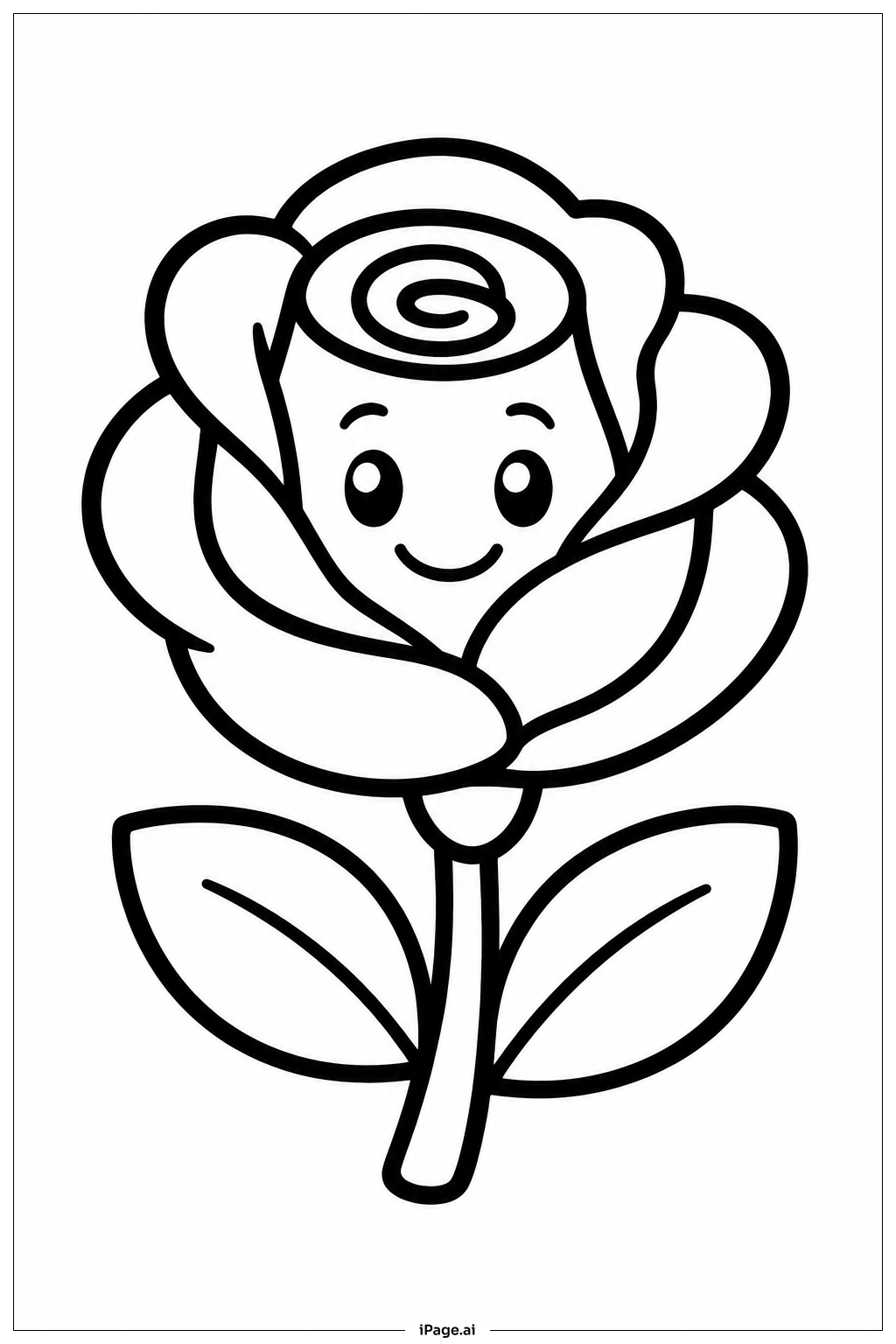
Coloring tips: How to color Smiling Rose Face coloring page well?
Start with the face at the center of the rose. Use a soft peach or light tan shade for the skin, and add rosy pink to the cheeks to give it a warm, happy glow. Color the eyes with brown or dark blue, and leave a tiny white dot to make them look bright and lively. For the petals, classic red or deep pink work beautifully, but you can also try soft coral, lavender, or even a rainbow gradient for a more creative look. Use a slightly darker shade of your chosen petal color along the edges and in the overlapping areas to create depth. The leaves look great in medium green, with darker green along the veins and lighter green toward the tips. The stem can be a rich forest green or olive tone. Feel free to add patterns like dots or stripes on the petals to make your rose truly unique. There are no wrong color choices here — let your imagination lead the way!
Coloring challenges: Which parts are difficult to color and need attention for Smiling Rose Face coloring page?
• Layered Petal Shading: The rose has multiple petals that overlap each other. Coloring each layer so they look distinct but still connected is tricky. You need to use slightly different shades or add shadowing along the edges where petals overlap to show depth. Without this, the petals can look flat and blend together.
• Tiny Facial Features: The face in the center of the rose has small details like eyes, a nose, and a smile. These features are close together and require a steady hand and fine-tipped markers or colored pencils. Coloring outside the lines in this area is easy to do, and it can affect the overall expression of the character.
• Smooth Color Transitions on Petals: If you want to blend colors across the petals — for example, going from light pink in the center to deep red at the tips — achieving a smooth gradient takes practice. Uneven pressure or abrupt color changes can make the petals look patchy rather than natural.
• Balancing the Face and Flower Colors: The face sits right inside the rose, so the skin tone and petal color must work well together. If both colors are too similar in value or hue, the face can get lost inside the flower. Choosing contrasting but harmonious colors for these two elements requires some color planning beforehand.
• Leaf Vein Details: The leaves have thin vein lines running through them. Coloring around these fine lines while keeping them visible takes patience. Using a lighter base color first and then adding darker tones around the veins helps, but staying neat within such small spaces is a real challenge for younger colorists.
Benefits of coloring books: Advantages of drawing Smiling Rose Face coloring page
Coloring this smiling rose page brings a wide range of benefits for kids and adults alike. The cheerful face at the center of the flower makes the image instantly engaging, encouraging even reluctant colorists to pick up their pencils and get started.
For younger children, tracing around the bold petal outlines and filling in the large shapes helps build fine motor skills and hand-eye coordination. Deciding which colors to use for the petals, face, and leaves also encourages creative thinking and personal expression.
For older children and teens, the overlapping petals and layered details offer a satisfying challenge. Practicing shading and blending on the petals helps develop real artistic technique that carries over into other drawing and painting projects.
For adults, the repetitive, flowing motion of coloring petal after petal is genuinely calming. It gives the mind a gentle focus, which can help reduce stress and quiet anxious thoughts. Completing the full image also delivers a small but real sense of accomplishment.
Because the design combines nature and character, it sparks imagination across all ages. Kids may invent a name or story for their smiling rose, which supports storytelling and language development. Overall, this page is a simple, joyful activity with surprisingly rich rewards.