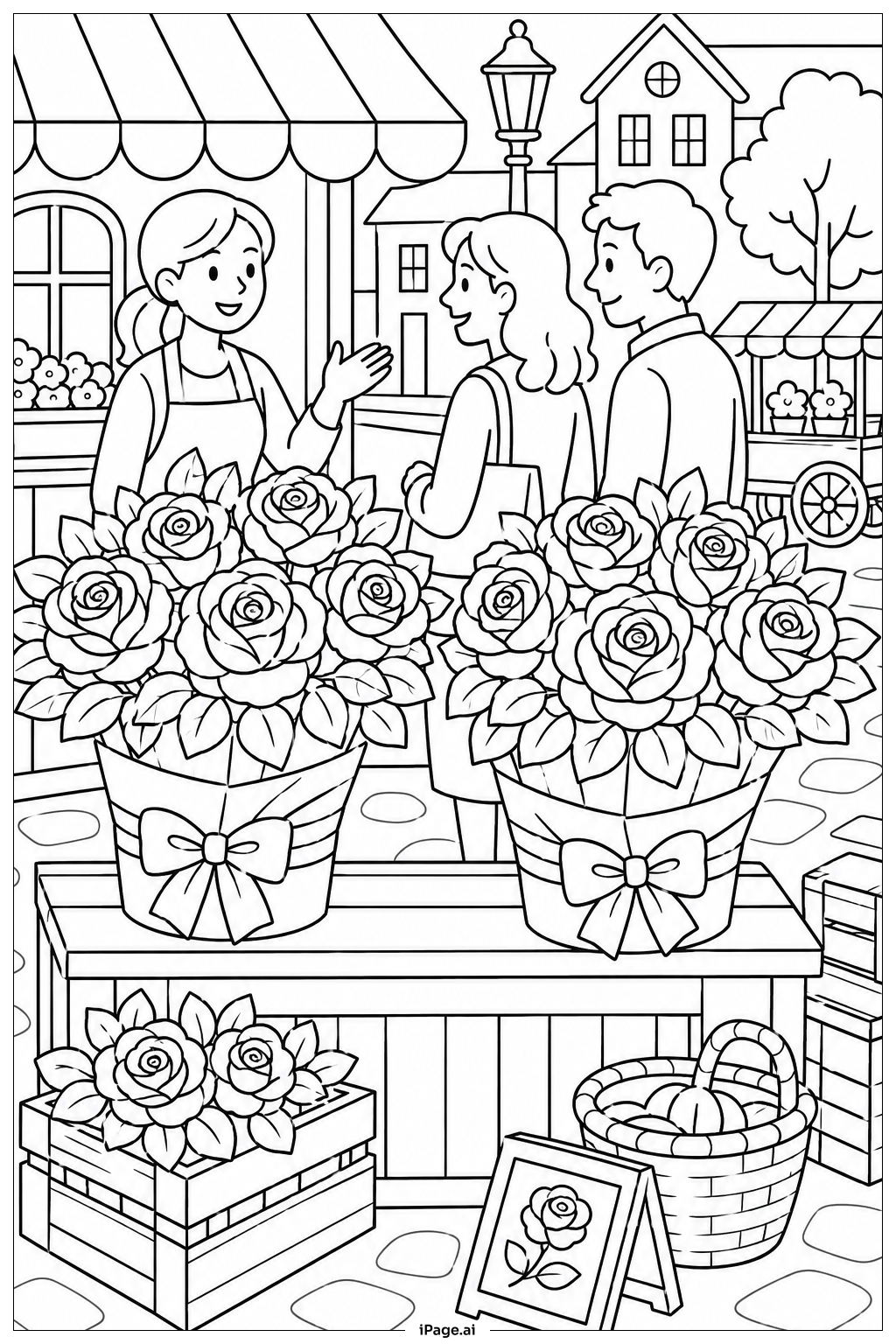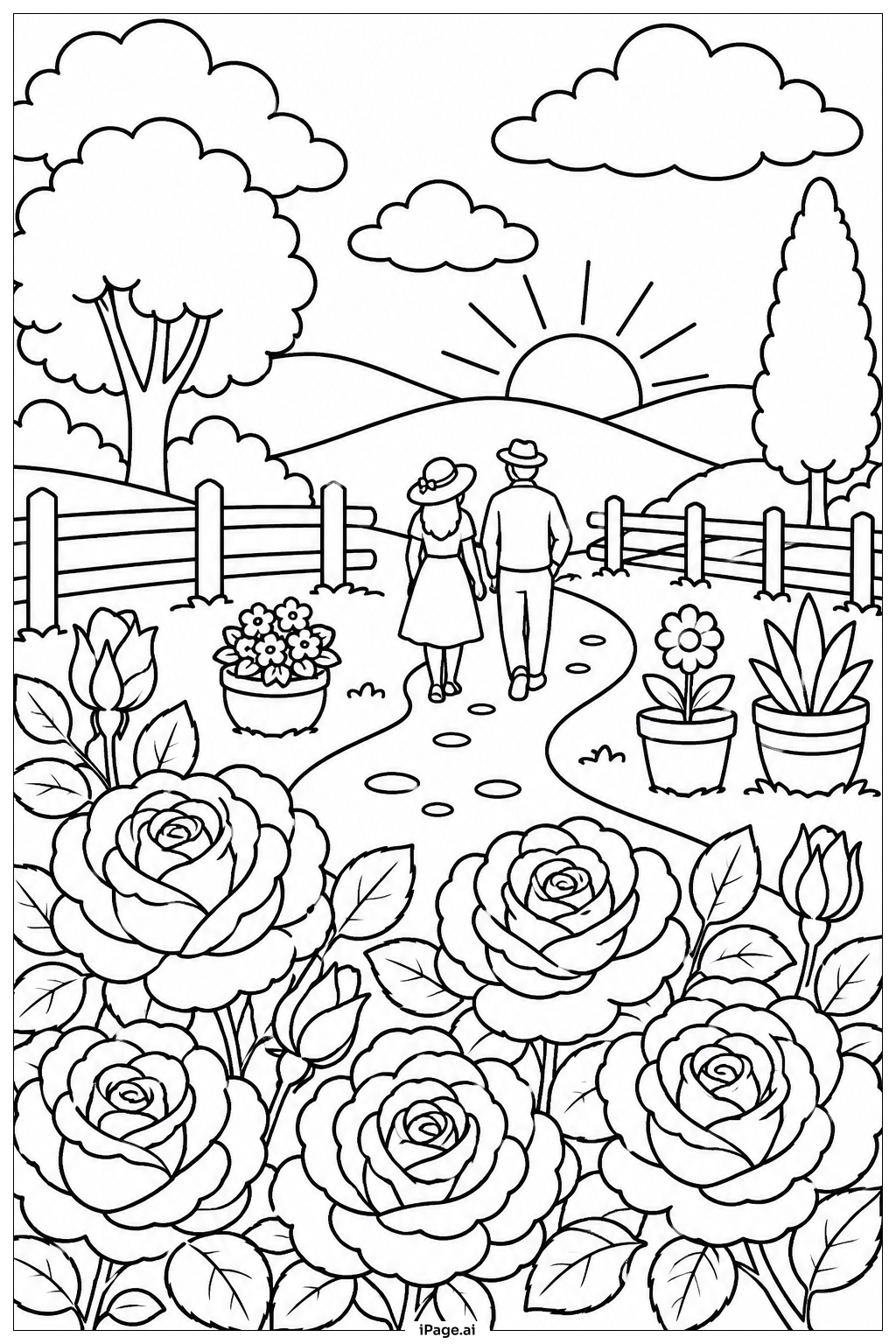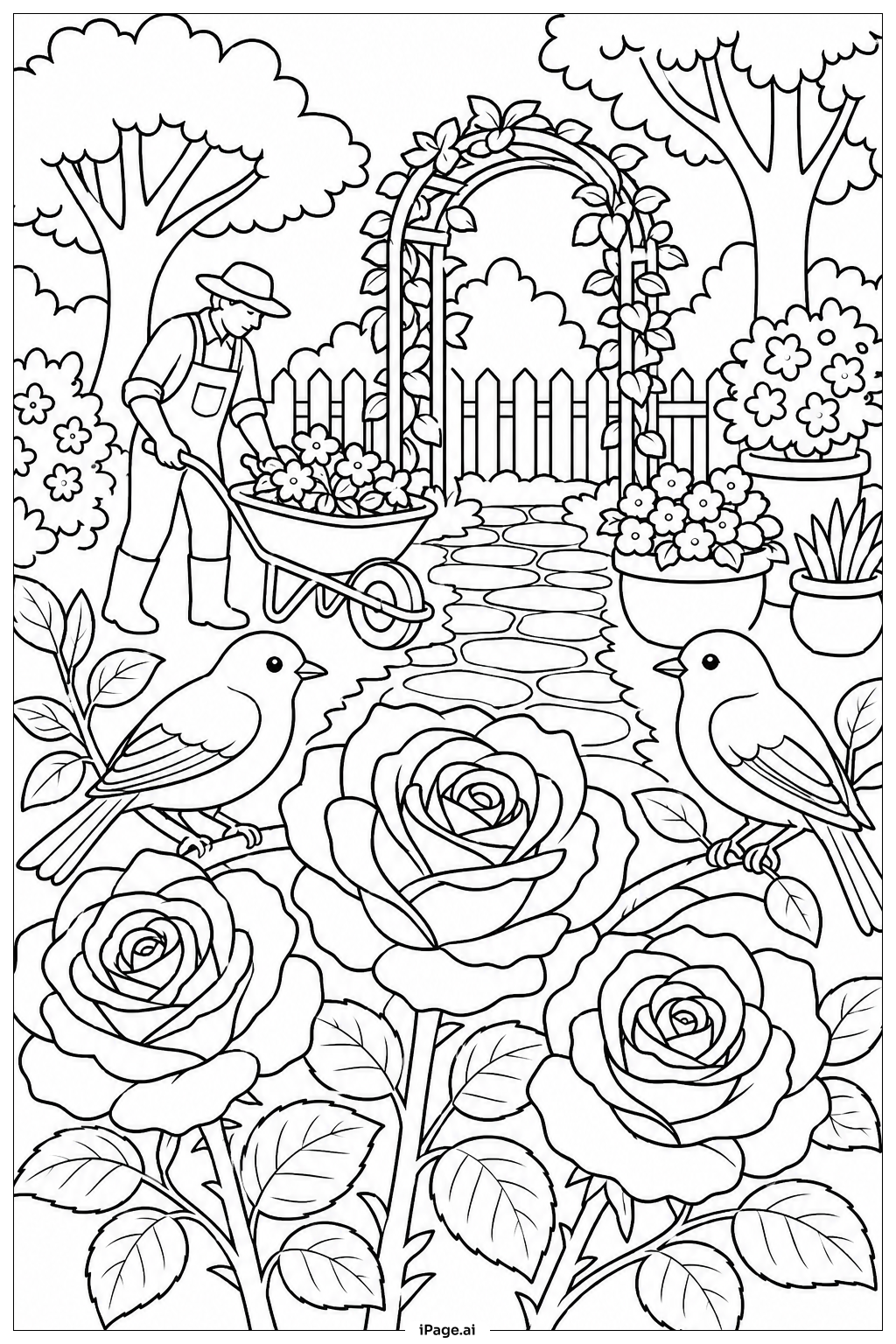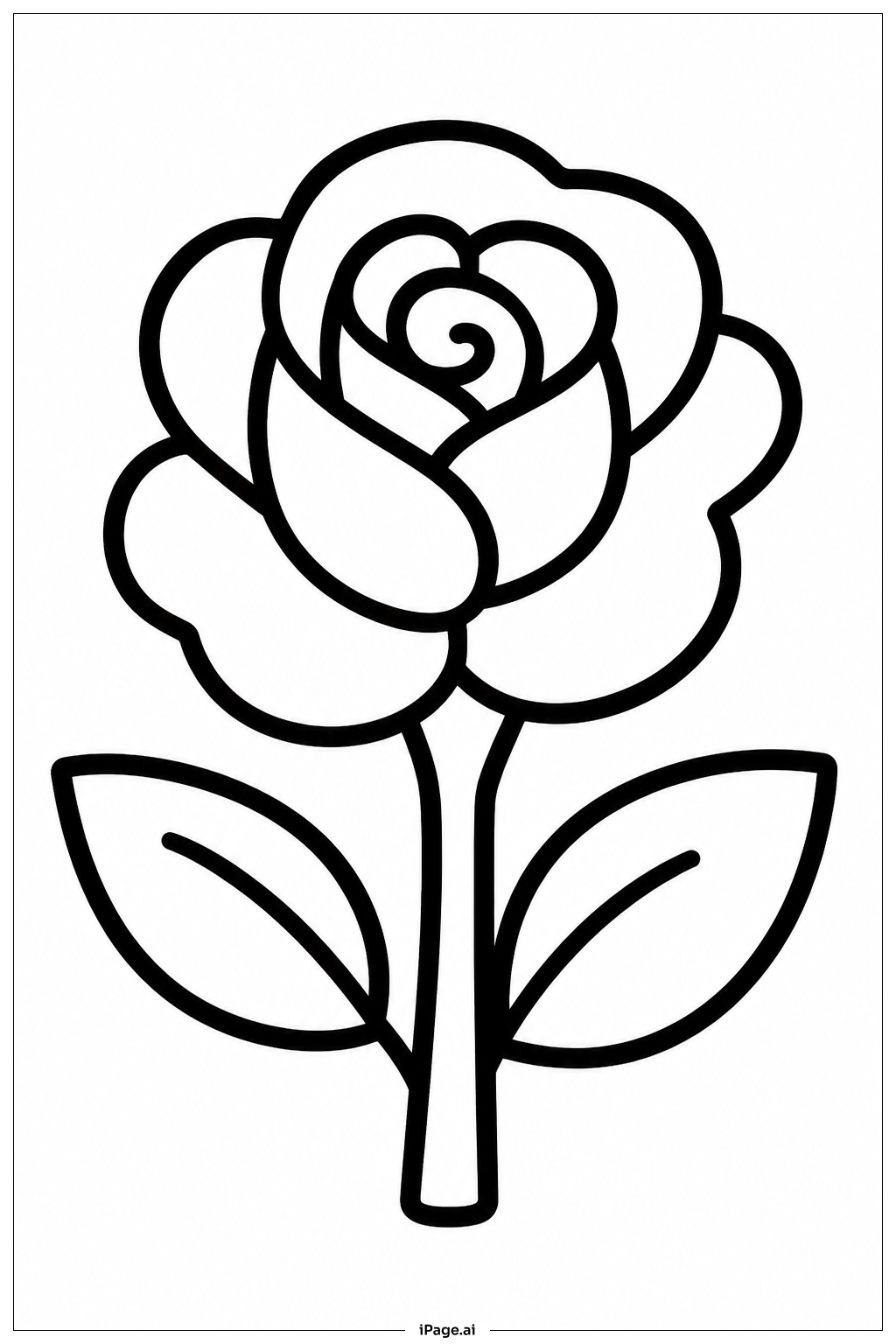
Coloring tips: How to color Single Rose Bloom coloring page well?
Start from the center of the rose and work your way outward. The innermost petals are usually darker, so try a deep red or magenta there. As you move to the outer petals, gradually lighten the color to a soft pink or peach. This creates a natural, three-dimensional look. For the leaves, use two or three shades of green. Add a darker green along the veins and a lighter tone on the flat areas. The stem can be medium green with a slight brown tint. Feel free to go beyond traditional colors. Try a purple rose with blue-tipped petals, or a golden yellow bloom for a sunny feel. Light pencil strokes work best for smooth blending. Take your time with each petal and enjoy the process.
Coloring challenges: Which parts are difficult to color and need attention for Single Rose Bloom coloring page?
• Petal Layering and Depth: The rose has multiple overlapping petals that curve in different directions. Keeping track of which petal sits on top of another can be tricky. To show depth, use a slightly darker shade where one petal tucks under another, and a lighter shade on the raised edges that catch the light. This takes patience and careful observation.
• Smooth Color Gradients: Creating a natural fade from dark to light across each petal requires gentle, even pressure. Pressing too hard with a pencil or marker can leave harsh lines instead of a smooth blend. Practice light, circular strokes and build the color up slowly in thin layers for the best result.
• Small Curved Spaces: The tightly coiled center of the rose has very small, curved areas that are difficult to fill neatly. A fine-tipped colored pencil or a thin marker works best here. Rushing through these sections often leads to color bleeding outside the lines, so slow down and use short, controlled strokes.
• Leaf Vein Details: The leaves have delicate veins running through them. These thin lines need to stay lighter than the surrounding leaf area to look realistic. One approach is to color around the veins carefully, leaving them slightly lighter, or to add a touch of white or yellow on top after the base color is applied.
• Thorn and Stem Consistency: The thorns are small but sharp-edged. Keeping the color consistent between the thorns and the stem while still making them stand out requires careful color choices and a steady hand along the narrow edges.
Benefits of coloring books: Advantages of drawing Single Rose Bloom coloring page
Coloring a single rose bloom is a wonderful activity for kids and adults alike. It helps build focus and concentration as you work through each petal and leaf with care. For younger children, staying within the lines and choosing colors strengthens fine motor skills and hand-eye coordination. For older kids and teens, blending shades and experimenting with color combinations encourages creative thinking and artistic confidence. The rose is a timeless symbol of beauty, so bringing it to life with color can feel deeply satisfying and rewarding. The repetitive, calming motion of coloring is also a great stress reliever. Spending even a short time on this page can help quiet a busy mind and bring a sense of peace. It also gives colorists a chance to explore color theory in a fun, low-pressure way — discovering how warm reds and cool purples interact, or how adding white creates a softer, dreamier look. Finished pages make lovely keepsakes or gifts, giving the activity a meaningful purpose beyond just the coloring itself.